9 Backsplash Without Upper Cabinets Ideas Worth Bookmarking Before You Renovate
- Full-Height Slab Tile for a Seamless Look
- Zellige Tile for Handmade Texture
- Classic Subway Tile Taken to New Heights
- Statement Mosaic as a Focal Point
- Open Shelving Paired with Wood Accents
- Marble or Marble-Look Porcelain for a Luxe Feel
- Vertical Installation for a Taller, Bigger Feel
- Bold Color for Personality and Contrast
- Textured Ceramic or Handmade-Look Tile for Warmth
Architected listicle structure for backsplash design article
9 Backsplash Without Upper Cabinets Ideas Worth Bookmarking Before You Renovate
Going without upper cabinets is one of those design choices that used to feel risky and now feels like the whole point of a kitchen renovation. Once you pull those cabinets off the wall, your backsplash stops being a strip of tile between counter and cupboard and becomes the actual star of the room. That’s a lot of pressure, sure, but it’s also a huge opportunity.
If you’re planning an open-shelving kitchen, a farmhouse-style space, or just a wall of windows above your sink, the right backsplash can carry the whole design. Here are nine ideas worth bookmarking before you start tearing anything off your walls.
Full-Height Slab Tile for a Seamless Look
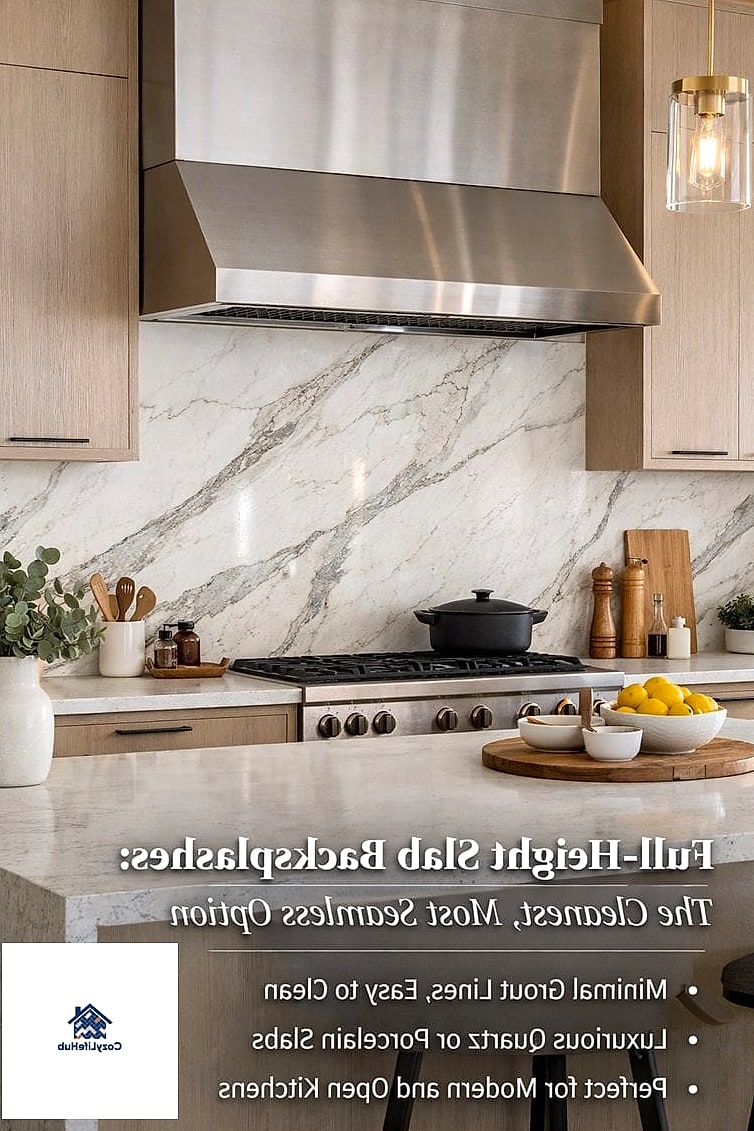
When there are no upper cabinets breaking things up, a full-height slab of tile running from countertop to ceiling makes a serious statement. Think large-format porcelain or natural stone panels with minimal grout lines, so the wall reads as one continuous surface instead of a patchwork of tiles.
This works especially well in modern or minimalist kitchens where you want the eye to travel uninterrupted. It’s also surprisingly practical — fewer grout lines mean less scrubbing and fewer spots for grease to hide.
Budget-wise, this is a splurge move since large-format slabs and the labor to install them aren’t cheap. But if you’re going tile-free on cabinets anyway, this is often where homeowners decide to spend the money they saved elsewhere.
Zellige Tile for Handmade Texture

Zellige has been everywhere lately, and for good reason. Those slightly irregular, handmade Moroccan tiles catch the light in a way that flat, mass-produced tile just can’t compete with. When it’s the main event on an open wall, that texture does a lot of visual heavy lifting.
It pairs beautifully with warm wood tones, brass hardware, and a neutral color palette, which makes sense why it shows up so often in kitchens without upper cabinets — those spaces tend to lean into natural materials anyway.
One thing to know going in: zellige is more porous than standard ceramic, so it needs a good sealant and a little extra care with acidic spills like wine or citrus. It’s not high-maintenance exactly, just not entirely maintenance-free either.
Classic Subway Tile Taken to New Heights
Subway tile with dark grout has become such a go-to that it almost feels like cheating to include it here, but hear me out — when you take it all the way to the ceiling instead of stopping at cabinet height, it looks like a completely different material.
This is one of those upgrades that instantly makes a kitchen feel more custom without requiring a full renovation. Stack it in a classic running bond pattern for a timeless feel, or switch to a herringbone pattern if you want something with a little more movement.
It’s also one of the more budget-friendly and DIY-friendly options on this list. Standard subway tile is inexpensive, widely available, and forgiving enough for a confident first-time tiler to install.
Statement Mosaic as a Focal Point
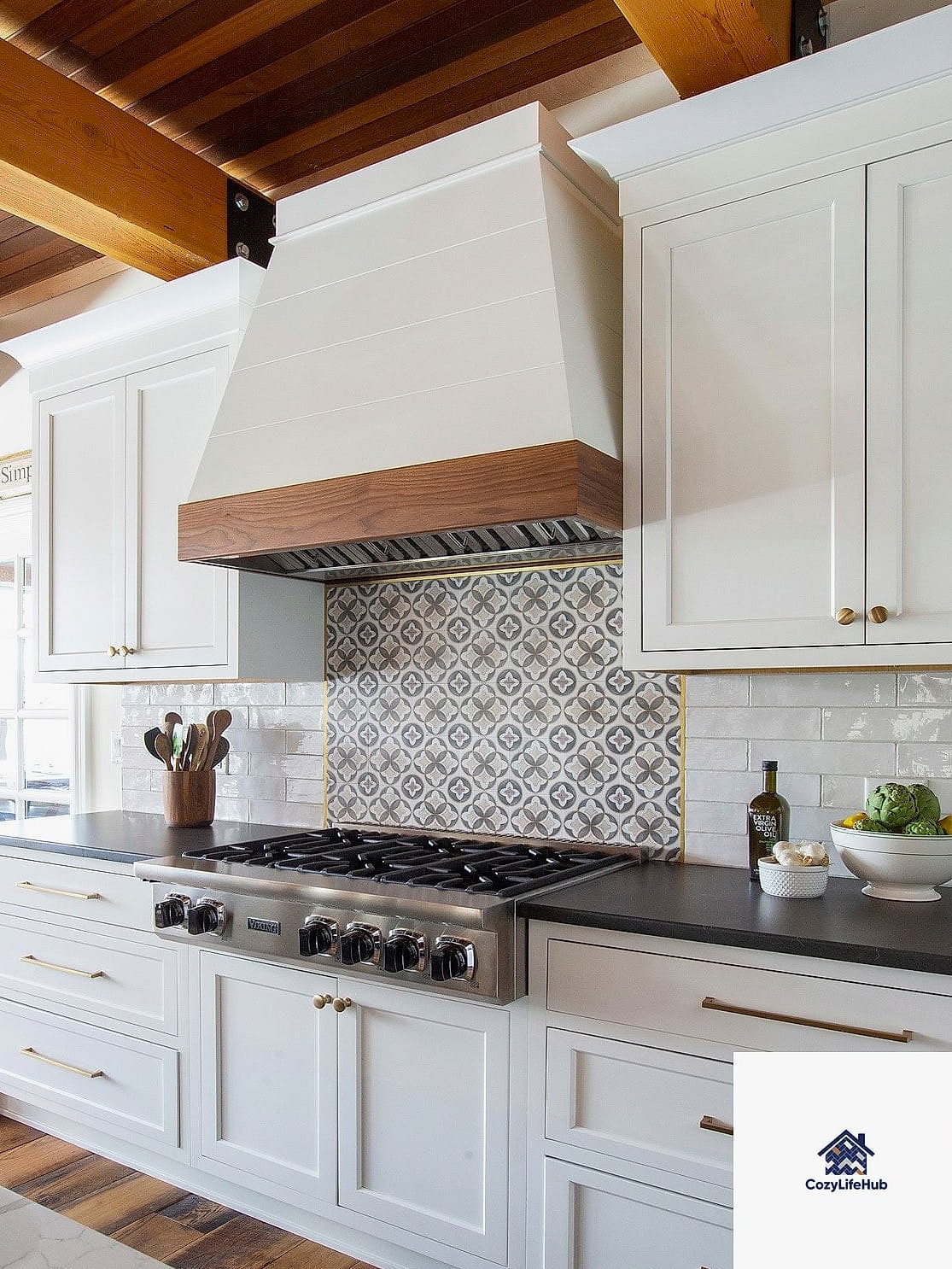
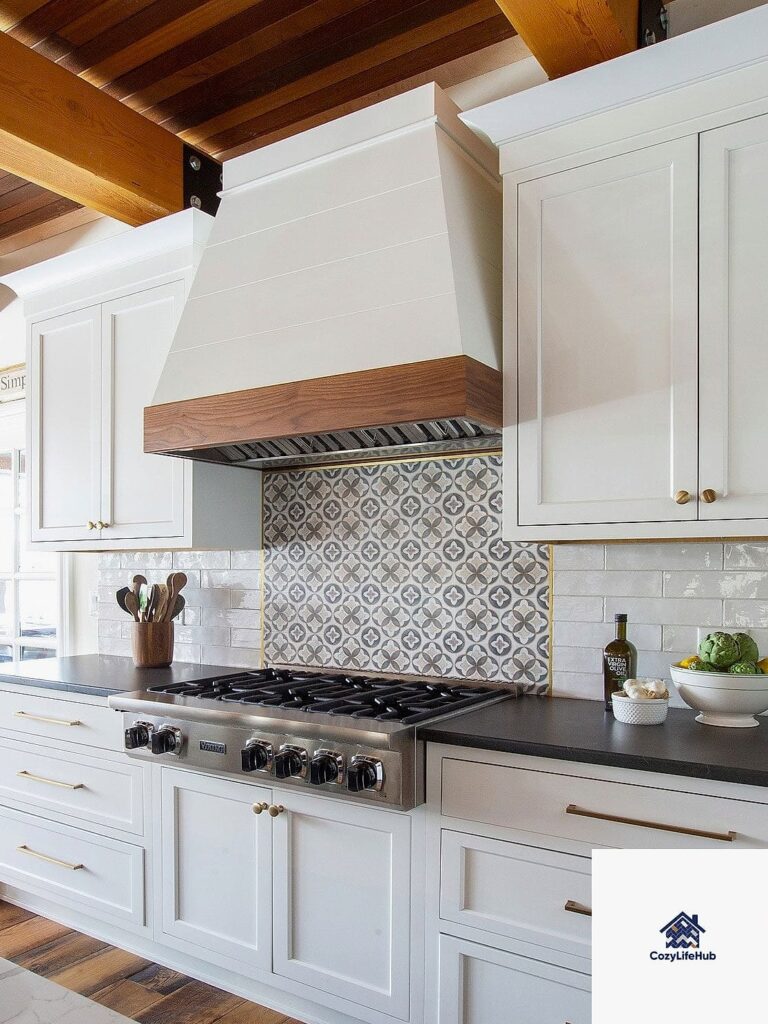
Without cabinets covering the wall, a mosaic backsplash finally gets the room it deserves to actually be seen. Whether it’s a hand-painted scene, a geometric pattern, or a colorful patchwork of tile scraps, this is where you get to have fun.
Mosaics work particularly well behind a range or sink where they become a natural focal point framed by open shelving on either side. Keep the rest of the kitchen fairly neutral so the mosaic doesn’t compete with anything else for attention.
Maintenance depends heavily on the grout color and tile finish you choose — glossy tiles wipe clean easily, while heavily textured mosaics can trap grease if you’re not staying on top of regular cleaning.
Open Shelving Paired with Wood Accents
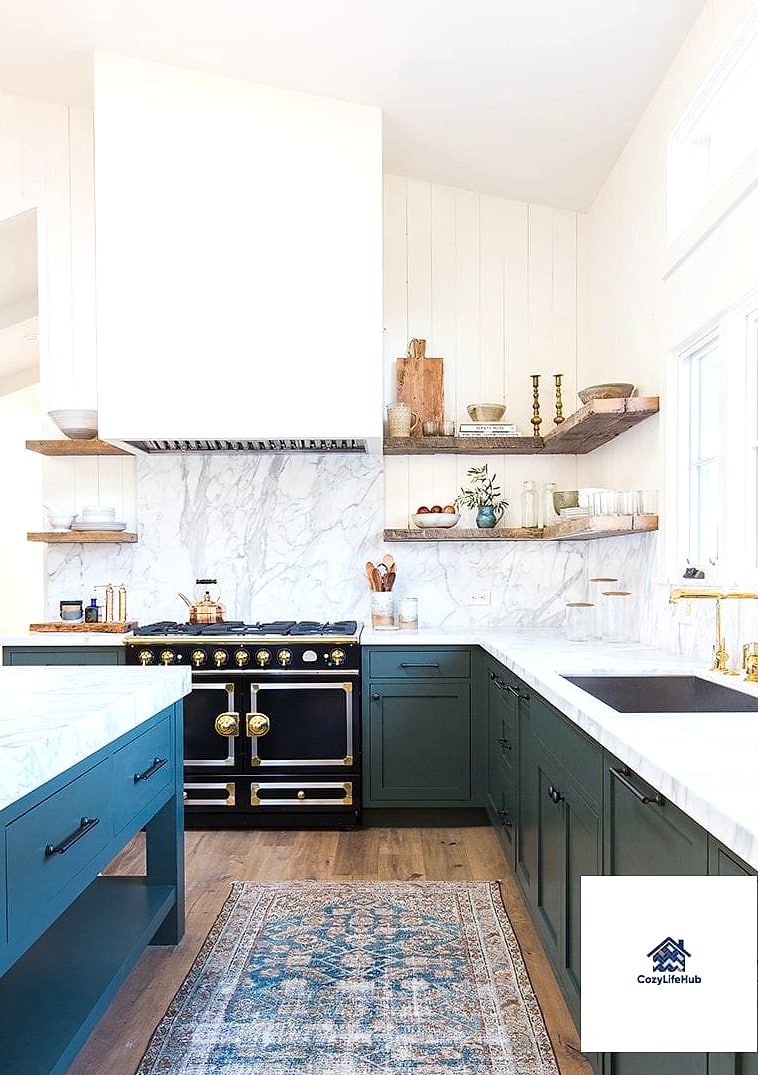
This isn’t a tile idea exactly, but it’s one of the most popular directions for backsplash without upper cabinets: pairing a simple tiled or paneled backsplash with floating shelves in warm wood tones instead of closed storage.
The backsplash itself can be fairly understated here, since the wood shelves, baskets, and displayed dishware are doing most of the visual work. A soft white or cream tile in a stacked layout keeps things calm and lets your everyday items become the decor.
It’s a practical choice for anyone who actually uses their kitchen tools often — everything’s within reach, nothing’s hidden behind a door, and it’s easy to swap out styling with the seasons.
Marble or Marble-Look Porcelain for a Luxe Feel
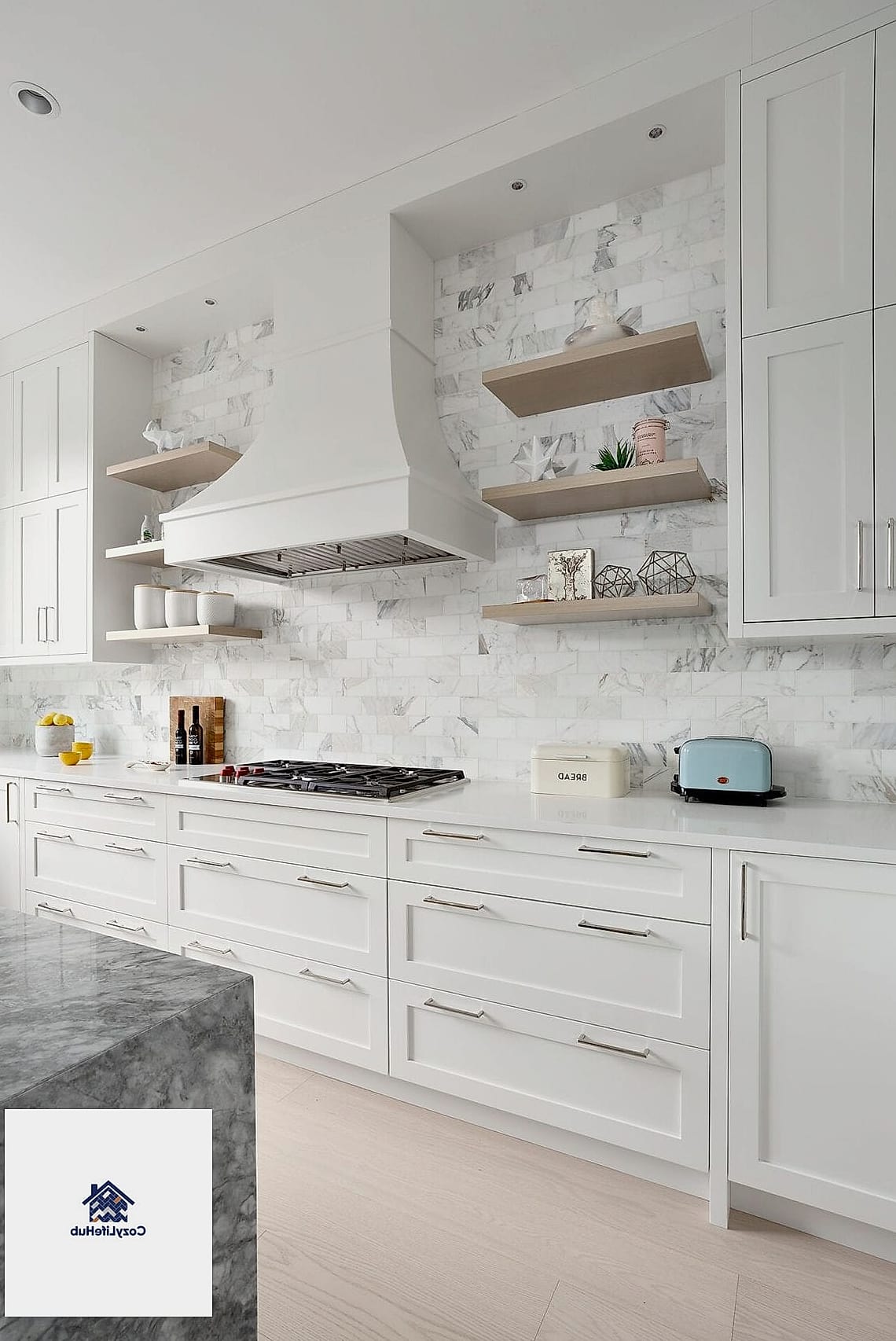
There’s a reason marble backsplashes keep showing up in design magazines — that soft veining against a clean white or gray base just reads as expensive, even when it’s the more affordable marble-look porcelain doing the work.
Running marble or marble-look tile up an open wall, especially behind a range, gives the kitchen a boutique-hotel feel without much other effort. It pairs naturally with brushed brass or black fixtures and matte or glossy cabinetry below.
Real marble is porous and will etch from acidic ingredients over time, which some homeowners actually love for the character it adds. If that sounds stressful rather than charming, porcelain versions give you the same look with a lot less babying.
Vertical Installation for a Taller, Bigger Feel
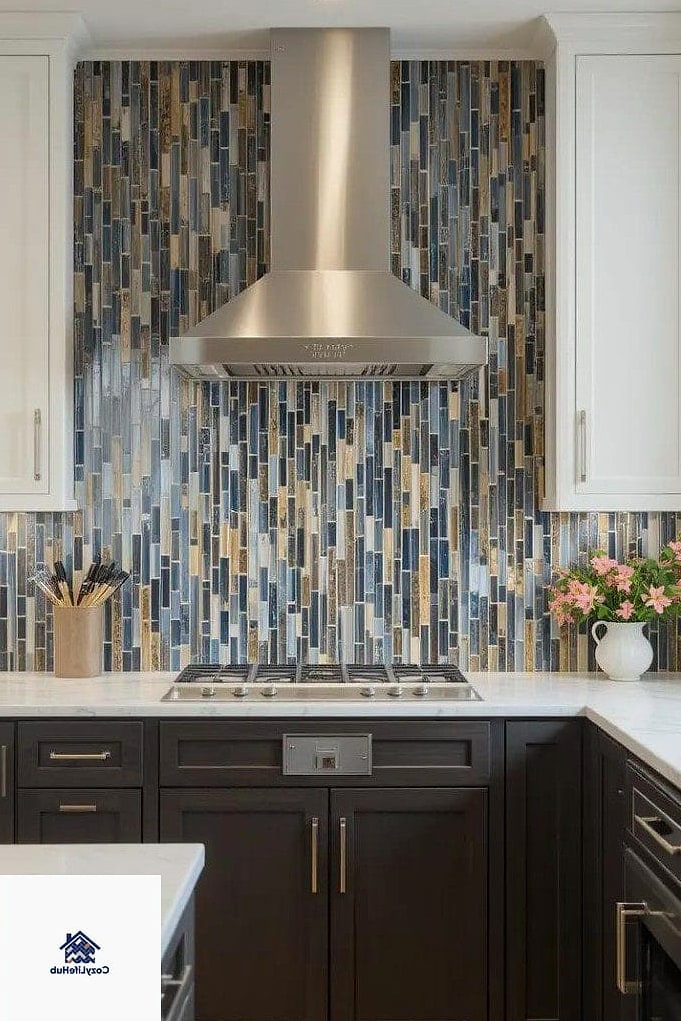
Sometimes the pattern matters more than the material. Installing rectangular tiles vertically instead of horizontally is a simple trick that makes ceilings feel taller and walls feel bigger, which is especially useful in a kitchen that lost some visual weight when the upper cabinets came down.
This works with almost any tile type — subway, zellige, even plain ceramic — so it’s more about technique than budget. It’s a nice option if you already love a certain tile but want the installation itself to add some interest.
It does take a slightly more careful hand during installation to keep vertical lines straight, so this might be one to leave to a pro rather than a weekend DIY project.
Bold Color for Personality and Contrast
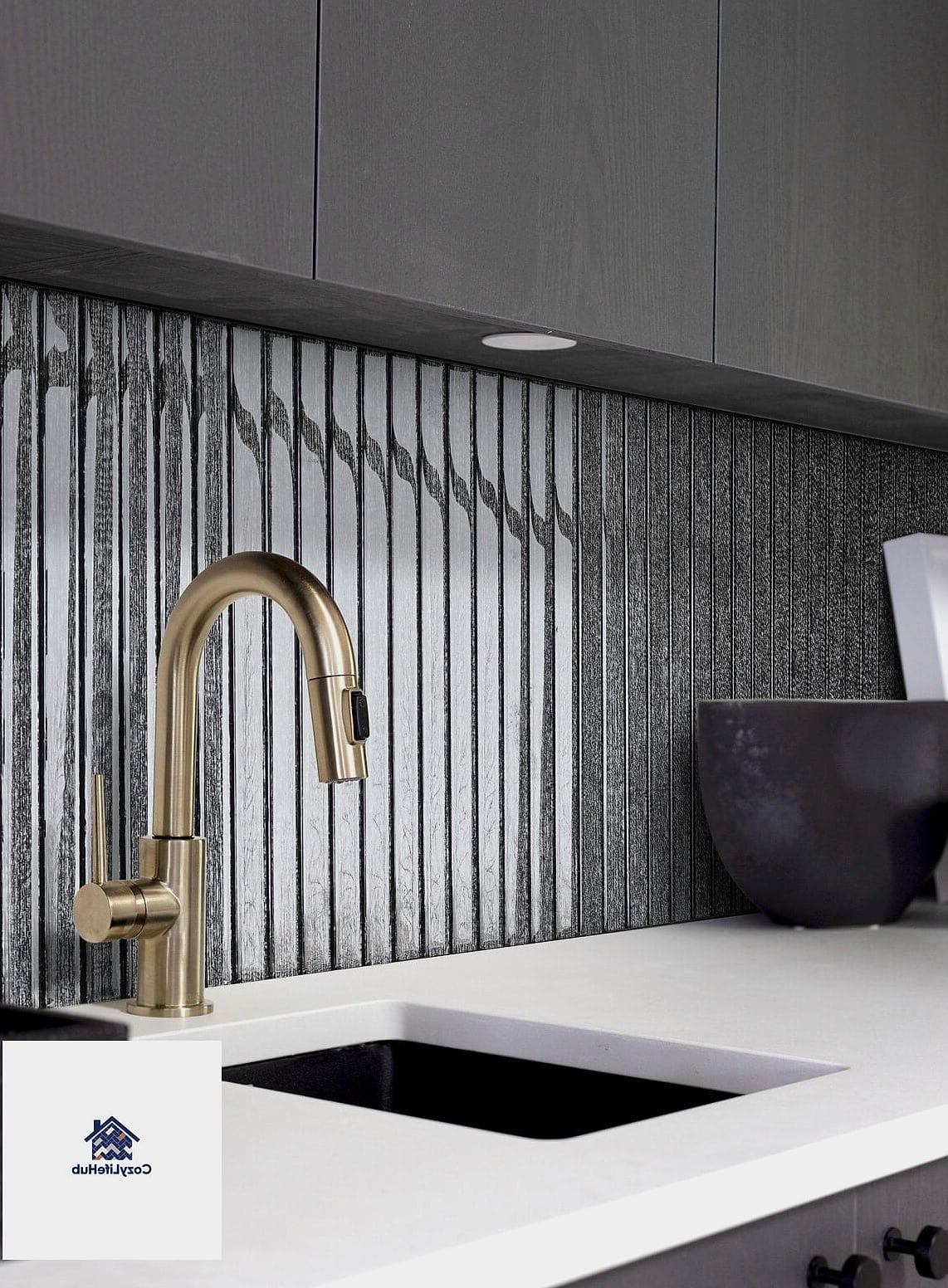
An open backsplash wall is basically asking for color. Deep green, navy, terracotta, even a moody black tile can turn a kitchen from pretty into genuinely memorable, especially against white countertops or light wood cabinetry below.
This is a great spot for personal opinions to come through in a kitchen design, and I’d argue it’s one of the most underused ideas on this list. Most people default to neutral because it feels safe, but a colorful backsplash without cabinets fighting for attention above it can look incredibly intentional.
If full commitment feels like too much, peel-and-stick tile in a bold color is a low-risk way to test the look, particularly if you’re renting or just not ready to commit to permanent tile.
Textured Ceramic or Handmade-Look Tile for Warmth
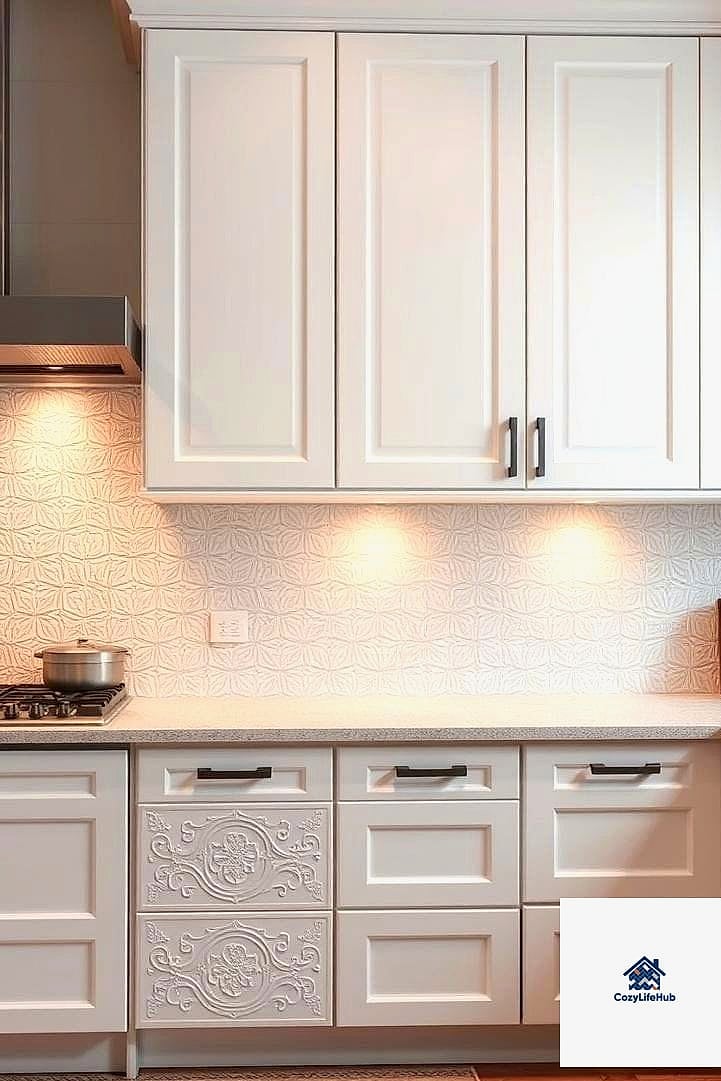
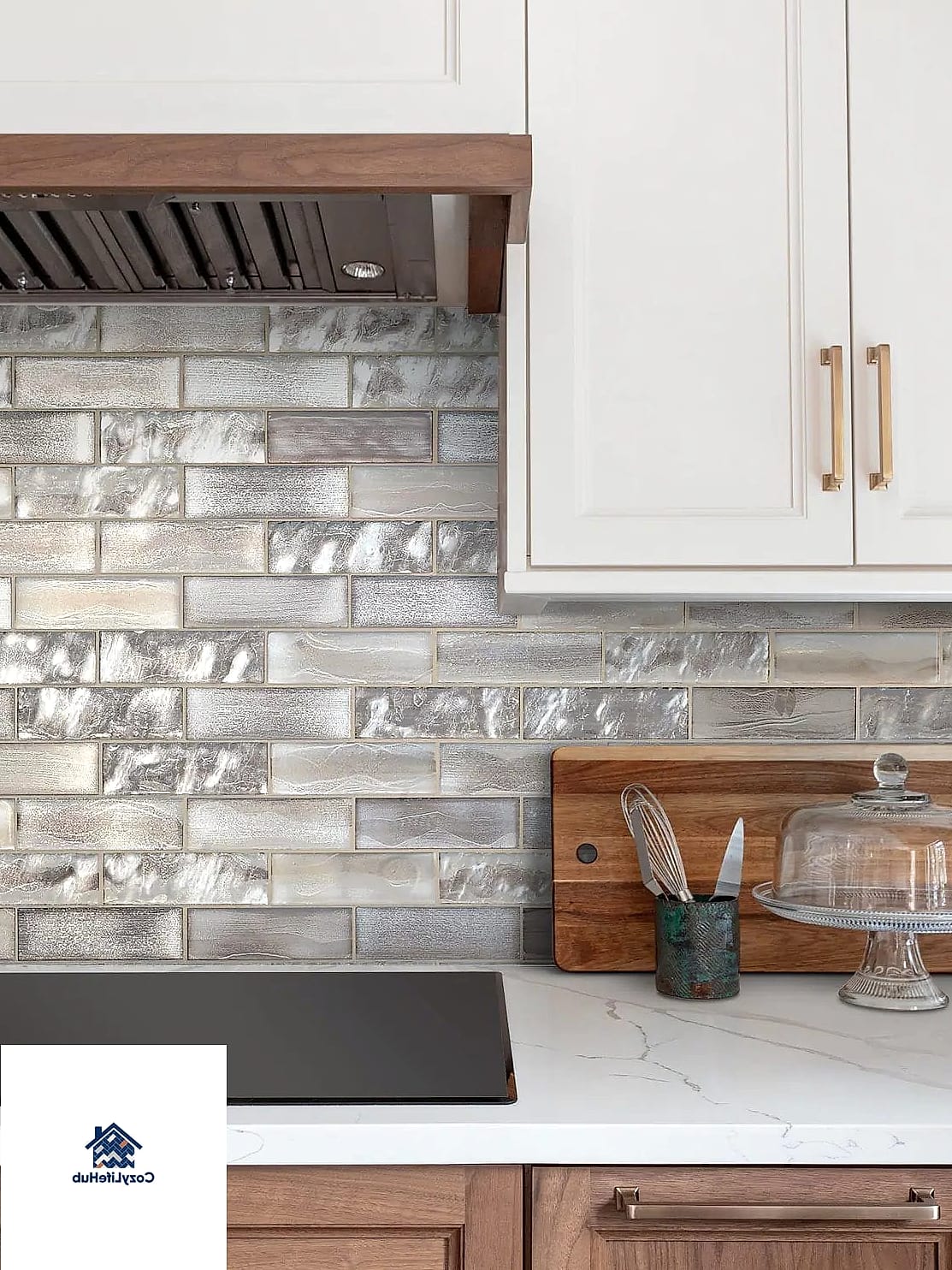
Not every open-wall backsplash needs to be glossy and reflective. A matte, textured ceramic tile — the kind with slight ridges, waves, or an irregular glaze — adds warmth and dimension to a wall that would otherwise feel flat without cabinets breaking it up.
This direction tends to suit farmhouse, coastal, or organic modern kitchens especially well, and it plays nicely with natural stone counters or butcher block. The texture also does a decent job of hiding minor water spots between cleanings, which is a small but real practicality bonus.
For upkeep, textured tile can collect a bit more dust and grease in its grooves than a smooth surface, so plan on wiping it down a little more often, particularly around the stove.
Whichever direction you land on, the biggest thing to keep in mind with backsplash without upper cabinets ideas is that the wall now has to do double duty — it’s storage-adjacent decor and functional surface all at once. Take your time picking a tile, pattern, and color that you’re genuinely excited to look at every day, since there’s nothing left to hide behind it.