7 Brick Backsplash Ideas That Maximize Style and Function
- Classic Red Brick for an Industrial Loft Look
- Whitewashed Brick for a Softer, Farmhouse Feel
- Herringbone Brick Pattern for Visual Interest
- Whitewhite Painted Brick for a Bright, Airy Kitchen
- Thin Brick Tile for an Easier Installation
- Gray Brick for a Modern, Neutral Palette
- Full Brick Accent Wall Behind Open Shelving
7 Brick Backsplash Ideas That Maximize Style and Function
Brick backsplashes have this way of making a kitchen feel grounded and lived-in, even when everything else in the room is brand new. There’s a warmth to exposed or faux brick that tile just can’t fake, and it works in almost any style of home, from a converted city loft to a farmhouse kitchen out in the country. If you’ve been scrolling through renovation photos wondering whether brick is the right call for your space, here are seven ways to bring it in without it feeling like a gimmick.
Classic Red Brick for an Industrial Loft Look
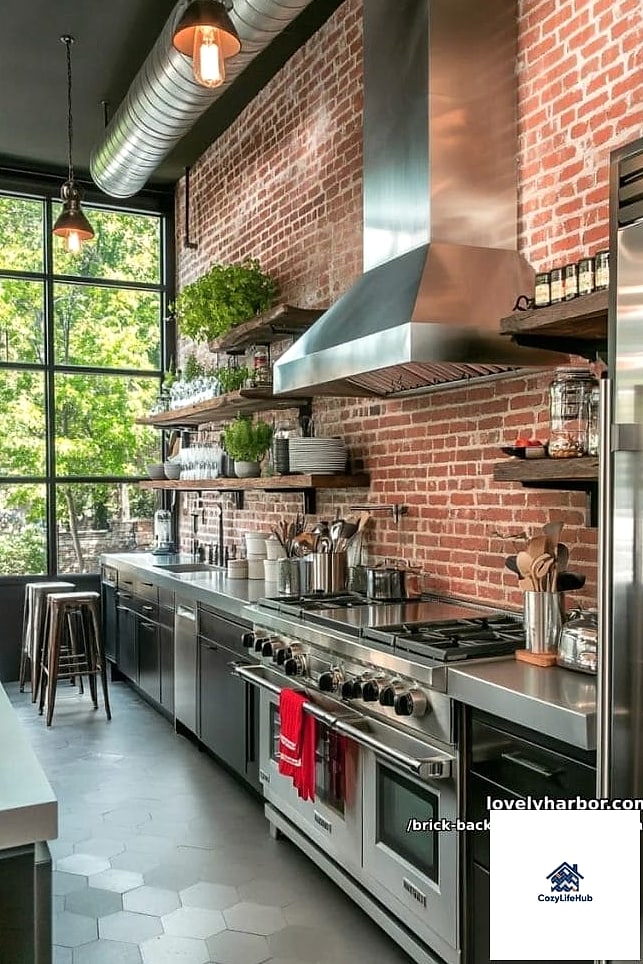
This is the look most people picture first: rich, reddish-brown brick with visible texture and slight color variation from piece to piece. It’s the backsplash equivalent of exposed ductwork or a steel beam left on display.
It works especially well in open-concept kitchens with high ceilings, black metal fixtures, and butcher block counters. The contrast between rough brick and smooth quartz countertops is honestly one of my favorite pairings in kitchen design right now.
Maintenance is pretty straightforward if you seal the brick properly, since sealing keeps grease and moisture from soaking into the porous surface. Unsealed brick near a stove is asking for stains, so don’t skip that step. Budget-wise, thin brick veneer panels are far more affordable than full reclaimed brick and install almost like large tiles.
Whitewashed Brick for a Softer, Farmhouse Feel
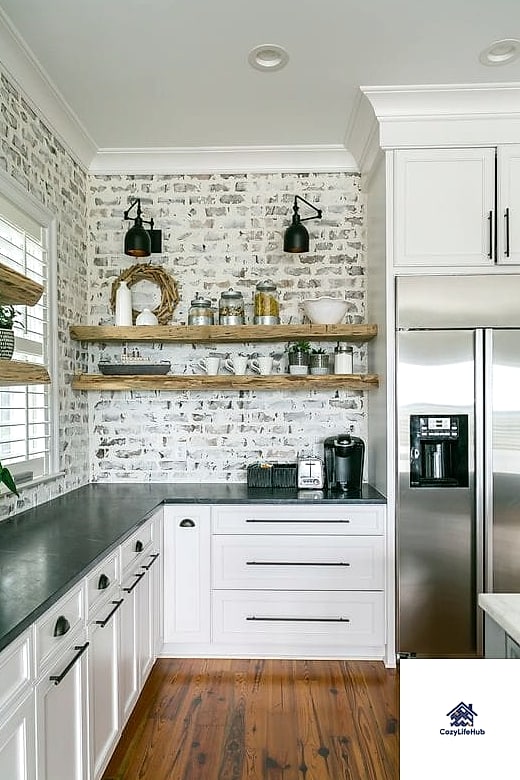
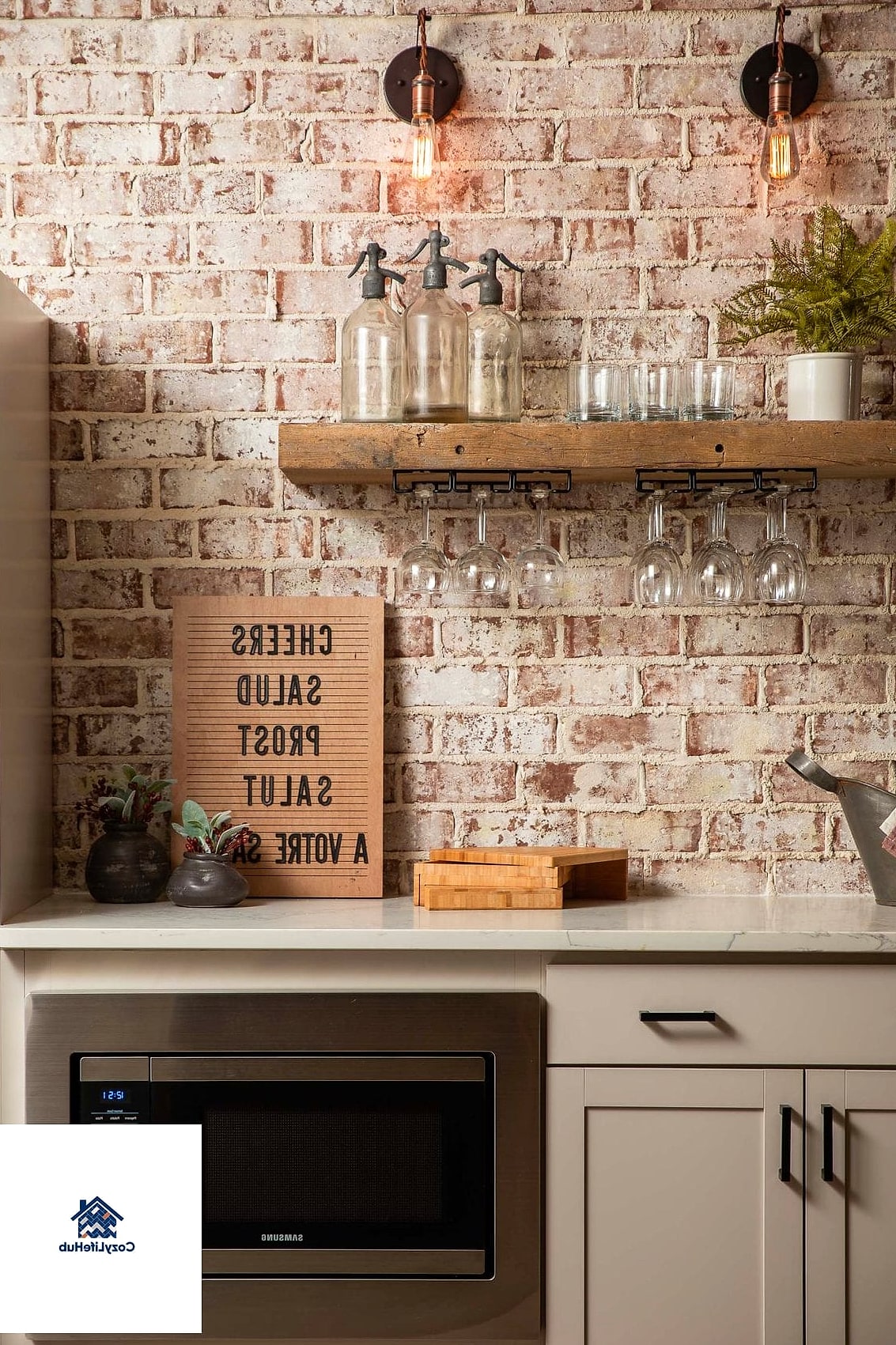
If full red brick feels like too much, whitewashing softens the whole thing without hiding the texture completely. You still see the outline of each brick and a hint of the natural color underneath, just muted.
This look shines in farmhouse and cottage-style kitchens, especially paired with open shelving, woven baskets, and warm wood tones. It also plays nicely with brass hardware, which tends to pick up the antique feel of the washed brick.
Whitewashing is a genuinely doable DIY project — a diluted paint-and-water mix, a brush, and a rag for wiping back the excess is basically the whole process. Just test a small section first, since brick absorbs unevenly and you want to get a feel for how much wash to apply before committing to the whole wall.
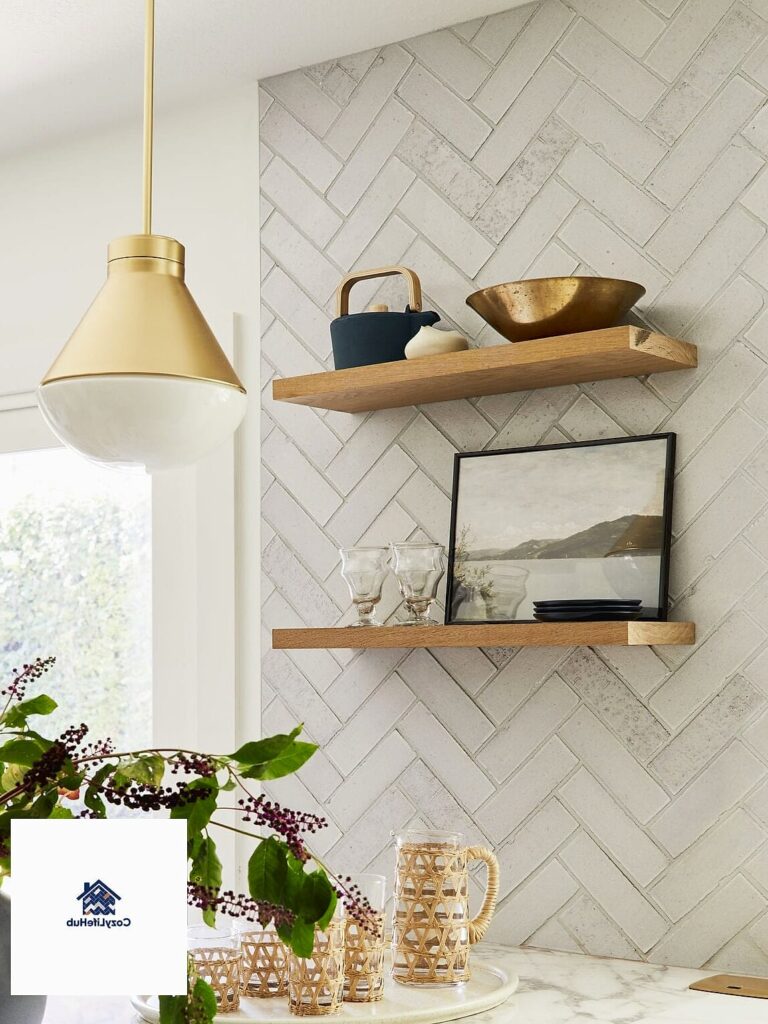
Herringbone Brick Pattern for Visual Interest
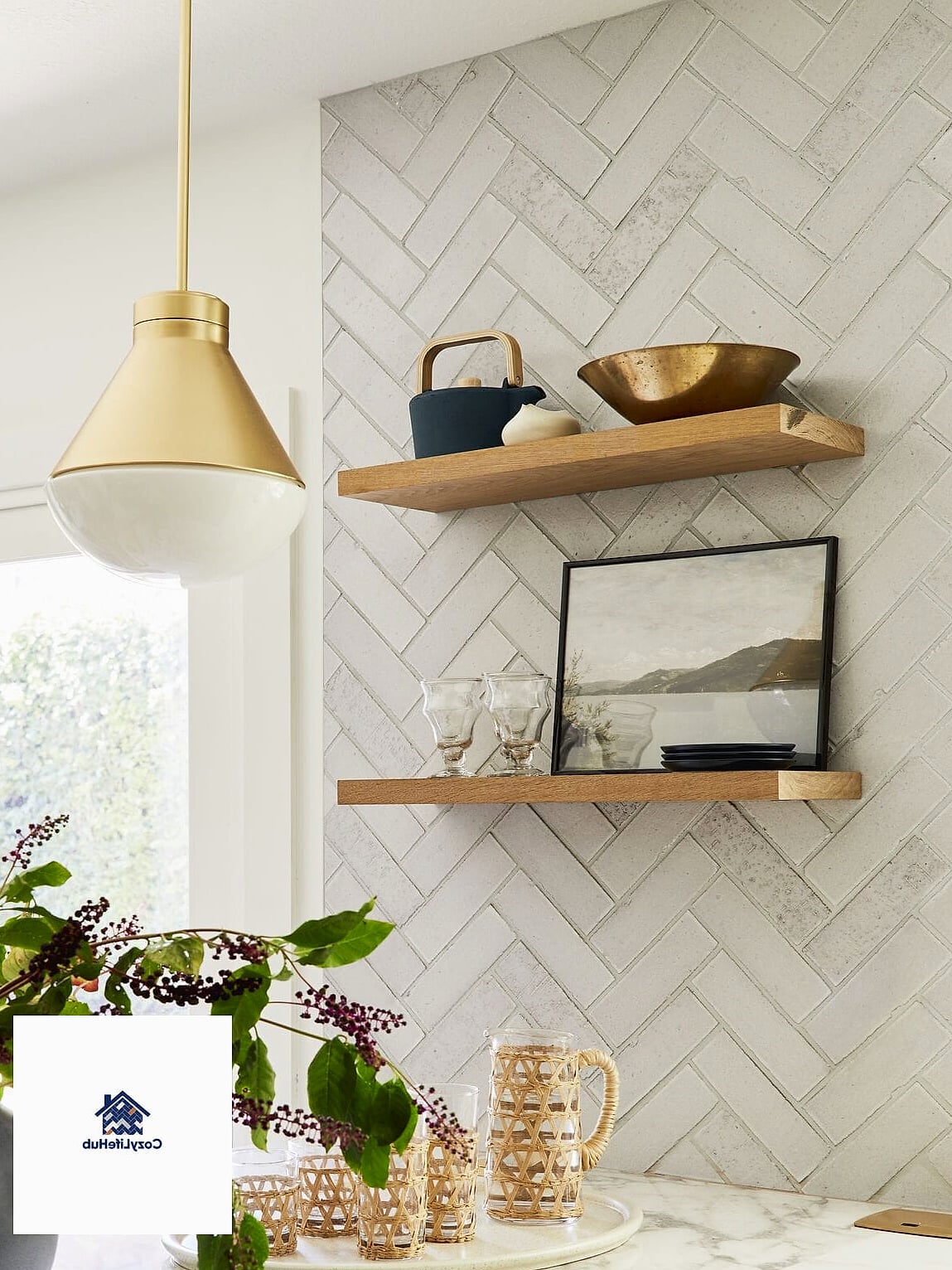
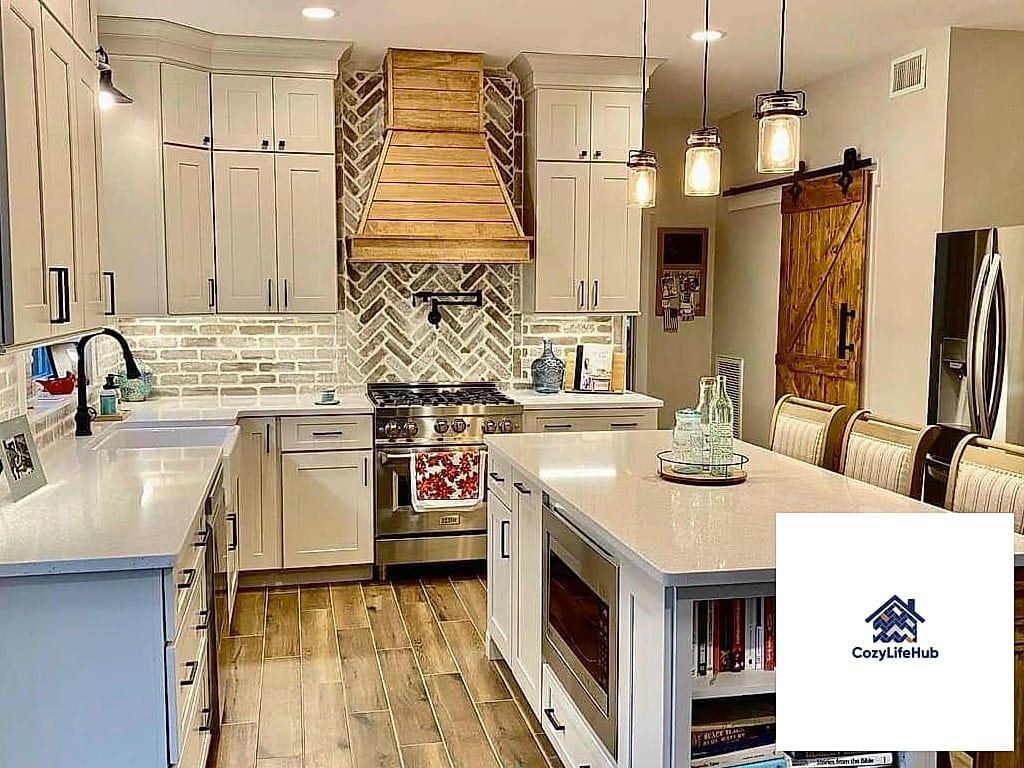
Instead of running brick in the standard horizontal rows, laying it in a herringbone pattern turns the backsplash into more of a design feature than a background material. The zigzag creates movement, which is great in a kitchen that’s otherwise fairly minimal.
This pattern works best behind a stove or sink as a focal point rather than wrapping an entire wall, since herringbone is busier and can feel overwhelming at large scale. A smaller accent area lets it do its job without competing with everything else going on.
Installation is more labor-intensive than a standard brick-laid pattern, so this is one where hiring a professional tile installer usually pays off unless you’re already comfortable with detailed layout work. Thin brick veneer in a herringbone cut is available from most tile suppliers, which saves you from cutting each piece by hand.
Whitewhite Painted Brick for a Bright, Airy Kitchen

Fully painted brick, usually in crisp white or soft off-white, keeps all the texture of brick while brightening up a smaller or darker kitchen considerably. It’s a nice middle ground between the ruggedness of raw brick and the clean look of subway tile.
Small kitchens with limited natural light benefit the most here, since painted brick reflects light rather than absorbing it the way red brick does. Pair it with matte black fixtures or brushed brass for a bit of contrast, and it reads as intentional rather than plain.
Because paint seals the surface, painted brick is actually easier to wipe down than raw brick, which makes it a solid choice for families who cook often. Just use a paint labeled for masonry or a durable eggshell finish so grease doesn’t dull the sheen over time.
Thin Brick Tile for an Easier Installation
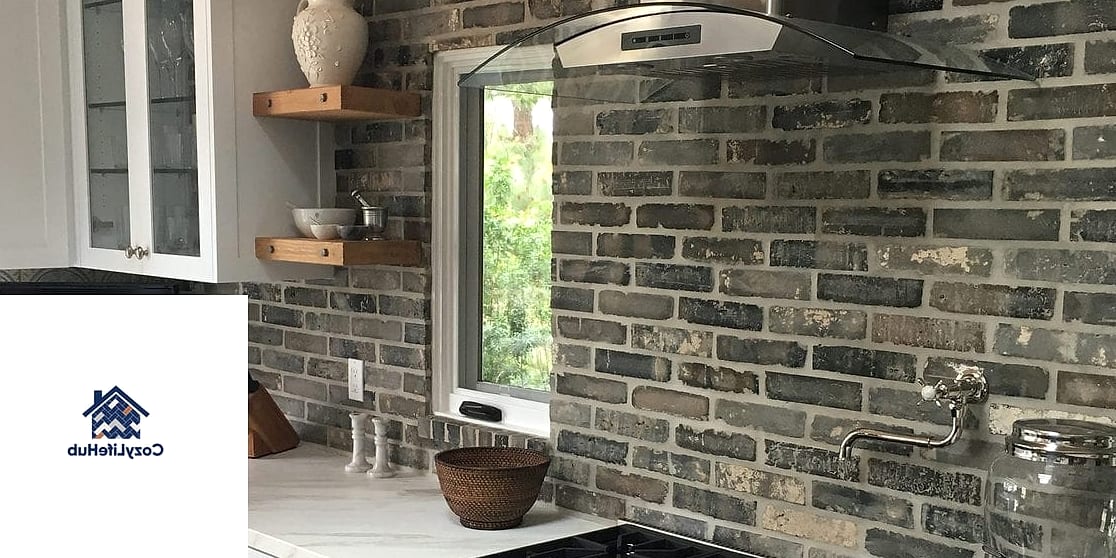
Thin brick tile, sometimes called brick veneer, gives you the exact look of full brick at a fraction of the weight and thickness. It’s cut into slim strips that install much like ceramic tile, using thinset and grout instead of mortar and structural bricklaying.
This option is popular for renters and DIYers because it doesn’t require the wall reinforcement that full brick sometimes does. Peel-and-stick brick veneer panels have also gotten a lot better in recent years, and they’re a genuinely renter-friendly way to test the look before committing to something permanent.
It fits nearly any kitchen style since it comes in multiple colors, from traditional red to gray and whitewashed finishes. Just double check the manufacturer’s weight limits if you’re using adhesive-only panels near a heat source.
Gray Brick for a Modern, Neutral Palette
Gray brick brings the texture and character of a traditional backsplash into a more contemporary color story. It reads less rustic than red brick and fits comfortably into kitchens leaning toward a neutral color palette with black, white, and warm wood accents.
This is a great option if you already have gray or charcoal cabinetry and want the backsplash to feel like part of the same design language rather than an unrelated accent. Add brushed nickel or matte black hardware and it pulls the whole kitchen together.
Gray brick tends to hide daily grime a bit better than lighter tones, which is a small but real perk for busy households. It still needs regular sealing and occasional grout cleaning, but the color forgives minor smudges between deep cleans.
Full Brick Accent Wall Behind Open Shelving
Rather than covering the whole backsplash area, this idea uses a section of exposed or faux brick as a backdrop for open shelving. The brick adds texture and depth behind the shelves, while the shelving itself keeps the space functional for everyday dishes and cookbooks.
It’s a great fit for kitchens that already lean toward a curated, styled look, since the open shelves become a display for ceramics, plants, and cutting boards against a textured backdrop. The mix of rough brick and smooth dishware creates nice visual contrast without much extra effort.
Because only part of the wall is brick, this is one of the more budget-friendly ways to bring the material in, especially if you’re using thin veneer over an existing wall. It also gives you room to change up the shelf styling seasonally without touching the backsplash itself.
Brick backsplashes aren’t a one-size-fits-all choice, but that’s kind of the point. Whether you go bold with exposed red brick or ease into it with a whitewashed or painted version, there’s a version of this look that fits almost any kitchen style and budget. Start with a sample panel or a small accent area if you’re unsure, live with it for a bit, and expand from there if it earns its keep.