21 Marble Herringbone Backsplash Ideas That Look Expensive But Aren’t
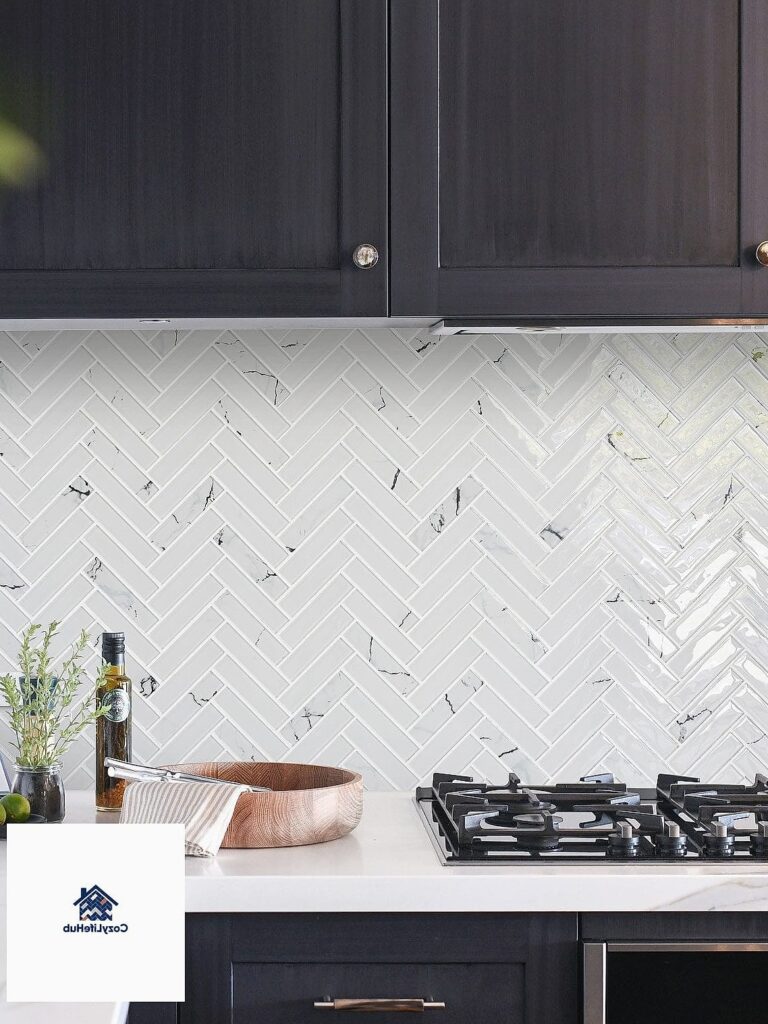
- Classic Carrara Marble Herringbone
- Peel-and-Stick Marble Herringbone
- Mini Herringbone Mosaic Sheets
- Herringbone with a Contrasting Grout Line
- Full-Height Marble Herringbone Wall
- Marble Herringbone Behind Open Shelving
- Herringbone with Marble Countertops for a Monochrome Look
- Black and White Marble Herringbone Mix
- Herringbone Accent Behind the Range Only
- Large-Format Marble Herringbone
- Marble Herringbone with Brushed Brass Accents
- Faux Marble Porcelain Herringbone
- Vertical Herringbone Layout
- Herringbone with a Marble Mosaic Border
- Warm Beige Marble Herringbone
- Herringbone with Under-Cabinet Lighting
- Small Kitchen Herringbone Accent Wall
- Marble Herringbone Bathroom Backsplash Crossover
- Herringbone with a Honed Matte Finish
- DIY Marble Herringbone with Tile Templates
- Herringbone Backsplash with a Marble Slab Ledge
- Herringbone Marble in a Neutral Color Palette Kitchen
21 Marble Herringbone Backsplash Ideas That Look Expensive But Aren’t
There’s something about a herringbone pattern that makes a kitchen look like it belongs in a magazine. Add real or faux marble into the mix, and suddenly your backsplash is doing all the heavy lifting in the room. The good news is you don’t need a designer budget to pull this off. Plenty of homeowners are getting that high-end look with smart material choices and clever layouts. Here are 21 marble herringbone backsplash ideas that look expensive but aren’t, broken down so you can find the one that fits your space and your wallet.
Classic Carrara Marble Herringbone
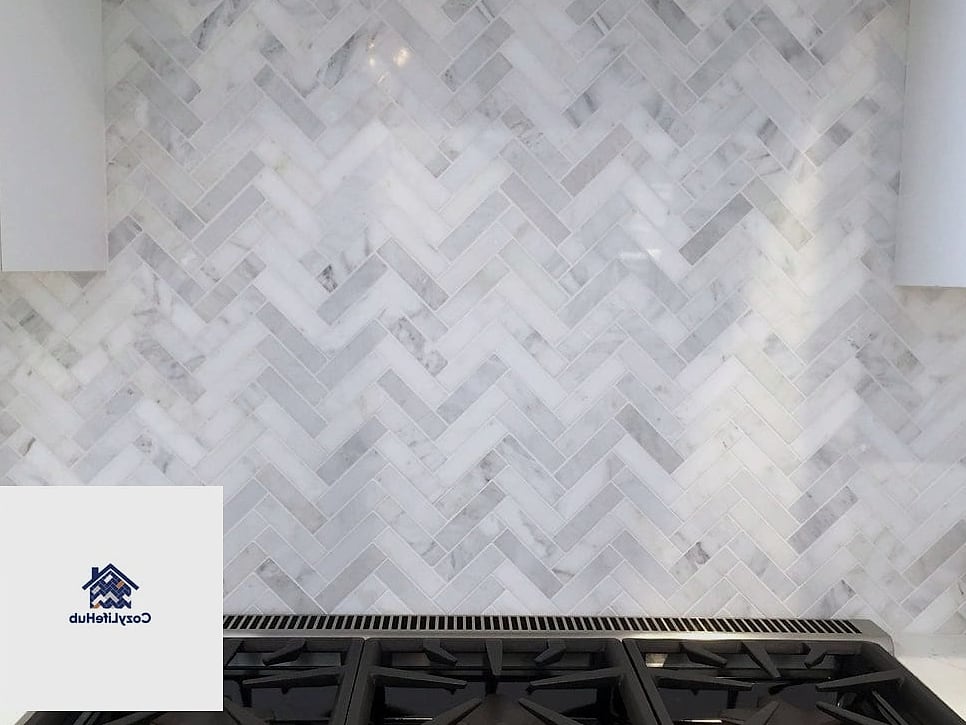
This is the look most people picture when they think of a marble herringbone backsplash. Soft white background with gray veining running through it in that signature zigzag pattern. It works in almost any kitchen style, from traditional to modern farmhouse. Carrara tile isn’t the cheapest natural stone out there, but buying smaller format tiles keeps the cost down compared to slab installations.
Peel-and-Stick Marble Herringbone
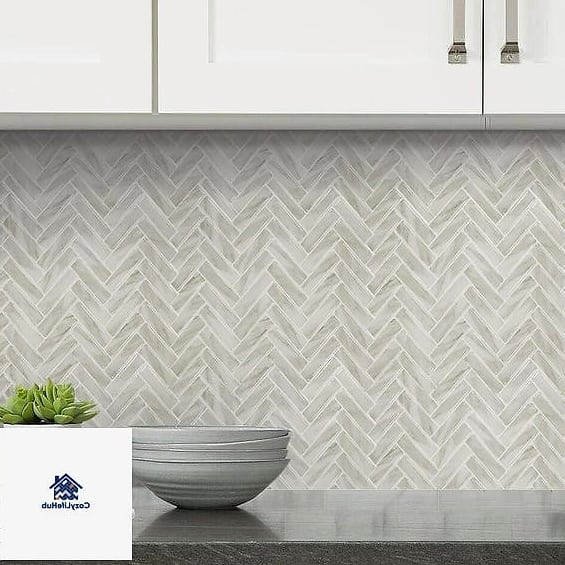
If you’re renting or just not ready to commit, peel-and-stick marble-look tiles are a legit option now. The good ones have realistic veining and a matte or satin finish that doesn’t scream “fake.” You can install a whole backsplash in an afternoon with no grout, no mess, and no landlord drama. Just make sure your walls are clean and smooth before applying, or the tiles won’t stick well long term.
Mini Herringbone Mosaic Sheets
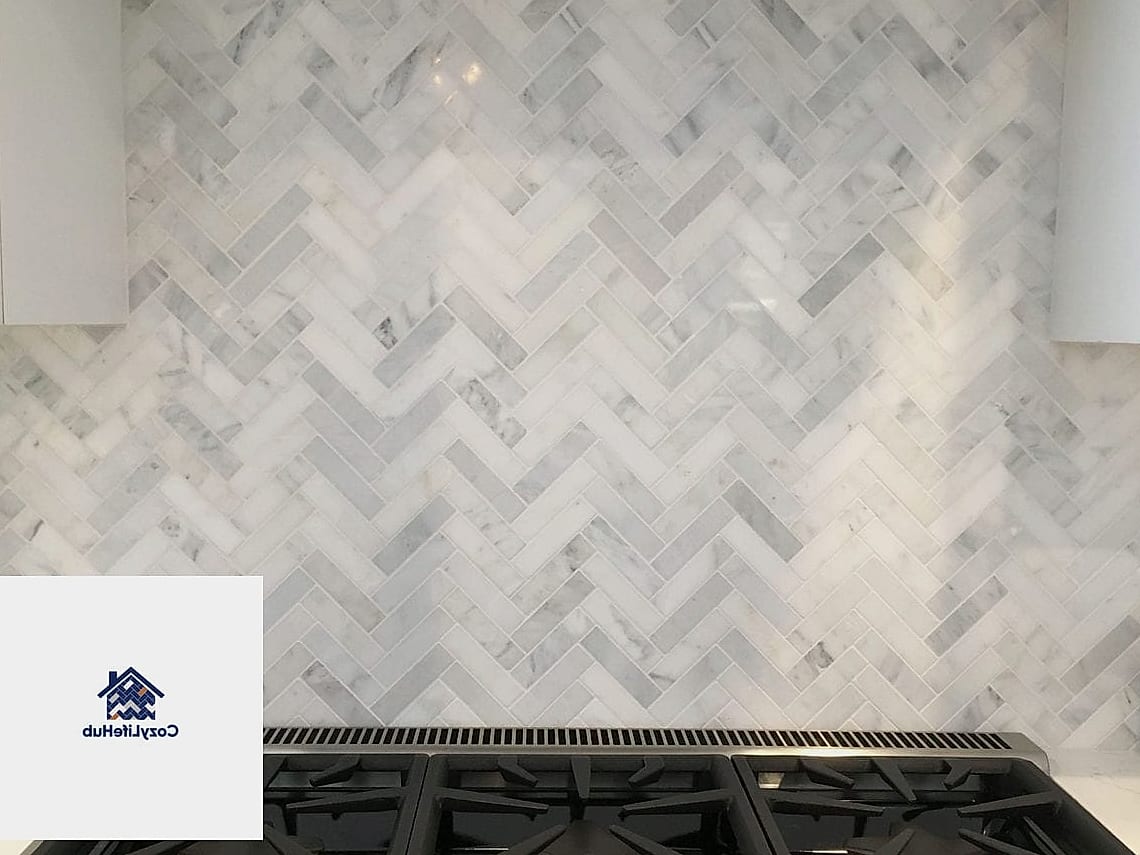
Instead of laying individual tiles, look for herringbone mosaic sheets where the pattern is pre-arranged on a mesh backing. This shrinks your install time dramatically and keeps everything lined up straight, which is honestly the hardest part of doing herringbone yourself. Mini mosaic versions also give a more delicate, jewelry-like texture that looks custom even though it’s a standard product.
Herringbone with a Contrasting Grout Line
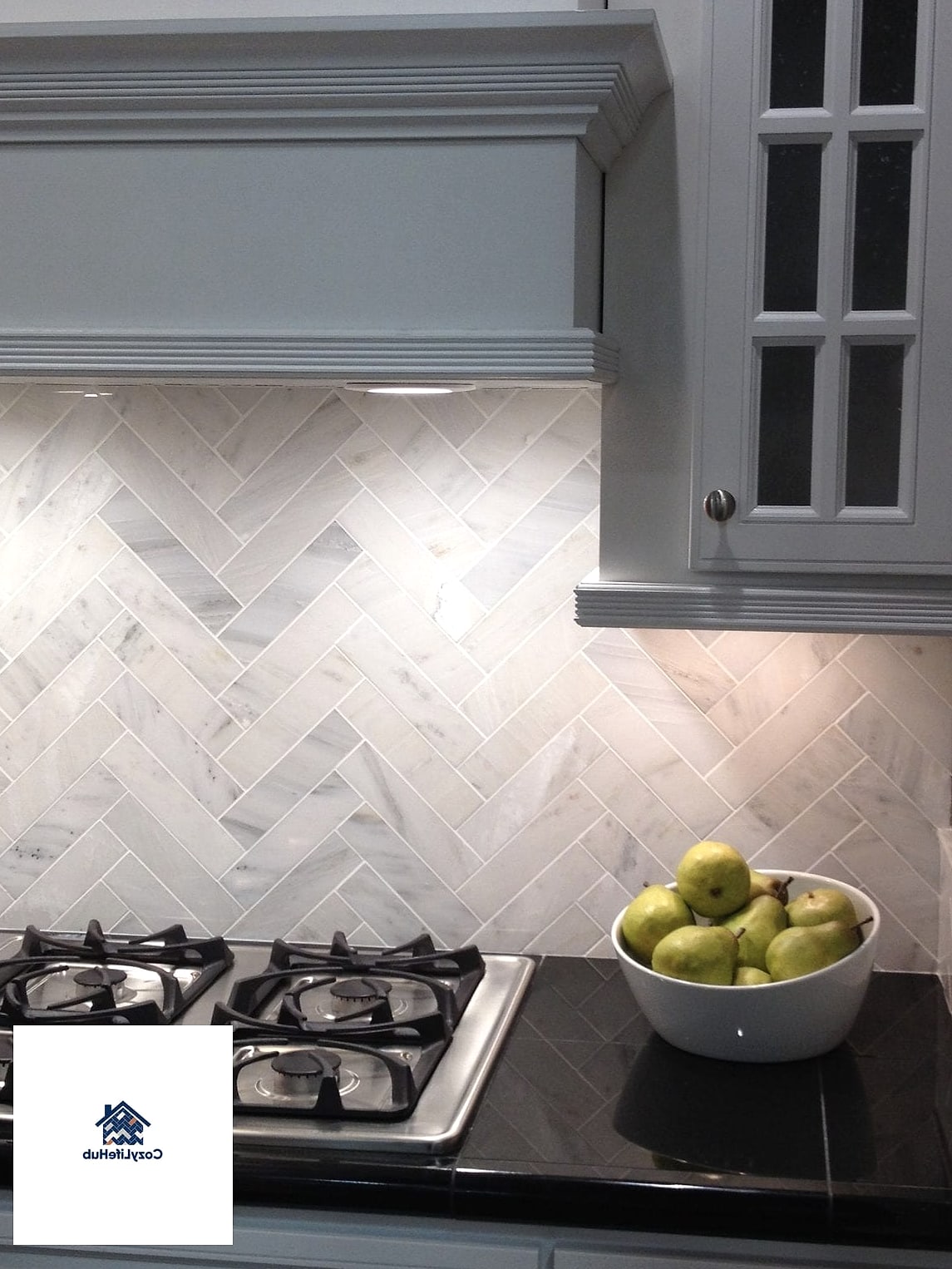
A lot of people default to white grout with white marble, but a soft gray or charcoal grout line makes the herringbone pattern pop way more. It adds definition so the zigzag actually reads from across the room instead of blending into one soft blur. This is a five-minute decision at the tile store that changes the entire look of the finished wall.
Full-Height Marble Herringbone Wall
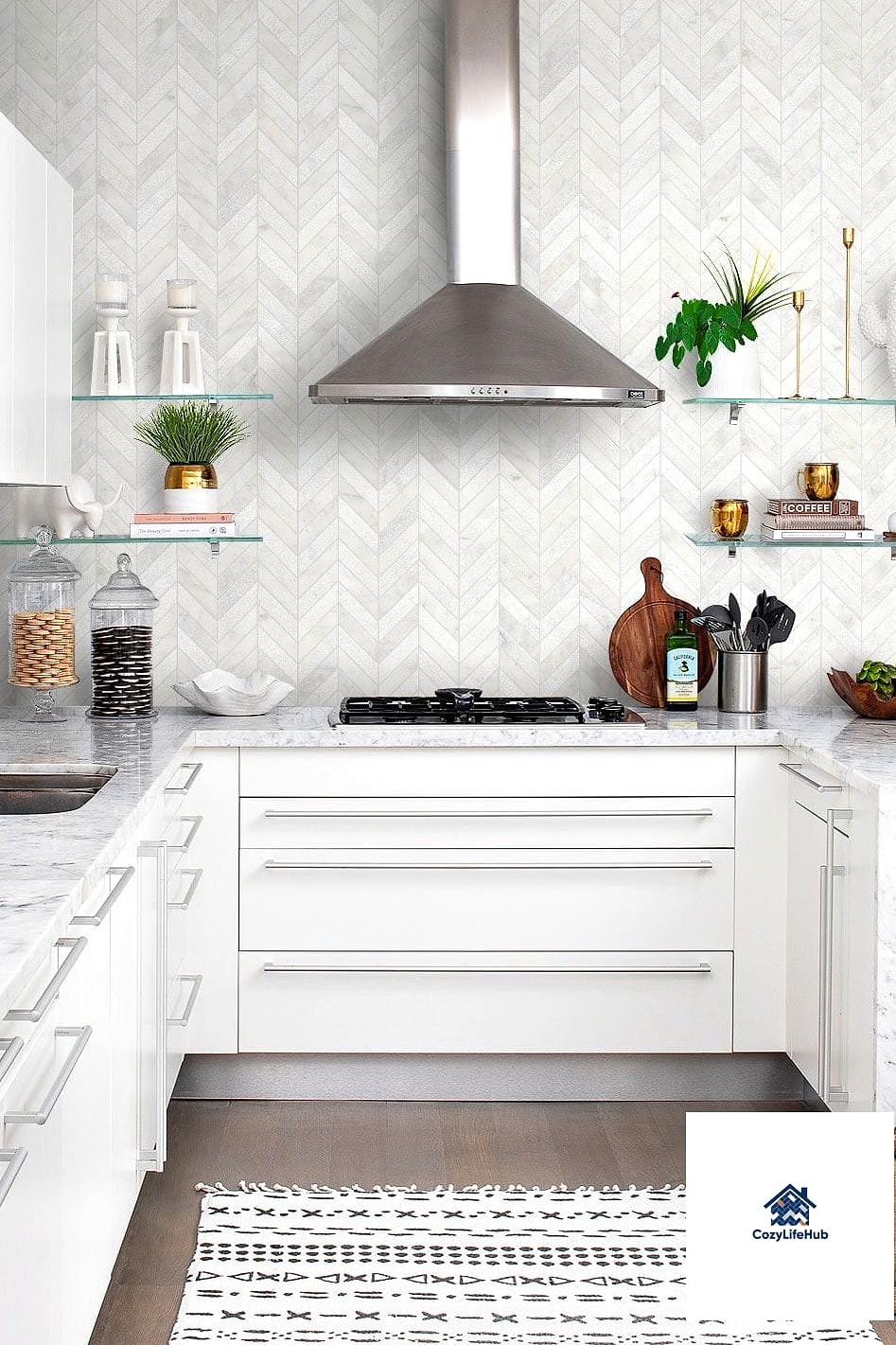
Instead of stopping the backsplash at the standard 18 inches, run the herringbone pattern all the way up to the upper cabinets or even to the ceiling. It creates a dramatic focal wall, especially behind a range where there’s no cabinetry breaking things up. This uses more tile so it does cost more, but it reads as a serious design statement without needing a slab of natural stone.
Marble Herringbone Behind Open Shelving
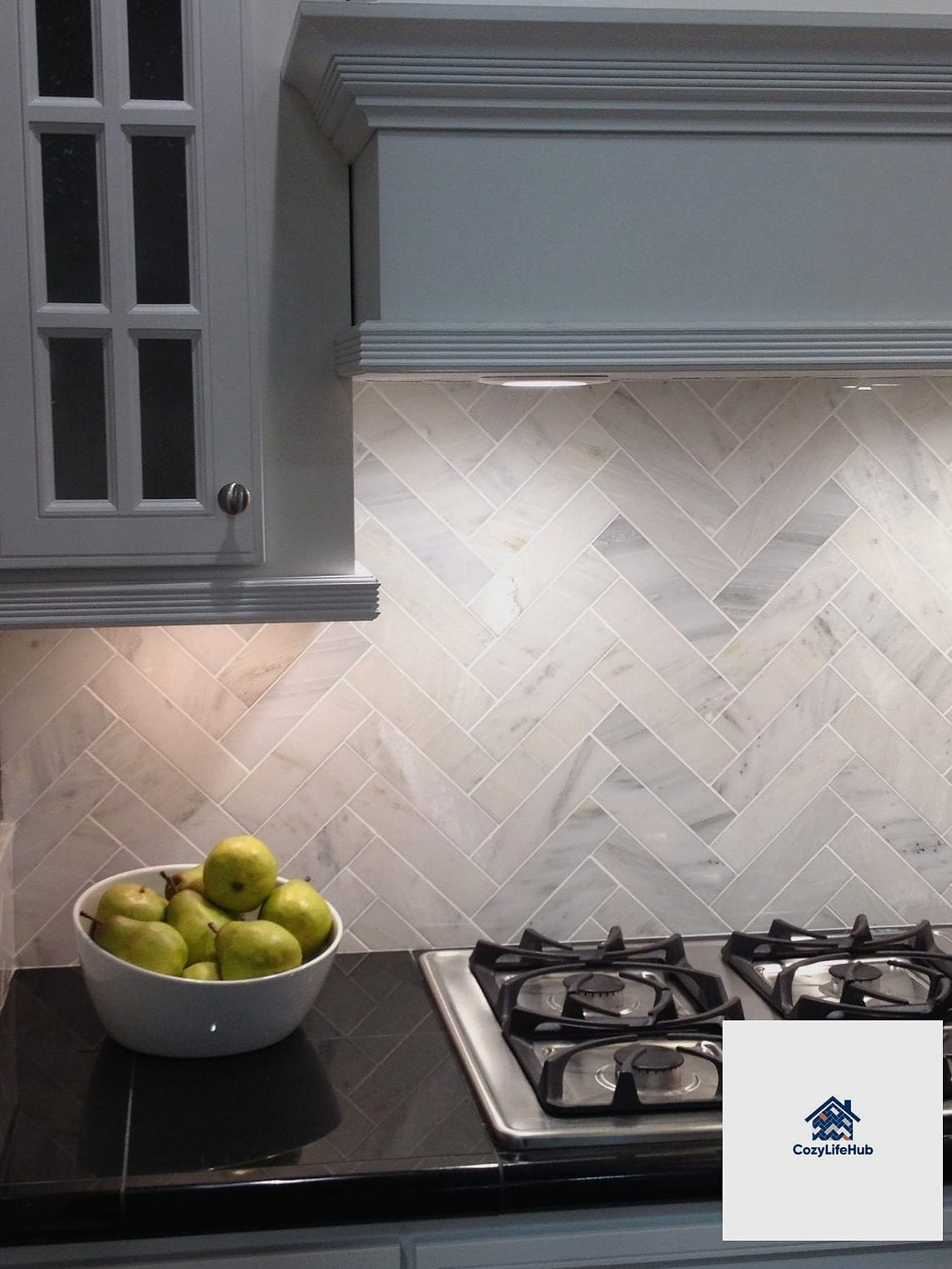
Open shelving already makes a kitchen feel more custom, and pairing it with a marble herringbone backsplash takes it further. The pattern peeks out between the shelves and gives your dishes and glassware a textured backdrop instead of a flat wall. Keep the shelves simple, wood or black metal brackets, so the tile stays the star of the show.
Herringbone with Marble Countertops for a Monochrome Look
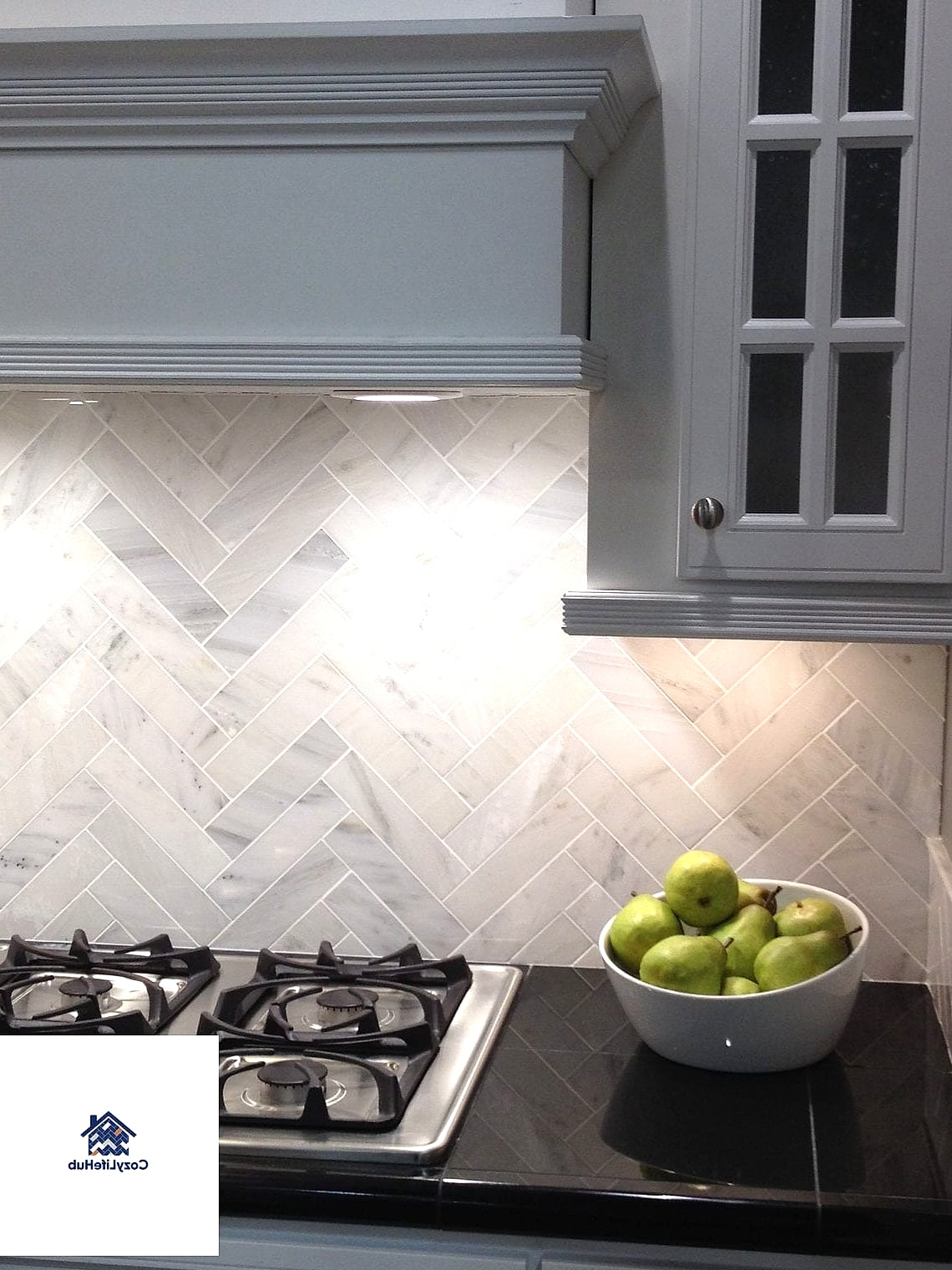
Matching your herringbone backsplash to your countertop material creates a seamless, expensive-feeling kitchen. It works especially well with quartz countertops that mimic marble, since you get the durability of quartz on your work surface with the texture of real or faux marble on the wall. The trick is choosing pieces with similar veining tones so they read as a cohesive set, not a mismatch.
Black and White Marble Herringbone Mix
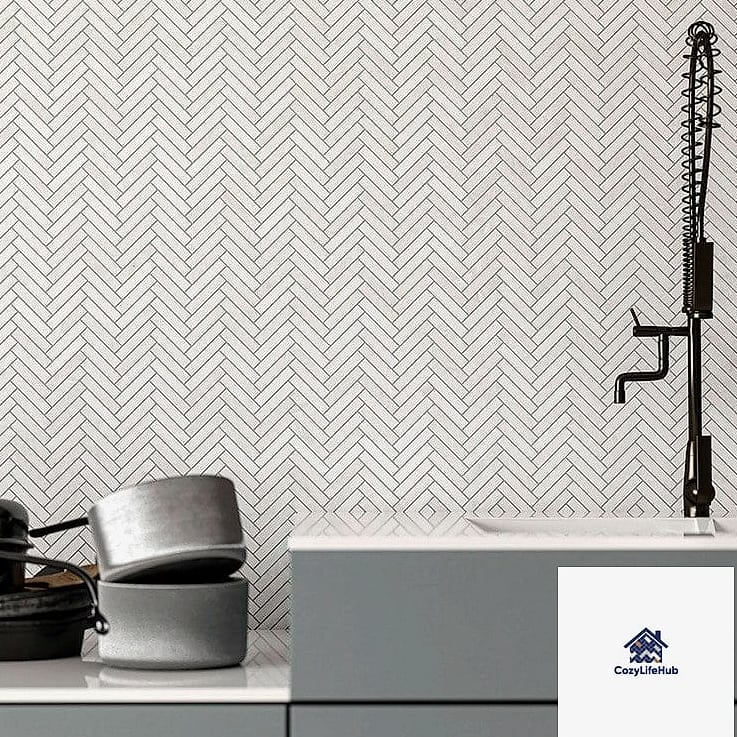
Mixing a dark marble-look tile with a light one in the same herringbone layout adds visual interest without going overboard. This works great in kitchens with black fixtures or matte black hardware since it ties the metal finishes back into the backsplash. It’s bolder than an all-white look, so it fits kitchens that already lean toward moody or dramatic styling.
Herringbone Accent Behind the Range Only
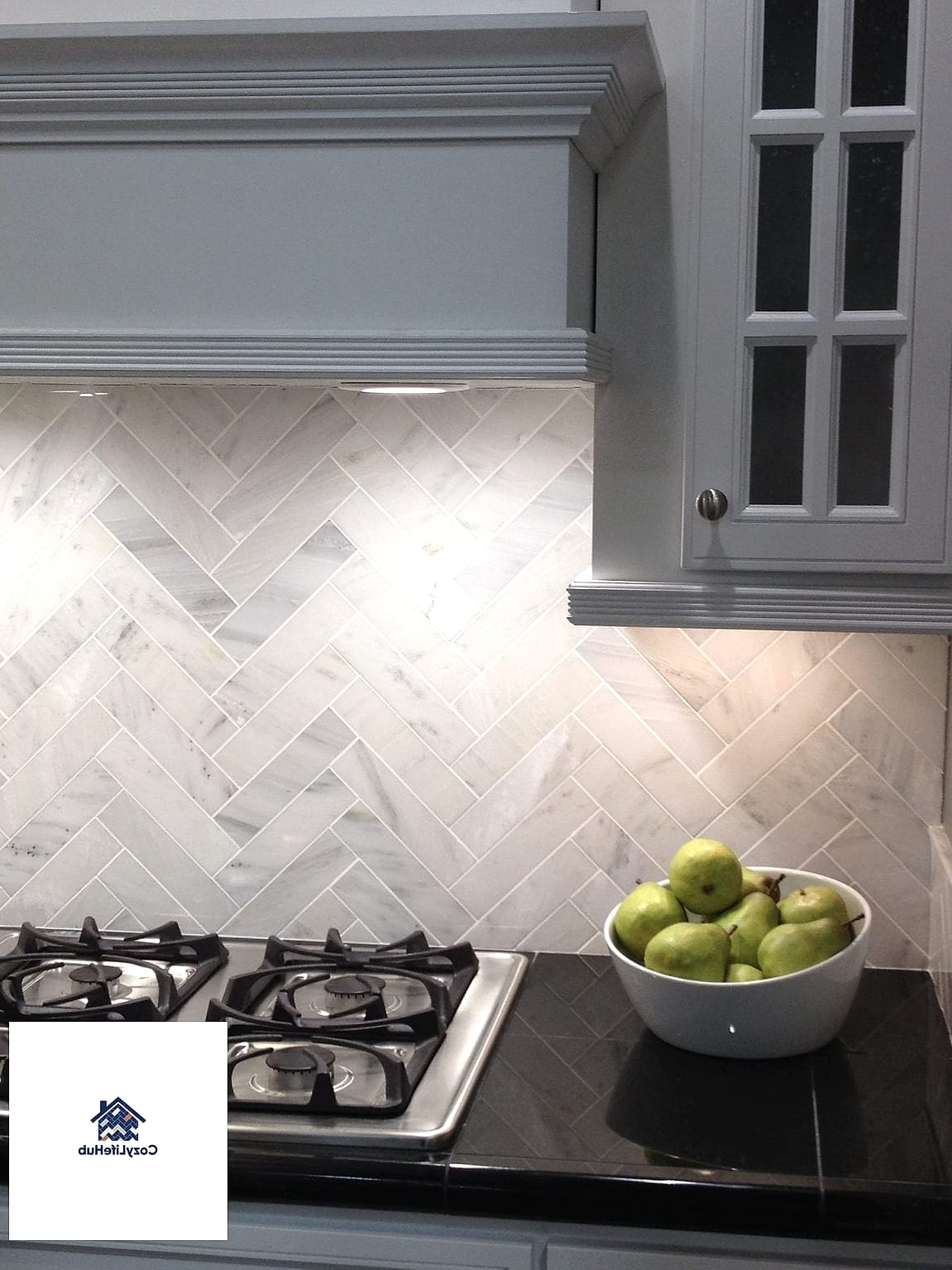
You don’t have to tile the whole wall to get the look. A lot of budget-conscious remodels use herringbone marble just behind the stove or range hood as a focal accent, with simpler subway tile or paint filling in the rest. This cuts material costs significantly while still giving you that showstopper moment right where people look most.
Large-Format Marble Herringbone
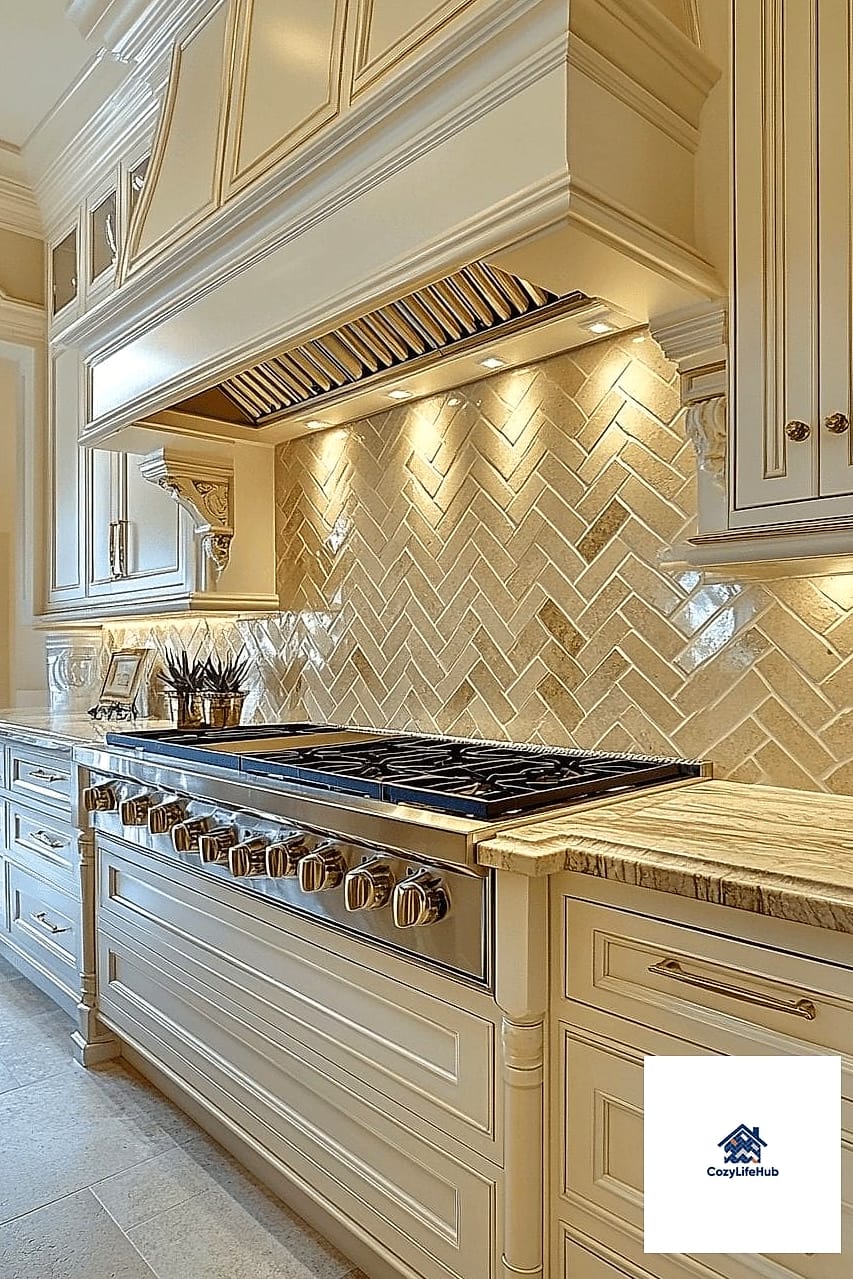
Most herringbone patterns use small tiles, but larger format pieces cut in a herringbone shape create a bolder, more modern take. Fewer grout lines mean easier cleaning and a sleeker overall look. This style tends to suit contemporary kitchens better than traditional ones, so keep your cabinetry and hardware simple if you go this route.
Marble Herringbone with Brushed Brass Accents
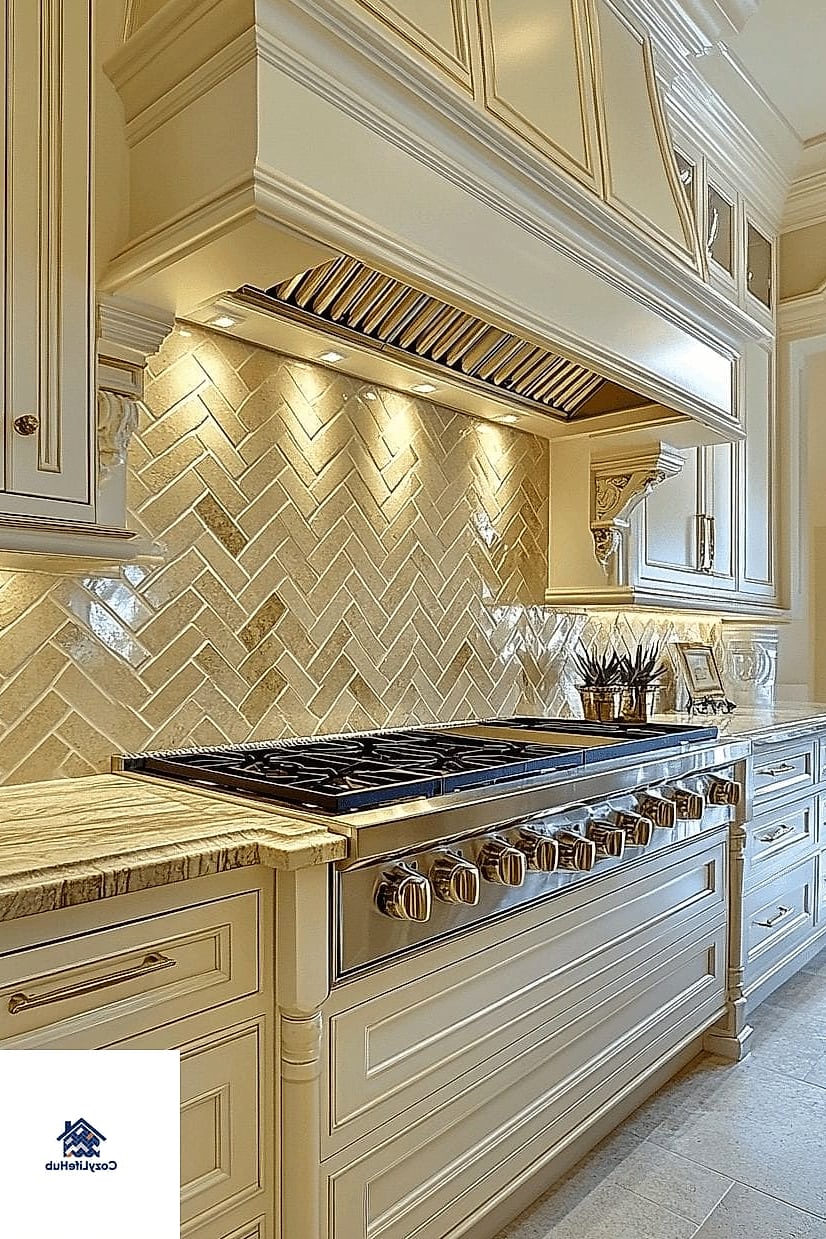
Pairing cool marble tones with warm brushed brass hardware or a brass faucet creates a balanced, high-end feel. The metal catches light against the matte or honed marble finish in a way that feels intentional rather than accidental. This combo shows up constantly in higher-budget kitchen renovations, so it’s an easy way to borrow that aesthetic for less.
Faux Marble Porcelain Herringbone
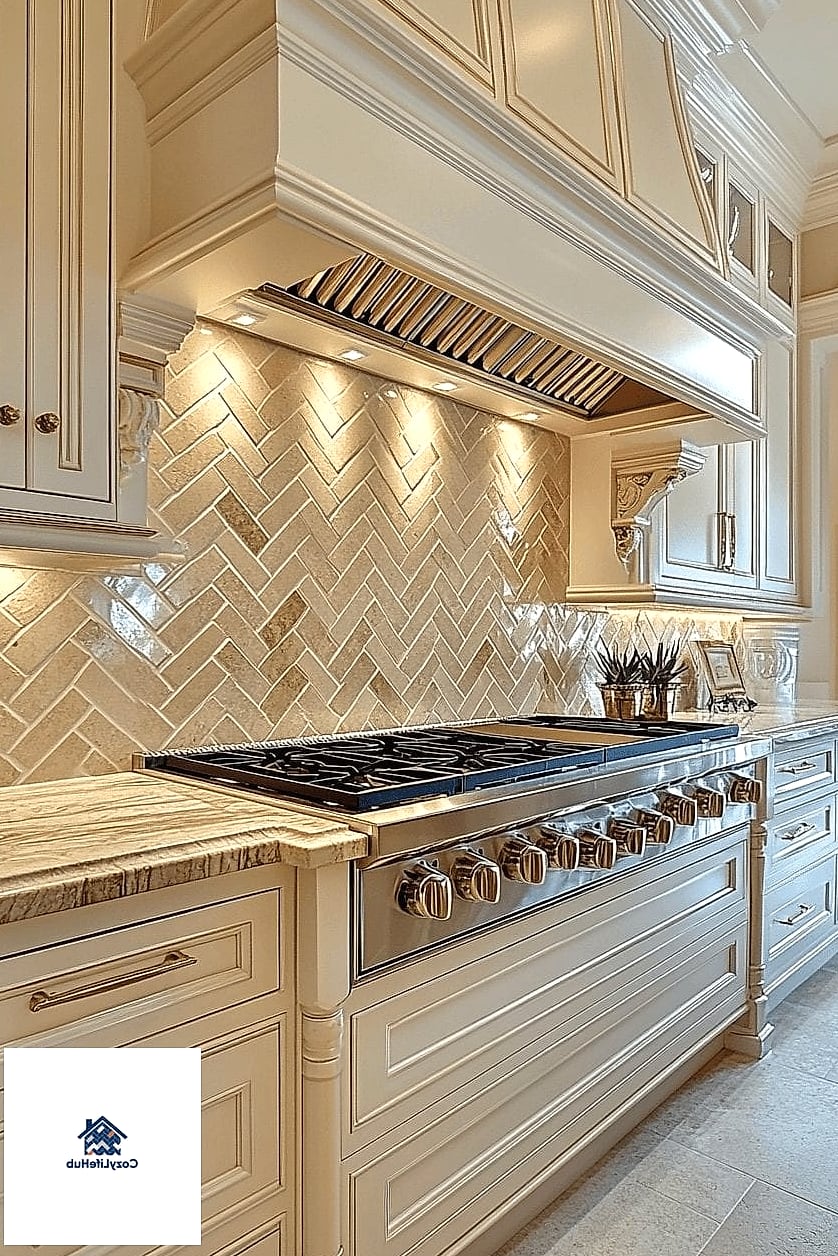
Porcelain tile has come a long way, and a lot of it now mimics marble veining almost perfectly. The advantage is durability. Porcelain resists staining and etching way better than real marble, which matters a ton in a kitchen where acidic foods and spills happen constantly. It’s also usually cheaper per square foot than natural stone.
Vertical Herringbone Layout
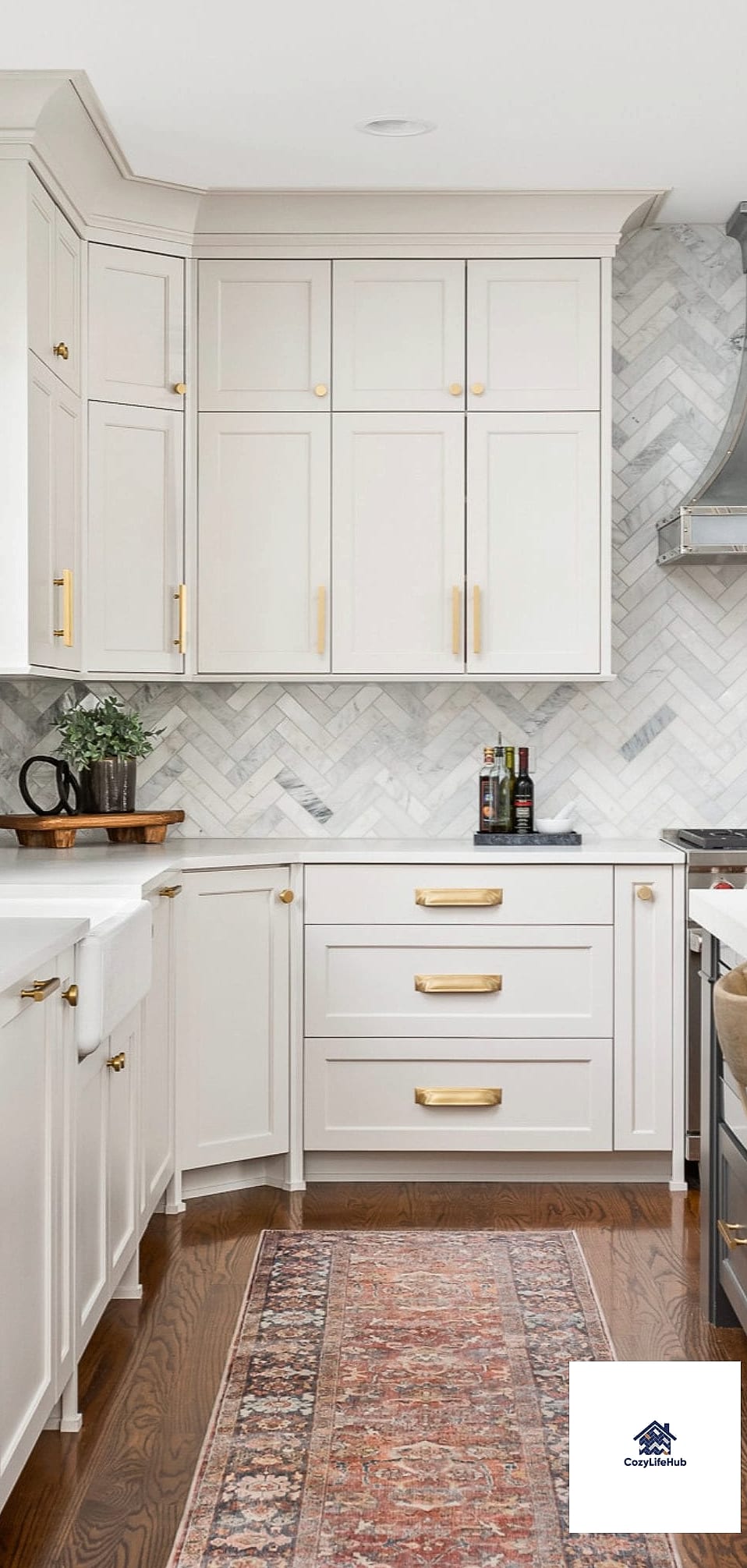
Most herringbone patterns run diagonally, but a vertical herringbone layout draws the eye upward and can make a kitchen with lower ceilings feel a bit taller. It’s a slightly less common choice, which gives it a custom, tailored feel even when you’re using the same basic tile everyone else has access to.
Herringbone with a Marble Mosaic Border
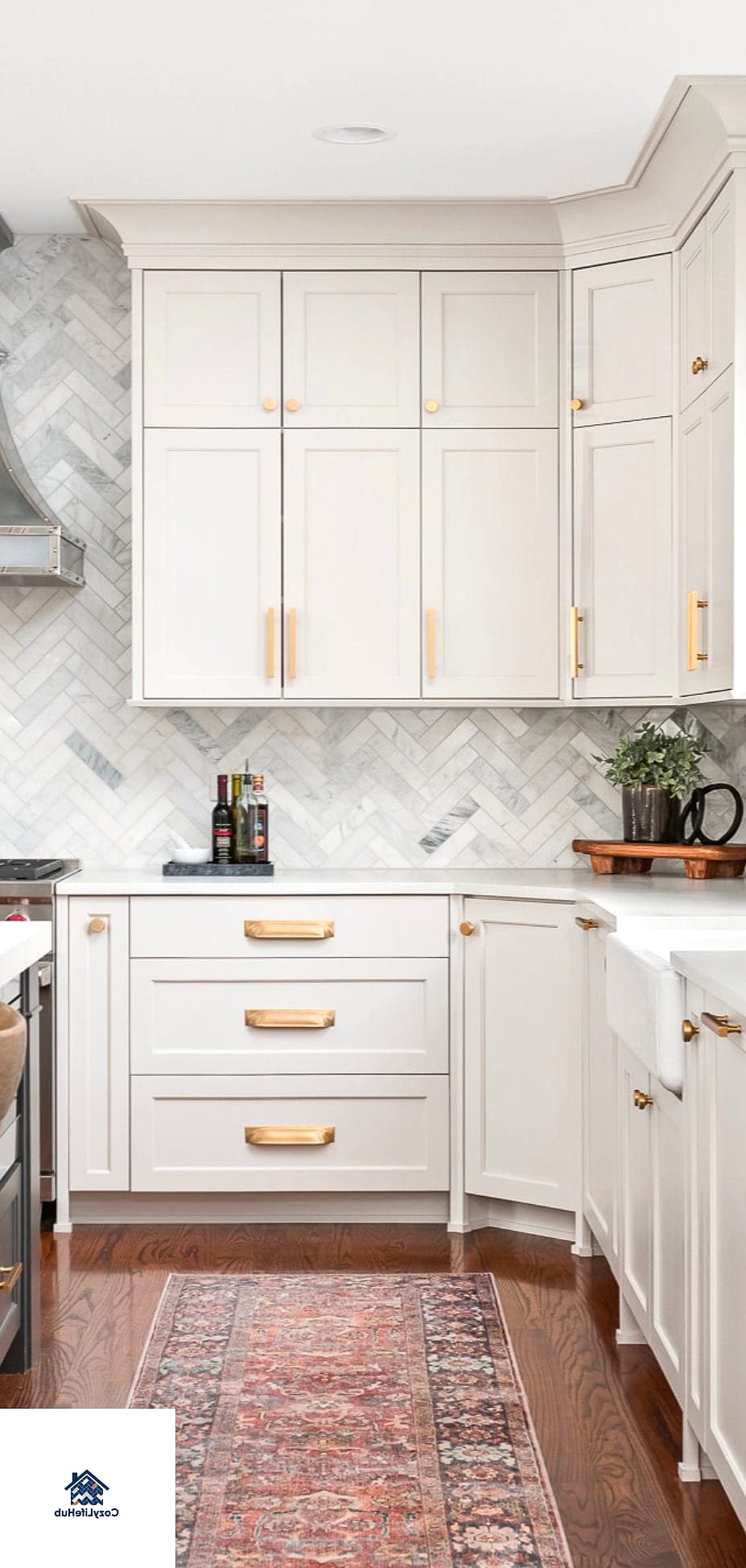
Framing your herringbone backsplash with a thin strip of straight-laid marble mosaic tile gives the whole install a finished, intentional edge. It’s a small detail, but it’s the kind of thing that makes people assume you hired a professional designer. This works especially well around windows or where the backsplash meets open shelving.
Warm Beige Marble Herringbone
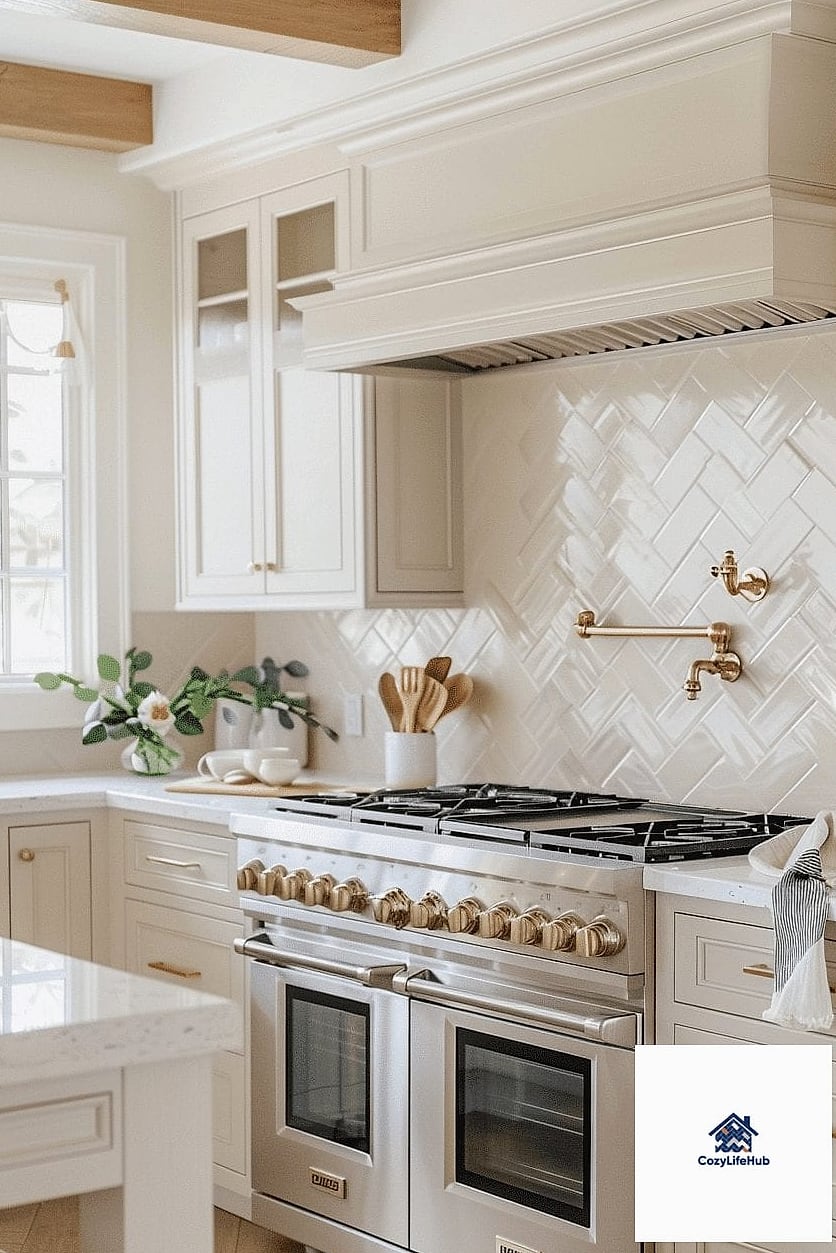
Not every marble look has to be stark white and gray. Warmer beige and cream-toned marble tiles bring a cozier feel and pair beautifully with wood accents and butcher block counters. This is a great option for farmhouse or transitional kitchens that want texture without leaning too cold or clinical.
Herringbone with Under-Cabinet Lighting
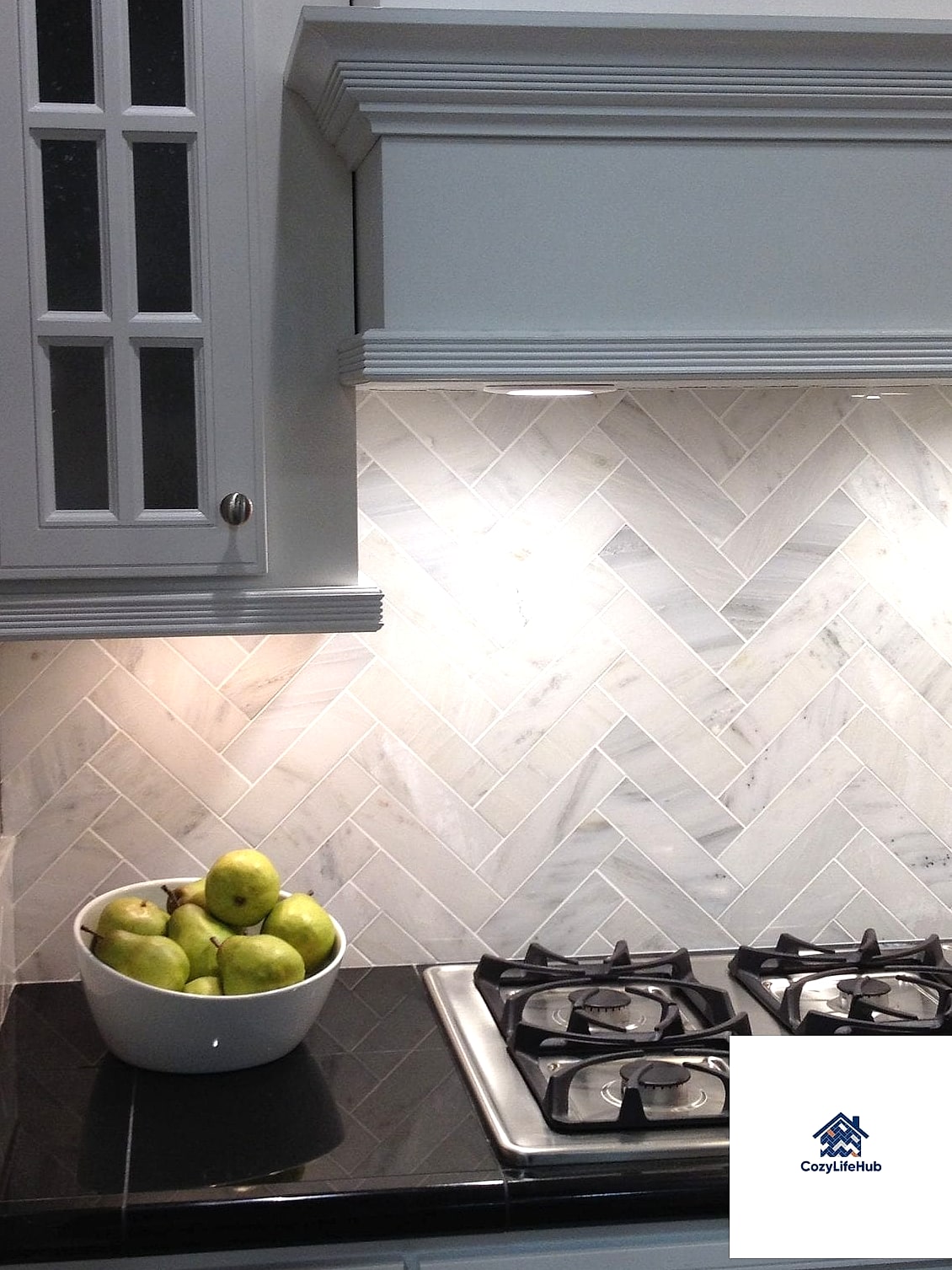
Layered lighting changes everything with a textured backsplash. Adding LED strip lighting under your upper cabinets highlights the veining and the zigzag pattern in a way that flat overhead lighting just can’t. It also makes prep work easier, so it’s practical as much as it’s pretty.
Small Kitchen Herringbone Accent Wall
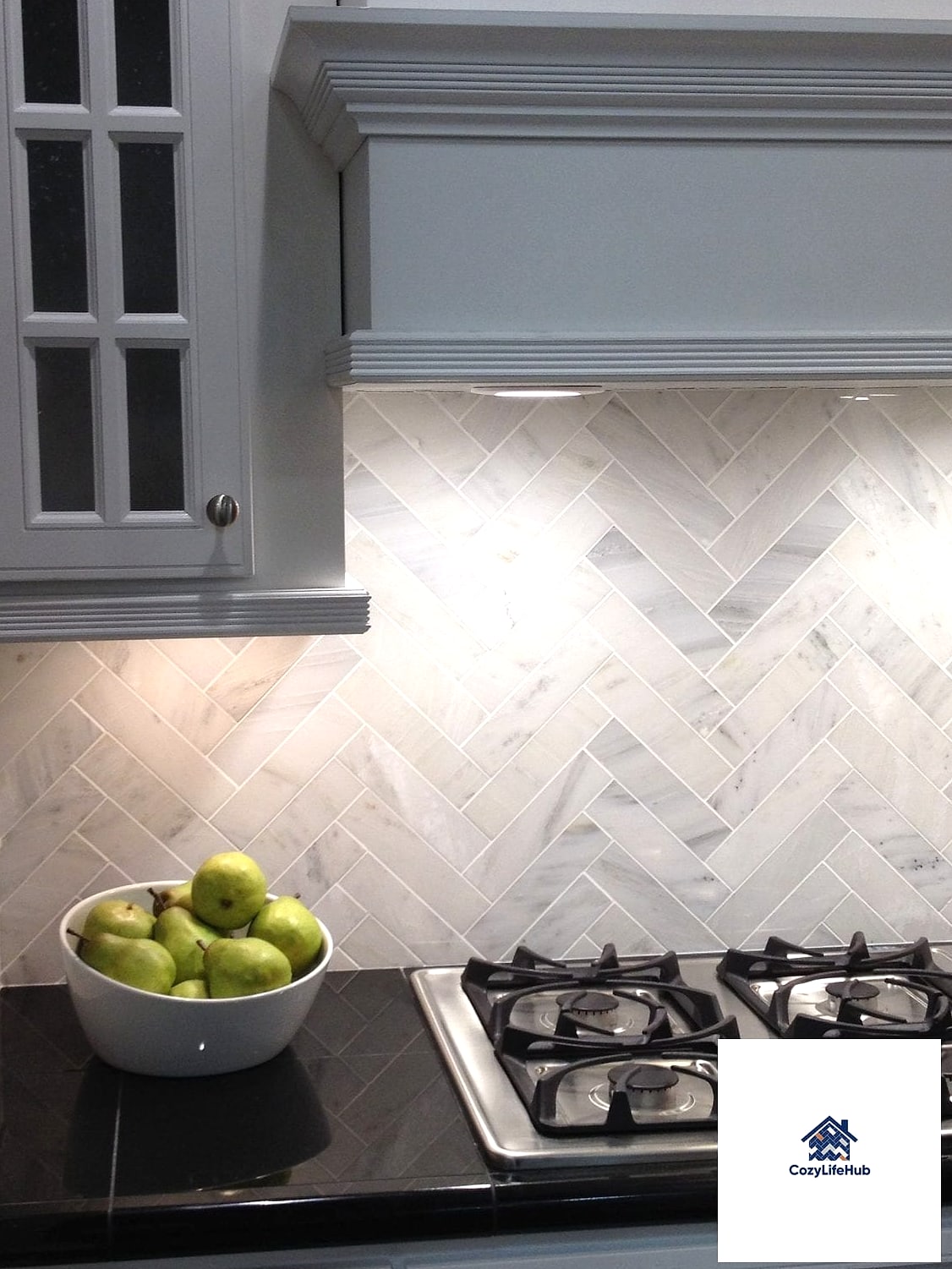
In a small kitchen, a full herringbone backsplash can sometimes feel busy. Using it on just one wall, like behind a small cooktop or a coffee station, gives you the texture and interest without overwhelming a tight space. Keep the surrounding walls in a simple ceramic tile or painted finish to let the accent breathe.
Marble Herringbone Bathroom Backsplash Crossover
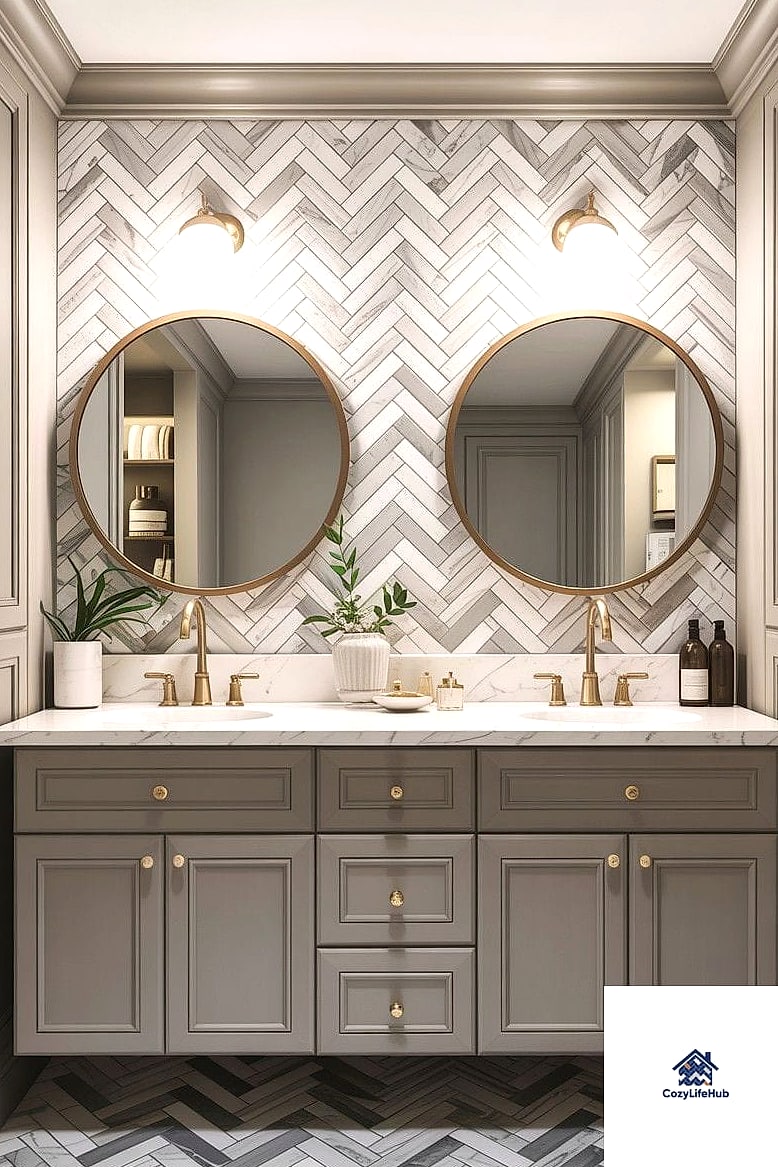
This pattern isn’t just for kitchens. A marble herringbone backsplash behind a bathroom vanity brings the same expensive-looking texture into a smaller space. Pair it with a simple white or black vanity and brushed nickel or matte black fixtures for a clean, spa-like finish that doesn’t require retiling the whole bathroom.
Herringbone with a Honed Matte Finish
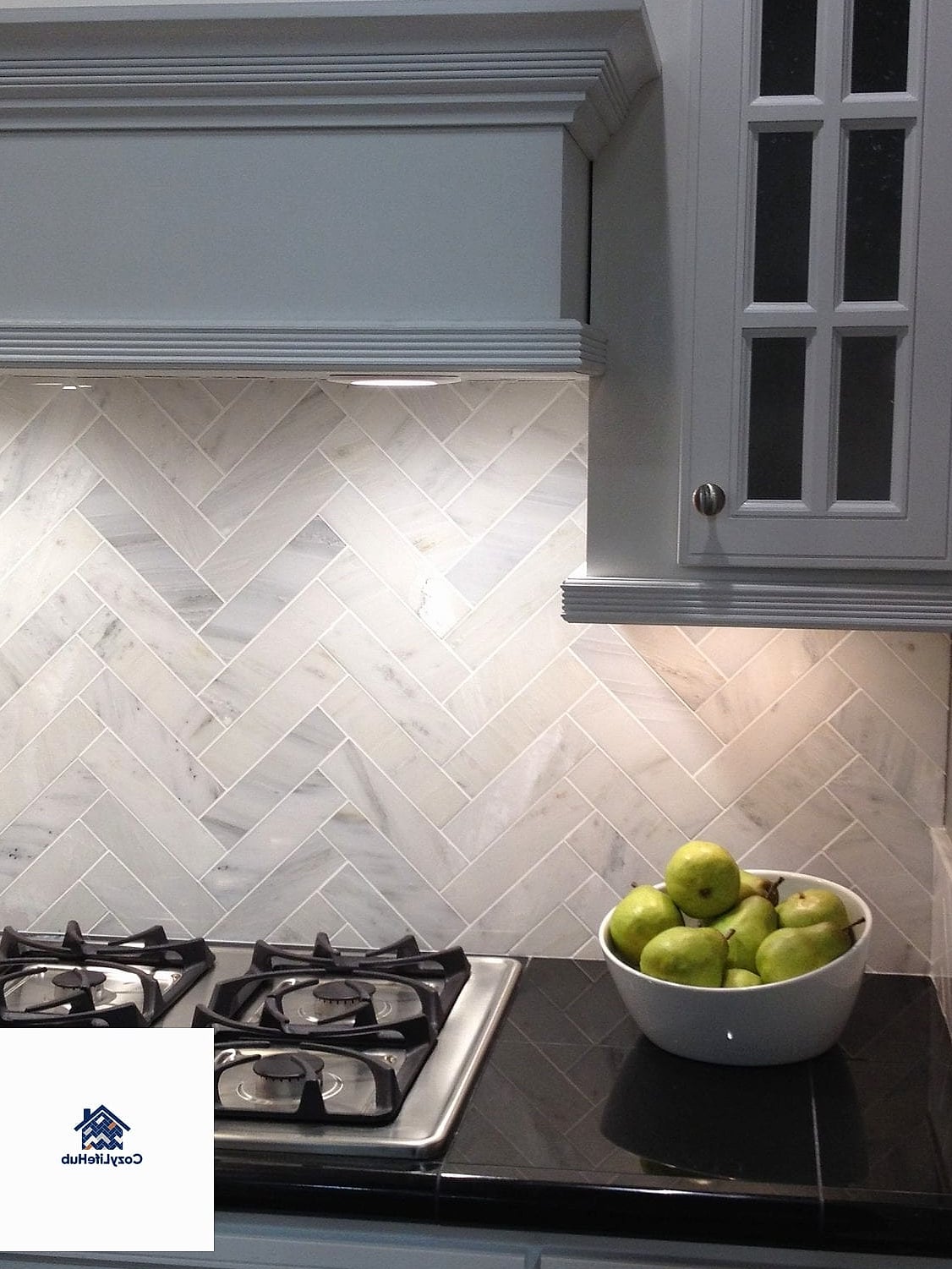
Glossy marble is beautiful, but a honed matte finish hides water spots and fingerprints way better, which matters a lot near a sink. It also gives the backsplash a softer, more understated look compared to polished marble. This finish choice is a favorite among people who want the material without the constant wiping down.
DIY Marble Herringbone with Tile Templates
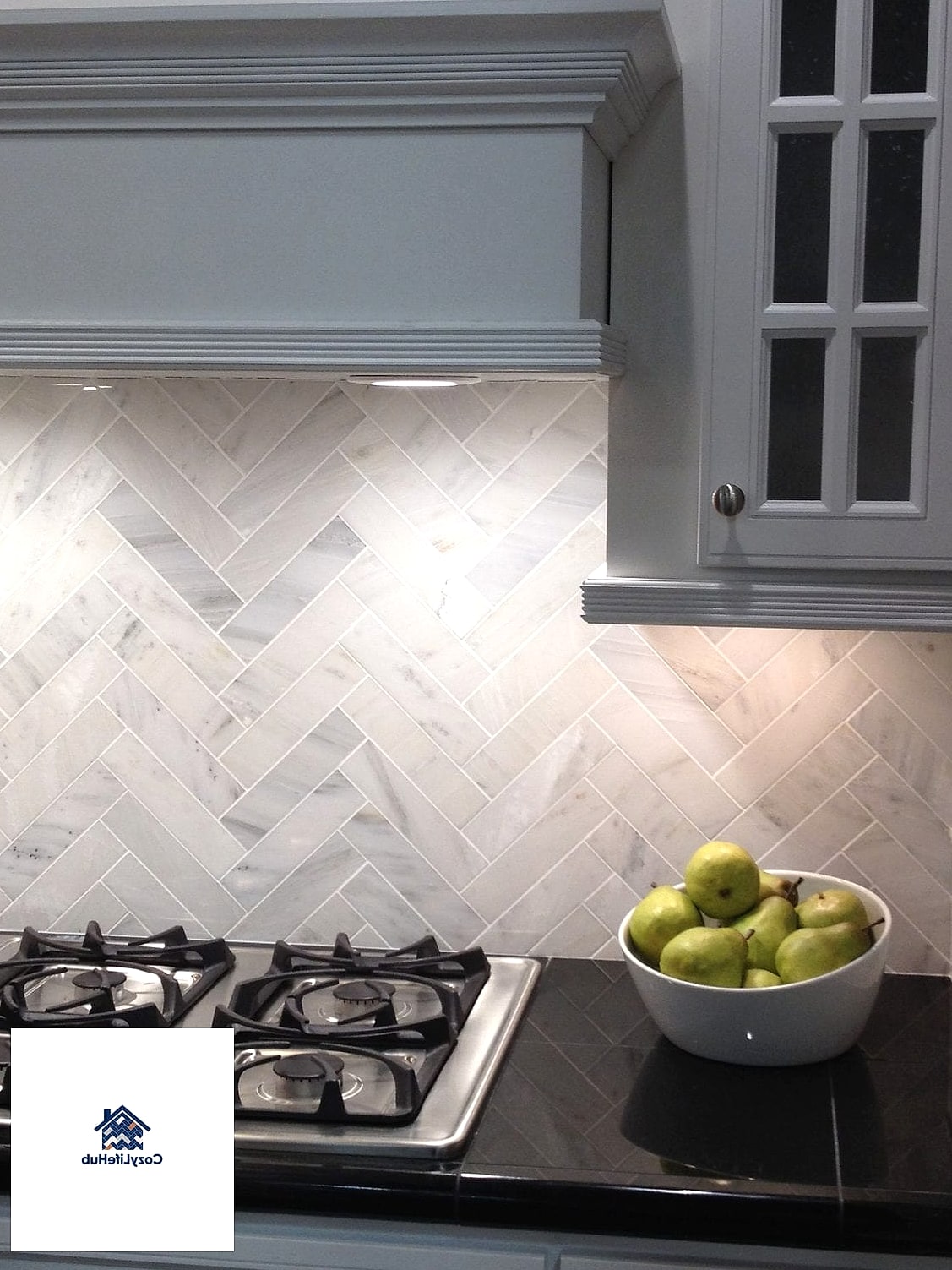
If you’re tackling this yourself, using cardboard or paper templates to map out your herringbone layout before you start cutting tile saves a ton of frustration. It’s not glamorous, but it’s the difference between a pattern that lines up cleanly and one that drifts crooked by the time you reach the outlet cutouts. Plenty of DIYers get professional-looking results this way with patience and a good wet saw.
Herringbone Backsplash with a Marble Slab Ledge
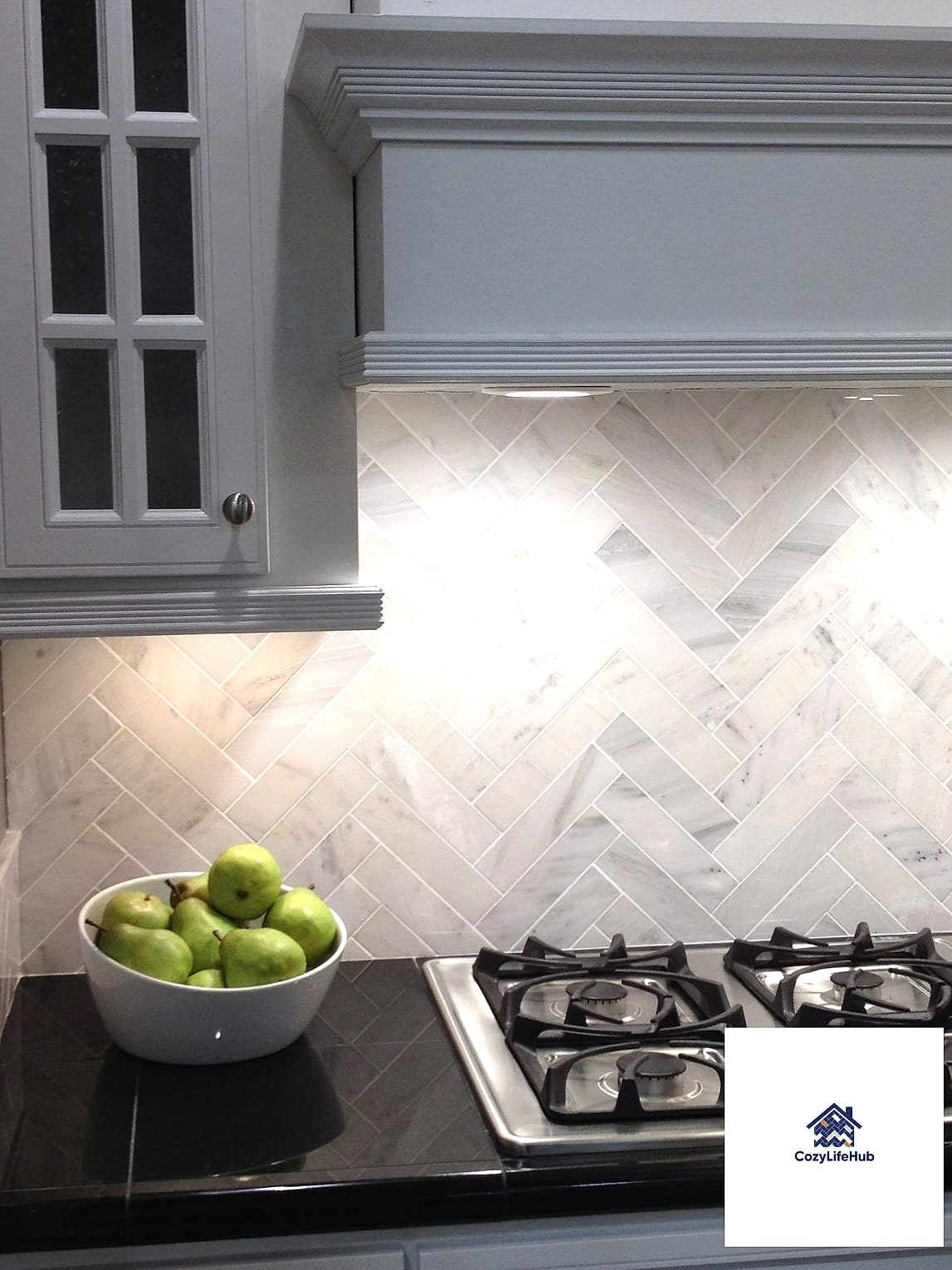
Adding a thin marble slab as a ledge or shelf at the base of your herringbone backsplash, right above the counter, gives you a spot for oils, salt, or small plants. It also creates a subtle break between the countertop and the tile pattern, which adds depth to the whole wall. This is a smaller material investment than a full slab backsplash but gives a similar luxury touch.
Herringbone Marble in a Neutral Color Palette Kitchen
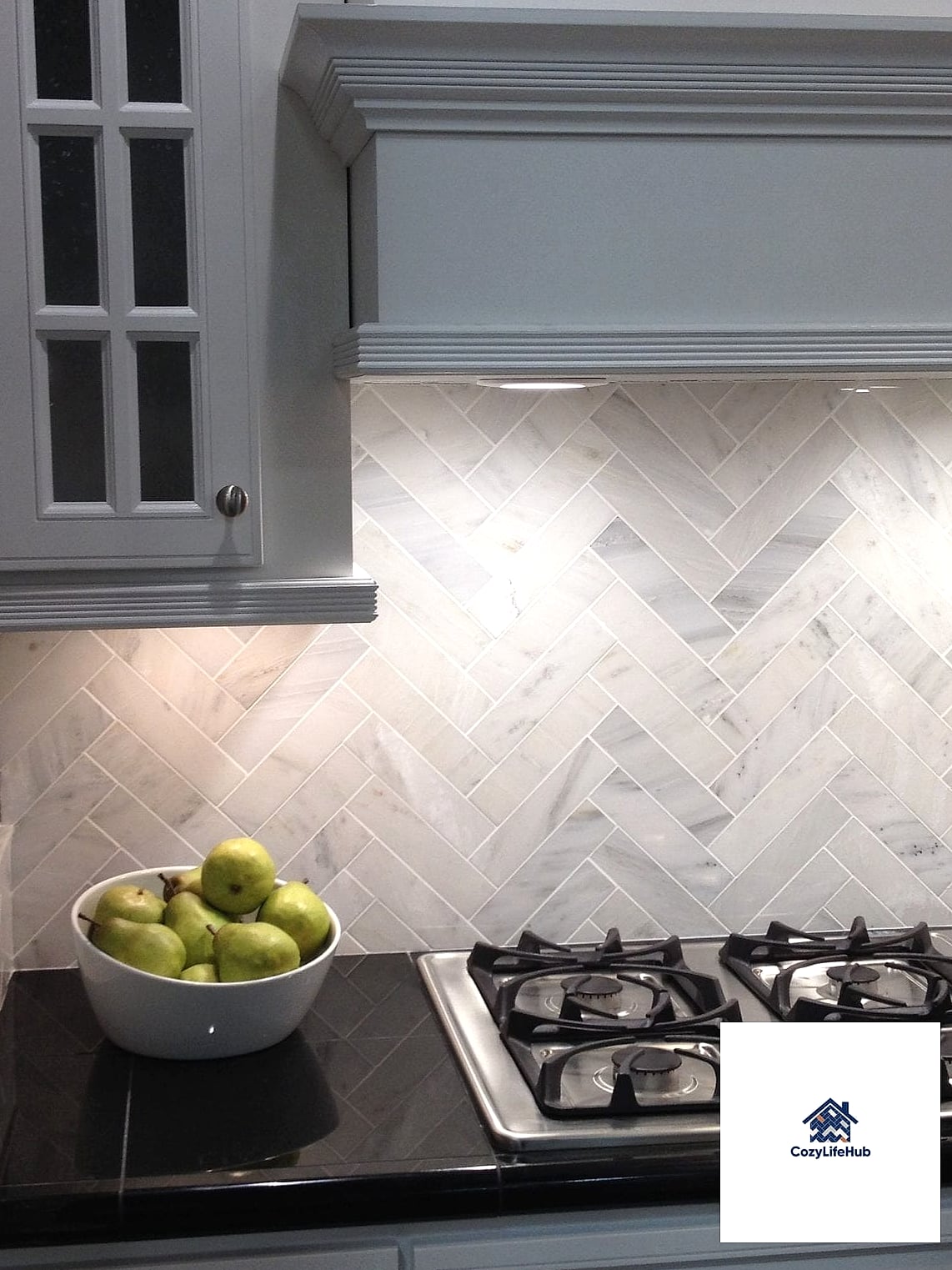
For kitchens built around a neutral color palette, whether that’s greige cabinets, warm whites, or soft taupe walls, a marble herringbone backsplash ties everything together without introducing a new color. The texture does the visual work instead of a bold hue, which keeps the space feeling calm and cohesive. It’s a safe choice if you’re worried about committing to a trend that won’t age well.
Getting this look doesn’t have to mean tearing your budget apart. Between peel-and-stick options, porcelain lookalikes, and smart accent placement, there’s a version of a marble herringbone backsplash that fits pretty much any kitchen and any price point. Start with the wall or area that gets the most attention, whether that’s behind your range or your open shelving, and build out from there.