14 Marble Backsplash Ideas That Are Absolutely Worth It
- Classic Carrara Slab Backsplash
- Herringbone Marble Tile
- Marble Subway Tile
- Bookmatched Marble Panels
- Marble Mosaic Tile
- Marble Accent Behind the Range
- Green Marble Backsplash
- Black Marble Backsplash
- Marble Slab with Waterfall Edge Continuation
- Marble Tile with Brass Inlay
- Marble Basketweave Pattern
- Honed Marble for a Matte Look
- Peel-and-Stick Marble Backsplash
- Marble Backsplash with Open Shelving
14 Marble Backsplash Ideas That Are Absolutely Worth It
Marble has a way of making a kitchen look pulled together the second you walk in. There’s something about those soft, moving veins that no printed tile or quartz slab quite manages to fake. It’s not the cheapest option out there, and it definitely asks a little more of you when it comes to upkeep, but for a lot of homeowners, that trade-off is worth it every single time.
If you’re on the fence about whether marble backsplash ideas are practical or just pretty, I get it. Marble has a reputation for being high-maintenance and precious. But once you see the range of ways people are using it now, from full slab walls to small herringbone accents, you start to realize there’s a version of this stone for almost every budget and lifestyle. Here are fourteen marble backsplash ideas that are absolutely worth it.
Classic Carrara Slab Backsplash
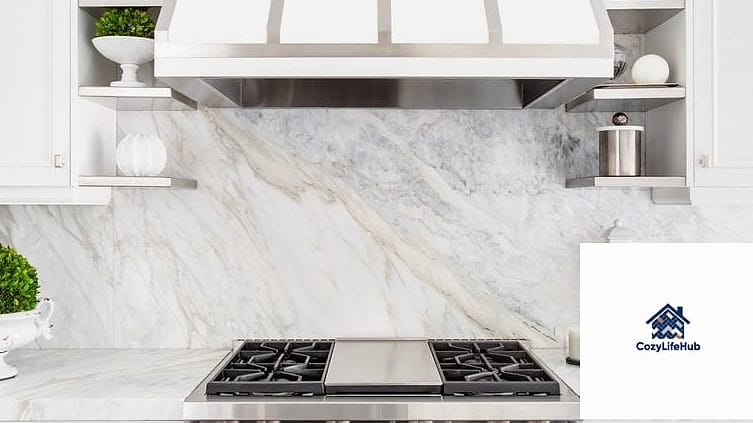
This is the look most people picture when they hear “marble backsplash,” and for good reason. A single slab of Carrara marble, with its soft gray veining on a white background, stretches from the countertop to the underside of the upper cabinets or even up to the ceiling.
It works especially well in kitchens that already lean traditional or transitional, though I’ve seen it pull off a surprisingly modern look too when paired with flat-panel cabinets. Because it’s one continuous piece, there’s no grout line to worry about, which makes cleanup a lot simpler. The main thing to know going in is that slab installations cost more upfront than tile, so this is more of a splurge move than a weekend project.
Herringbone Marble Tile
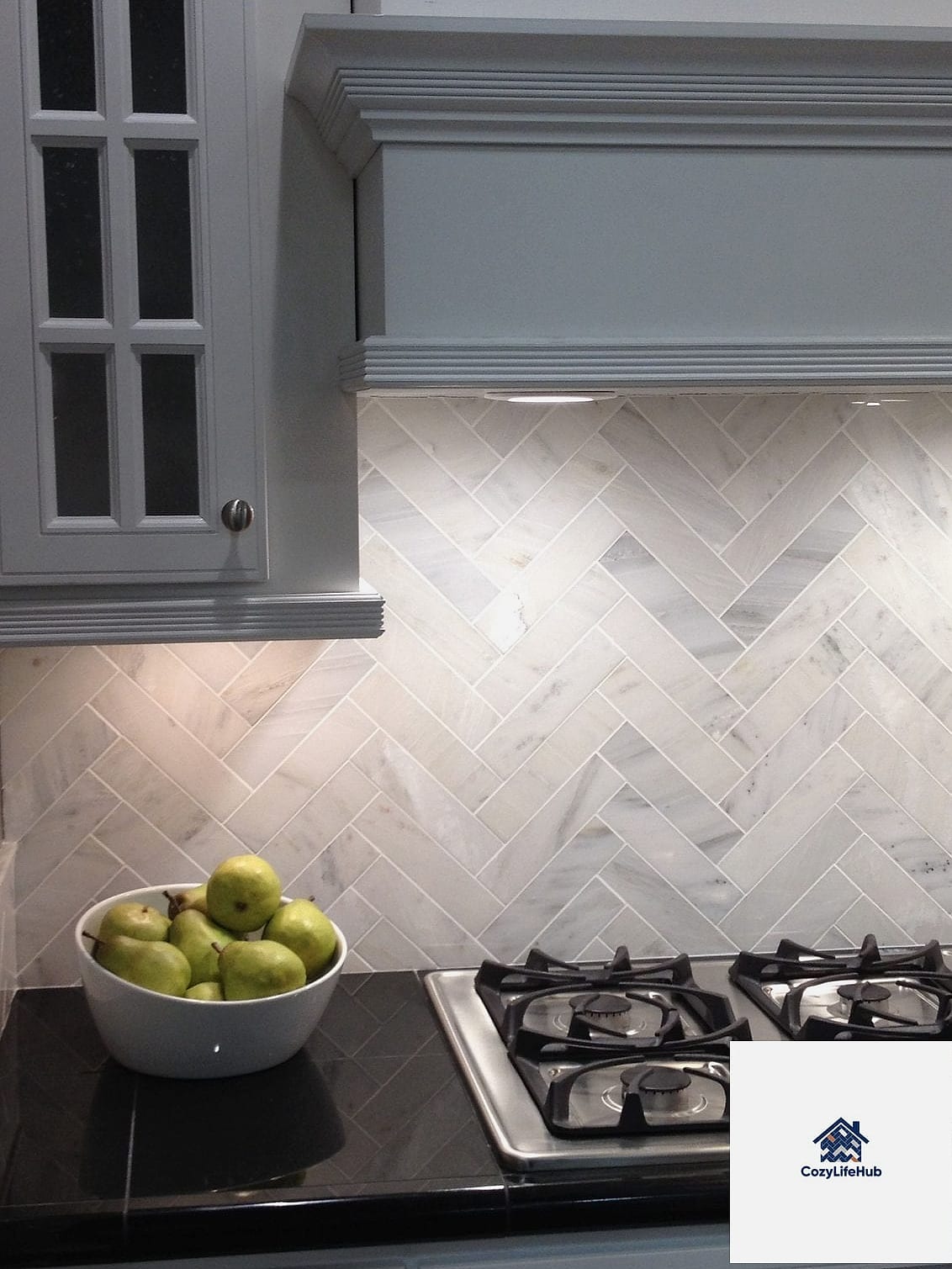
Herringbone patterns add movement to a wall in a way that flat tile just can’t. Small marble pieces laid at an angle create that zigzag effect that photographs beautifully and looks even better in person.
This works great behind a stove as a focal point, even if the rest of your backsplash is simpler tile. It’s a bit more labor-intensive to install because of all the cuts involved, so budget extra for labor if you’re hiring it out. The payoff is a backsplash that feels custom without going full slab.
Marble Subway Tile
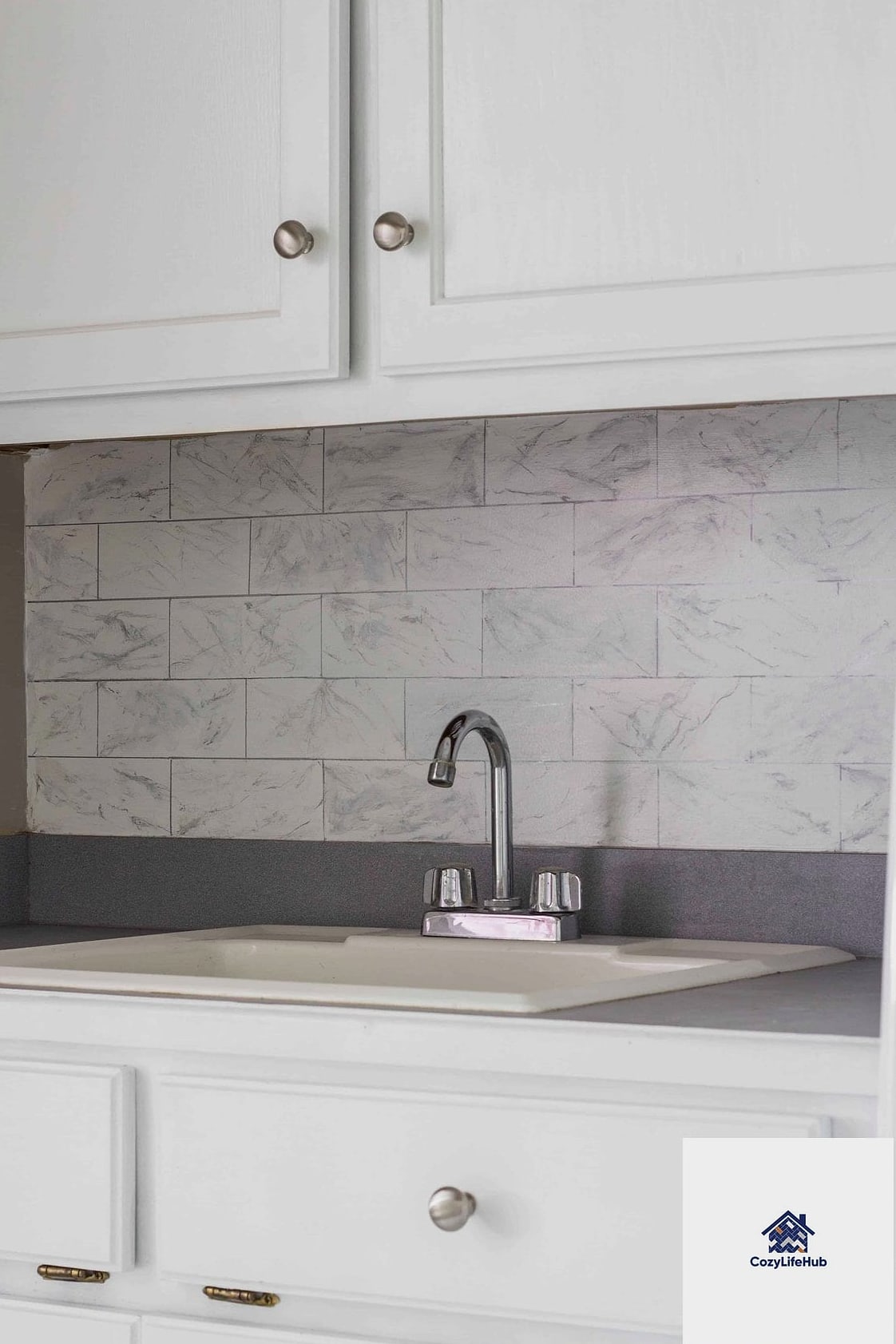
Subway tile in marble gives you that familiar, timeless shape but with the natural texture and shine that ceramic or porcelain just can’t replicate. It’s a nice middle ground for people who want the marble look without committing to a full slab budget.
I like this option for smaller kitchens where you want something classic that won’t compete with other design choices. Marble subway tile also comes in different finishes, honed for a softer, matte look or polished for more shine, so you can adjust the vibe depending on your space.
Bookmatched Marble Panels
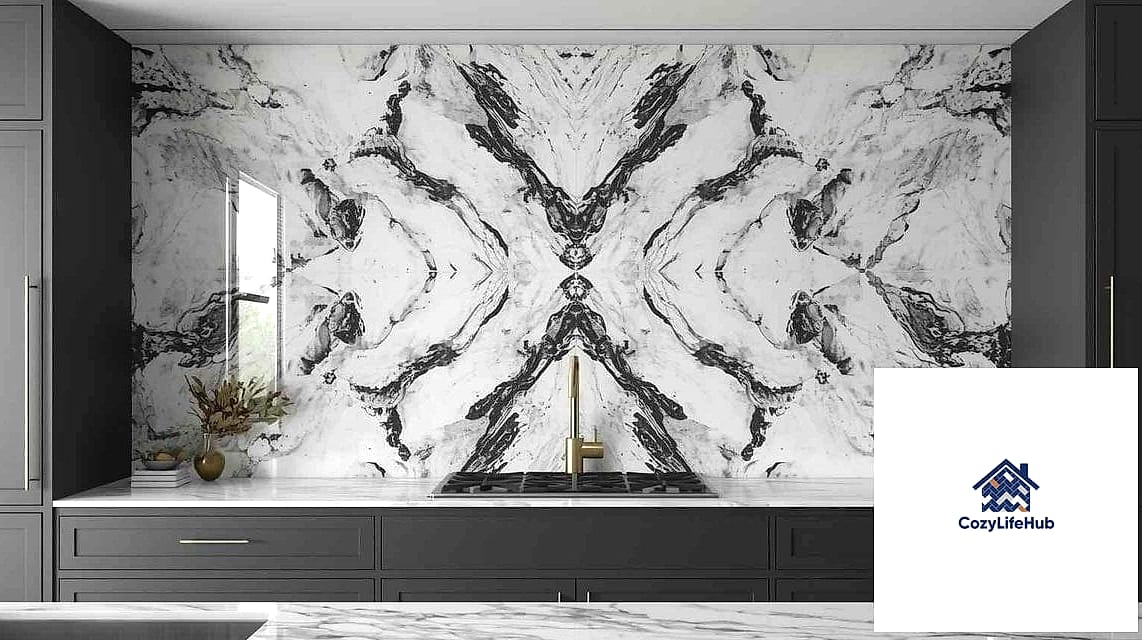
Bookmatching is when two slabs are cut from the same block and mirrored so the veining creates a symmetrical, almost artistic pattern where they meet. It’s a technique typically saved for statement walls, and a backsplash is honestly one of the best places to try it.
This tends to show up in higher-end kitchen renovations because it requires careful slab selection and precise installation. If your budget allows for it, though, it turns your backsplash into genuine wall art. Just make sure whoever’s cutting the stone has experience with bookmatching specifically.
Marble Mosaic Tile
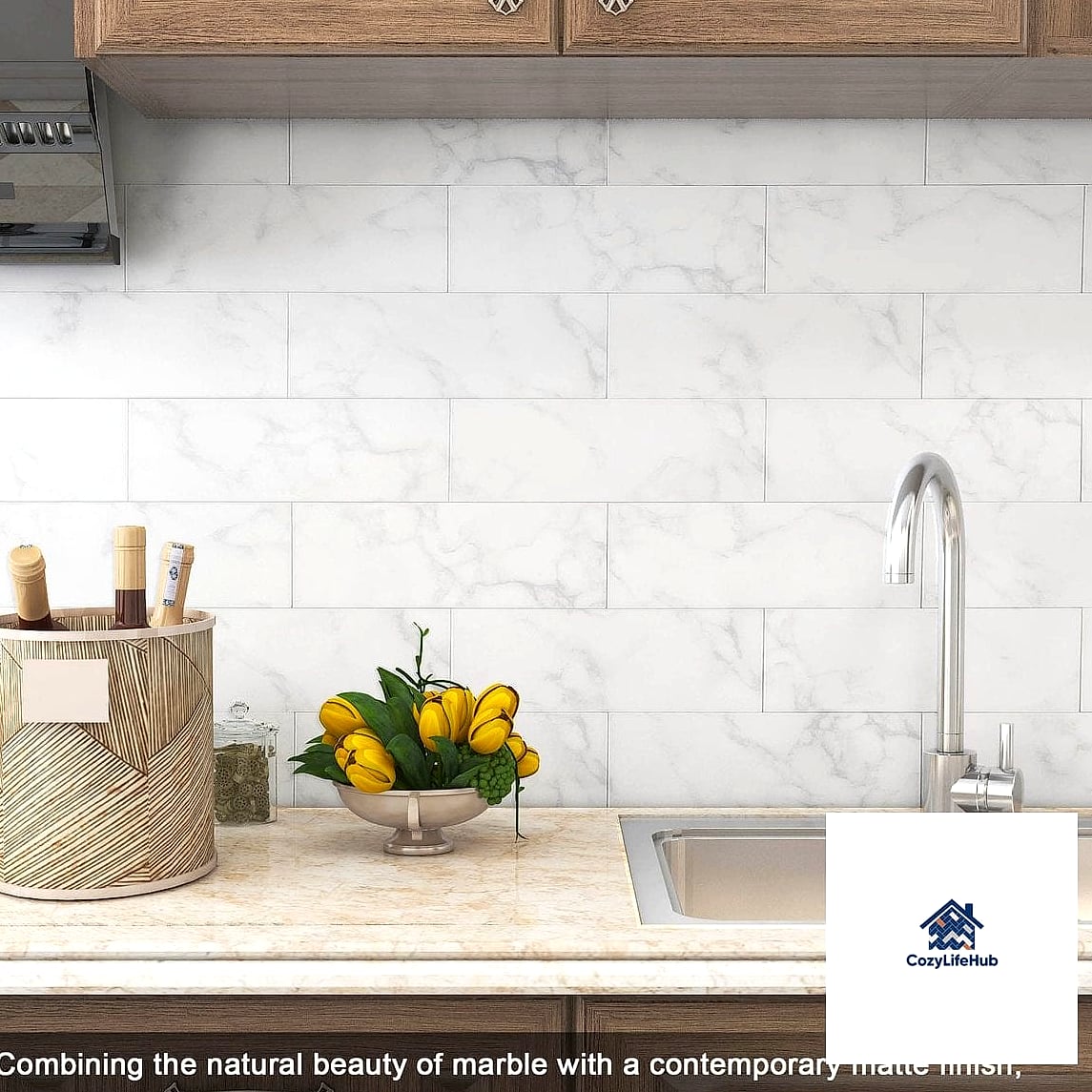
Mosaic marble tiles, usually small squares, hexagons, or basketweave shapes mounted on mesh sheets, bring texture and detail to a backsplash without the cost of full slabs. They’re also fairly forgiving for DIY installation since the sheets go up faster than individual tiles.
This is a solid pick for bathroom vanities too, not just kitchens, if you’re trying to bring a similar look throughout your home. Because there are more grout lines with mosaic patterns, expect slightly more maintenance than you’d get with larger tile or slab.
Marble Accent Behind the Range
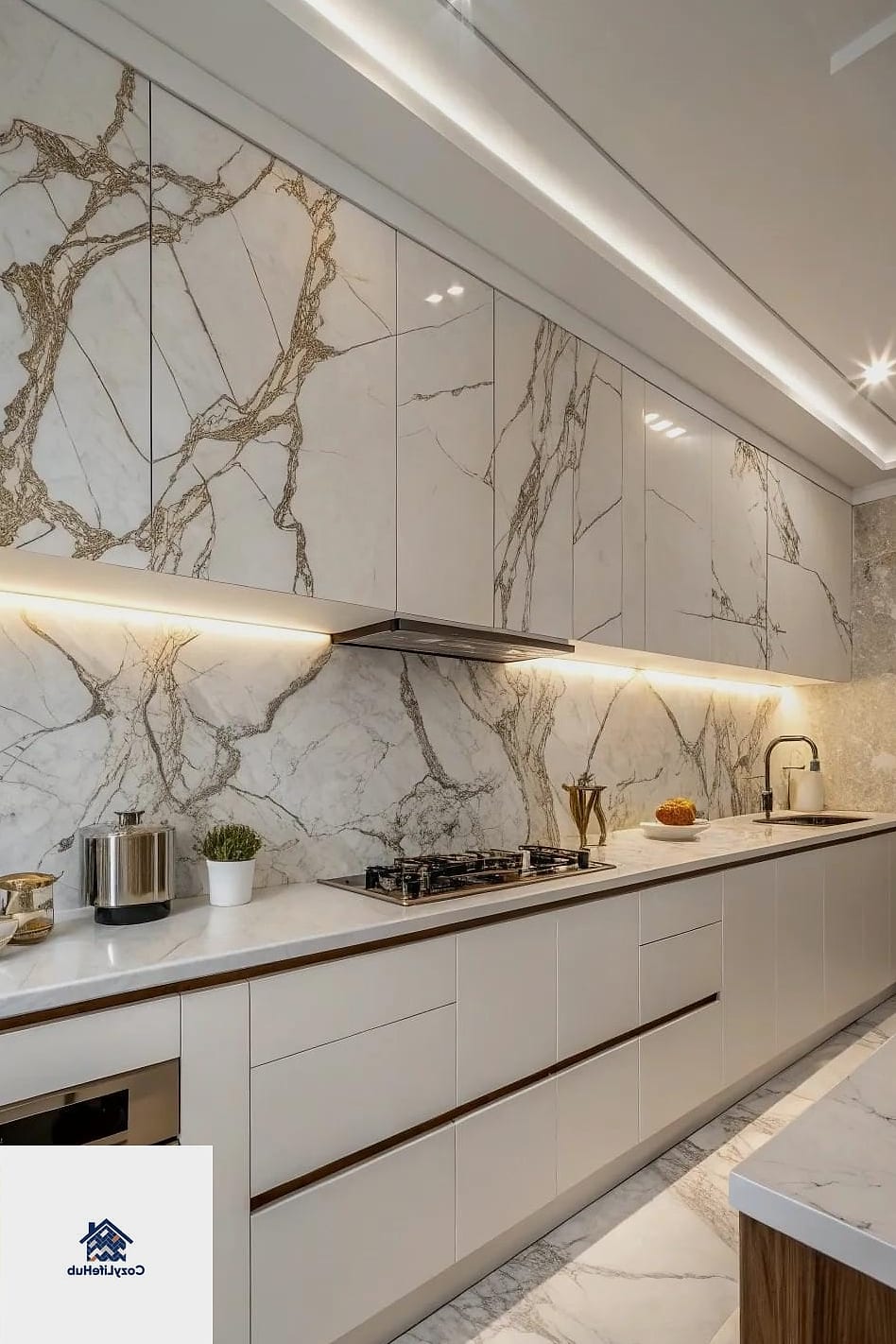
Instead of covering your whole backsplash in marble, you can use it just behind the stove as a statement piece, with simpler tile or paint everywhere else. This approach lets you get the marble look in the spot where it’ll be seen most, without the full cost.
It’s a smart budget-friendly option and honestly one I recommend a lot to people who love the look but aren’t ready to commit their whole kitchen to natural stone. Pairing it with open shelving on either side tends to make the whole wall feel more intentional.
Green Marble Backsplash
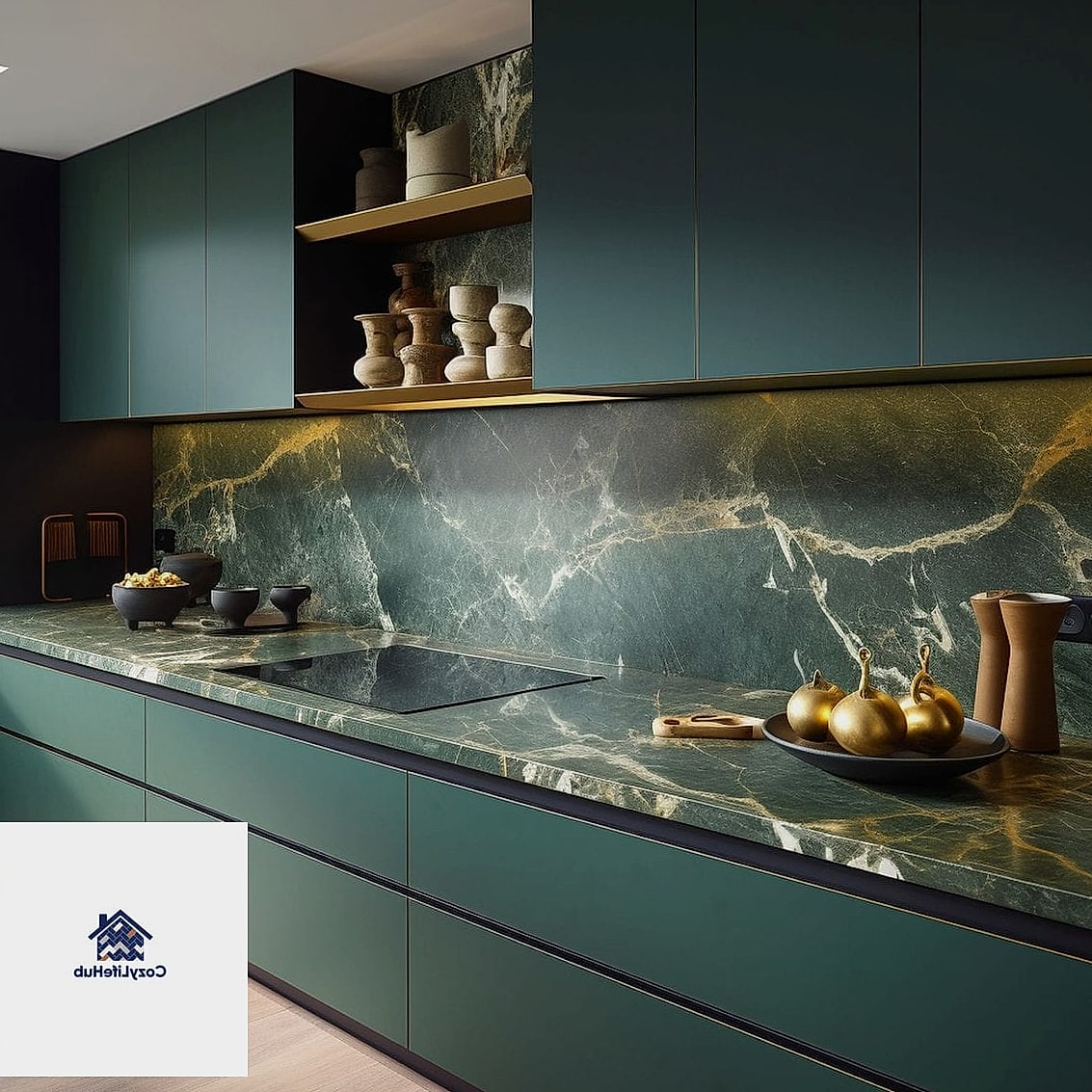
Not every marble backsplash has to be white and gray. Green marbles, like Verde Guatemala or Rainforest Green, bring a moodier, more dramatic feel to a kitchen. The deep, swirling patterns pair beautifully with brass hardware and warm wood tones.
This is a great choice if you’re leaning into a more maximalist or nature-inspired kitchen design. It reads as bold without being trendy in a way that’ll feel dated in five years, since green stone has been used in interiors for centuries.
Black Marble Backsplash
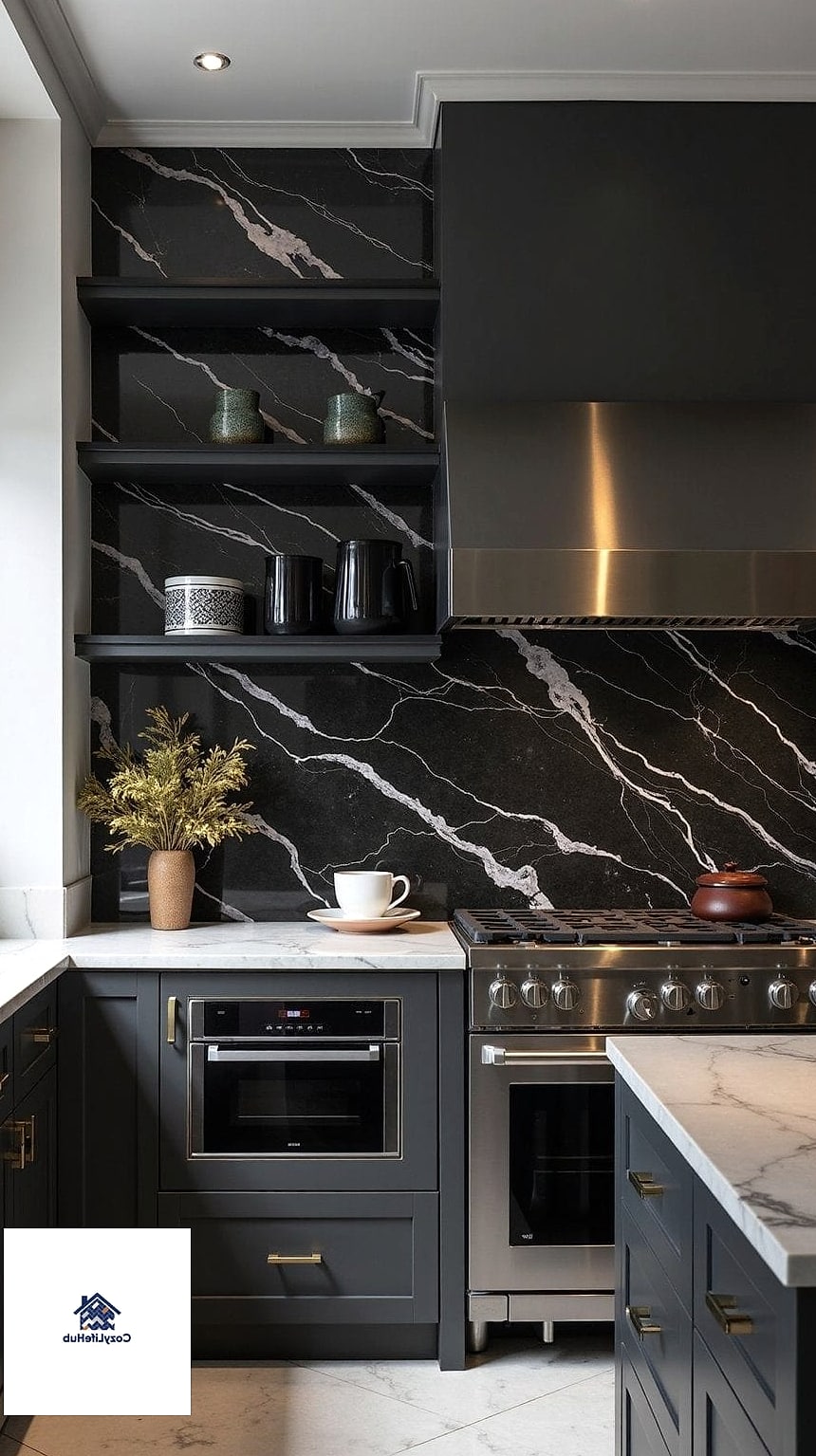
Black marble, especially varieties like Nero Marquina with their white veining, creates serious contrast against white or light wood cabinetry. It’s a striking choice for anyone who wants their kitchen to feel a little more dramatic or moody.
Because it’s darker, it tends to hide small water spots better than white marble, which is a nice practical bonus. Pair it with matte black fixtures or brushed brass for a look that feels intentional rather than random.
Marble Slab with Waterfall Edge Continuation
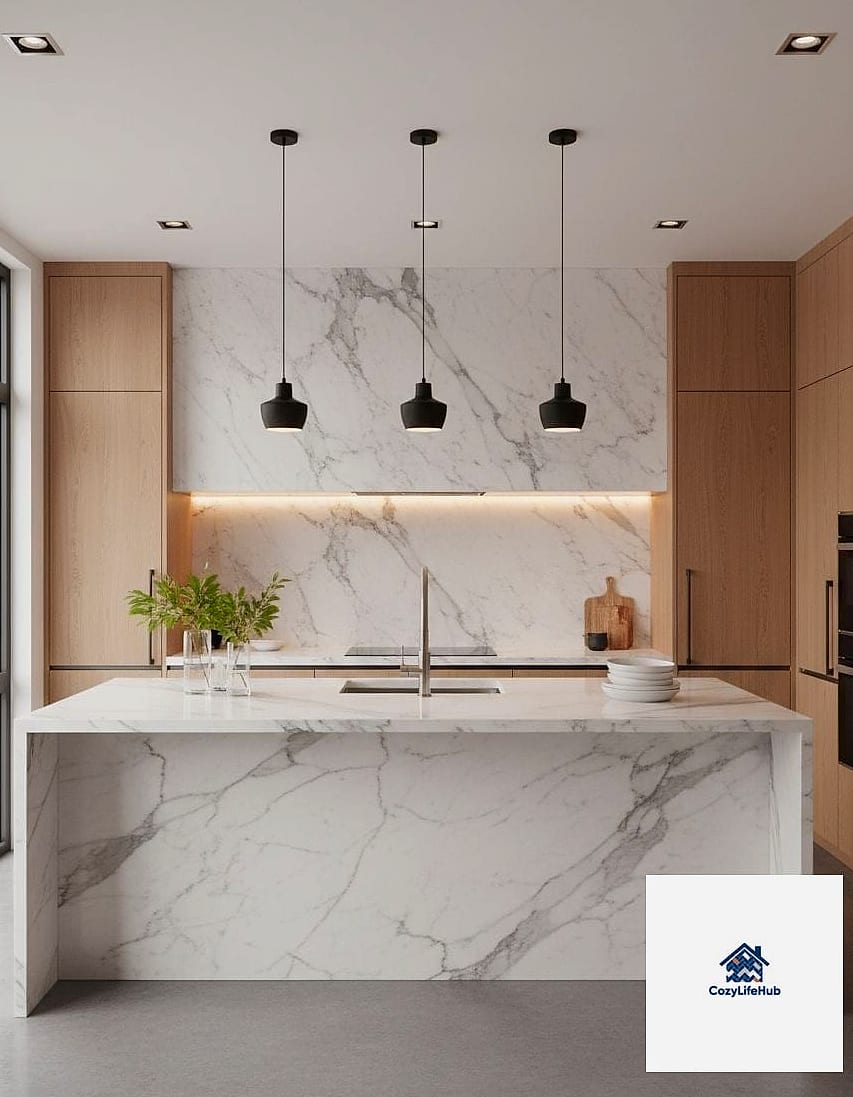
If you already have marble countertops with a waterfall edge, extending that same slab up the backsplash creates a seamless, wraparound effect. Your eye just follows the stone from the counter up the wall without interruption.
This is a more advanced and expensive install, since it requires careful slab matching so the veining flows naturally. It’s the kind of detail that makes a kitchen feel custom-designed rather than pieced together from a catalog, and it’s often a highlight in higher-end remodels.
Marble Tile with Brass Inlay
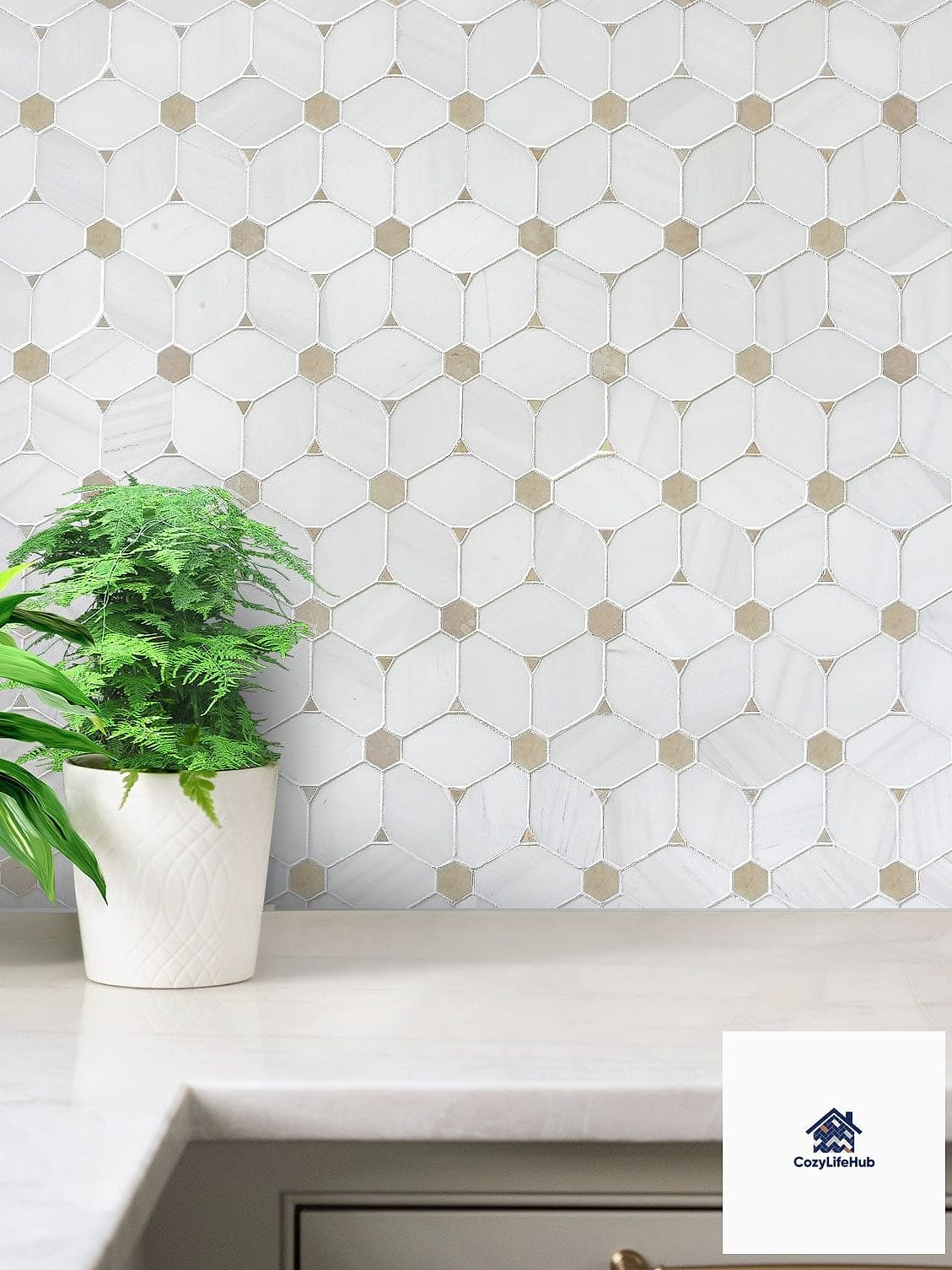
Adding thin brass or metal strips between marble tiles creates a subtle grid pattern that catches the light. It’s a detail that feels a little unexpected and elevates a fairly classic material into something more unique.
This works particularly well in kitchens that already have brass or gold fixtures, since it ties the metal tones together. It’s not the easiest DIY project, so this one’s usually best left to an experienced tiler who’s worked with metal inlay before.
Marble Basketweave Pattern
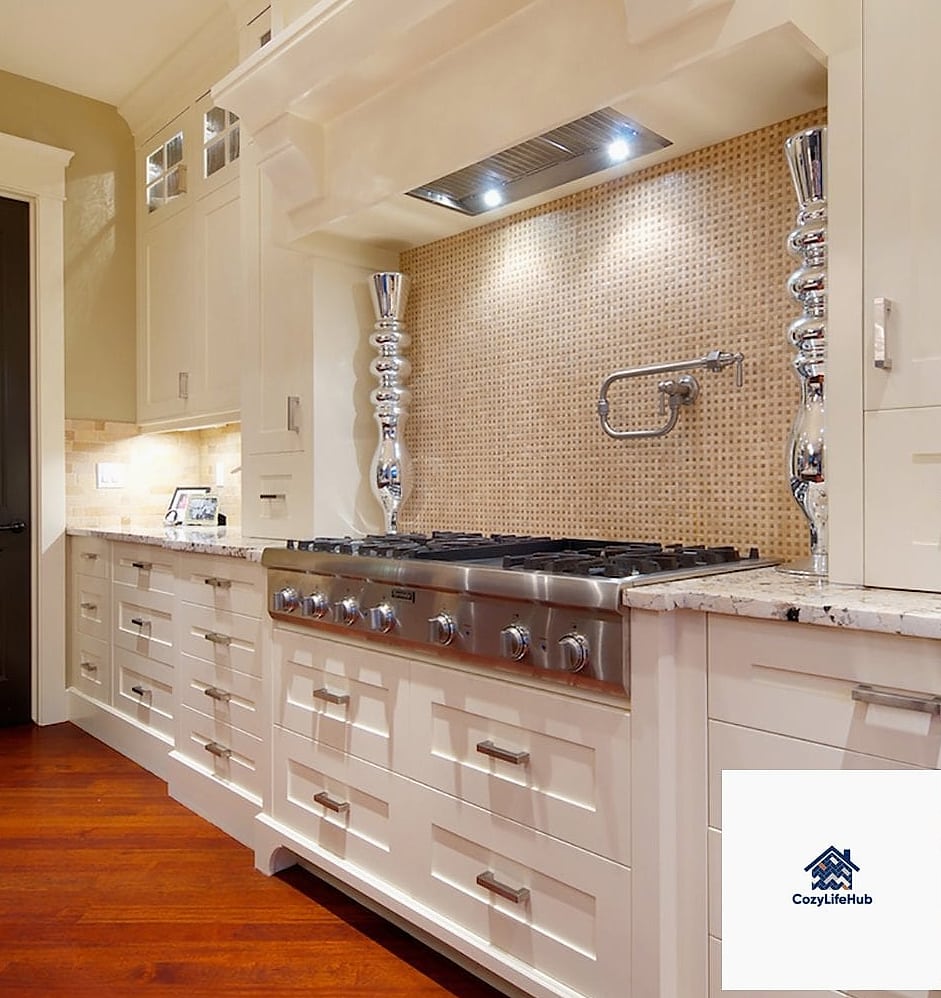
Basketweave tile creates a woven, three-dimensional look using small rectangular marble pieces arranged in a repeating pattern. It’s an old-school pattern that’s been showing up again in kitchens that want a slightly more traditional, textured feel.
This pattern tends to work best in smaller areas, like a niche behind the stove or a strip above open shelving, rather than covering an entire wall. The added texture does mean a few more grout lines to keep clean, but a quick wipe-down after cooking usually keeps it looking fresh.
Honed Marble for a Matte Look
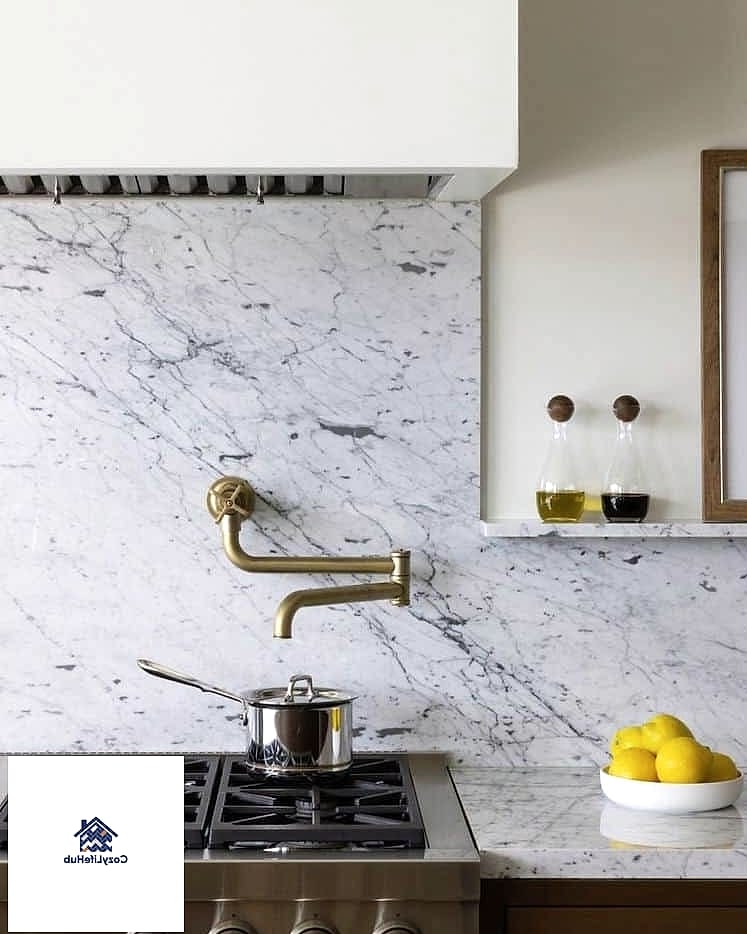
If polished marble feels too glossy or formal for your space, honed marble gives you that same natural veining with a soft, matte finish instead. It has a more relaxed, understated feel that works well in farmhouse or modern rustic kitchens.
Honed marble does show etching and water spots a bit more visibly than polished marble since there’s no shine to distract from it, so it helps to seal it well and wipe up spills fairly quickly. Many people find the softer look worth that extra bit of attention.
Peel-and-Stick Marble Backsplash
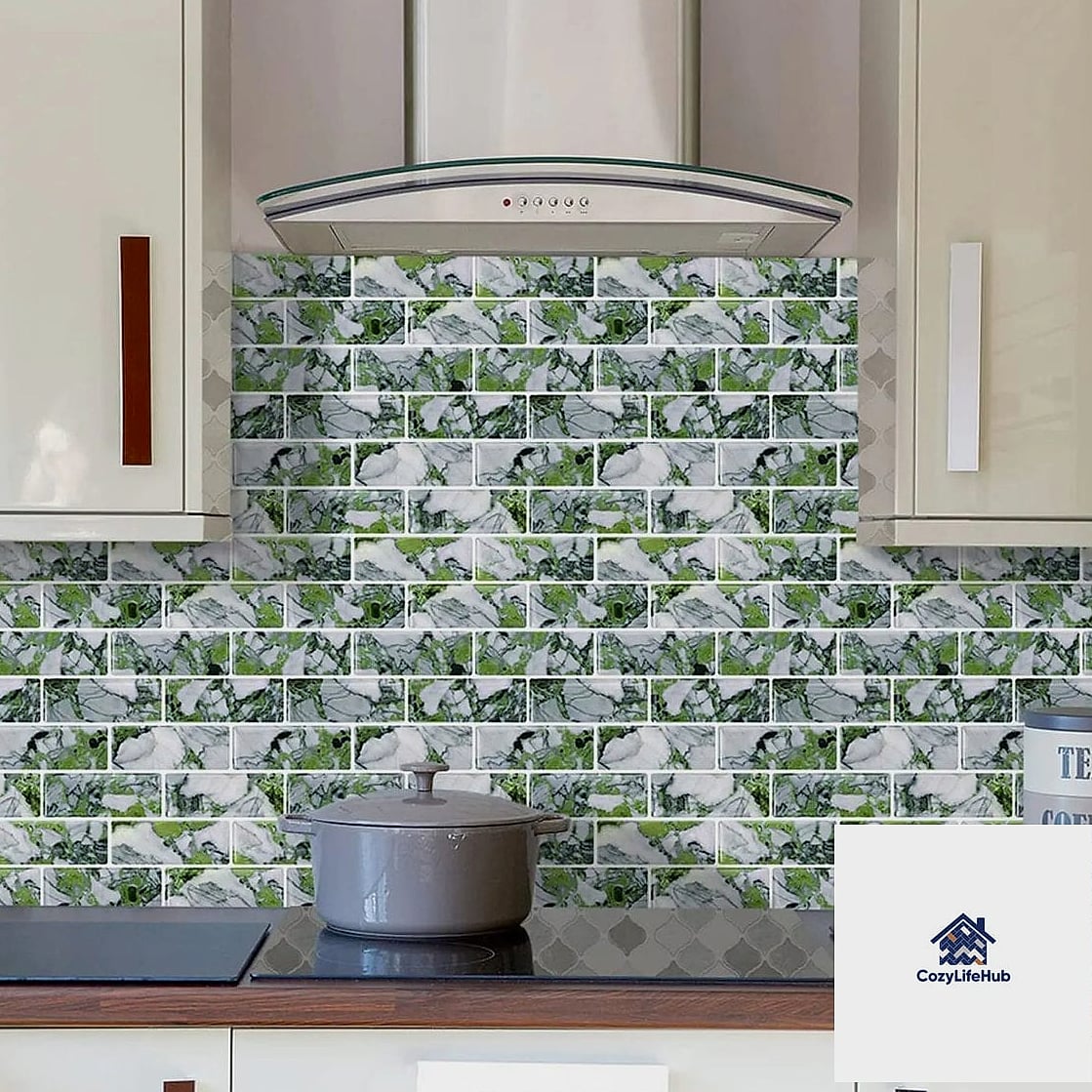
For renters or anyone not ready to commit to real stone, peel-and-stick marble-look tiles have come a long way in recent years. They mimic the veining and texture of real marble at a fraction of the price and effort.
This is obviously not the same as natural stone in terms of durability or resale value, but it’s a genuinely good option if you want to test out the look before committing, or if you’re in a space you don’t own. Installation is quick, usually just an afternoon project, and it’s easy to remove without damaging the wall underneath.
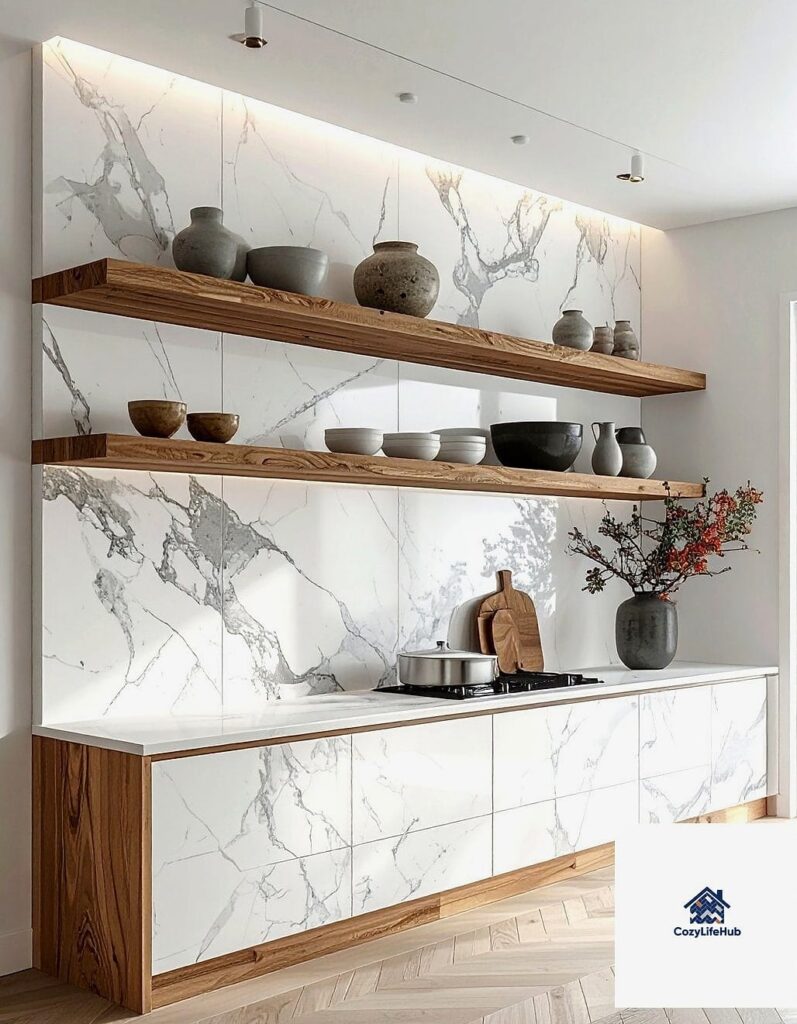
Marble Backsplash with Open Shelving
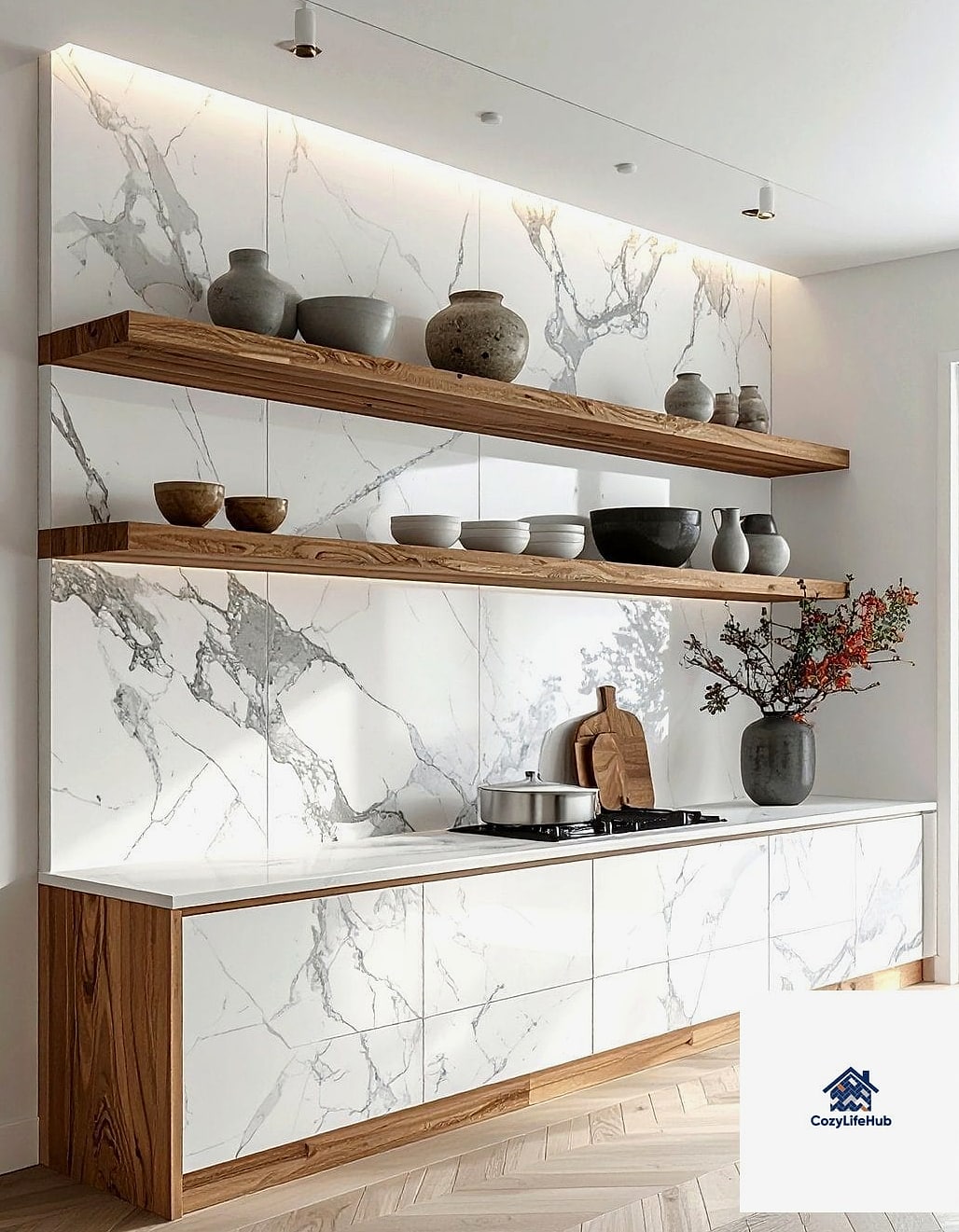
Pairing a marble backsplash with open shelving instead of upper cabinets lets the stone breathe a little more and become part of the everyday display, not just a background element. Wood shelves against a marble wall create a nice contrast between the cool stone and warm wood tones.
This combination works well in kitchens that already lean toward a more curated, styled look, since open shelving means everything’s on display. It’s also a practical choice for smaller kitchens, since it can make the space feel more open and less closed in than a wall of cabinetry.
Final Thoughts
Marble backsplash ideas cover a lot more ground than people usually expect, from full dramatic slabs to peel-and-stick versions you can try out risk-free. The right choice really comes down to your budget, how much upkeep you’re willing to do, and the overall style you’re going for in your kitchen.
Whatever direction you land on, marble has a way of making a space feel more considered and personal than a lot of other materials can. It’s not always the low-maintenance choice, but for many homeowners, that little bit of extra care is a small price to pay for a backsplash that genuinely looks better every year.