18 Traditional Kitchen Ideas Worth Stealing From Interior Designers
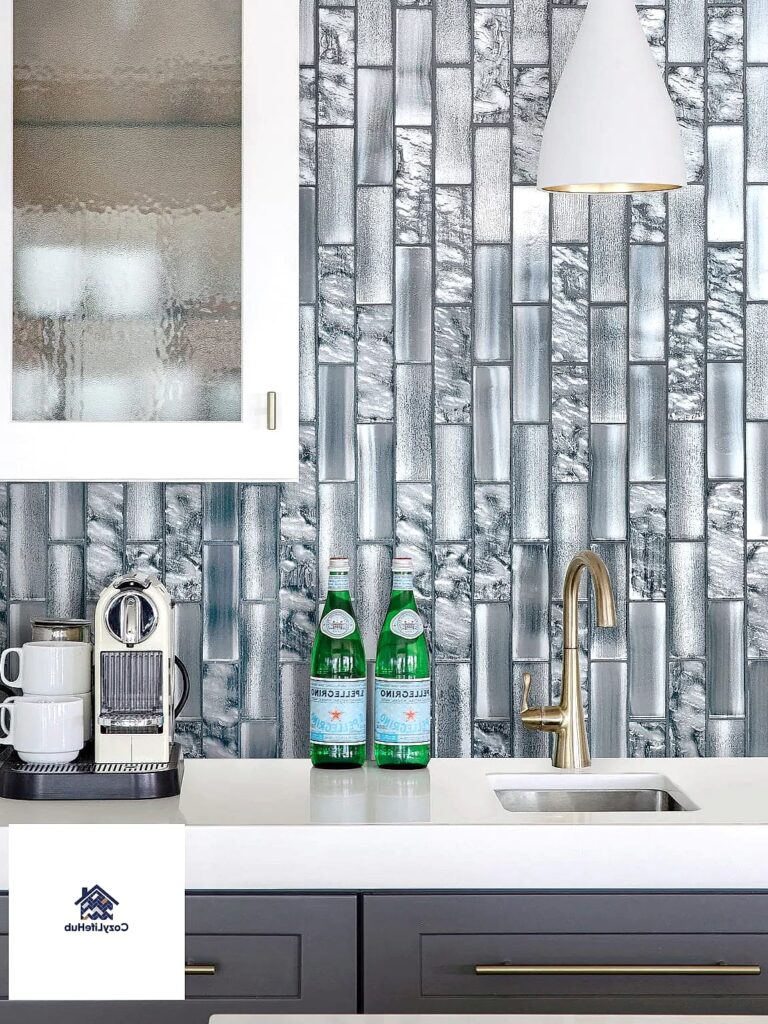
- Raised Panel Cabinetry
- Farmhouse Apron Sink
- Beadboard Backsplash
- Marble Countertops
- Furniture-Style Island
- Glass-Front Upper Cabinets
- Warm Wood Flooring
- Crown Molding on Cabinets
- Brass or Bronze Hardware
- Plate Rack Storage
- Checkerboard Flooring
- Panel-Ready Appliances
- Open Shelving with Curated Display
- Traditional Range Hood
- Bridge Faucet
- Wainscoting or Paneled Walls
- Woven and Natural Texture Accents
- Layered, Warm Lighting
18 Traditional Kitchen Ideas Worth Stealing From Interior Designers
There’s a reason traditional kitchens never really go out of style. While trends come and go, a well-designed traditional kitchen just feels right — warm, welcoming, and built to last. If you’ve been scrolling through design inspiration and keep gravitating toward those classic, timeless spaces, you’re not alone.
I’ve pulled together some of the best traditional kitchen ideas that designers keep coming back to, whether they’re working on a full remodel or a simple refresh. These aren’t stuffy or dated looks either. Traditional design has evolved, and these ideas prove you can have all that cozy, classic charm without your kitchen feeling like it’s stuck in the past.
Raised Panel Cabinetry
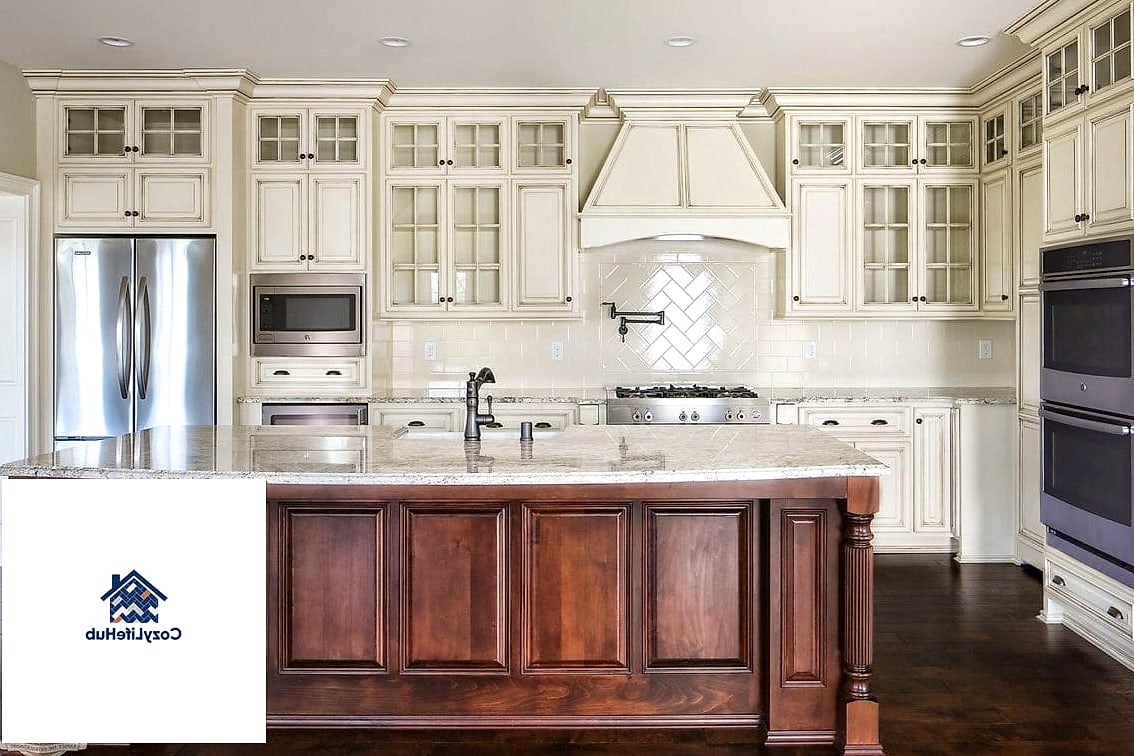
This is the backbone of any traditional kitchen. Raised panel cabinets have that dimensional, carved look that instantly reads as classic and custom.
They work beautifully in white, cream, or soft sage green, though deeper tones like navy or forest green have become popular for lower cabinets. The detail catches light in a way flat-panel cabinets just can’t match.
Maintenance-wise, they do collect a little more dust in the grooves, so plan on wiping them down regularly. Worth it for the character they add.
Farmhouse Apron Sink
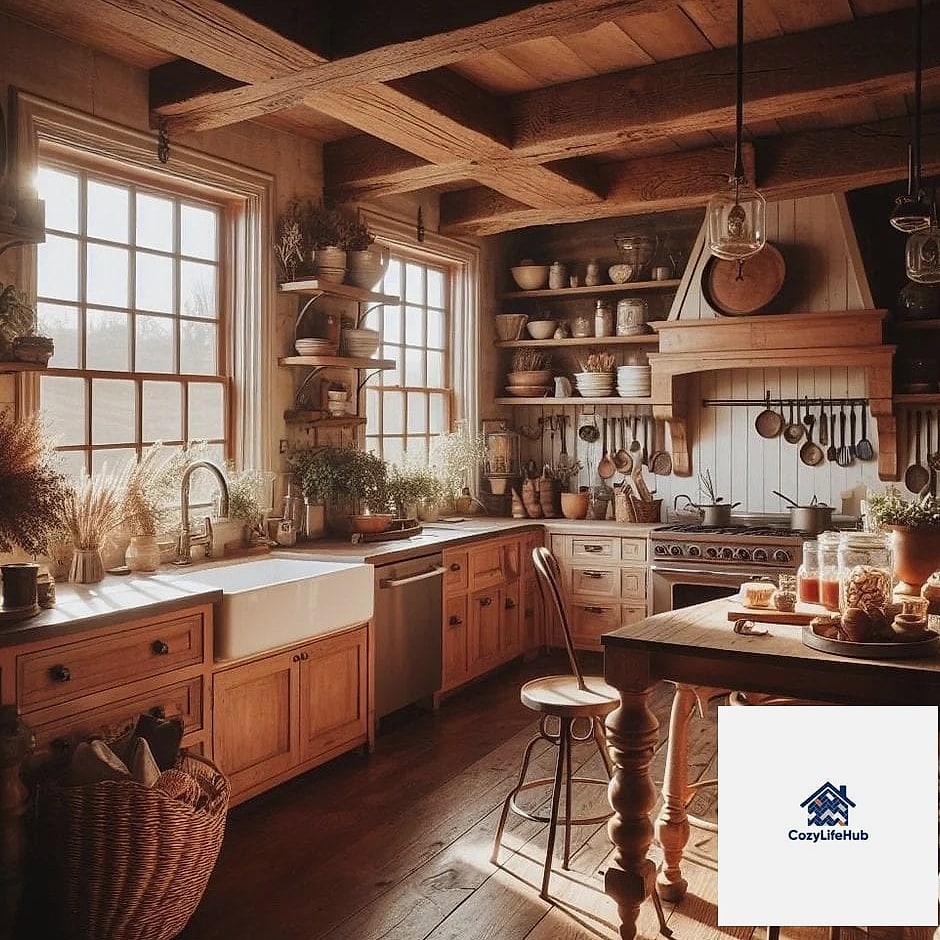
An apron-front sink is one of those features that immediately signals “traditional kitchen” the second you walk in. The exposed front panel adds a sculptural quality you don’t get with an undermount sink.
Fireclay and cast iron are the go-to materials since they’re durable and age well. White is classic, but I’ve seen homeowners have real fun with colored options too.
They’re deep enough to handle big pots and baking sheets, which makes them genuinely practical for anyone who cooks often. Just know they can be pricier to install since they often require custom cabinetry.
Beadboard Backsplash
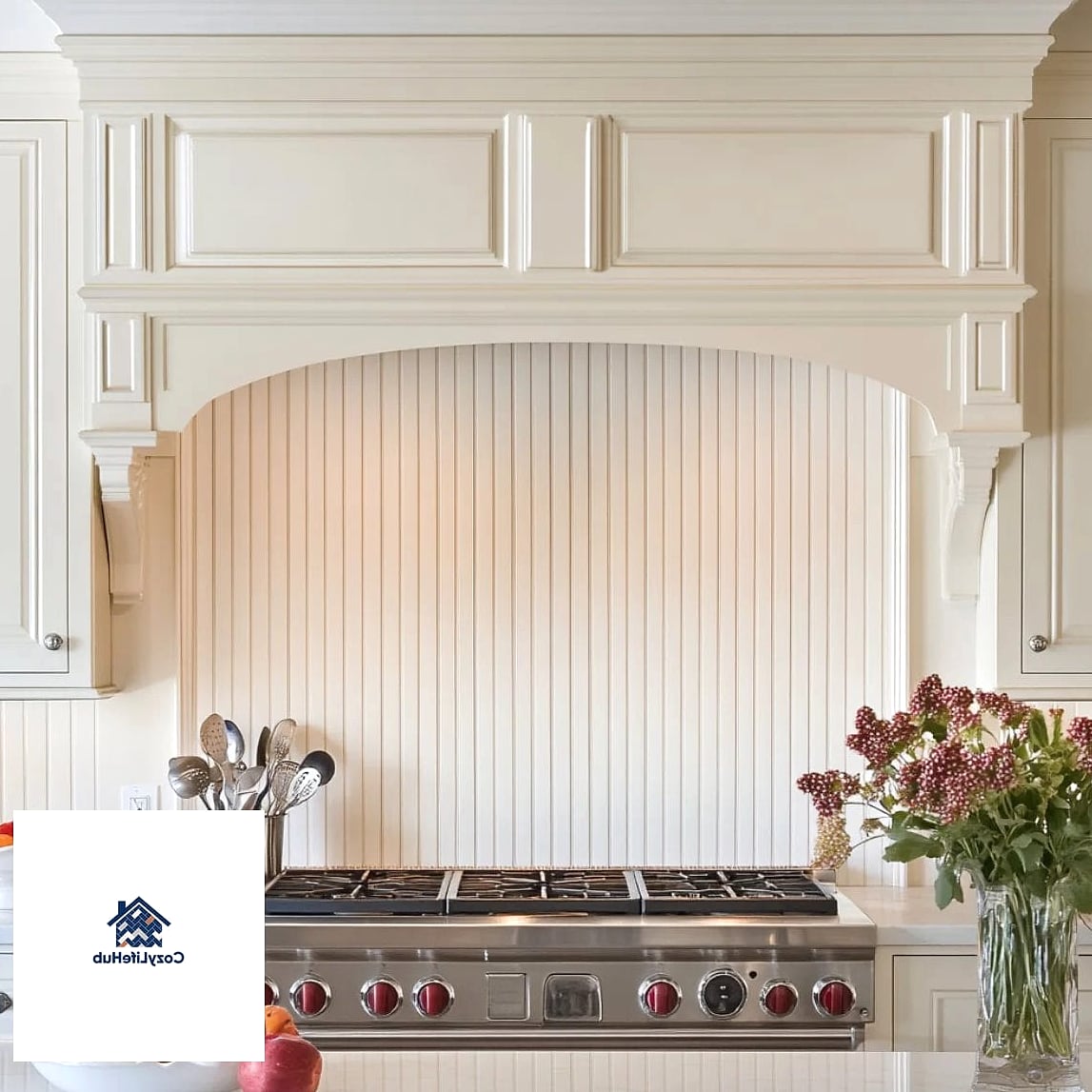
Beadboard isn’t just for mudrooms and bathrooms anymore. Bringing it into the kitchen as a backsplash adds cottage-inspired texture that pairs so well with traditional cabinetry.
It’s typically painted white or a soft neutral to keep things airy, though painted beadboard in a muted color can work too if you want more contrast. It’s budget-friendly compared to tile and fairly DIY-friendly if you’re comfortable with basic carpentry.
One thing to keep in mind: it’s not as easy to wipe clean as tile, so it works best a bit away from the main cooking zone.
Marble Countertops
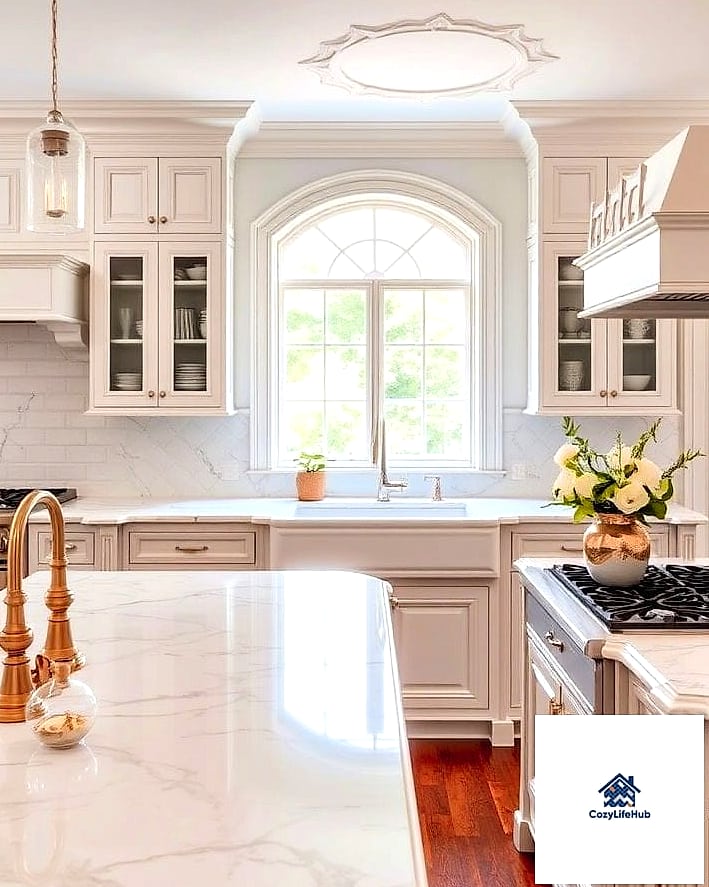
Nothing says traditional luxury quite like marble. The soft veining and natural variation give each slab its own personality, which is part of the appeal.
Carrara and Calacatta are the most requested varieties, and both bring that classic, high-end look designers love pairing with traditional cabinetry. Just be upfront with clients (or yourself) about maintenance — marble etches and stains more easily than quartz.
If you love the look but want less worry, marble-look quartz has gotten remarkably convincing and requires far less babying.
Furniture-Style Island
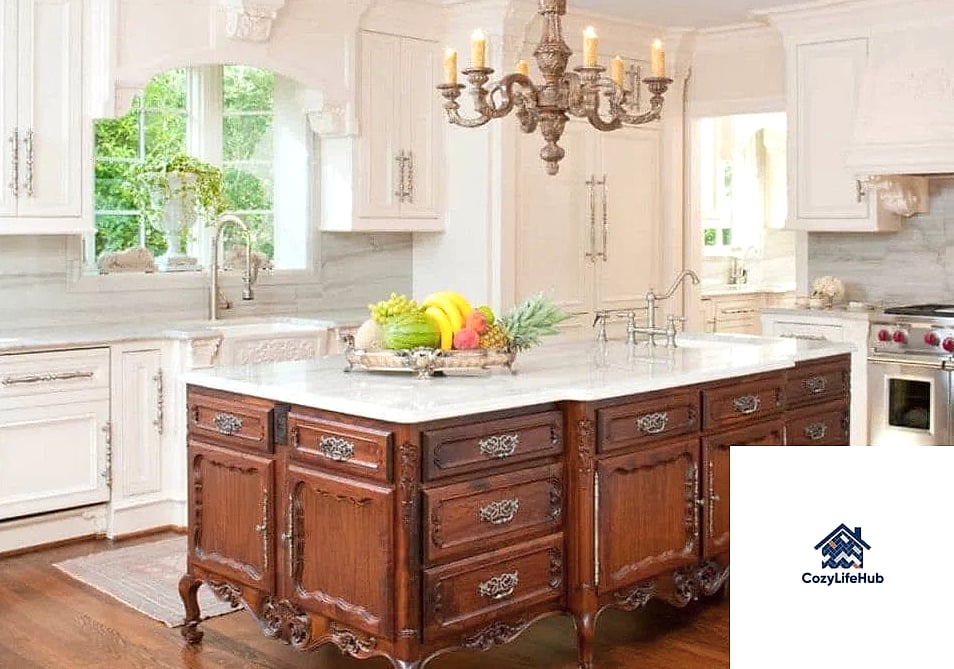
A kitchen island that looks like an actual piece of furniture, complete with turned legs, a contrasting finish, or even a different countertop material, adds so much personality to a traditional space.
This is a great spot to introduce a bold color or a warm wood tone if the rest of your cabinetry is painted. It creates a natural focal point without overwhelming the room.
Because it stands apart visually, it also gives you an easy way to update your kitchen’s look later just by refinishing or repainting the island.
Glass-Front Upper Cabinets
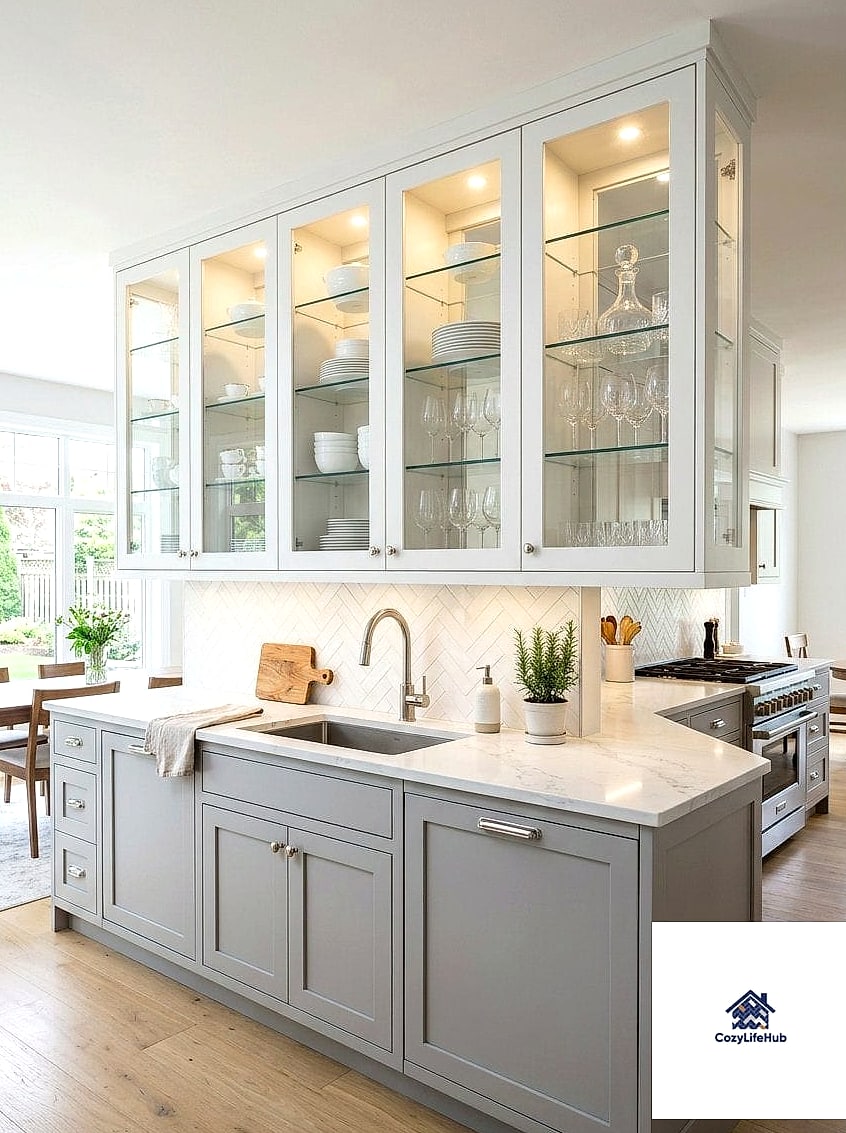
Swapping a few solid cabinet doors for glass-front ones is such a simple way to add traditional charm. It breaks up a wall of cabinetry and gives you a spot to display pretty dishware or glassware.
Mullioned or divided-light glass doors lean especially traditional, almost like something out of an old English kitchen. Frosted or seeded glass is a nice option if you’d rather not keep everything perfectly organized on display.
Just a heads up, these do require a little more upkeep since fingerprints and smudges show more than they would on solid wood.
Warm Wood Flooring
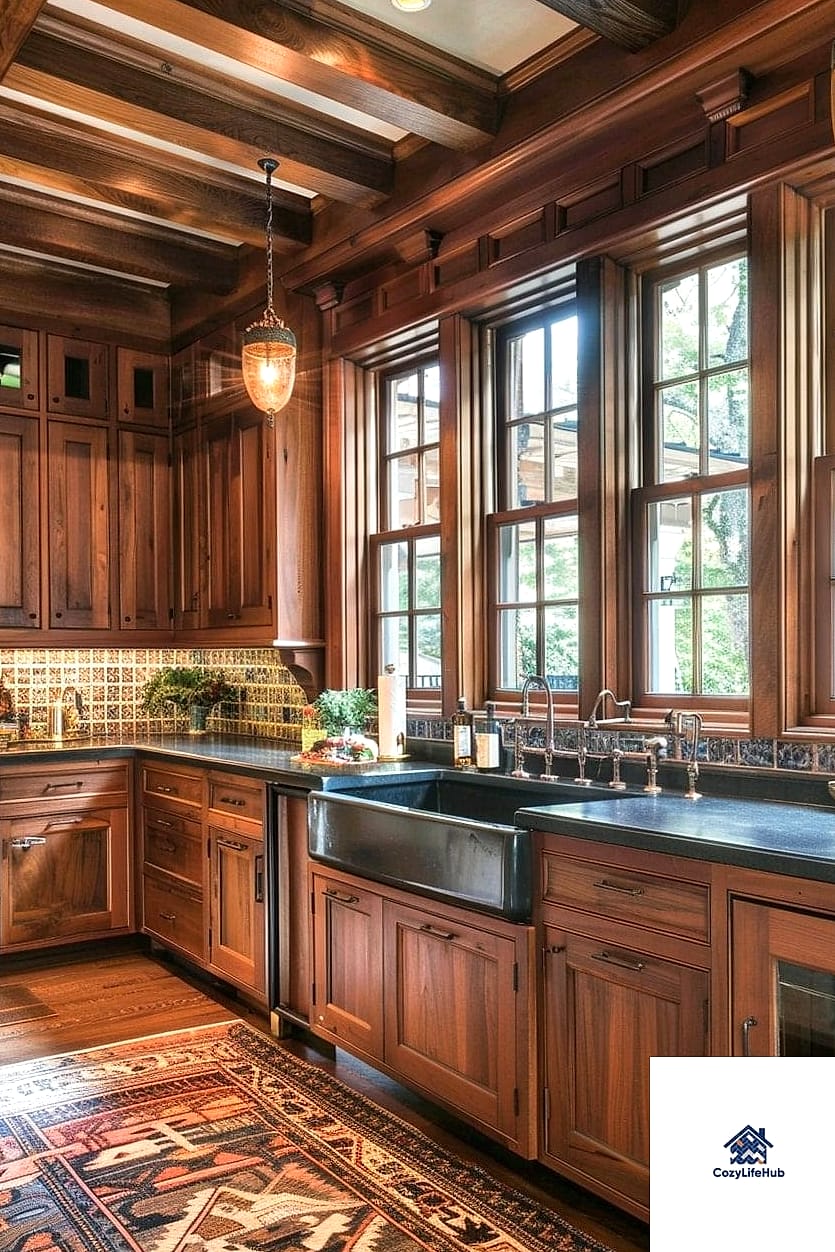
Hardwood floors in warm, honey or walnut tones ground a traditional kitchen and add coziness that tile just doesn’t replicate. Wide-plank floors especially have become a favorite among designers for their relaxed, slightly rustic feel.
If you’re worried about durability in a high-traffic kitchen, engineered hardwood is a solid workaround since it holds up better against humidity and temperature shifts than solid wood.
For families with kids or pets, a matte or hand-scraped finish hides scratches better than a glossy one.
Crown Molding on Cabinets
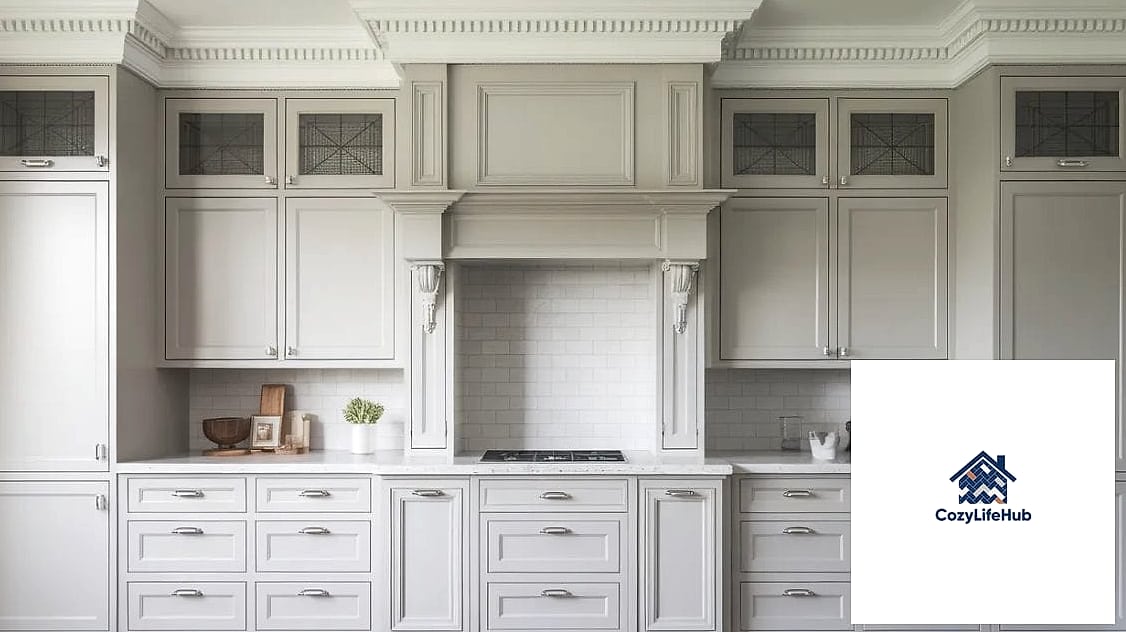
This is a small detail that makes a massive difference. Adding crown molding to the top of your upper cabinets gives them a built-in, custom look, like they were made specifically for your kitchen rather than installed off the shelf.
It’s a relatively affordable upgrade too, especially if your cabinets already reach the ceiling. Painting the molding the same color as your cabinets keeps things seamless, while a contrasting ceiling color can make it pop even more.
This detail alone can make a builder-grade kitchen feel noticeably more upscale.
Brass or Bronze Hardware
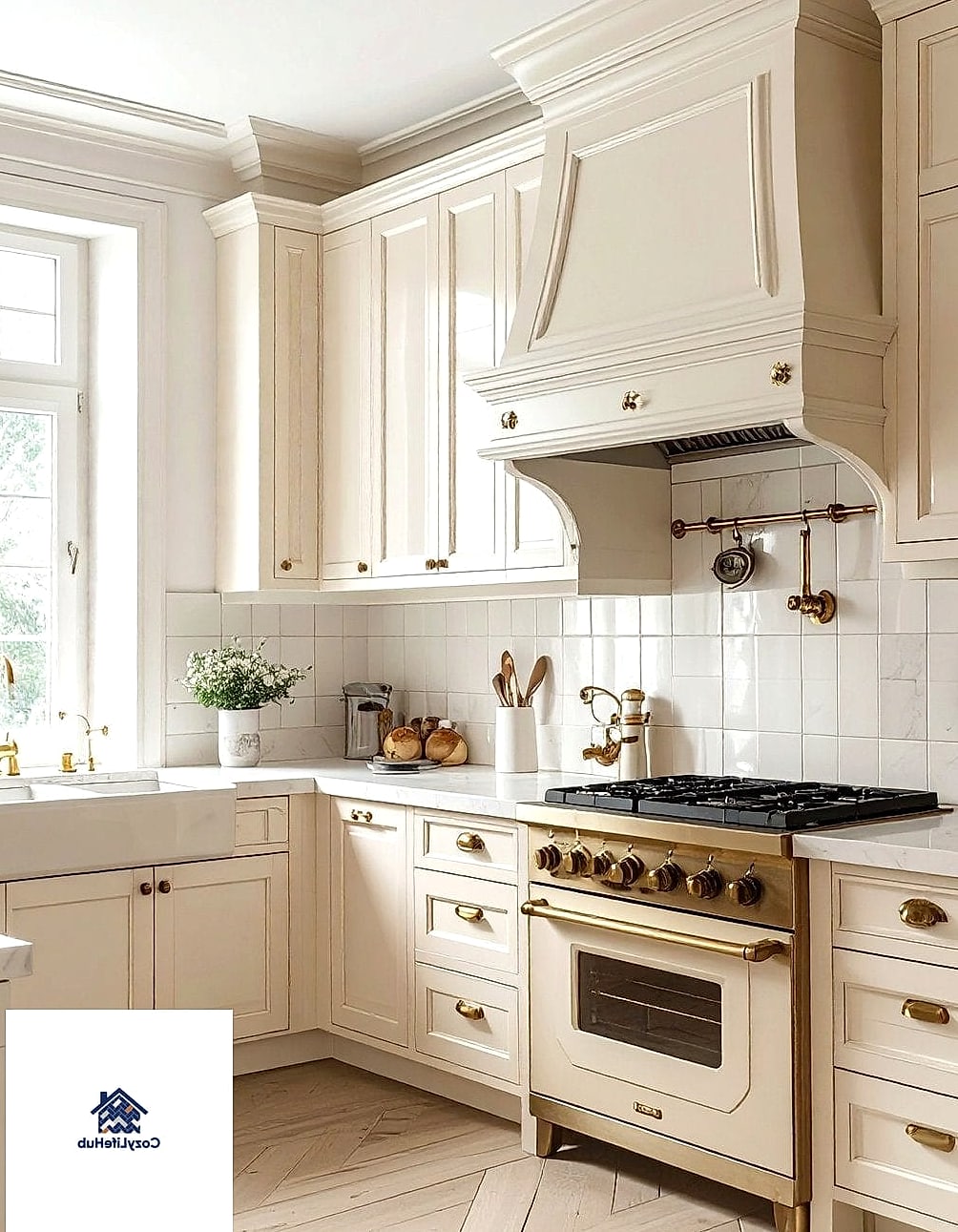
Traditional kitchens tend to favor warmer metal tones, and brass or oil-rubbed bronze hardware fits that mood perfectly. It’s a shift from the brushed nickel and matte black that’s dominated more modern kitchens lately.
Unlacquered brass is especially popular right now because it develops a natural patina over time, giving your kitchen a lived-in, collected-over-years feel rather than something that just came out of a showroom.
It’s also one of the easiest and cheapest ways to update a kitchen’s whole personality without touching the cabinets themselves.
Plate Rack Storage
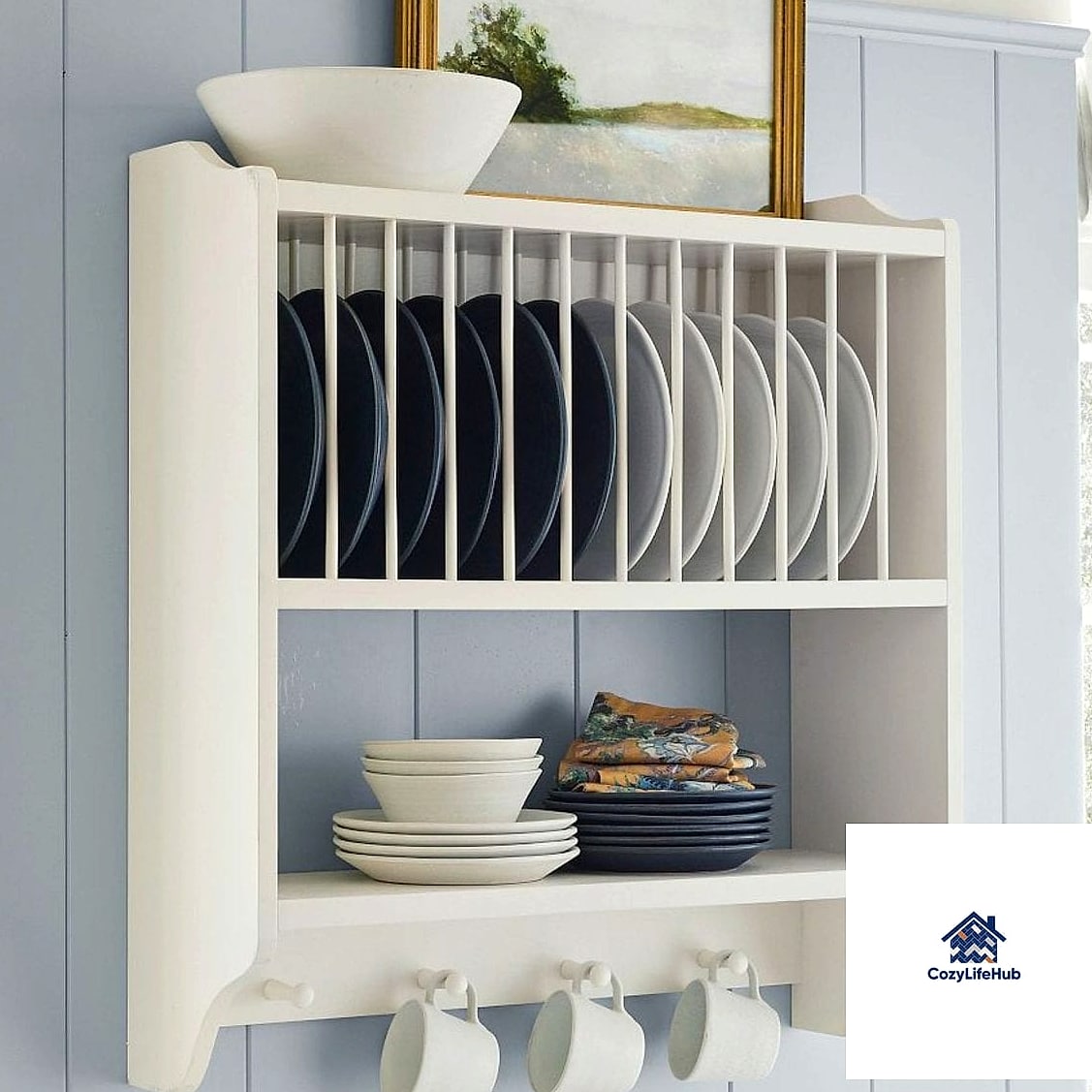
A built-in plate rack, whether open or with glass doors, is such a charming traditional detail. It’s practical too, giving you a spot to air-dry and store dishes right where you need them.
These work especially well above a sink or built into an upper cabinet run. They’re often crafted from the same wood as your cabinetry to keep everything cohesive.
If you love cottage or English-country style kitchens, this is one of those details that instantly nails the look.
Checkerboard Flooring
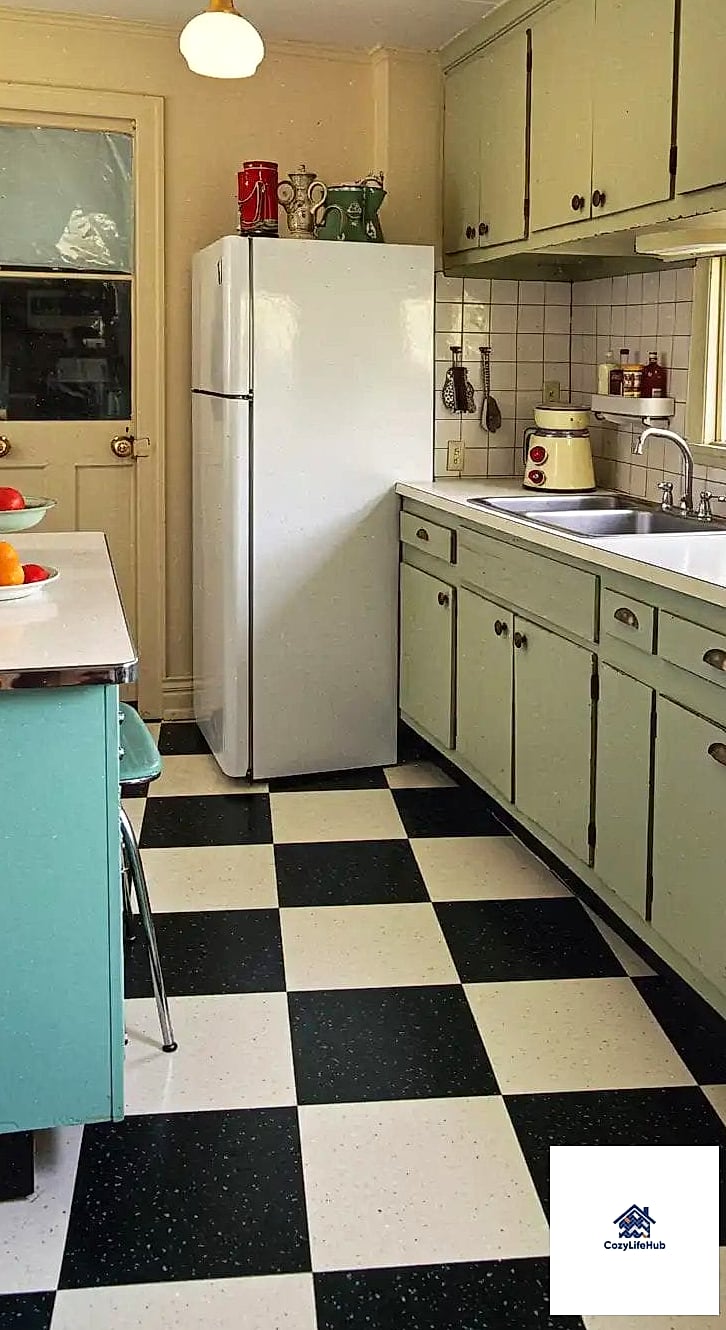
Black and white checkerboard floors have serious old-world charm, and they’ve been showing up again in traditional kitchen designs lately. Whether in classic tile or a more updated stone version, the pattern adds graphic interest without competing with your cabinetry.
Porcelain tile is the practical choice here since it handles moisture and heavy foot traffic well. For a softer take, some designers are using two different tones of natural stone instead of stark black and white.
It’s a bold move, so it works best when the rest of the kitchen stays fairly simple and let the floor do the talking.
Panel-Ready Appliances
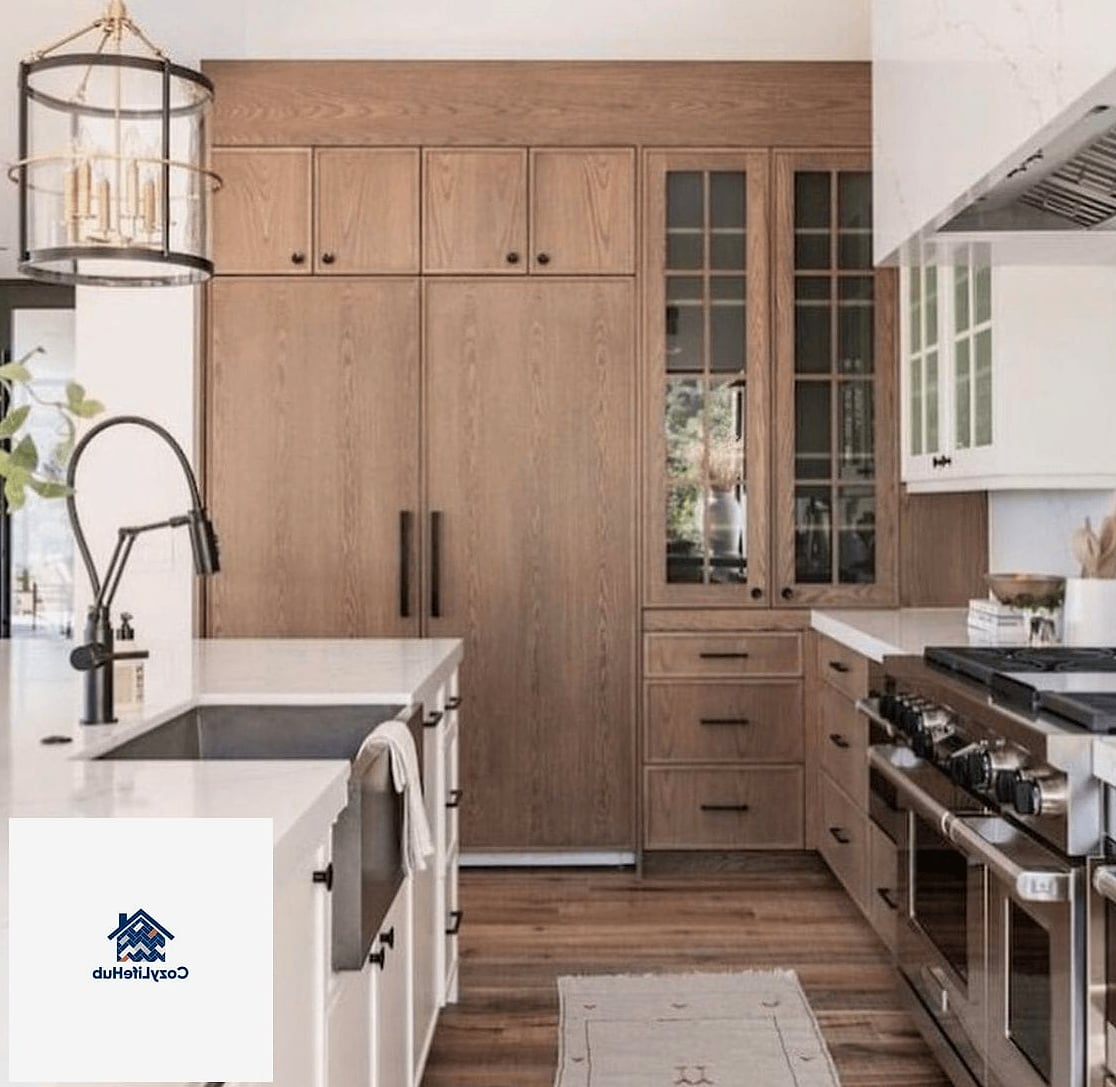
Hiding your refrigerator and dishwasher behind matching cabinet panels keeps a traditional kitchen looking cohesive and uninterrupted. Instead of a big stainless steel box breaking up your cabinetry, everything flows together.
This is a higher-investment option since it usually requires specific appliance models built to accept panels, but the payoff is a kitchen that looks custom-built from top to bottom.
If a full panel-ready fridge isn’t in the budget, even paneling the dishwasher alone makes a noticeable difference.
Open Shelving with Curated Display
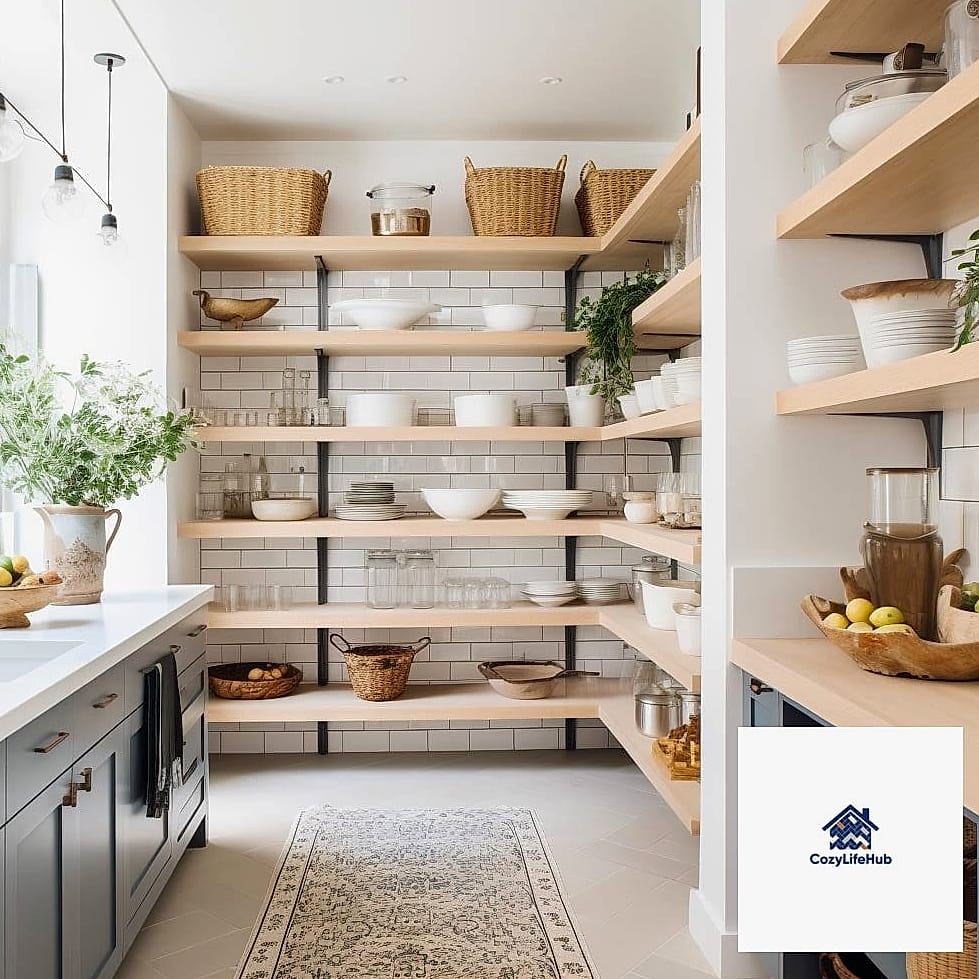
A section of open shelving mixed in with your traditional cabinetry adds warmth and lets you show off pretty dishware, cookbooks, or a few plants. It keeps the kitchen from feeling too closed off or formal.
Wood shelves with a bit of grain pair especially well with painted cabinetry for a nice material contrast. Just keep the styling relatively simple, a few stacked bowls, some everyday glasses, maybe a small plant, rather than overloading every inch.
This is also a genuinely renter-friendly idea if you use freestanding shelves instead of built-ins.
Traditional Range Hood
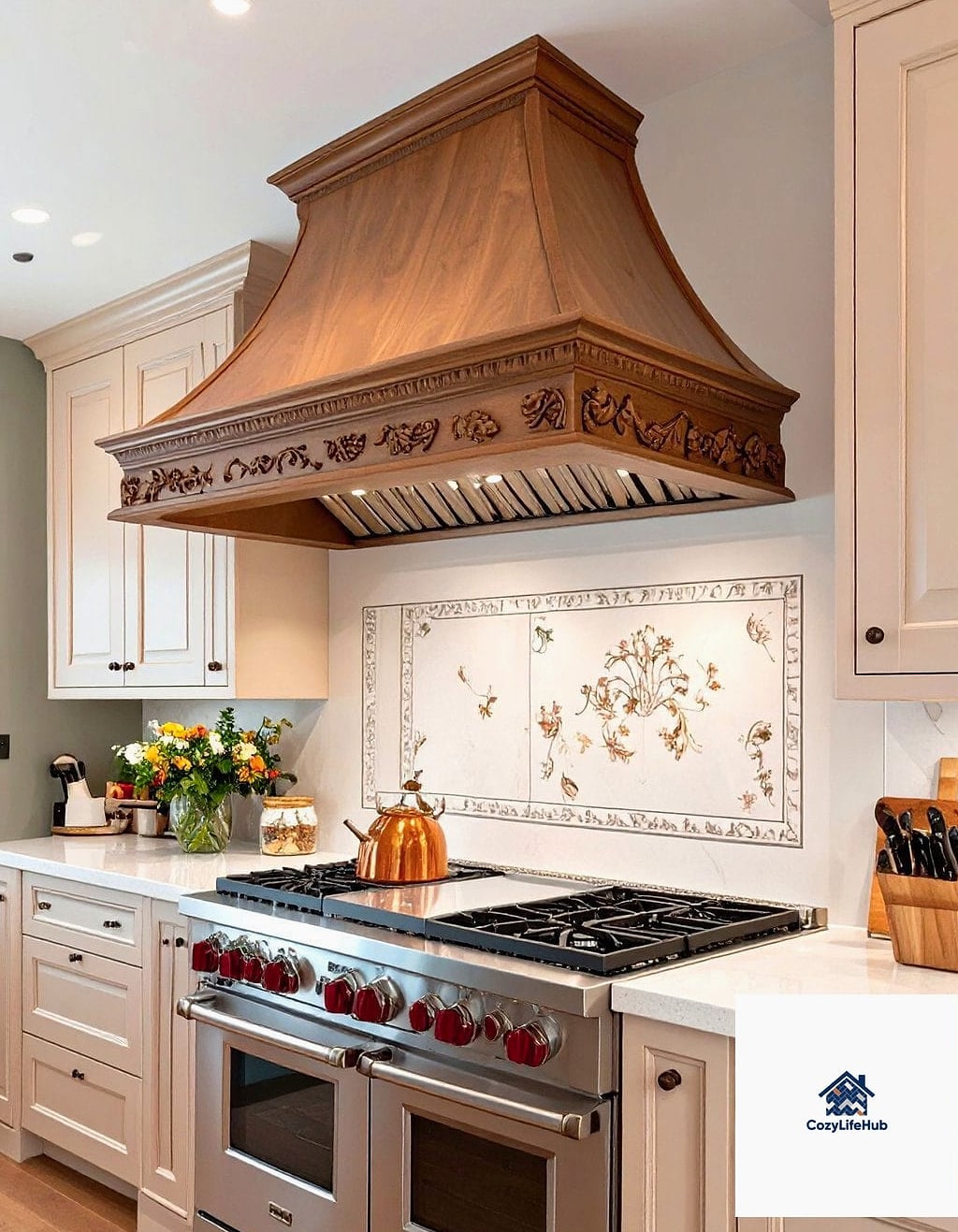
A statement range hood, especially one with decorative trim, corbels, or a curved shape, acts almost like a piece of architecture in the kitchen. It draws the eye and gives the whole room a sense of intention.
Plaster hoods have become especially popular for their soft, handcrafted texture, though wood and painted wood hoods remain classic favorites too. Pairing it with your cabinetry color keeps things unified.
This is typically a job for a contractor rather than a DIY project, but it’s one of the higher-impact upgrades you can make.
Bridge Faucet
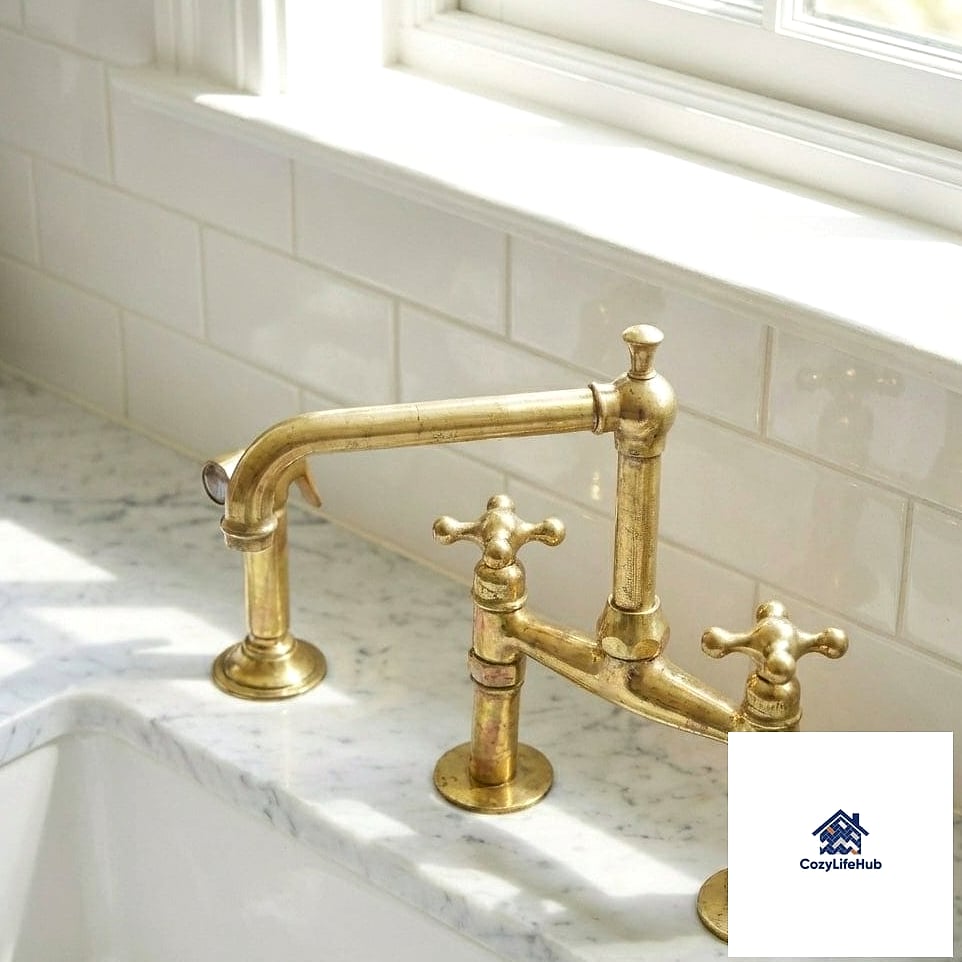
A bridge faucet, with its exposed pipe connecting two separate handles, is a small but distinctly traditional detail. It has that old-fashioned, almost apothecary feel that pairs beautifully with an apron sink.
Polished nickel and unlacquered brass are the most popular finishes for this style. They tend to sit a bit higher than standard faucets too, which is handy if you’re regularly filling tall pots.
They can be trickier to clean around compared to a single-handle faucet, but most homeowners find the look is worth the extra wipe-down.
Wainscoting or Paneled Walls
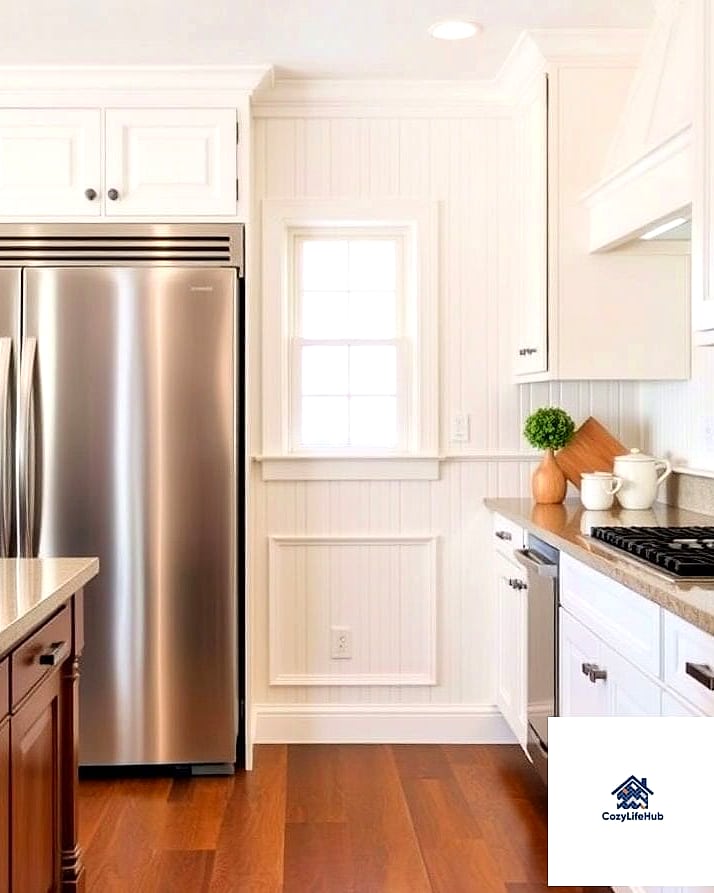
Bringing wainscoting into the kitchen, either on a lower half-wall or wrapped around a full room, adds architectural texture that feels distinctly traditional. It’s especially lovely in breakfast nooks or dining areas attached to the kitchen.
Painted a soft white or cream, it keeps the space feeling light while still adding dimension. Board and batten is a slightly more relaxed, farmhouse-adjacent take on the same idea if you want something a touch less formal.
This is a project that’s fairly approachable for confident DIYers with basic tools and a little patience.
Woven and Natural Texture Accents
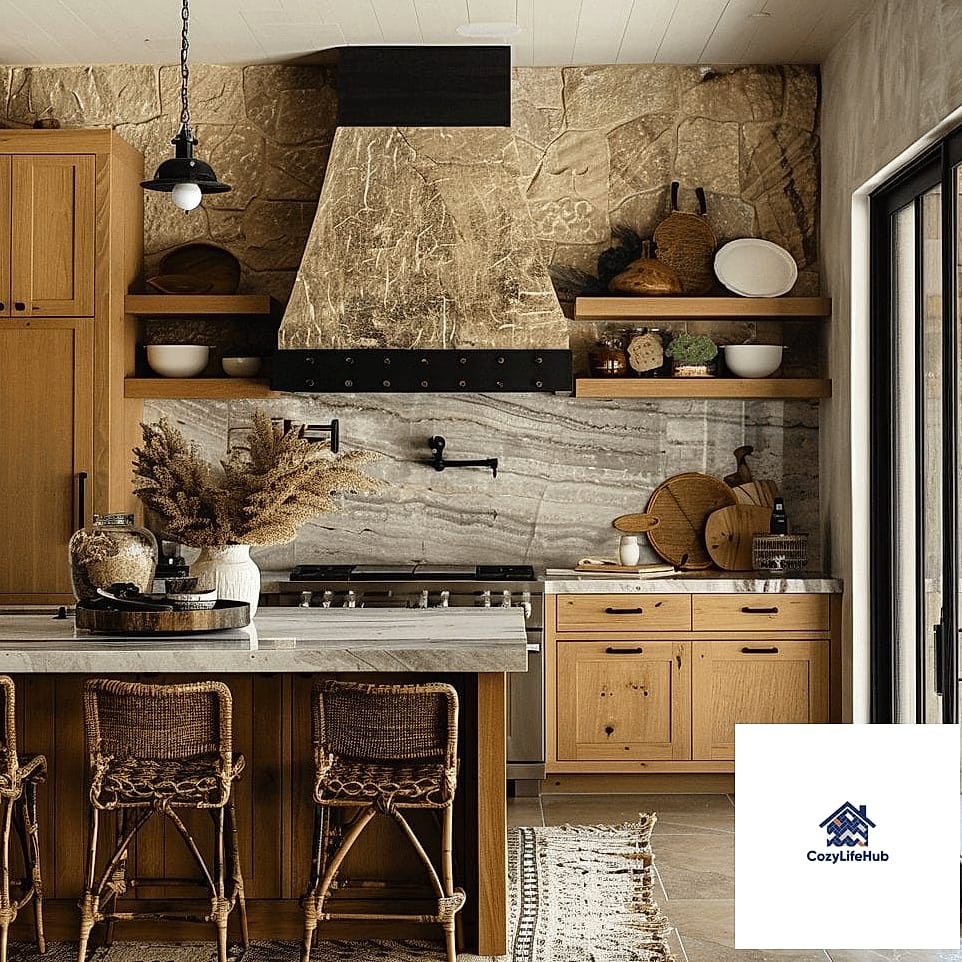
Traditional kitchens lean into natural materials, and woven elements like rattan pendant lights, wicker baskets for storage, or a jute rug in front of the sink add texture that keeps the space feeling warm rather than sterile.
These pieces also tend to be budget-friendly and easy to swap out seasonally if you want to refresh the space without a renovation. A few rattan pendants over an island is an especially popular way to bring in this texture without much commitment.
They’re not the most durable option for spill-prone areas, so keep them slightly away from the sink or stove.
Layered, Warm Lighting
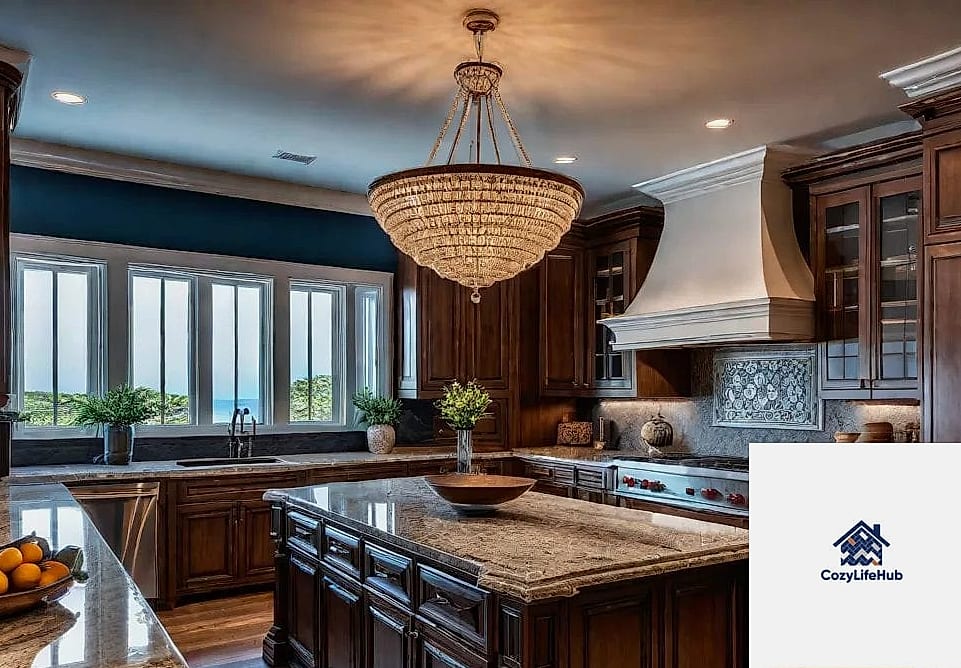
Traditional kitchens rarely rely on one single light source. Designers tend to layer a statement fixture over the island, under-cabinet lighting for task work, and maybe a few sconces or pendants near a sink or prep area.
Warm-toned bulbs, generally in the 2700K to 3000K range, keep the whole space feeling cozy rather than clinical. Fixtures with fluted glass, brass details, or an antique finish tie in nicely with the rest of a traditional design.
This layered approach also just makes the kitchen more functional, since you’re not stuck with one harsh overhead light for every task from cooking to entertaining.
Pulling together a traditional kitchen doesn’t mean copying a single look exactly. It’s really about layering in details, materials, and finishes that feel warm and considered rather than trendy for the sake of it. Pick a handful of these ideas that speak to you, whether that’s swapping out hardware or going all in on a plaster range hood, and build from there. The best traditional kitchens feel collected over time, not decorated all at once.