14 Modern Glass Backsplash Ideas That Maximize Style and Function
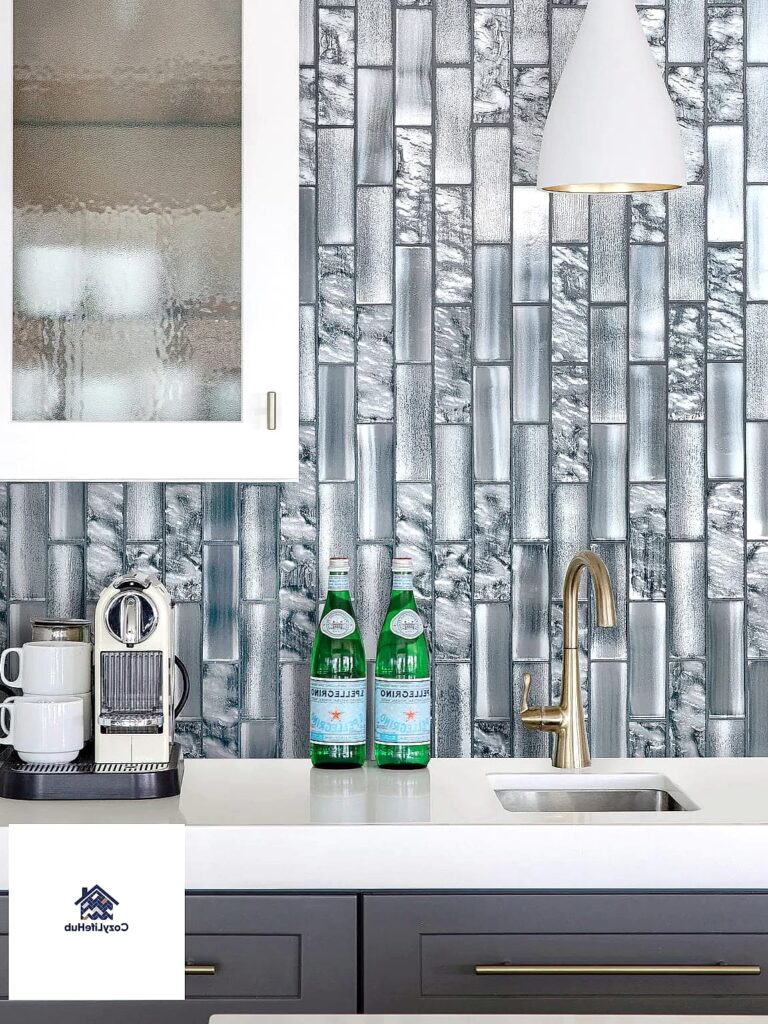
- Back-Painted Glass in a Bold Color
- Glass Subway Tile with a Twist
- Iridescent Glass Mosaic
- Frosted Glass for a Softer Look
- Colored Glass Herringbone
- Large-Format Glass Panels
- Textured 3D Glass Tile
- Smoked or Bronze Glass
- Glass and Metal Mosaic Blend
- Peel-and-Stick Glass-Look Backsplash
- Ombre Glass Tile
- Clear Glass Over a Patterned Wall
- Recycled Glass Tile
- Two-Tone Glass Tile Blocks
14 Modern Glass Backsplash Ideas That Maximize Style and Function
Glass backsplashes have come a long way from the plain subway-style panels you might remember from a decade ago. Today’s options range from moody colored glass to textured, hand-finished pieces that look almost like art. If you’re weighing a kitchen refresh and want something that reflects light, resists grime, and still feels current in a few years, glass is worth a serious look. Here are 14 ways homeowners are using it right now.
Back-Painted Glass in a Bold Color
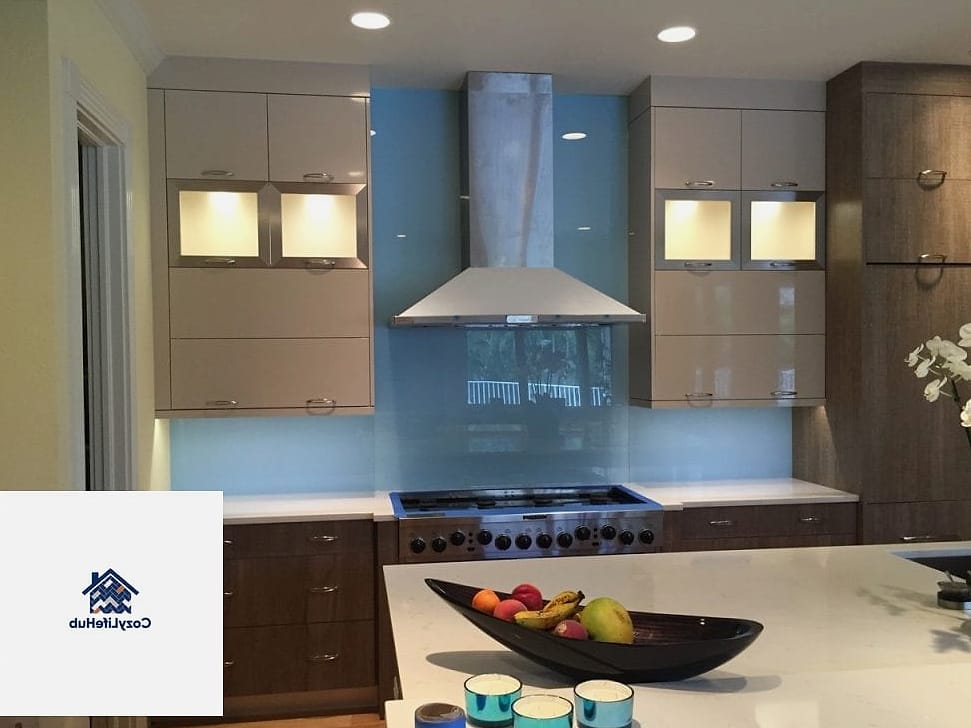
This is a single sheet of tempered glass painted on the back in a solid color, then mounted directly to the wall. No grout lines, no seams, just a clean pop of color behind your range or sink.
Deep emerald, navy, and terracotta are having a moment, though classic black or white still reads modern if you’d rather keep things quiet. It works especially well in kitchens with white or wood cabinetry that could use a little contrast.
Cleanup is about as easy as it gets since you’re basically wiping down one continuous surface. The only real downside is cost, since custom color matching and large panels aren’t cheap, but many homeowners say the seamless look justifies it.
Glass Subway Tile with a Twist
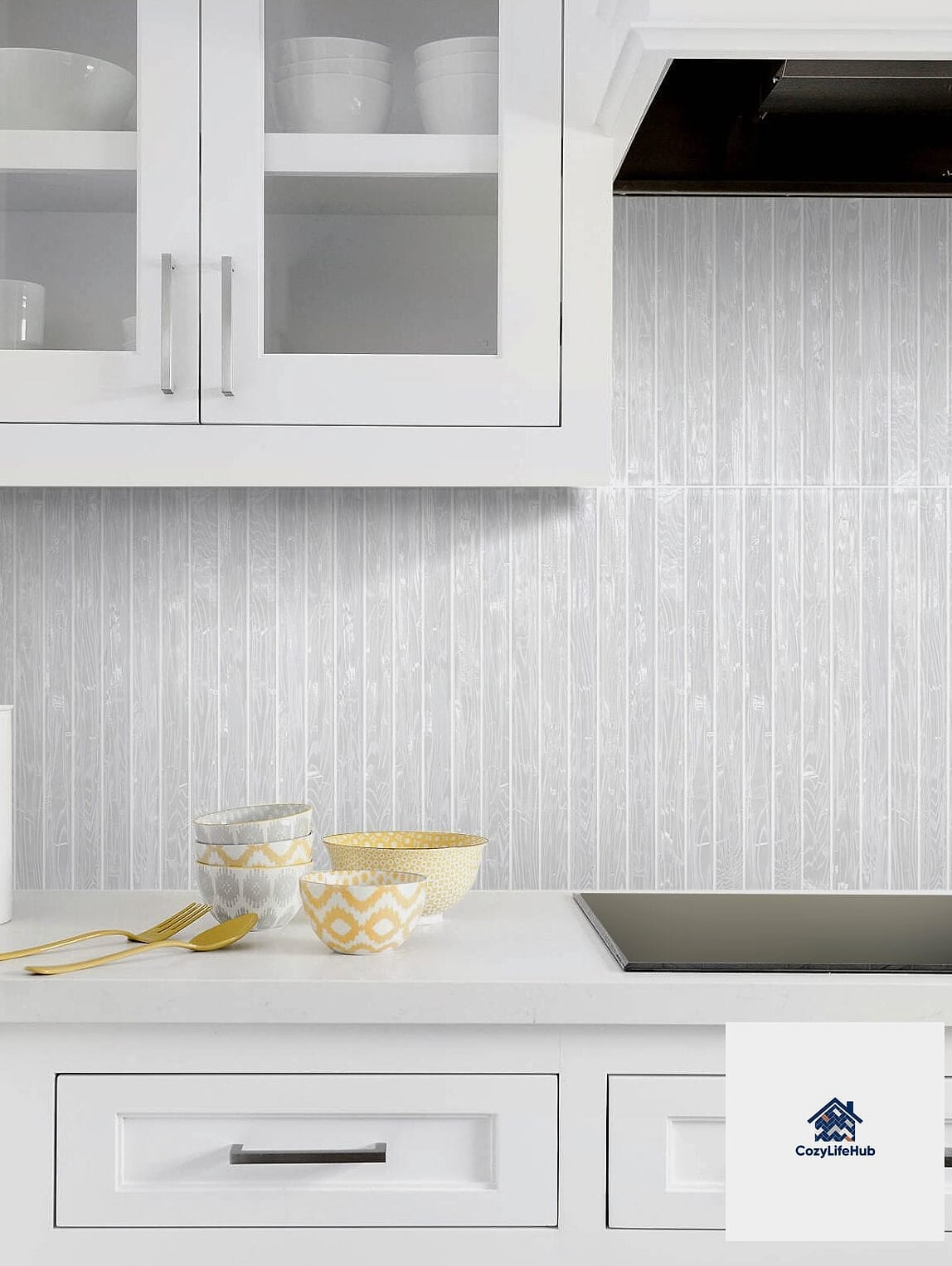
Subway tile isn’t going anywhere, but swapping ceramic for glass gives the same familiar layout a glossy, almost wet-look finish. Light bounces off it in a way that makes small kitchens feel a bit more open.
You can keep it classic with a brick pattern or turn it sideways for a vertical installation that draws the eye upward. Either way, it pairs nicely with brushed brass hardware or matte black fixtures depending on the mood you’re going for.
Glass subway is fairly DIY-friendly if you’ve tiled before, though it does show adhesive shadows more than ceramic, so a skilled installer helps if this is your first project.
Iridescent Glass Mosaic
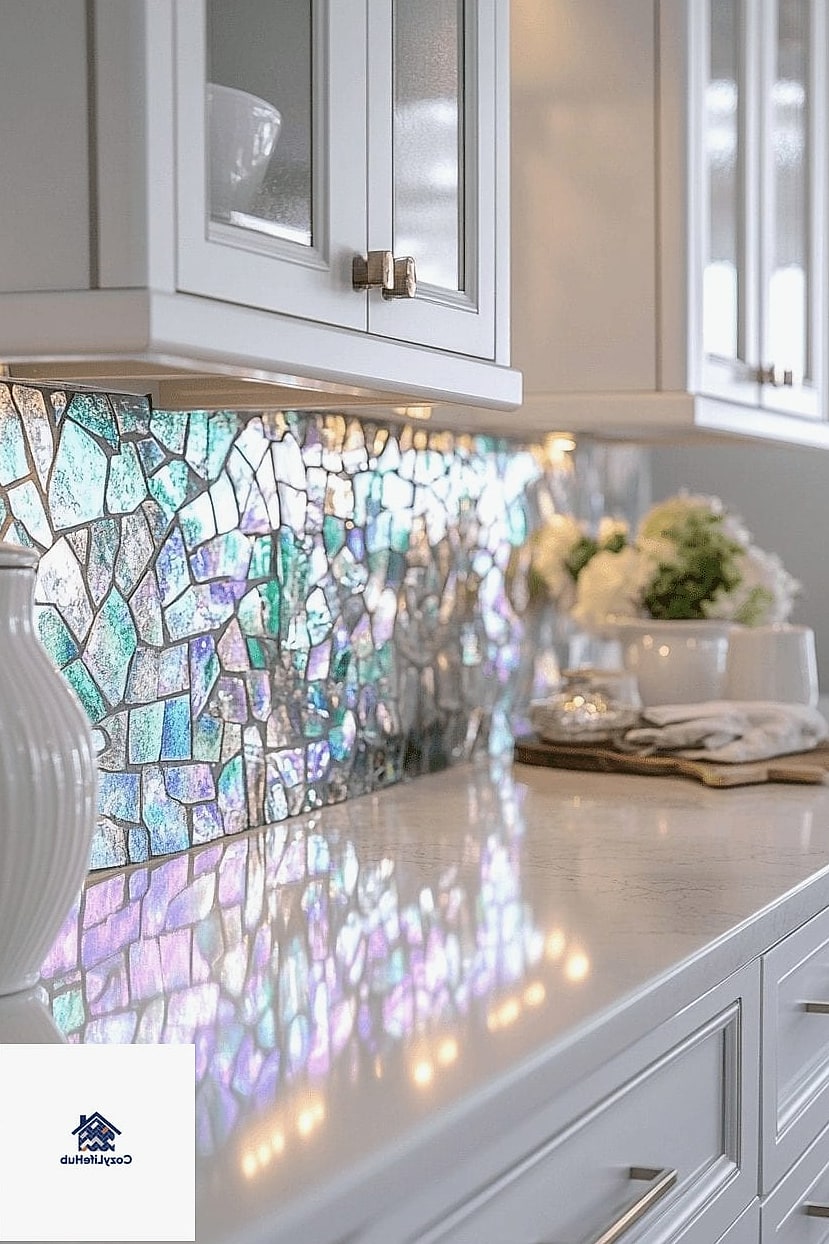
Mosaic tiles with an iridescent or opalescent finish shift color slightly depending on the light and your angle in the room. It’s a fun way to add movement to an otherwise simple kitchen without going overboard on pattern.
This style tends to shine (literally) in kitchens with under-cabinet lighting, since the glow really activates the shimmer. It’s a favorite for anyone who wants their backsplash to double as a design statement.
Because the tiles are small, installation takes patience, and grout lines will be more visible than with large-format glass. Sealing the grout well matters here, since these kitchens tend to see a lot of splatter.
Frosted Glass for a Softer Look

Frosted or etched glass diffuses light instead of reflecting it sharply, which gives the wall a soft, almost matte appearance. It’s a nice middle ground if glossy glass feels too shiny for your taste but you still want that seamless finish.
This works beautifully in neutral color palettes, especially warm whites and soft greiges, where you want texture without shine competing with natural stone countertops or quartz.
Fingerprints and water spots show up less on frosted finishes than on high-gloss glass, which makes it a practical pick for busy family kitchens.
Colored Glass Herringbone
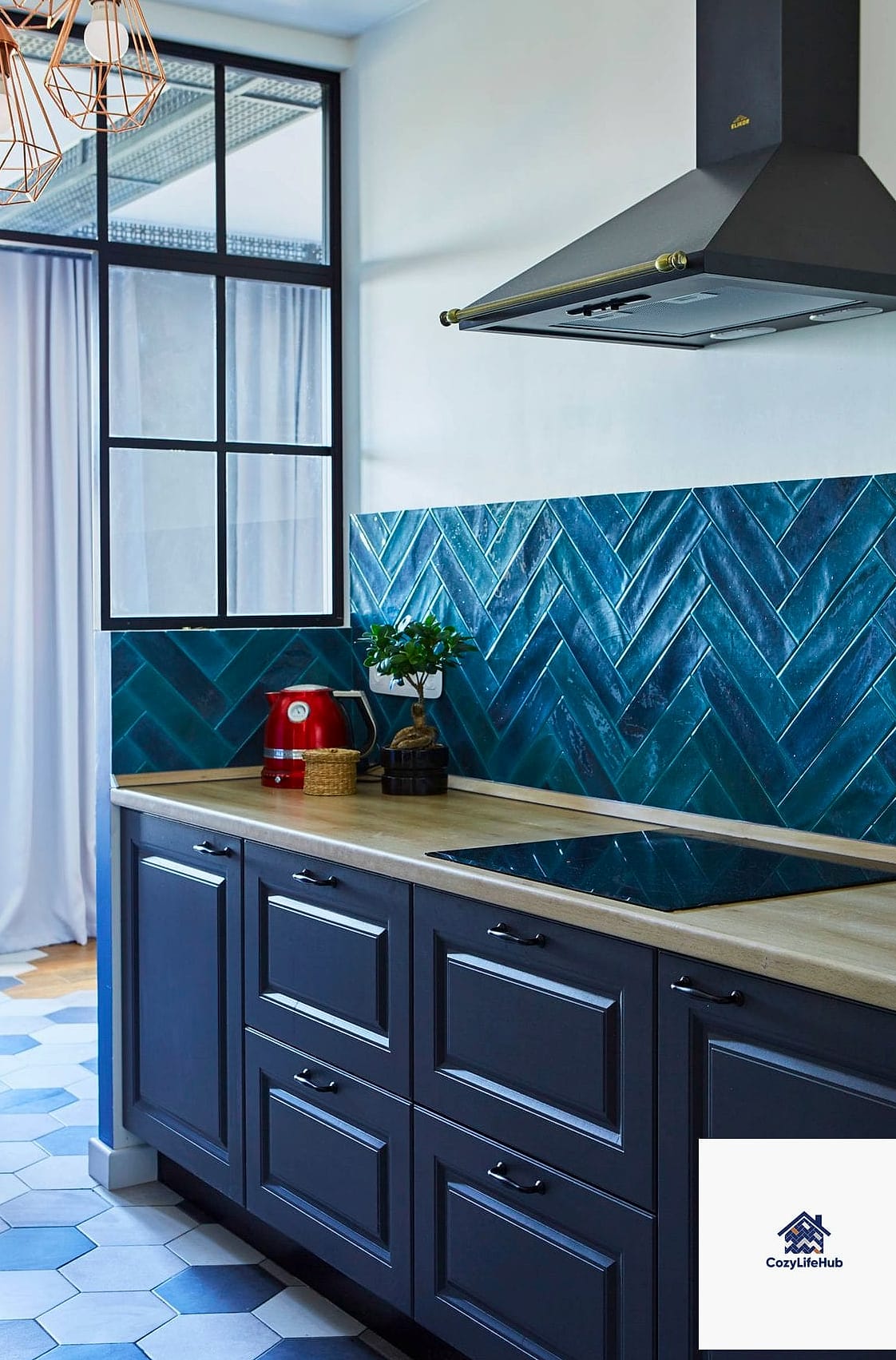
Herringbone patterns add movement to a backsplash, and doing it in glass instead of ceramic gives the zigzag a little extra shine. Muted blues, sage greens, and warm ambers are popular right now for this look.
It’s a strong choice behind a range where you want a focal point, especially if the rest of your kitchen leans simple. Pair it with open shelving nearby so the pattern has room to breathe visually.
Herringbone requires more cuts and precise layout work than a straight pattern, so this is one project where hiring a pro often saves headaches.
Large-Format Glass Panels
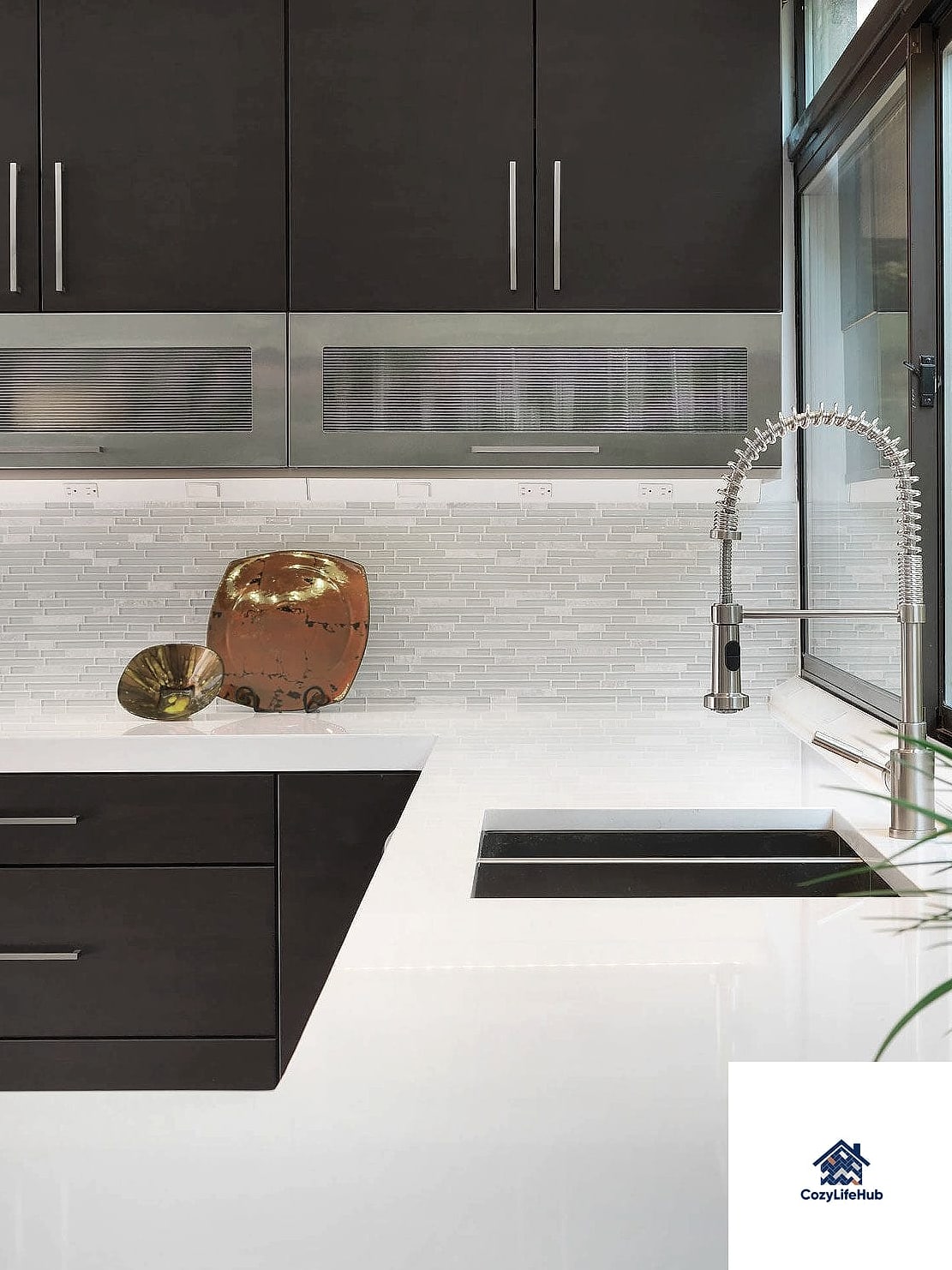
Instead of tile at all, some homeowners are going with oversized glass panels, sometimes covering the entire wall from countertop to upper cabinets. It’s dramatic, modern, and about as low-maintenance as backsplashes get.
This style suits contemporary or minimalist kitchens especially well, where the goal is clean lines and as few visual breaks as possible. It also makes a small kitchen feel less chopped up.
Installation typically requires professional measuring and mounting since the panels are heavy and need to be cut precisely to fit outlets and cabinetry.
Textured 3D Glass Tile
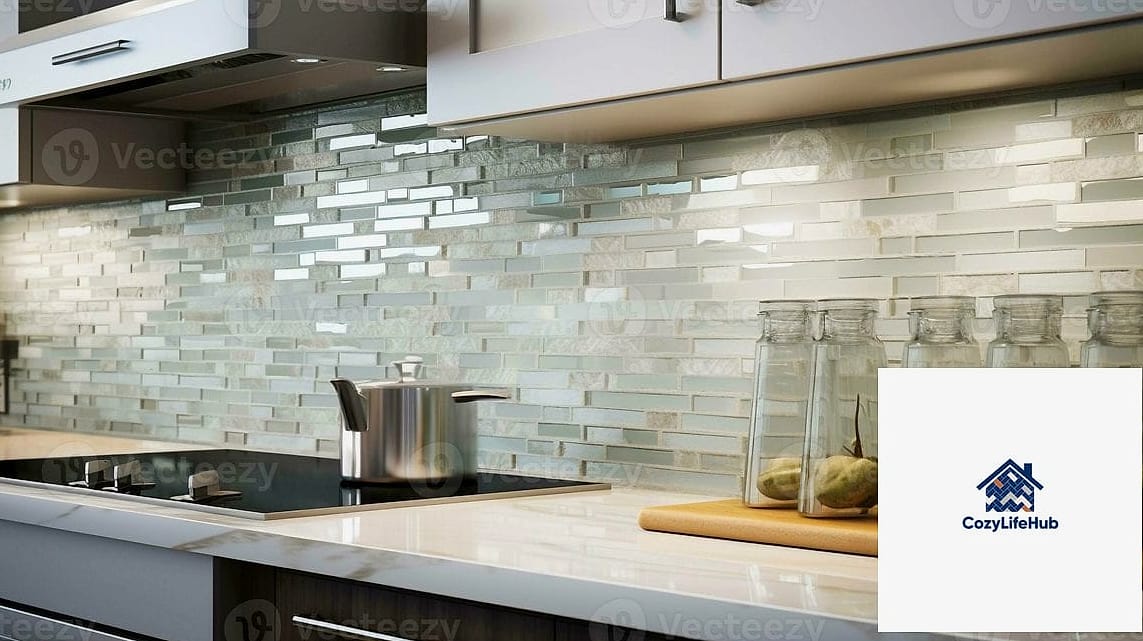
Textured glass tiles have a dimensional, almost rippled surface that catches light differently across the wall. They add visual interest without relying on bold color, which makes them a good fit if your cabinets or countertops are already busy.
These tiles work well as an accent strip too, not just a full backsplash, so you can use them behind a stove as a focal point while keeping the rest of the wall simpler.
The texture does mean a bit more attention when cleaning, since grease can settle into the ridges, but a degreasing spray and soft cloth usually handle it fine.
Smoked or Bronze Glass
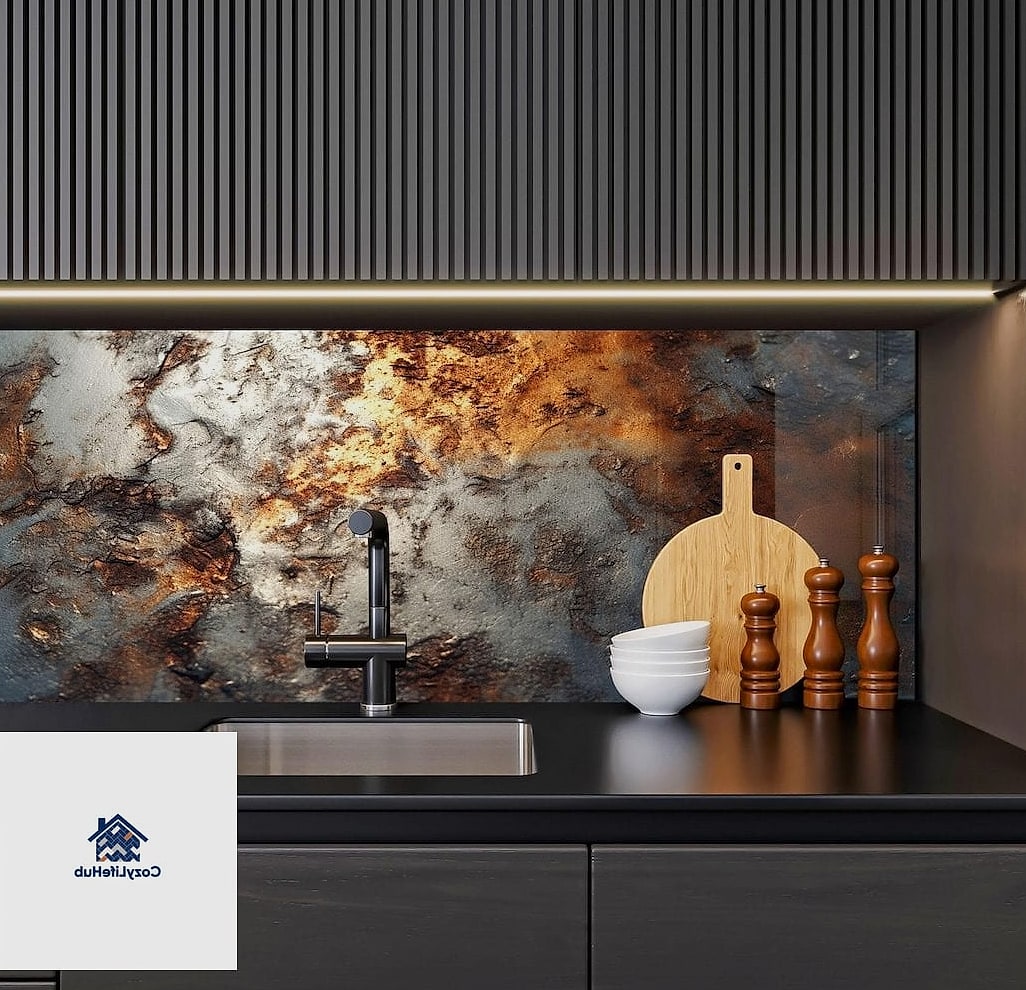
Smoked glass has a warm, slightly translucent gray-brown tone that reads more sophisticated than clear or white glass. It’s become popular in kitchens leaning into a moody, upscale aesthetic.
This pairs especially well with black fixtures, walnut or other warm wood tones, and brushed brass accents. It’s not the brightest option, so it works best in kitchens that already get good natural light.
Because it’s darker, water spots and dust are less noticeable day to day, which some homeowners find is genuinely easier to live with than an all-white glossy option.
Glass and Metal Mosaic Blend
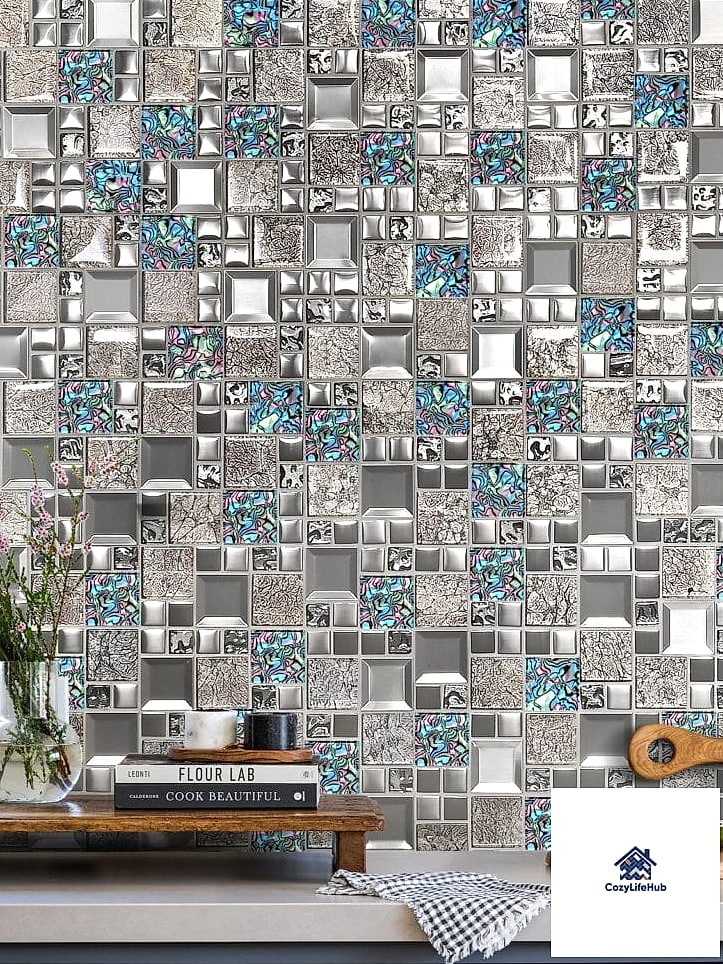
Mixing glass tiles with metal accents, think stainless steel or brushed brass strips woven through a glass mosaic, gives you texture and shine without picking just one material.
This look tends to show up in transitional kitchens that want a little industrial edge without going full loft-style. It also ties together stainless appliances with warmer metal hardware elsewhere in the room.
Keep in mind metal accents can show fingerprints more than the glass portions, so a quick wipe-down routine helps keep things looking sharp.
Peel-and-Stick Glass-Look Backsplash
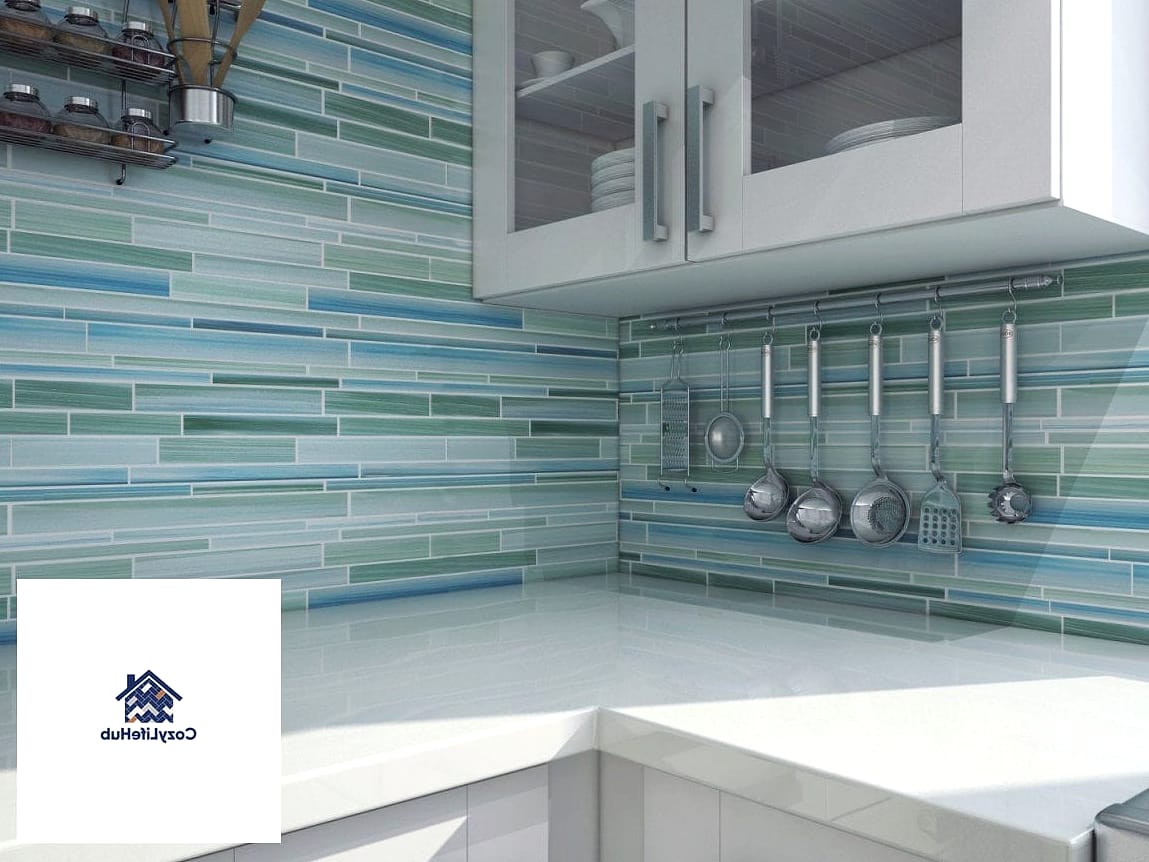
For renters or anyone not ready to commit to a full tile job, peel-and-stick options that mimic glass tile have genuinely improved in recent years. Many now have real dimensional texture instead of a flat printed look.
This is about as budget-friendly and renter-friendly as backsplash options get, and it’s easy to remove if you move or change your mind. It’s a smart way to test a glass look before committing to real tile.
It won’t hold up quite as well to heavy grease or high heat as actual glass, so it’s best suited to lighter-use kitchens or as a temporary update.
Ombre Glass Tile
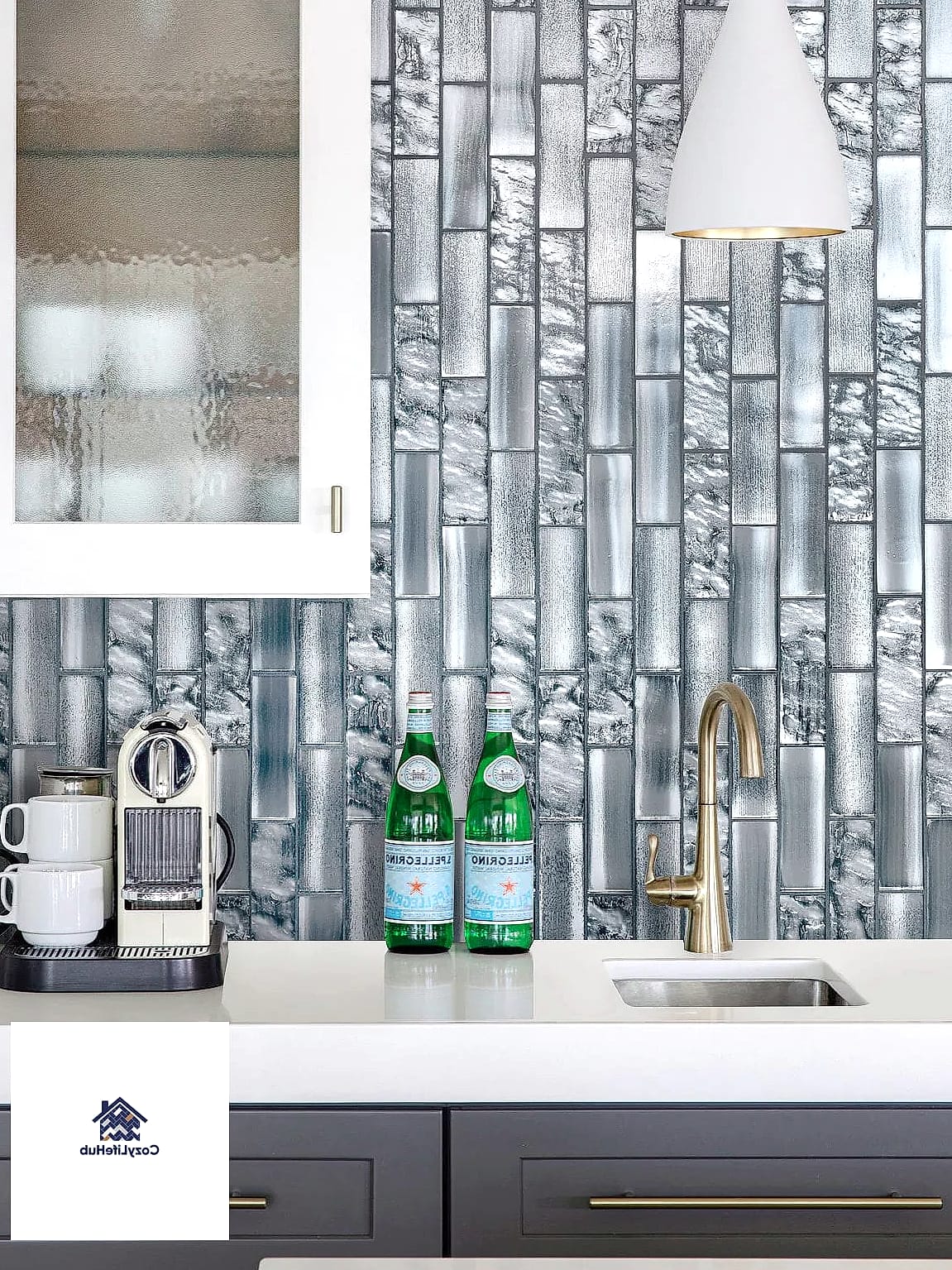
Ombre backsplashes fade from one shade to another, light to dark or one color to a neighboring hue, using glass tile cut in gradient rows. It’s a striking option if you want something that feels custom without being loud everywhere.
This works nicely as a statement wall behind open shelving, where the gradient has room to unfold across a larger surface rather than getting cut off by upper cabinets.
Sourcing enough matching tile in the right gradient can take extra planning, so ordering a bit more than you think you need is a smart move here.
Clear Glass Over a Patterned Wall
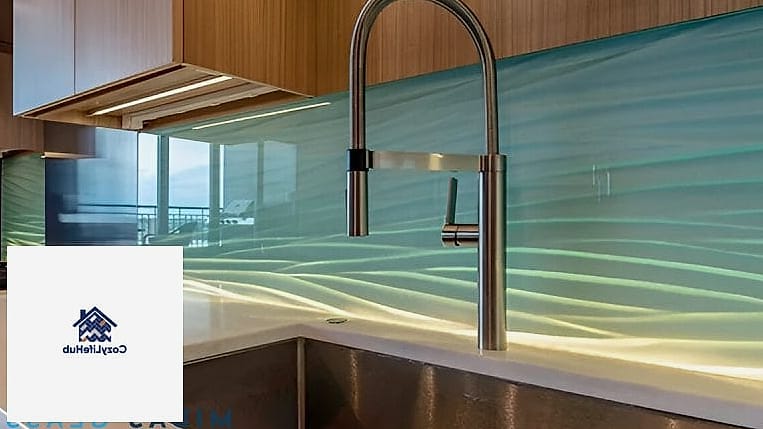
Instead of colored glass, this approach uses clear glass panels mounted over wallpaper, painted patterns, or even reclaimed wood. You get the practicality of a glass surface with the personality of whatever’s underneath.
It’s a favorite among DIY-inclined homeowners who want to change the look down the road, since swapping what’s behind the glass is far easier than retiling.
The main thing to watch for is condensation or trapped moisture between the glass and the wall, so a professional installer will usually recommend a small air gap or proper sealant.
Recycled Glass Tile
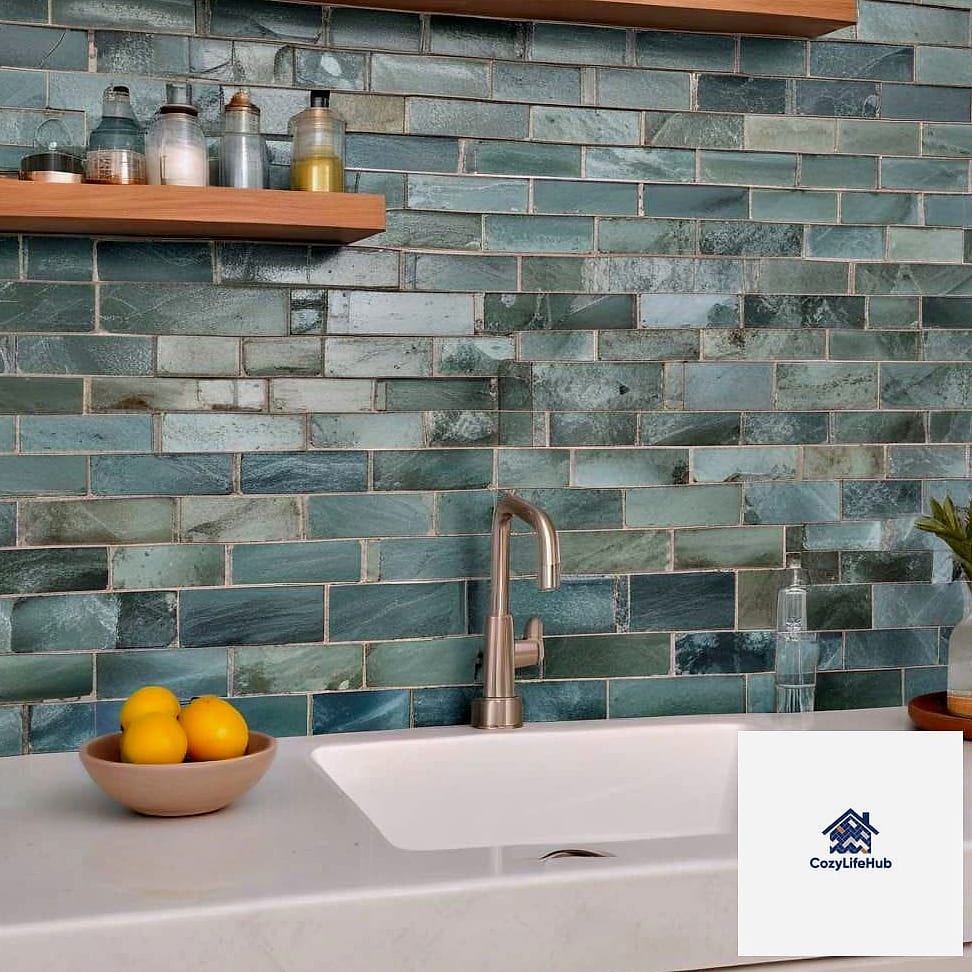
Recycled glass tiles are made from post-consumer glass and have a slightly flecked, artisanal look compared to standard manufactured glass. They’re popular with homeowners who care about sustainability without sacrificing style.
The flecked texture pairs nicely with natural stone countertops and warm wood tones, giving the kitchen an earthy, collected feel rather than a slick showroom look.
These tiles perform just as well as standard glass in terms of durability and cleaning, so you’re not giving up practicality for the eco-friendly angle.
Two-Tone Glass Tile Blocks
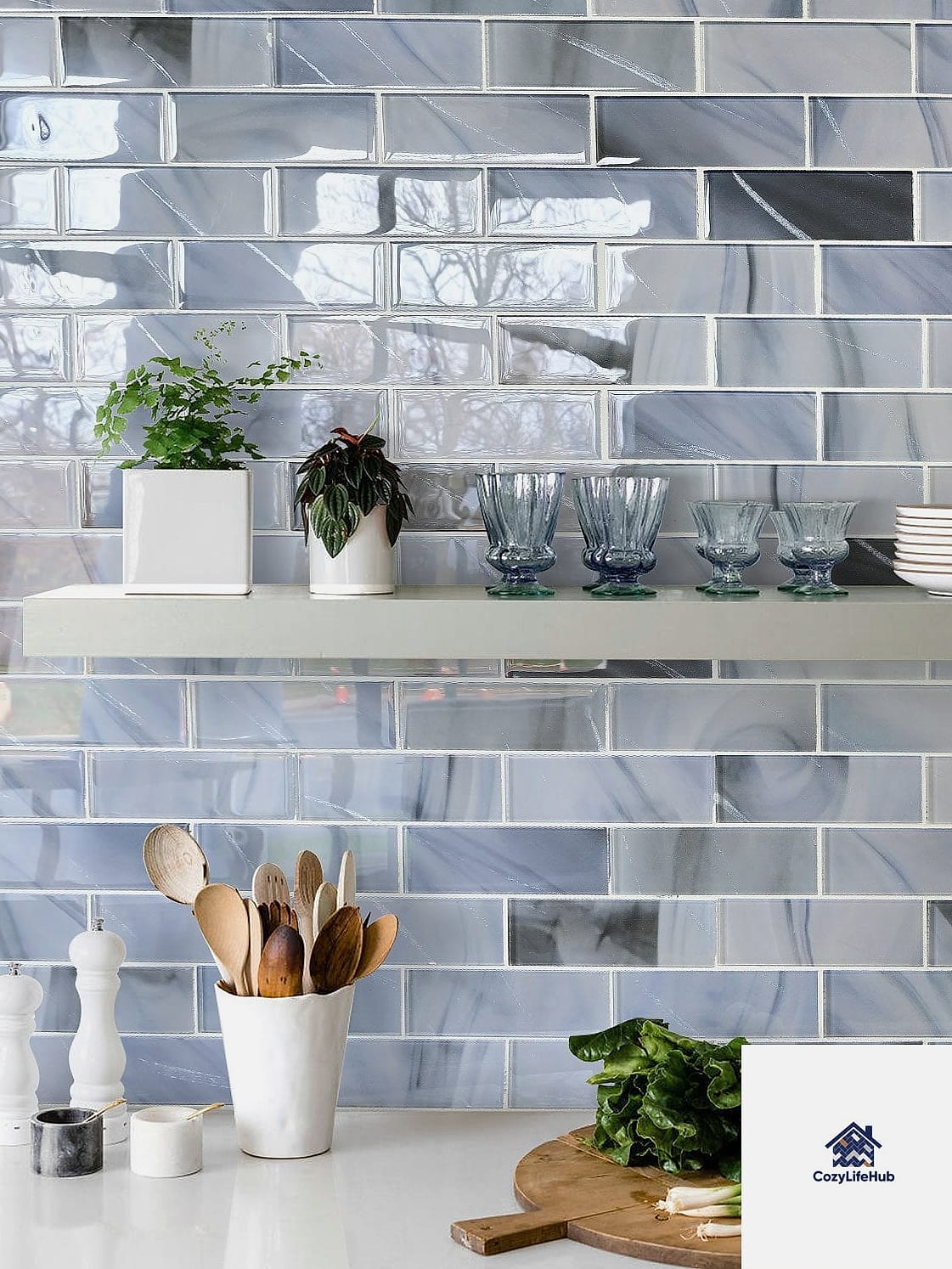
This look uses larger glass tile blocks in two complementary tones, often arranged in an offset or stacked layout, to create subtle pattern without going full mosaic. It reads more graphic and architectural than a single-color wall.
It suits modern or Scandinavian-inspired kitchens especially well, where clean geometry matters more than ornate pattern. Try pairing it with matte black faucets for a bit of contrast.
Because the tiles are larger than mosaic pieces, installation is more forgiving and grout maintenance is minimal, making this a reasonably approachable DIY project for confident beginners.
Final Thoughts
Glass backsplashes cover a huge range, from budget peel-and-stick versions to custom-painted statement walls, so there’s genuinely something here for almost any kitchen style and price point. The best approach is usually to think about how much upkeep you want, how much natural light your kitchen gets, and whether you’re after something quiet or something that carries the room. Whichever direction you go, glass tends to reward you with a backsplash that stays easy to clean and still looks good years down the line.