12 Iridescent Tile Ideas That Designers Keep Coming Back To
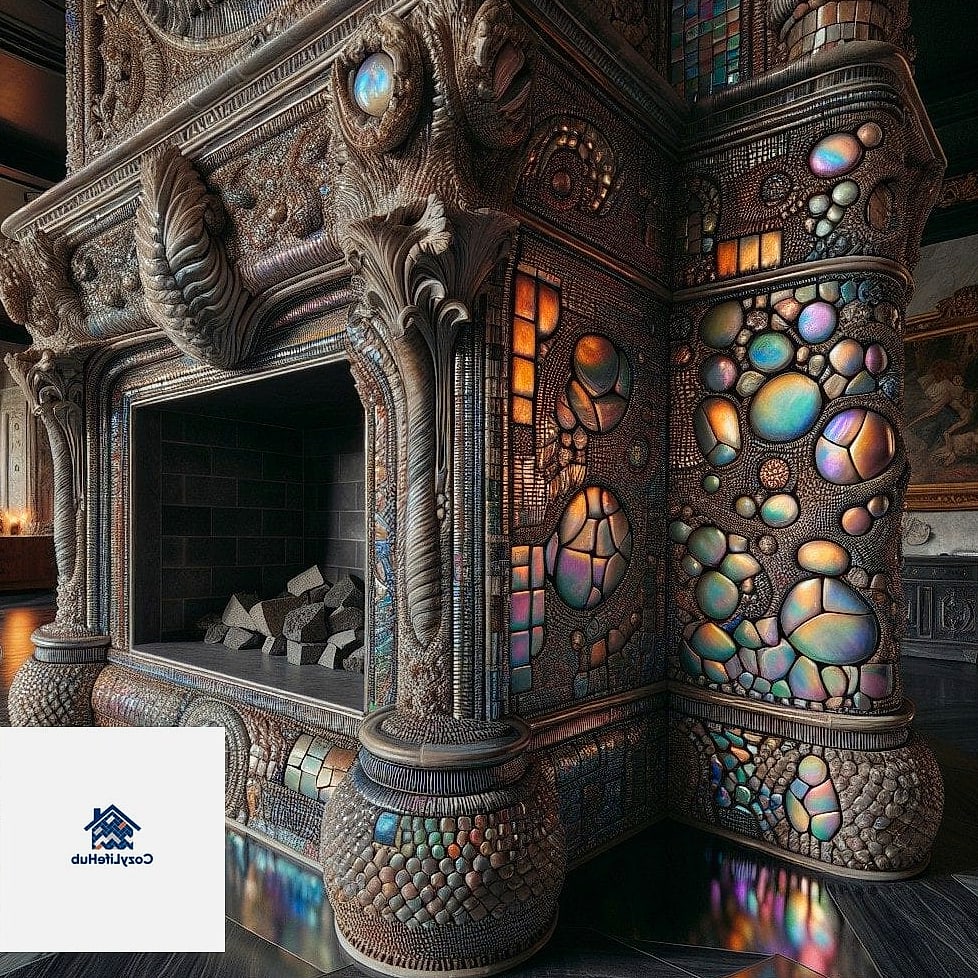
- Iridescent Glass Mosaic Backsplash
- Iridescent Fish Scale Tile in a Powder Room
- Shimmering Herringbone Backsplash
- Iridescent Subway Tile with a Twist
- Statement Shower Wall
- Iridescent Accent Niche
- Iridescent Mermaid Scale Floor
- Kitchen Island Wrap
- Fireplace Surround in Shifting Glass Tile
- Iridescent Tile Feature Wall in a Bedroom
- Iridescent Tile Bar Backsplash
- Iridescent Tile Ceiling Accent
12 Iridescent Tile Ideas That Designers Keep Coming Back To
There’s a reason iridescent tile keeps showing up in the projects designers are proudest of. It catches light in a way that flat, matte finishes just can’t compete with, shifting from blue to green to gold depending on where you’re standing and what time of day it is. It’s the kind of detail that makes a small bathroom or a kitchen backsplash feel like it belongs in a magazine, without needing to gut the whole room to get there.
If you’ve been scrolling design inspiration and keep pausing on those shimmery, almost mermaid-scale-looking walls, you’re not imagining the appeal. Iridescent tile has staying power because it does something most materials can’t: it changes personality depending on your mood, your lighting, even your paint color. Here are twelve ways designers keep bringing it back into their projects.
Iridescent Glass Mosaic Backsplash
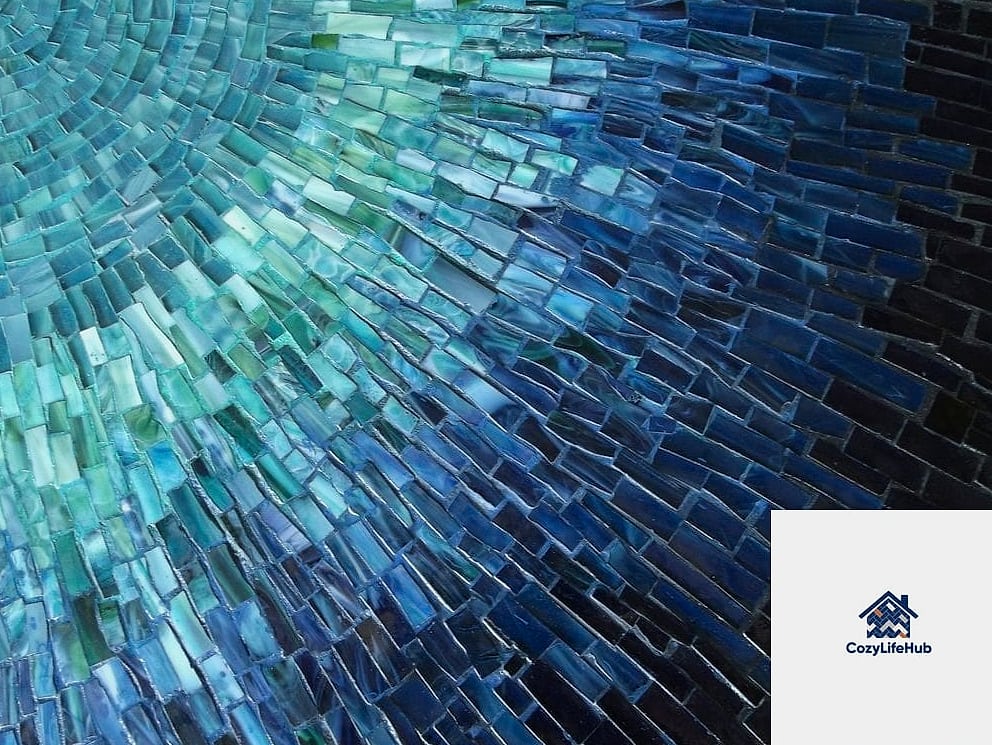
This is probably the most common entry point for people who want to try iridescent tile without committing to an entire room. Small glass mosaic tiles, usually in the one-inch range, get installed behind the range or sink where they catch overhead light and pendant fixtures.
It works especially well in kitchens with white or pale gray cabinetry, since the neutral backdrop lets the color-shifting glass do all the talking. Homeowners love it because it reads as a splurge finish even when it’s installed on a modest budget. Glass mosaic sheets are relatively easy to find pre-mounted on mesh backing, which also makes DIY installation more realistic than people expect.
Upkeep is simple, too. A soft cloth and basic glass cleaner keep the shimmer intact, and there’s no sealing required the way there is with natural stone.
Iridescent Fish Scale Tile in a Powder Room
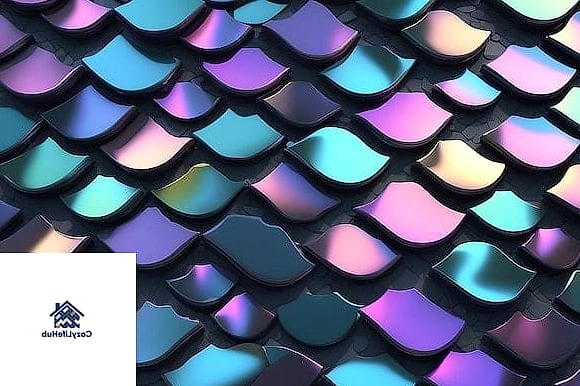
Fish scale, or “scallop,” tile has been trending for a few years now, and pairing it with an iridescent glaze takes it somewhere more dramatic. The overlapping curved shape already creates movement on a wall, and the shifting finish amplifies that.
Powder rooms are the perfect testing ground for this look because they’re small, low-traffic spaces where a bold choice doesn’t overwhelm daily life. Designers often run it floor to ceiling on one accent wall, leaving the rest of the room in a quieter tone so the tile has room to breathe.
It’s not the easiest DIY layout since the curved edges require careful spacing, so this is one where hiring a tile setter tends to pay off in a cleaner finish.
Shimmering Herringbone Backsplash
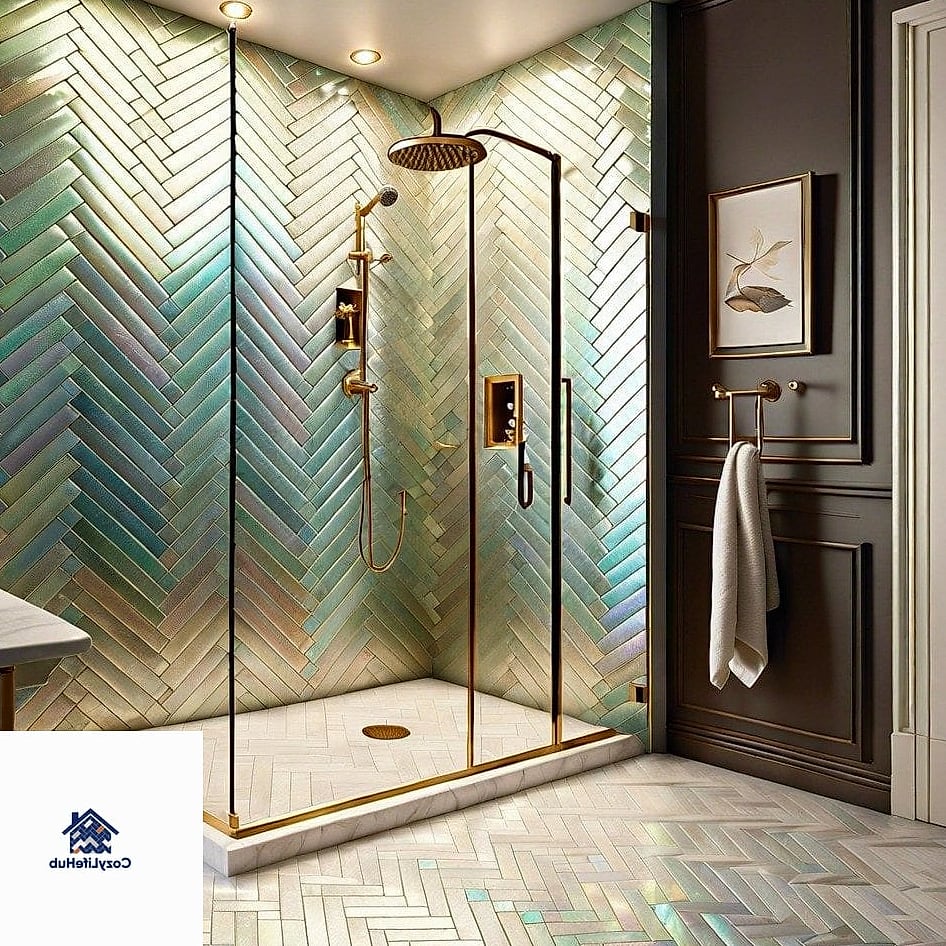
Herringbone pattern already has built-in visual interest thanks to the angled layout, and when you add an iridescent finish, the zigzag seems to move as you walk past it. It’s a favorite for kitchens that want texture without leaning into a busy color palette.
This works particularly well in white kitchens with brass or matte black hardware, since the warm or cool undertones in the tile pick up whichever metal finish you’ve chosen. It’s a subtle way to tie the whole space together.
Herringbone does require more cuts and more tile waste than a straight layout, so budget a little extra for materials if you’re going this route.
Iridescent Subway Tile with a Twist
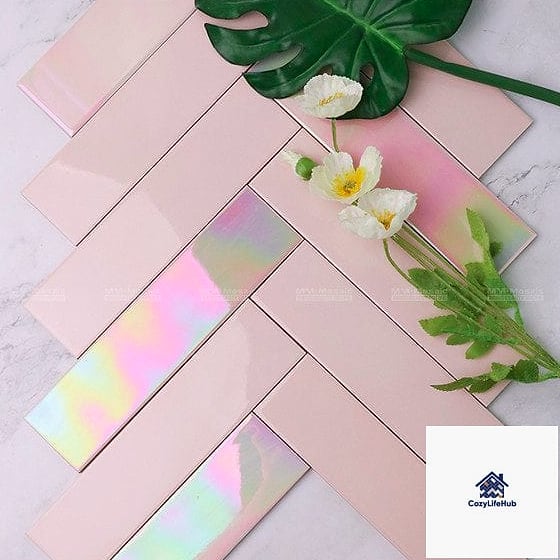
Subway tile is the reliable, renter-friendly classic, and an iridescent glaze gives it a reason to feel fresh again. Instead of the flat white rectangle everyone already has, you get a tile that shifts subtly from silvery blue to soft green depending on the light.
It’s a smart choice for anyone who wants something a little different but isn’t ready to commit to a bold pattern or color. The rectangular shape keeps installation straightforward, and it plays nicely with almost any grout color, though a light gray or white grout tends to let the shimmer stand out most.
Because it’s still technically a subway layout, it also tends to age well and won’t feel dated the way a more novelty-driven pattern might in five or ten years.
Statement Shower Wall
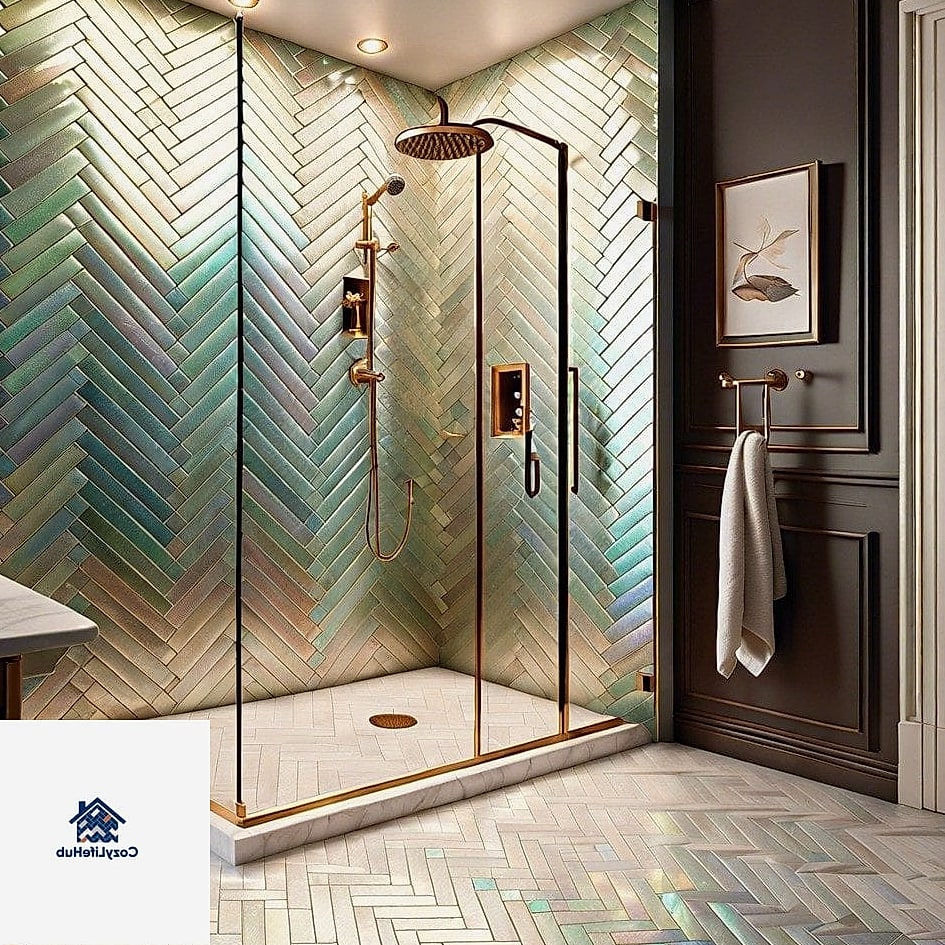
A full shower surround in iridescent tile turns a functional space into something closer to an art installation. Water and steam actually enhance the effect, since moisture on the glass surface intensifies the way light bounces around.
This is a favorite in primary bathrooms where the shower is somewhat enclosed or glass-fronted, letting the tile become a focal point visible from the rest of the room. Smaller mosaic sizes tend to work best here since they can wrap curved niches and corners without awkward cuts.
Maintenance is worth mentioning honestly: hard water spots show up more visibly on shiny surfaces, so a squeegee after each shower goes a long way toward keeping that shimmer looking sharp.
Iridescent Accent Niche
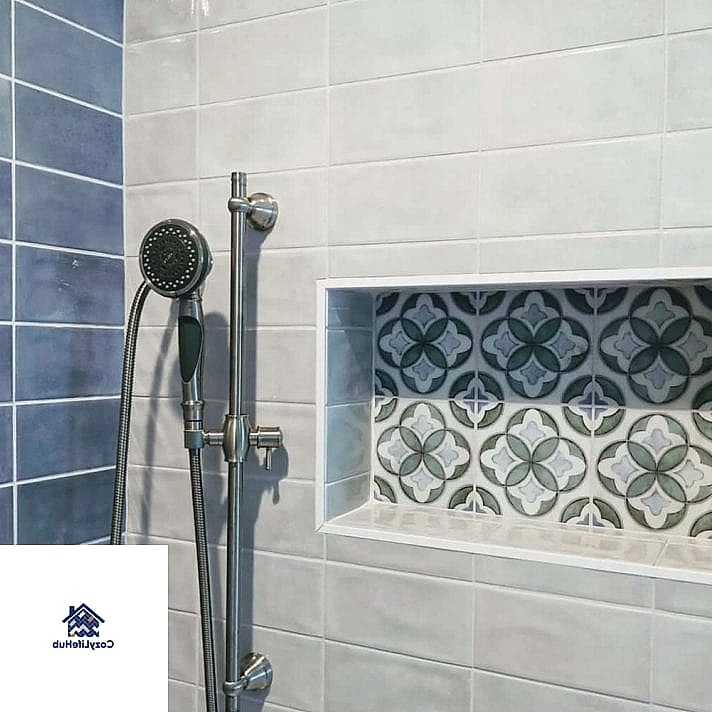
Not every bathroom or kitchen needs a full wall of shimmer, and that’s where a tiled niche comes in. A recessed shelf lined in iridescent mosaic gives you a concentrated dose of sparkle in a shower or above a vanity without a bigger commitment.
Designers like this option because it’s genuinely budget-friendly, often needing just one small sheet of tile. It also gives you a low-risk way to test whether you actually love the finish before investing in a larger installation elsewhere in the house.
Pairing the niche with simple white or cream tile on the surrounding walls keeps the contrast crisp and intentional rather than accidental.
Iridescent Mermaid Scale Floor
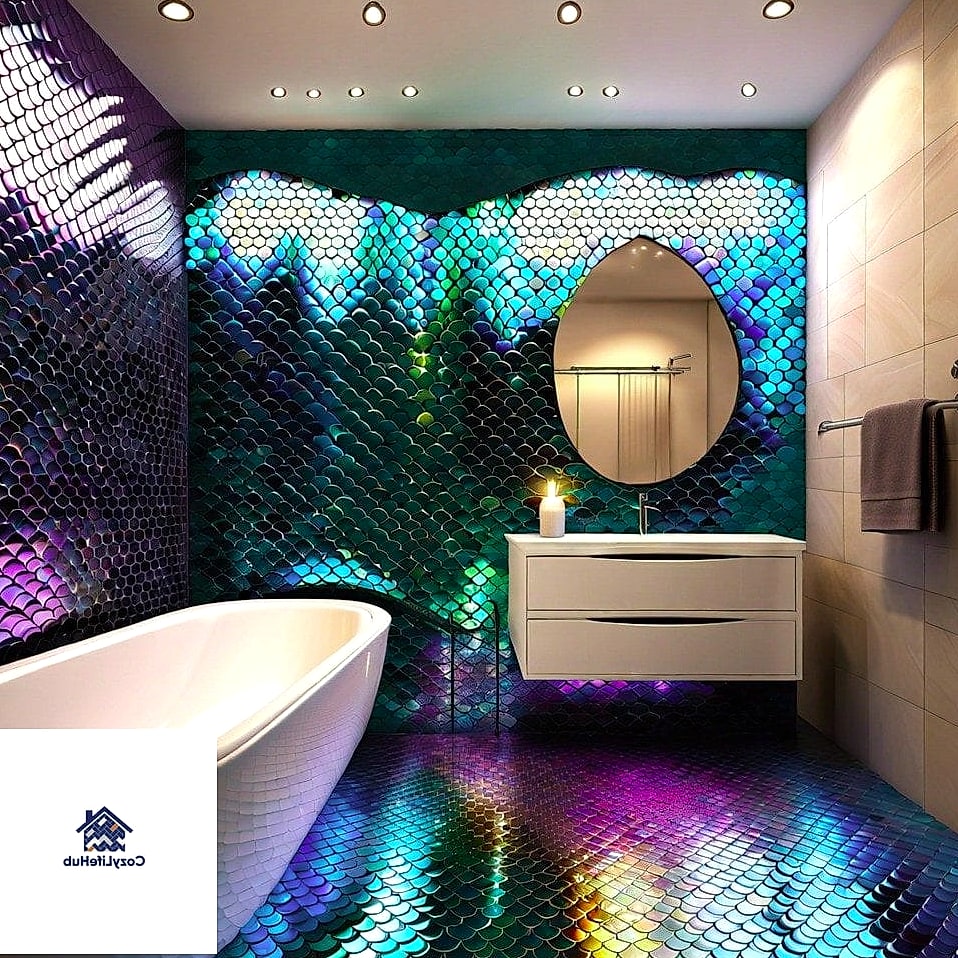
Taking iridescent tile down to the floor is a bolder move, but it’s one that shows up more and more in laundry rooms and powder room floors where designers want the space to feel unexpected the second you walk in.
Scalloped or mermaid-scale shaped floor tile in an iridescent glaze creates a rippling, almost underwater feeling underfoot. It’s most successful in smaller footprints, since a large expanse of shimmer can start to feel busy rather than luxurious.
Floor installations do call for slightly more attention to slip resistance, so it’s worth asking your tile supplier about the finish’s texture rating, especially for bathroom applications.
Kitchen Island Wrap
Instead of limiting iridescent tile to walls, some designers are wrapping kitchen islands in it, turning the island into a genuine centerpiece. It’s an unexpected application that instantly makes a kitchen feel more custom without requiring a full renovation.
This works especially well in kitchens that already lean neutral, giving the island permission to be the one piece with real personality. A glossy iridescent finish paired with a butcher block or quartz countertop on top creates nice contrast between textures.
It’s a higher-maintenance choice than paint or wood paneling, since grout lines on an island need occasional cleaning, but the payoff in visual impact is hard to match.
Fireplace Surround in Shifting Glass Tile
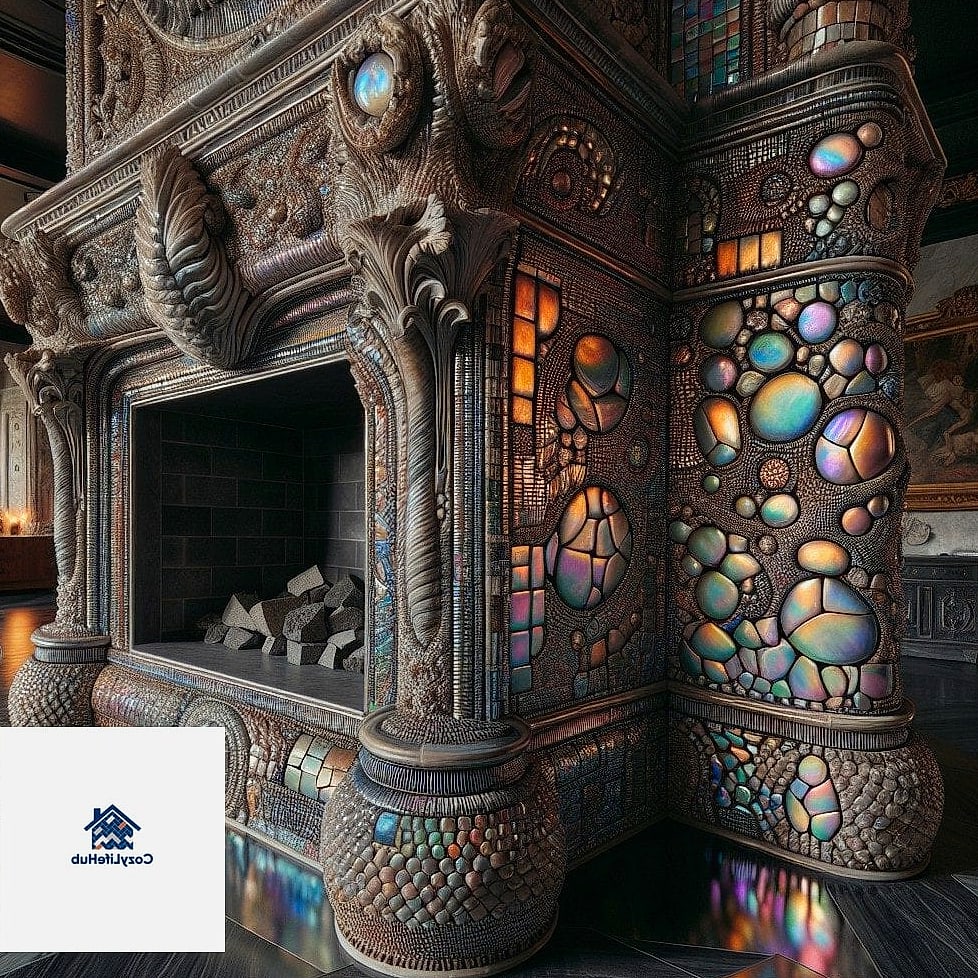
A fireplace surround is another spot where iridescent tile earns its keep. The flicker of firelight against a color-shifting glass tile creates a genuinely cozy, almost hypnotic effect in a living room.
Designers tend to reach for slightly larger format tiles here, rather than tiny mosaics, so the pattern doesn’t compete with the fireplace itself. Darker iridescent glazes, the ones that shift from charcoal to deep blue or purple, tend to feel more at home in living spaces than the paler, beachier tones that work well in bathrooms.
It’s a project that usually calls in a professional, since fireplace surrounds involve working around venting and clearances, but the visual payoff justifies the extra planning.
Iridescent Tile Feature Wall in a Bedroom
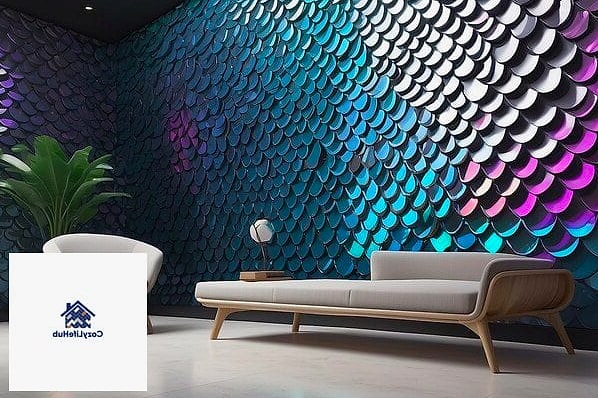
Bringing tile into a bedroom might sound unconventional, but a single accent wall behind the headboard in iridescent tile has become a favorite for designers working on more editorial, statement-driven spaces.
It photographs beautifully because the finish reacts differently depending on the angle of the shot, which is part of why it keeps showing up in portfolio projects. In real life, it also means the wall never looks static, since morning light and evening lamp light will each bring out different tones.
This isn’t a budget-friendly weekend project, admittedly, but for anyone doing a full bedroom remodel, it’s worth considering as the one splurge wall in an otherwise simple room.
Iridescent Tile Bar Backsplash
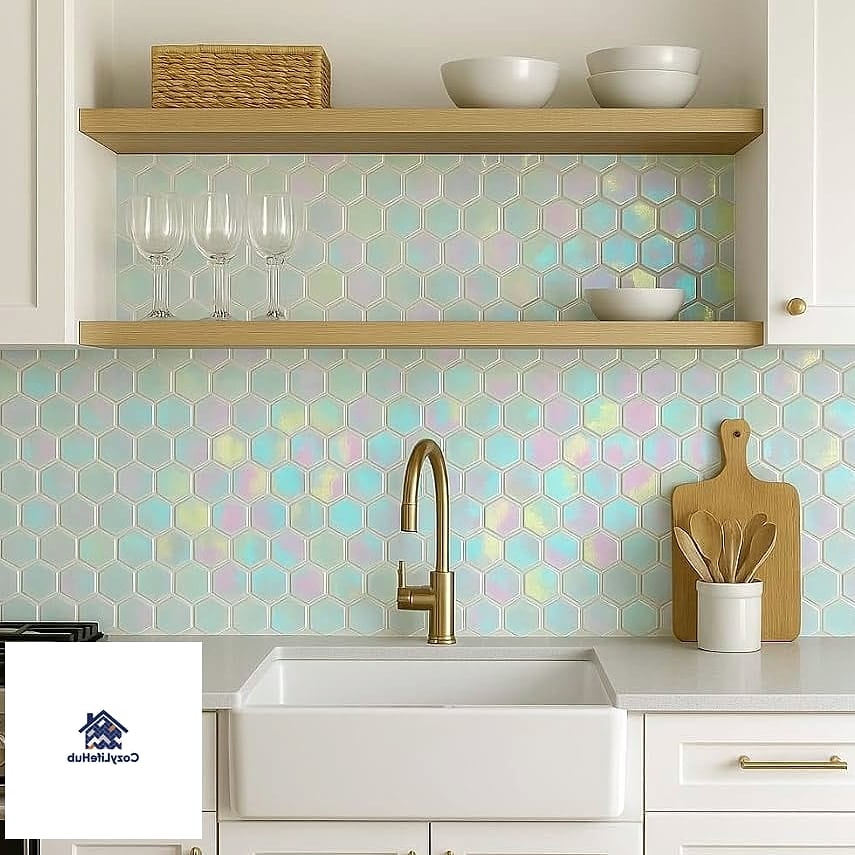
Home bars and butler’s pantries are quietly becoming one of the best places to use iridescent tile, since these are spaces meant to feel a little more indulgent than the rest of the house.
A shimmering backsplash behind open shelving, paired with glassware and a few brass fixtures, gives the whole nook a boutique, cocktail-lounge feel. Because these spaces tend to be smaller and enclosed, they’re also more forgiving for a bold material choice that might feel like too much in a larger open kitchen.
Peel-and-stick iridescent tile options have gotten notably better in recent years, making this one of the more renter-friendly ways to try the look without a permanent installation.
Iridescent Tile Ceiling Accent
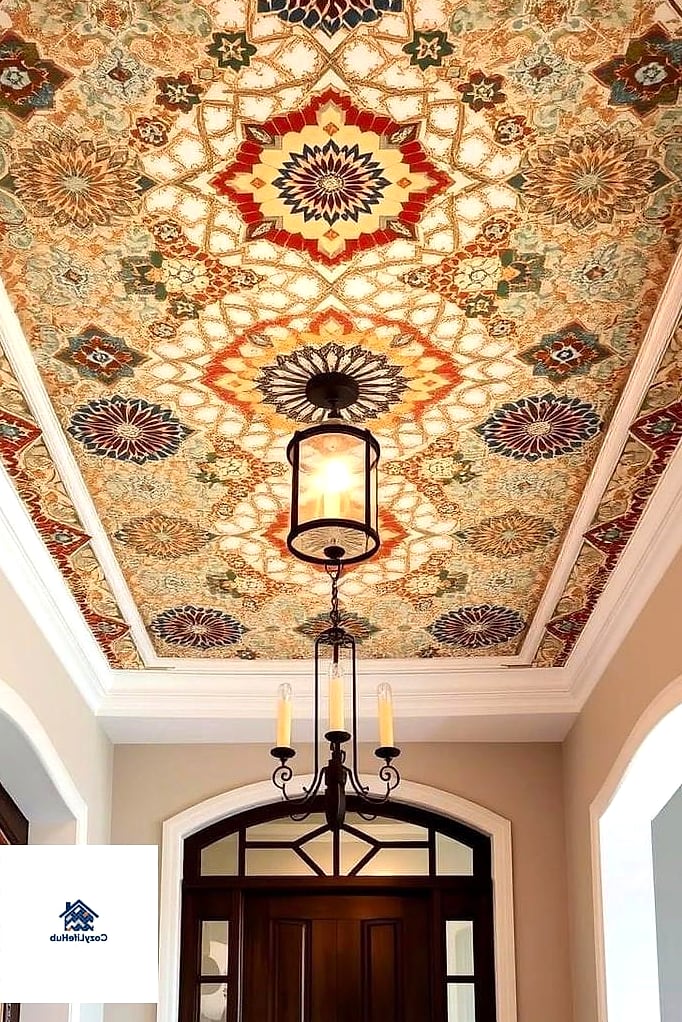
This is the idea designers mention almost like a secret weapon: tiling the ceiling instead of, or in addition to, the walls. In a small powder room or a shower with a skylight, an iridescent tile ceiling catches natural light from above and throws color around the room in a way flat paint never could.
It’s an unconventional application, and it’s not for every space, but in the right bathroom it creates a genuinely memorable, almost jewel-box feeling. Designers usually pair it with simpler tile or paint on the walls so the ceiling has room to be the surprise.
Installation is more labor-intensive since it’s overhead work, so this is one to budget extra time and money for, but it’s consistently one of the details people mention first when they walk into a space that has it.
Iridescent tile isn’t going anywhere anytime soon, and it’s easy to see why designers keep returning to it project after project. It adapts to almost any room, any budget, and any level of boldness you’re comfortable with, whether that’s a small tiled niche or a full shimmering shower wall. If you’ve been on the fence about trying it, a small space like a powder room or backsplash is a low-risk place to start, and there’s a good chance you’ll end up wanting it somewhere else in the house too.