18 Shiplap Backsplash Ideas to Inspire Your Next Renovation
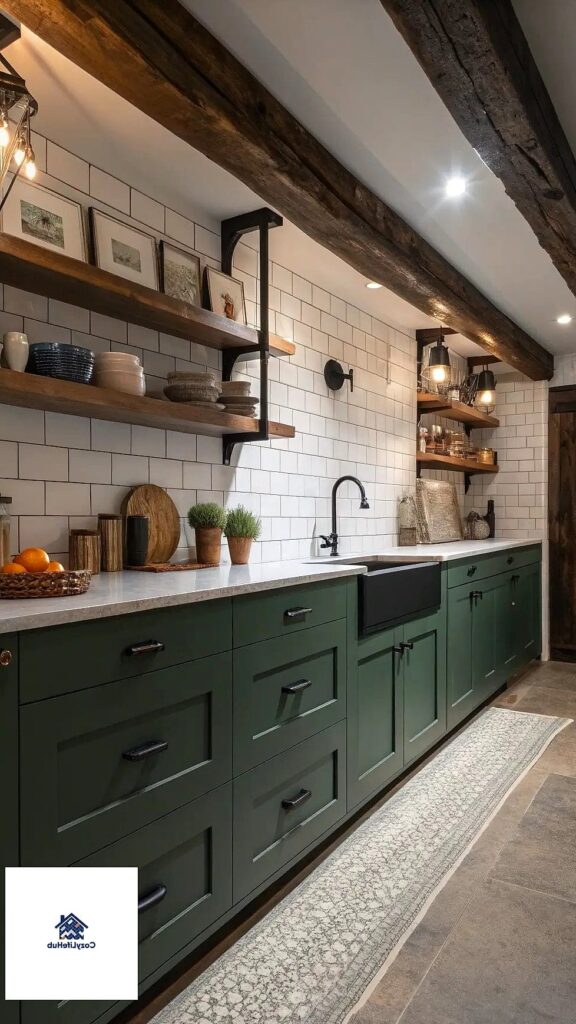
- Classic White Shiplap Behind the Range
- Whitewashed Wood for a Softer Farmhouse Feel
- Dark Charcoal Shiplap for Moody Contrast
- Shiplap Paired with a Butcher Block Counter
- Vertical Shiplap Installation
- Shiplap Above the Counter, Tile Below
- Shiplap in a Small Galley Kitchen
- Blue-Gray Shiplap for a Coastal Vibe
- Shiplap with Open Shelving
- Shiplap Behind a Floating Range Hood
- Warm Wood-Tone Shiplap, No Paint at All
- Shiplap in a Butler’s Pantry
- Herringbone-Inspired Shiplap Pattern
- Shiplap with a Pop of Color
- Shiplap Behind Open Bathroom Vanity Shelving
- Shiplap with Brass or Gold Accents
- Weathered or Reclaimed Wood Shiplap
- Shiplap Accent Behind a Kitchen Island
18 Shiplap Backsplash Ideas to Inspire Your Next Renovation
Shiplap isn’t just for accent walls anymore. Once homeowners realized how well those horizontal grooved boards hold up behind a stove or sink, shiplap backsplashes started popping up in kitchens all over the country. There’s something about the texture and the shadow lines that a flat tile just can’t replicate.
If you’re weighing this option for your own kitchen or bathroom, here are eighteen ways to use it that go way beyond the plain white farmhouse look you’ve probably already seen a hundred times.
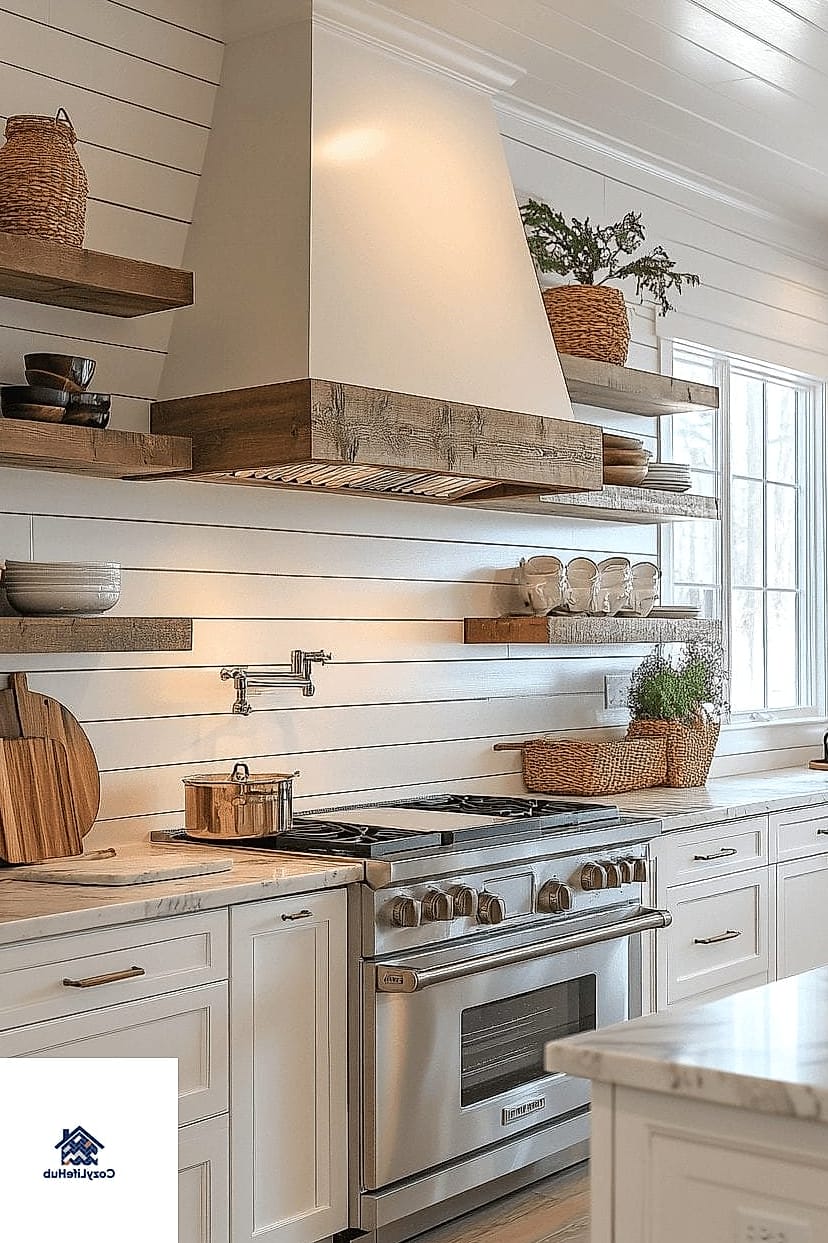
Classic White Shiplap Behind the Range
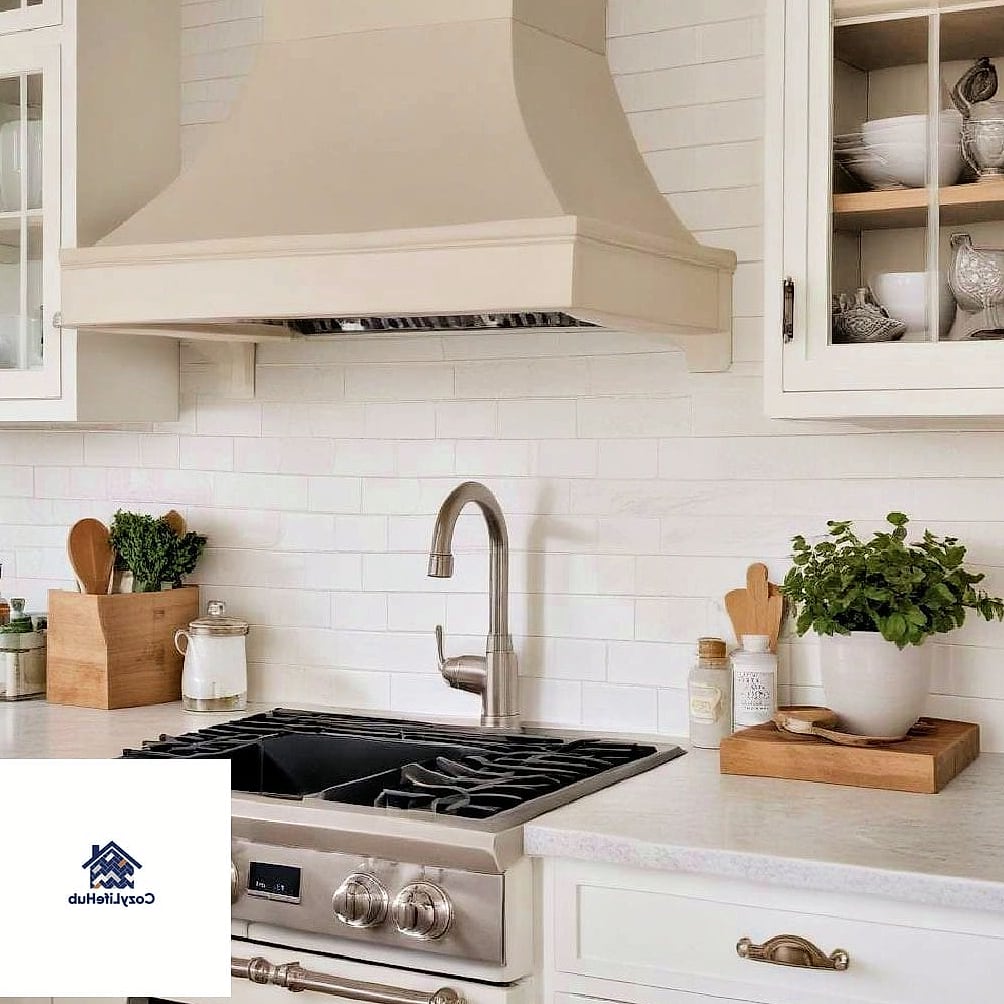
This is the look that started the trend, and honestly, it earns its popularity. Crisp white boards behind the stove create a bright, airy backdrop that makes everything else in the kitchen pop. It pairs beautifully with black iron hardware and open shelving. Just keep in mind that white paint near a stovetop needs a good coat of semi-gloss so grease wipes off instead of soaking in.
Whitewashed Wood for a Softer Farmhouse Feel
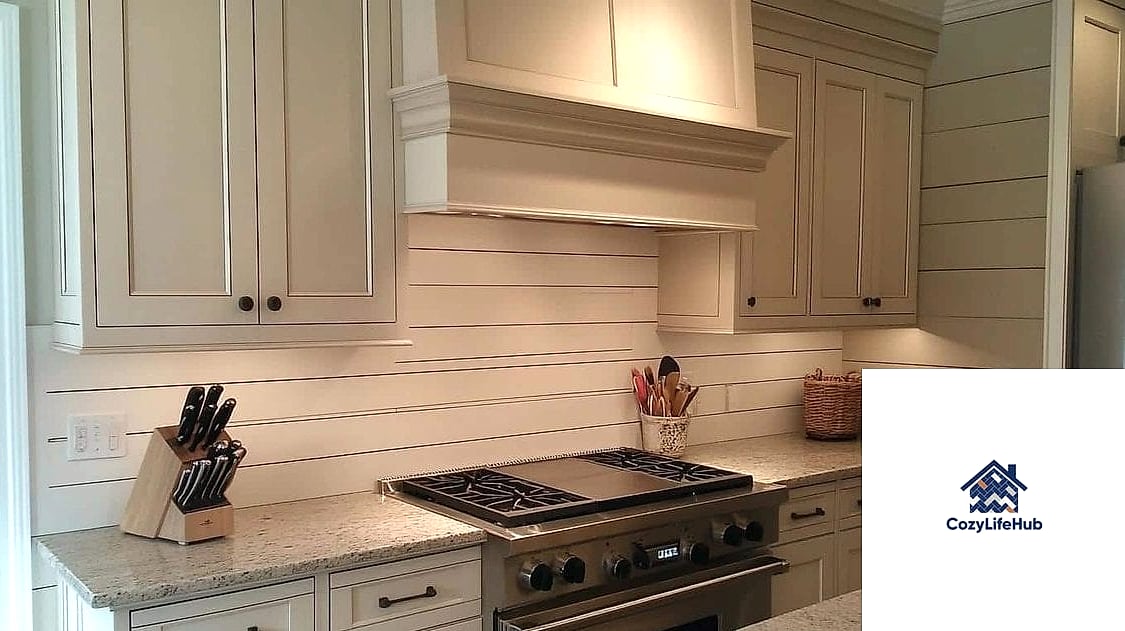
Instead of solid white paint, a whitewash lets the wood grain peek through for something a little less stark. It’s a nice middle ground between rustic and refined. This works especially well in kitchens that already lean toward warm wood tones, like butcher block counters or a wood dining table nearby, since it ties the whole space together without matching everything exactly.
Dark Charcoal Shiplap for Moody Contrast
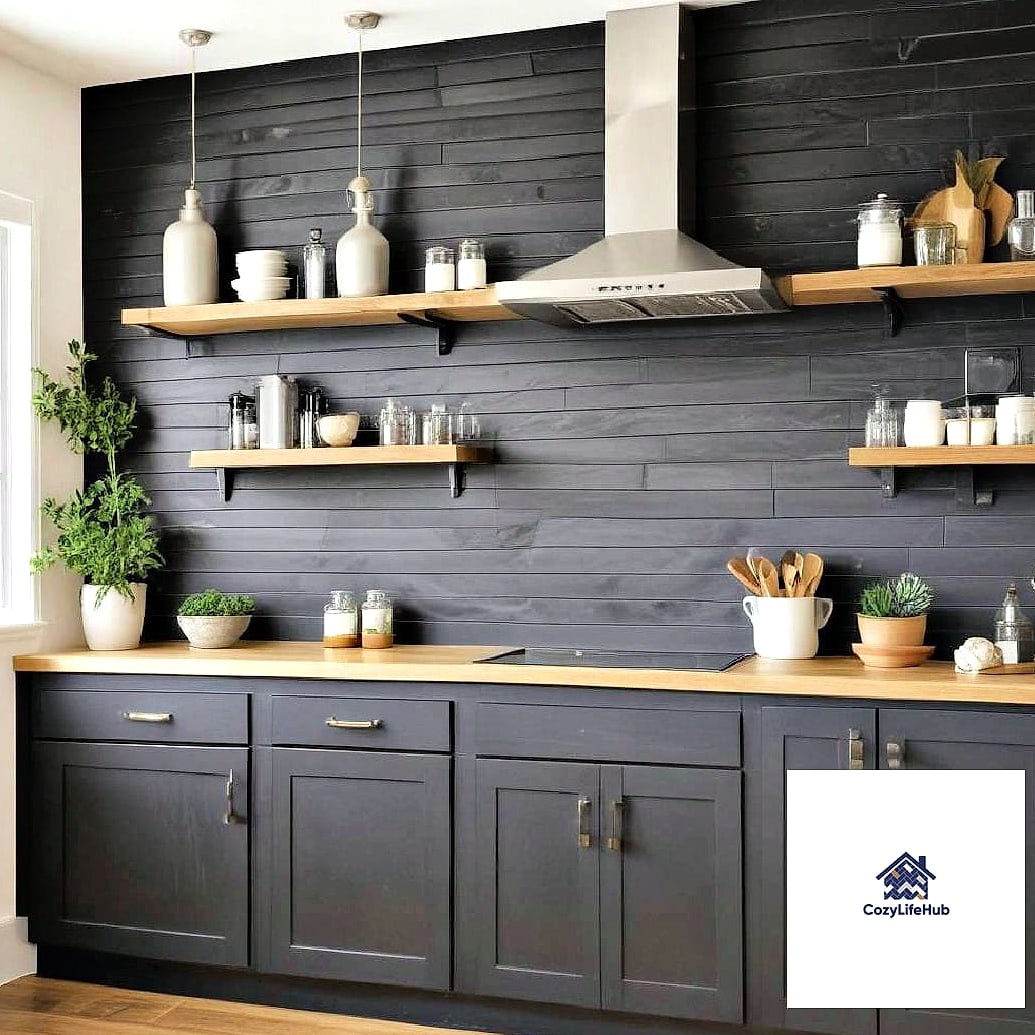
If your kitchen has white cabinets and light countertops, a charcoal or black shiplap backsplash adds serious drama. It’s become a favorite for kitchens that want a bit of an edge without going full industrial. Pair it with brushed brass or matte black fixtures and the contrast does most of the design work for you.
Shiplap Paired with a Butcher Block Counter
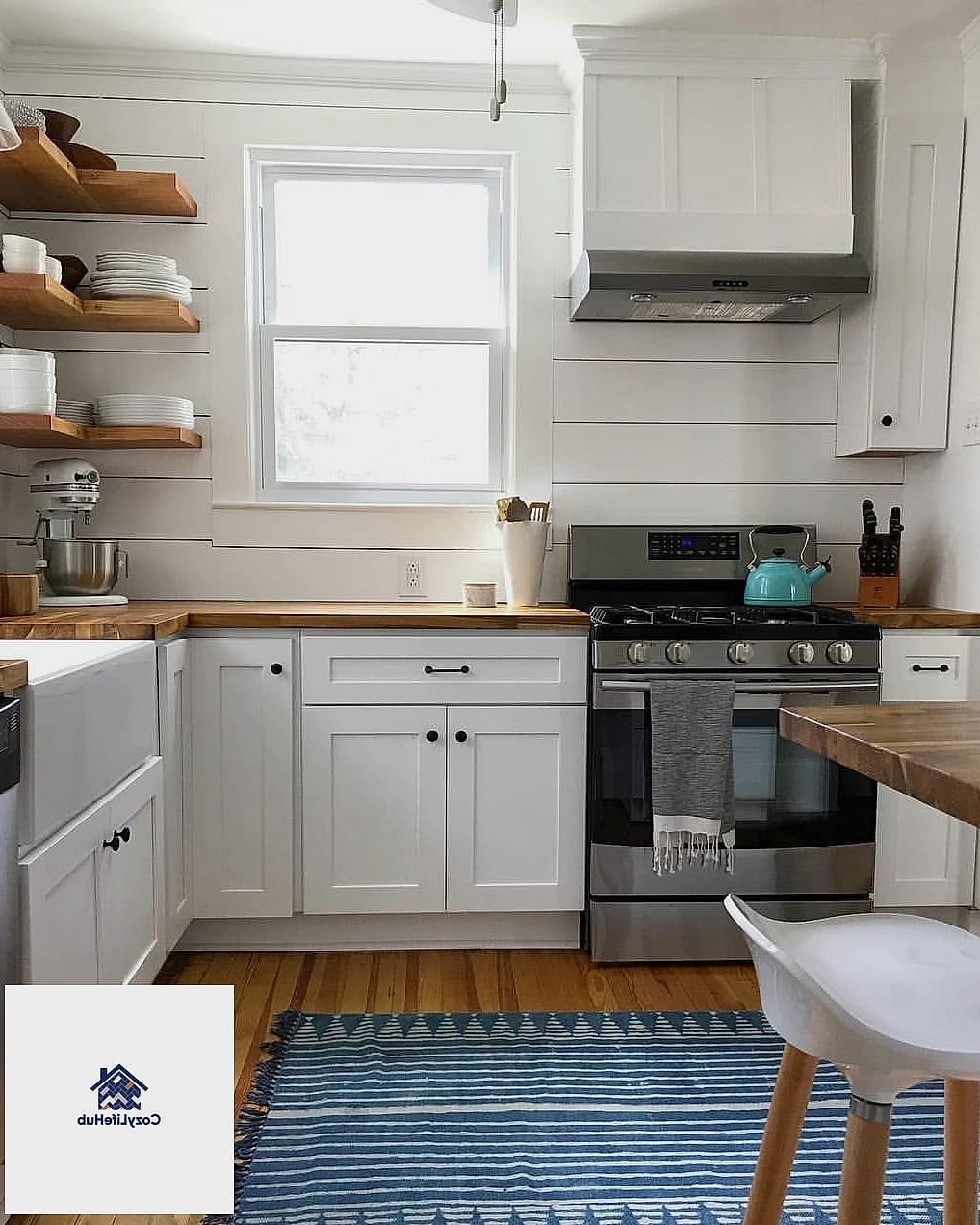
There’s a coziness to combining horizontal wood planks with a butcher block counter, especially in a smaller kitchen. The repeated wood tones feel intentional rather than matchy. Just make sure you seal the shiplap near the counter edge, since butcher block already needs regular oiling and you don’t want moisture creeping into the wood behind it.
Vertical Shiplap Installation
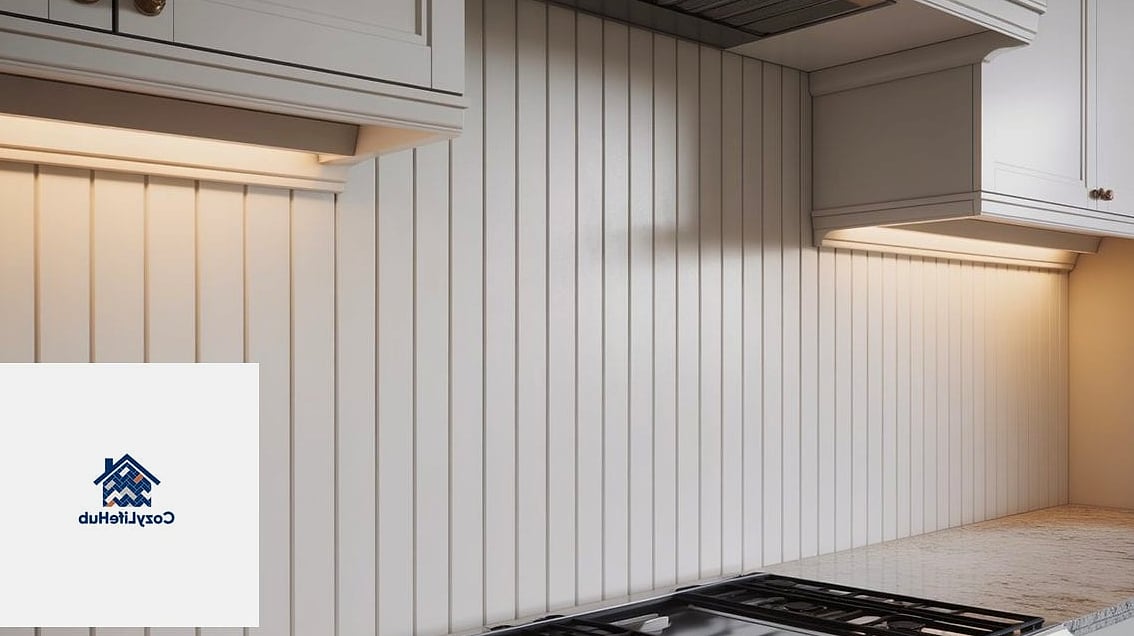
Most people default to horizontal boards, but running them vertically changes the whole feel of the space. It draws the eye upward, which is a nice trick in a kitchen with lower ceilings. It also reads a bit more modern than the traditional horizontal farmhouse look, so it’s worth considering if you want shiplap without leaning too far into rustic territory.
Shiplap Above the Counter, Tile Below
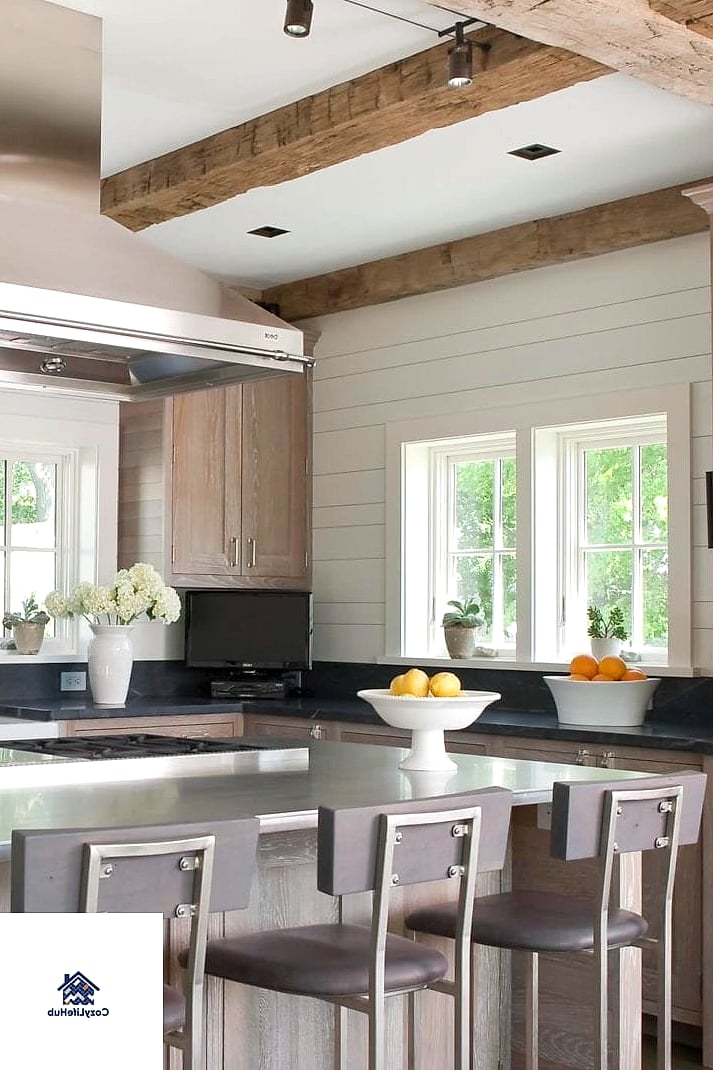
A lot of homeowners are mixing materials rather than committing fully to one. Shiplap on the upper wall with a strip of subway tile or marble mosaic right at the counter line gives you the texture of wood up top and the easy-wipe practicality of tile where spills actually happen. It’s a smart compromise if you love the look but worry about grease near the cooktop.
Shiplap in a Small Galley Kitchen
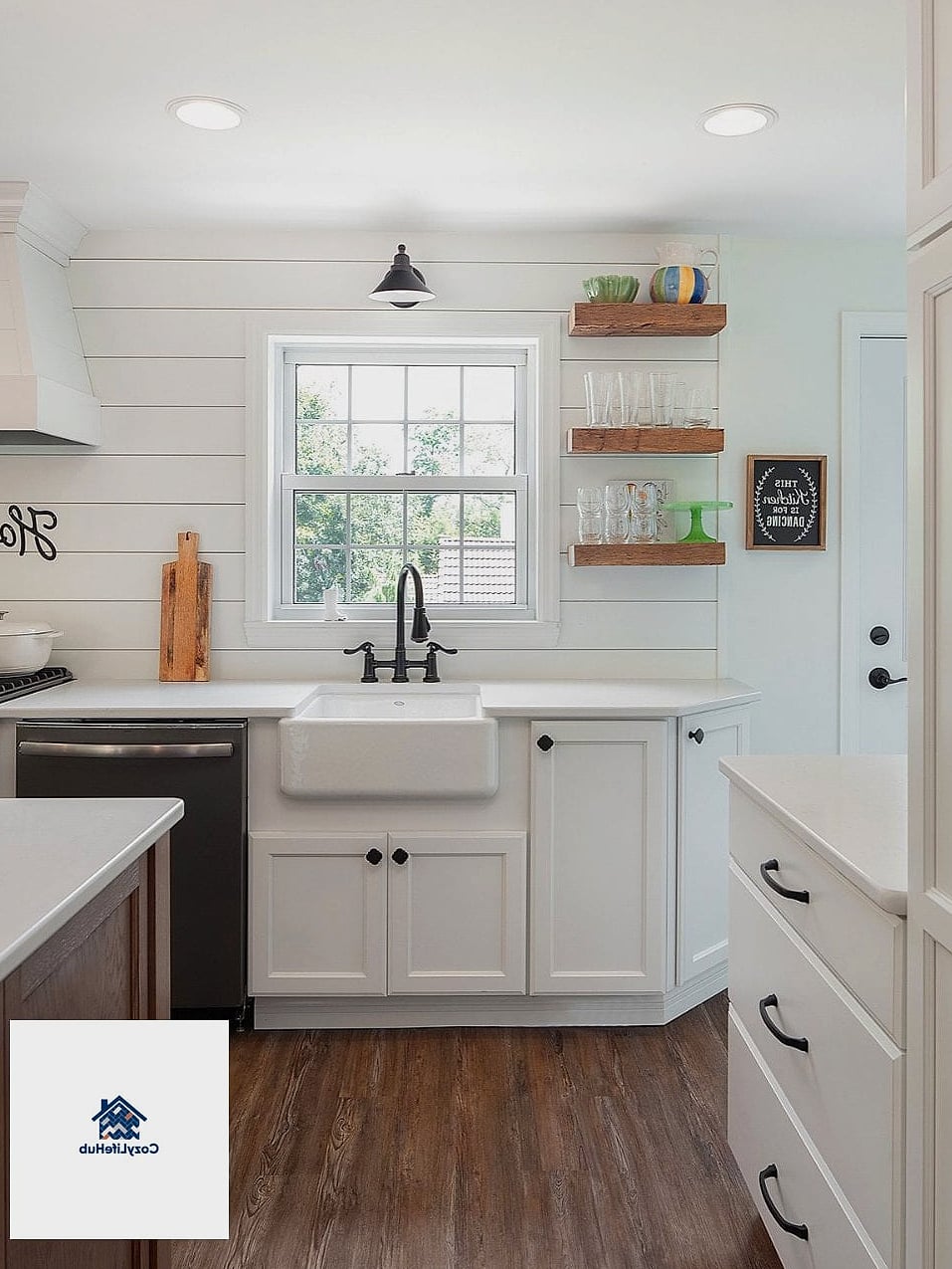
In tight kitchens, shiplap can actually help rather than hurt. The horizontal lines visually widen a narrow space, and a light color palette keeps things from feeling boxed in. Skip the heavy trim work here, since a galley kitchen benefits from clean, simple lines more than ornate detailing.
Blue-Gray Shiplap for a Coastal Vibe
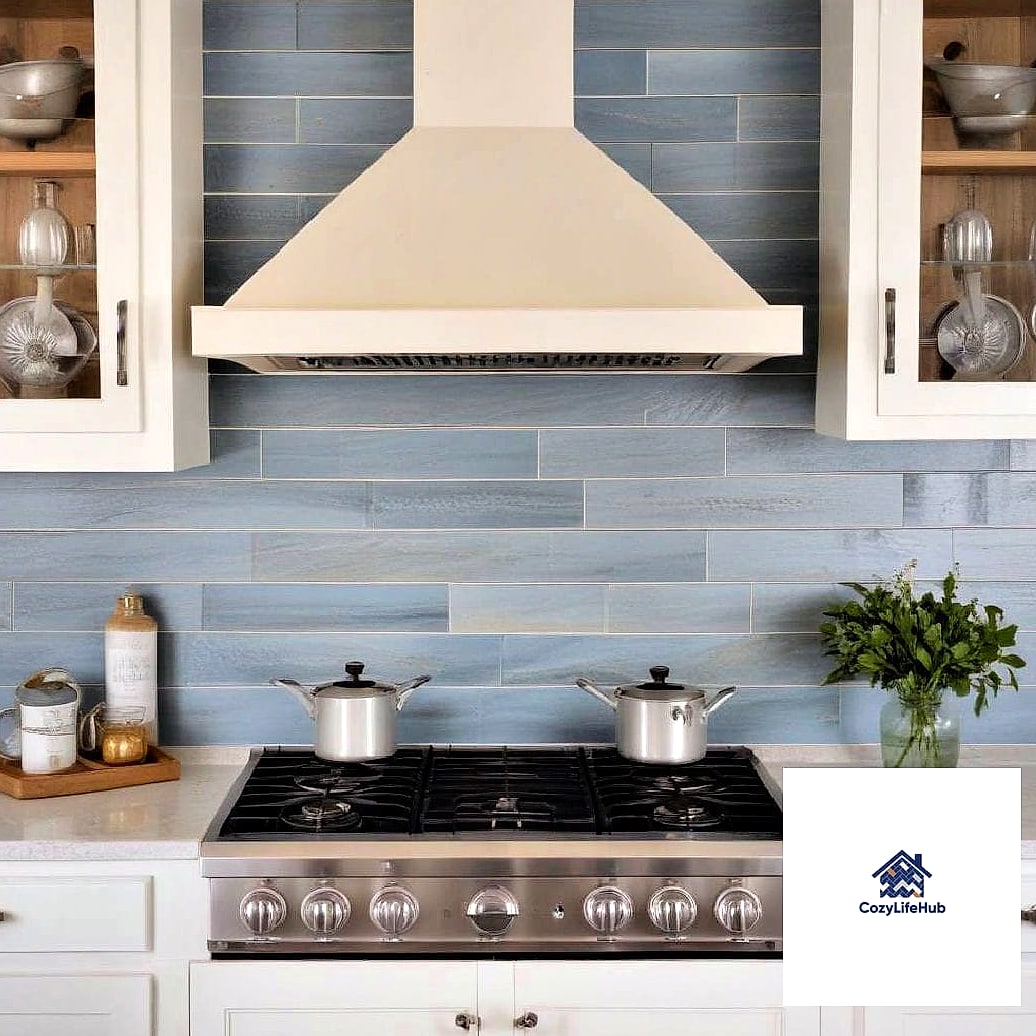
Swap the expected white for a soft blue-gray and suddenly you’ve got a coastal or cottage feel without adding a single anchor or seashell. This works great in kitchens with white cabinetry and natural wood accents. It’s a subtle way to bring in color without committing to a bold accent wall.
Shiplap with Open Shelving
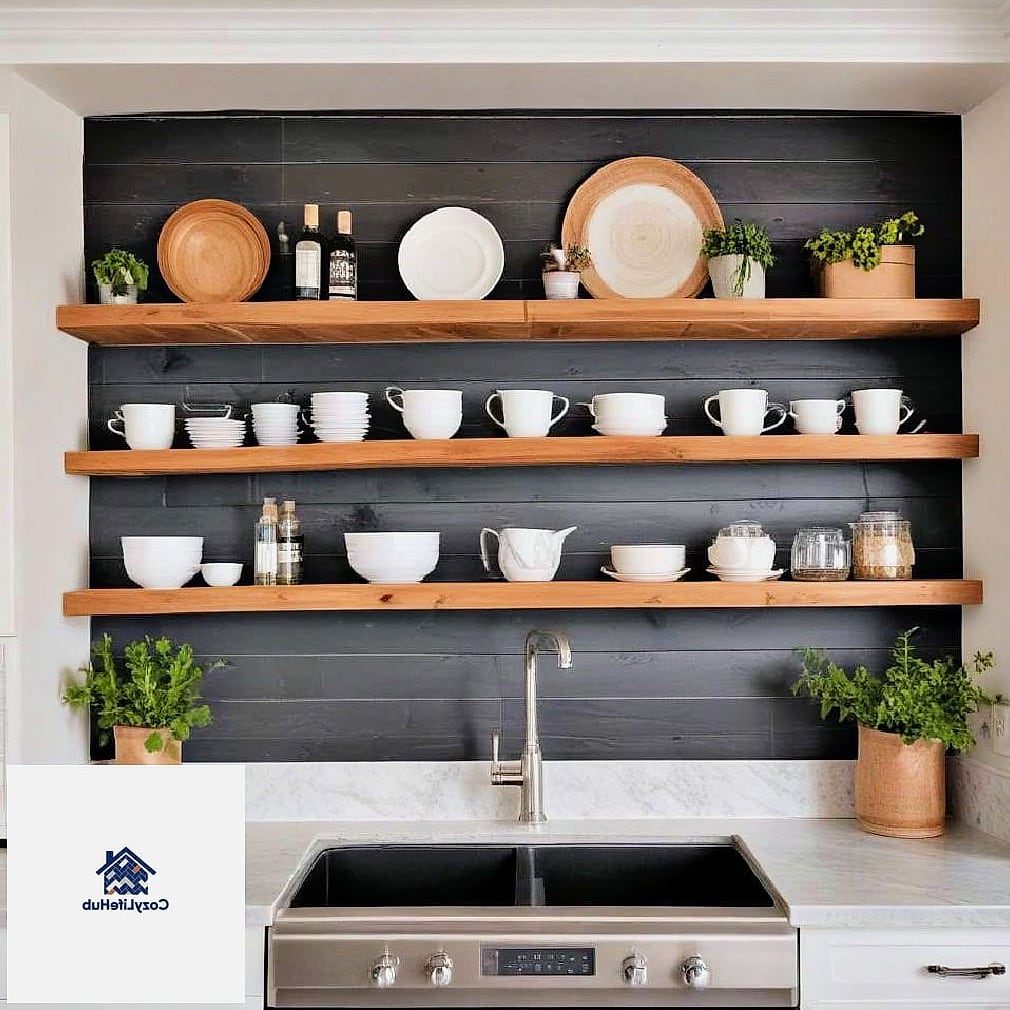
Open shelving already has a casual, lived-in charm, and shiplap behind it doubles down on that feeling. The grooved lines give the shelves something to visually rest against instead of floating on a blank wall. This pairing is especially popular in farmhouse and cottagecore kitchens, though it does mean more visible surface to keep dust-free, so plan on wiping it down weekly.
Shiplap Behind a Floating Range Hood
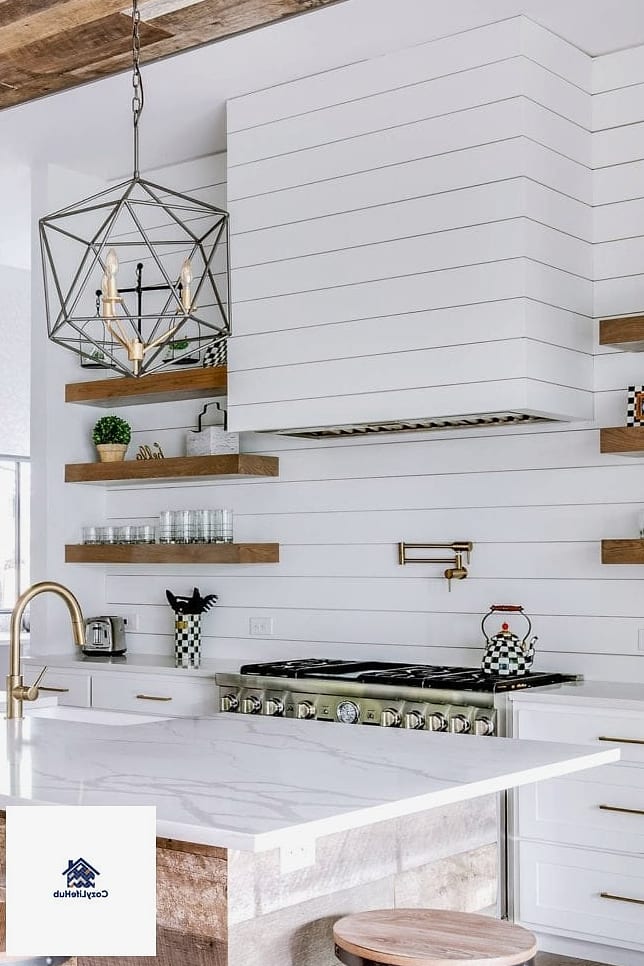
A floating wood or plaster hood surrounded by shiplap creates a real focal point. It’s become a signature look in modern farmhouse renovations because it draws your eye straight to the cooking zone. If you’re going this route, consider extending the shiplap a few inches wider than the hood itself so it doesn’t look like an afterthought.
Warm Wood-Tone Shiplap, No Paint at All
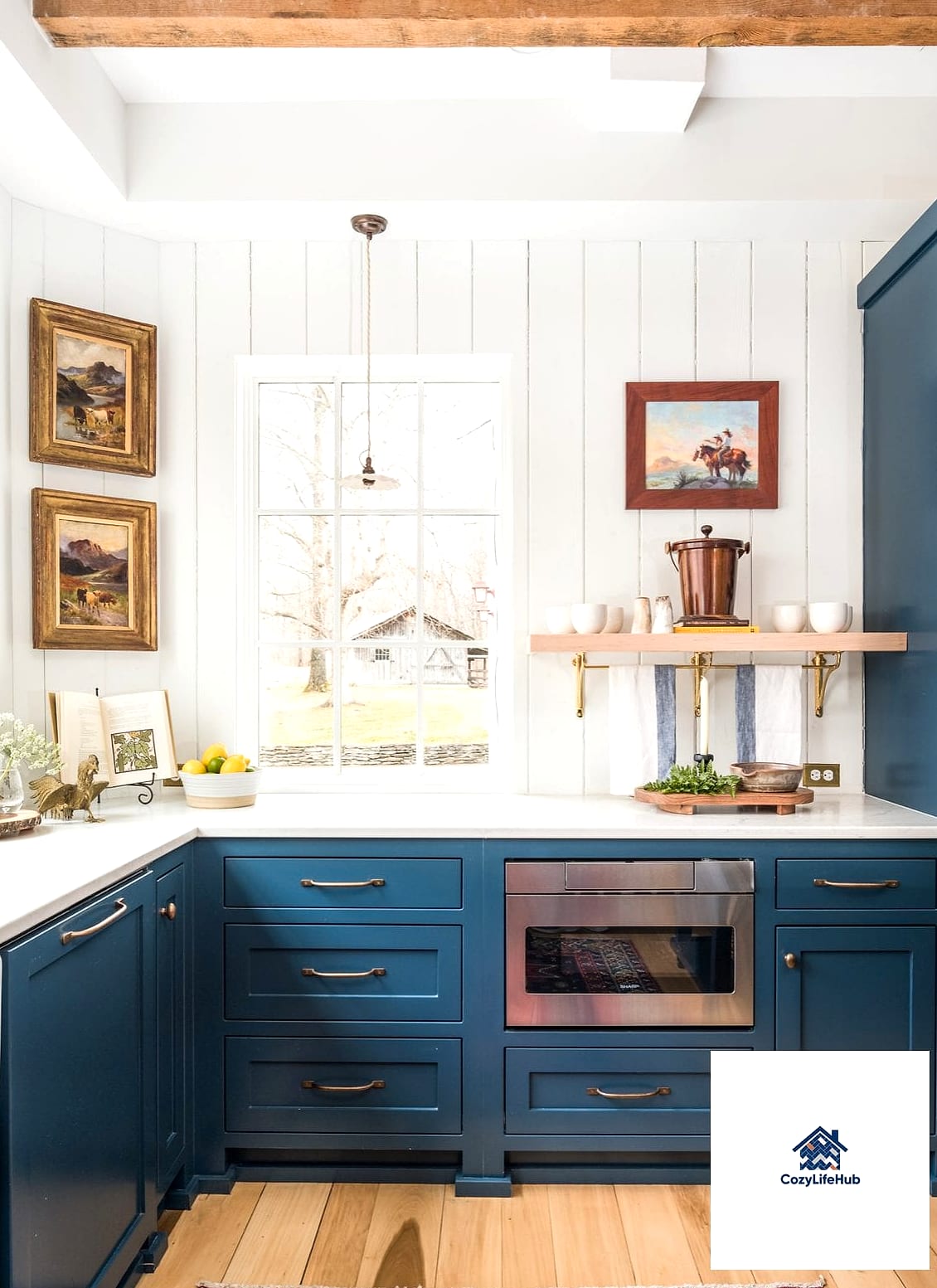
Skip paint entirely and let the natural wood grain be the star. Stained or raw wood shiplap brings warmth that painted versions just don’t have. It suits kitchens going for a Scandinavian or Japandi feel, especially when paired with matte black hardware and simple, unfussy cabinetry.
Shiplap in a Butler’s Pantry
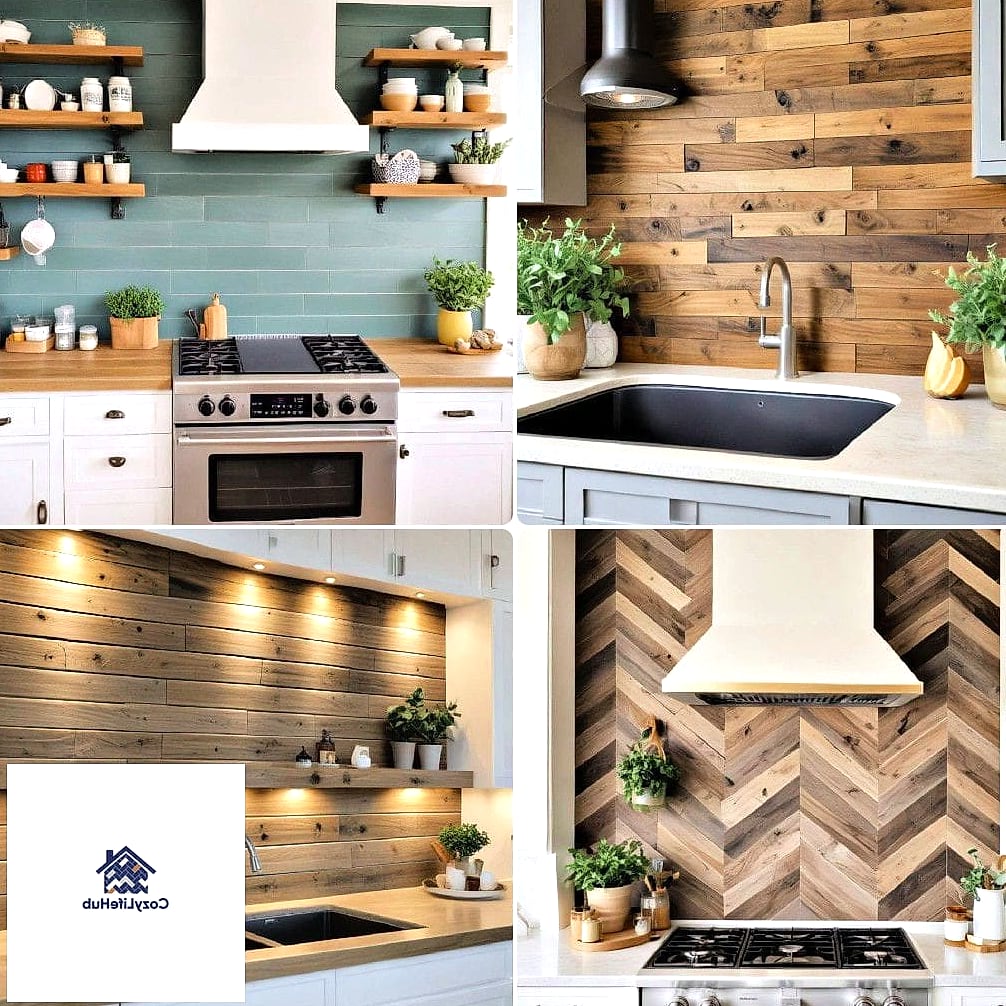
Butler’s pantries and prep kitchens are the perfect low-pressure spot to experiment with shiplap since they see less daily wear than a main cooking area. A painted shiplap wall back here, maybe in a soft sage or muted terracotta, adds personality to a space that’s usually an afterthought.
Herringbone-Inspired Shiplap Pattern
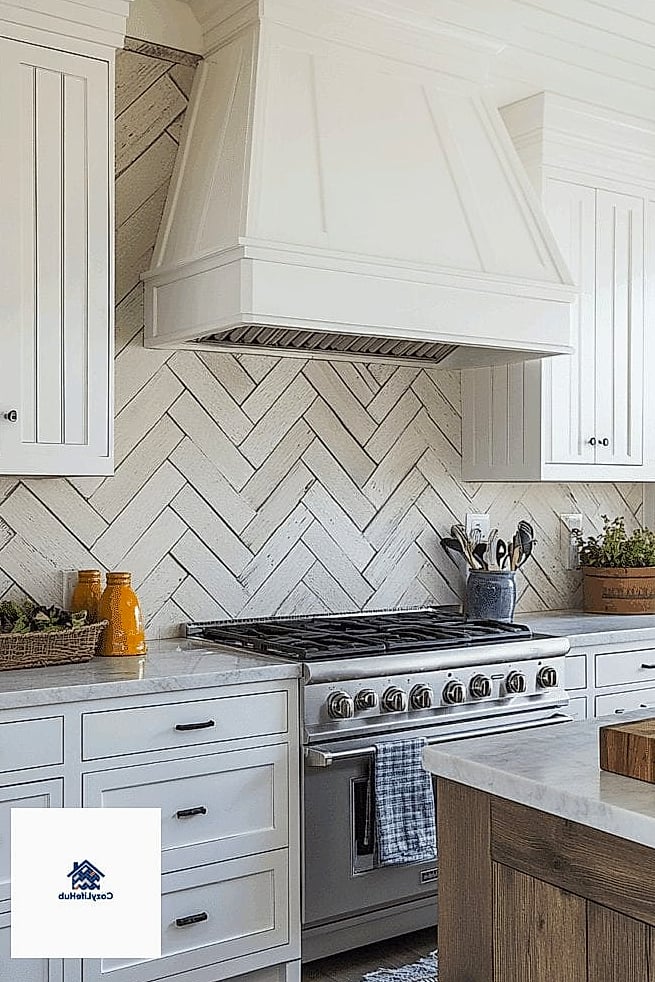
Instead of the traditional straight horizontal boards, some installers are cutting shiplap into angled pieces for a herringbone effect. It’s more labor-intensive and definitely not a weekend DIY project, but the visual payoff is striking. This one’s best left to a contractor unless you’re already comfortable with precise angle cuts.
Shiplap with a Pop of Color
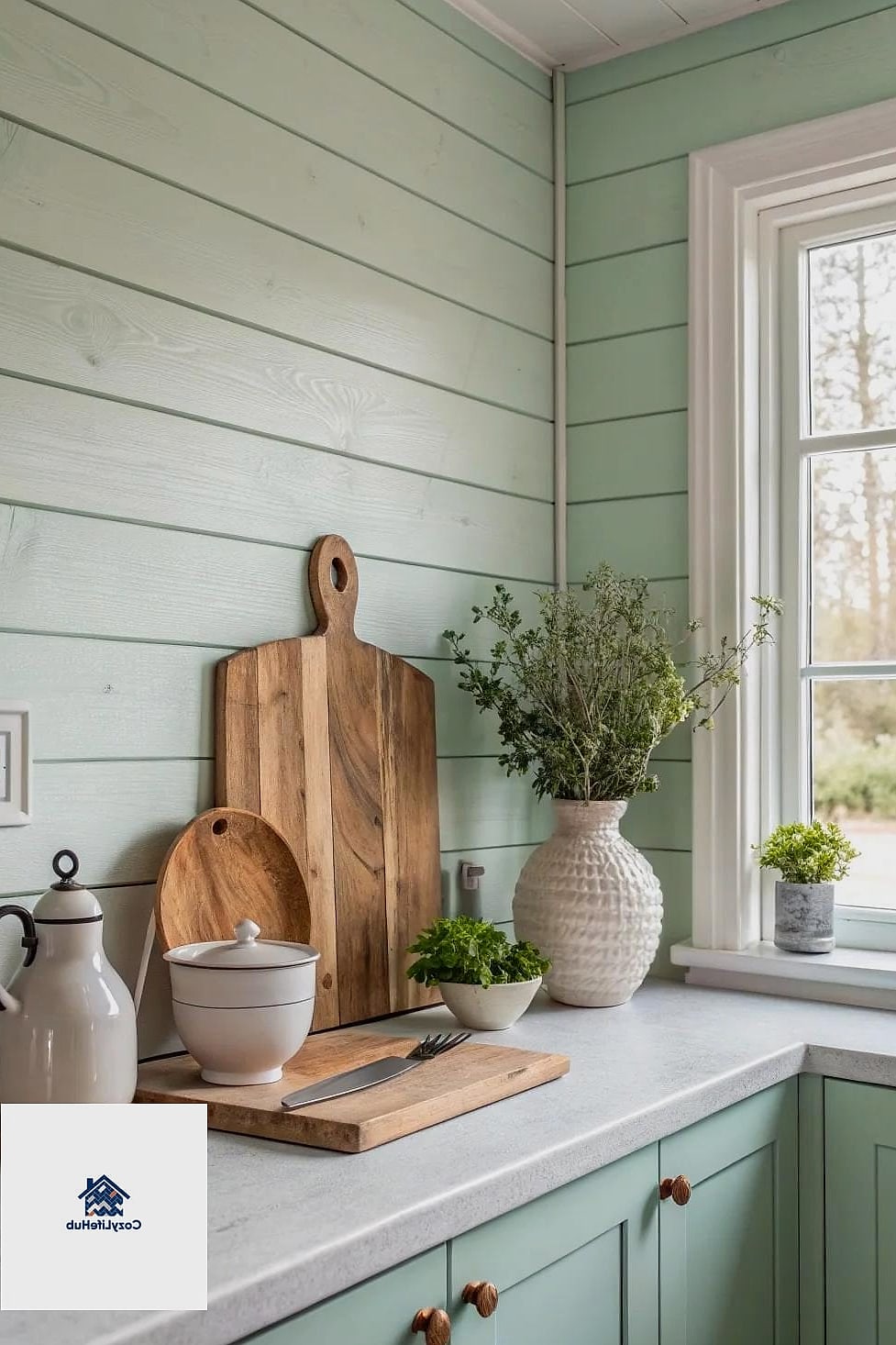
White kitchen, colorful backsplash. A shiplap wall in deep green, navy, or terracotta gives you a bold moment without needing patterned tile. It’s also easier to change later than tile would be, since repainting shiplap is a much smaller project than retiling if your taste shifts down the road.
Shiplap Behind Open Bathroom Vanity Shelving
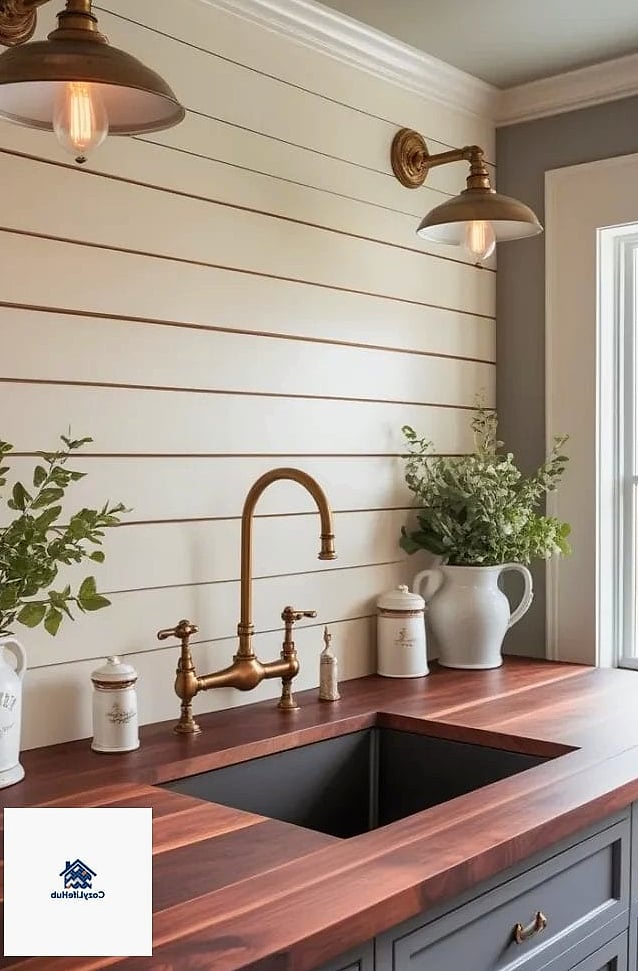
Shiplap isn’t limited to kitchens. Behind a bathroom vanity, especially one with open shelving or a vessel sink, it adds texture in a room that’s often all hard, flat surfaces. Just make sure it’s properly sealed, since bathrooms deal with more humidity than kitchens do.
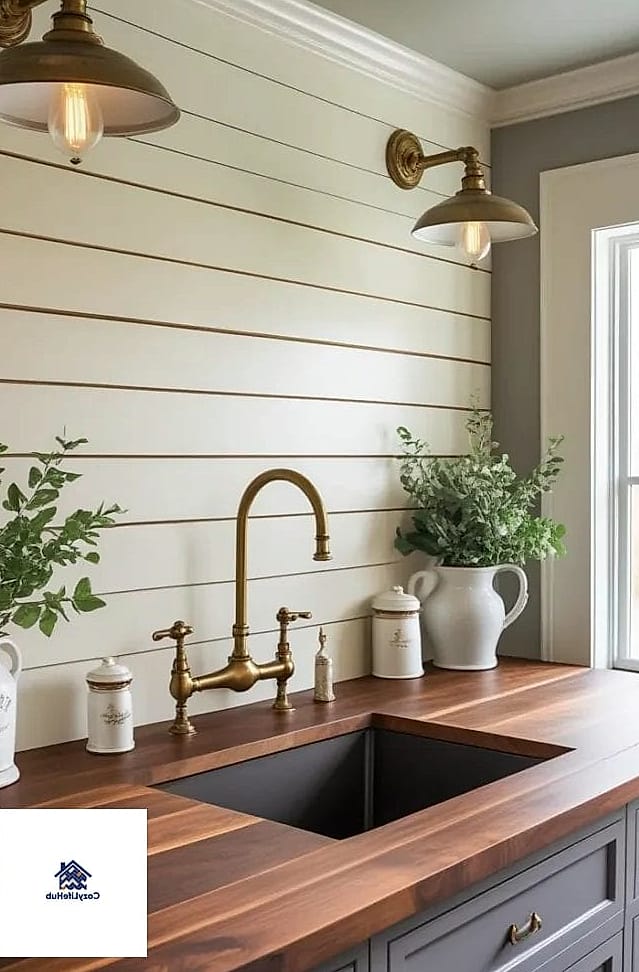
Shiplap with Brass or Gold Accents
Warm metallics against white or cream shiplap create an elevated, almost boutique-hotel feel. Brass faucets, gold cabinet pulls, and a simple pendant light do a lot of heavy lifting here. It’s a good option if you want your farmhouse-adjacent kitchen to feel a little more polished than rustic.
Weathered or Reclaimed Wood Shiplap
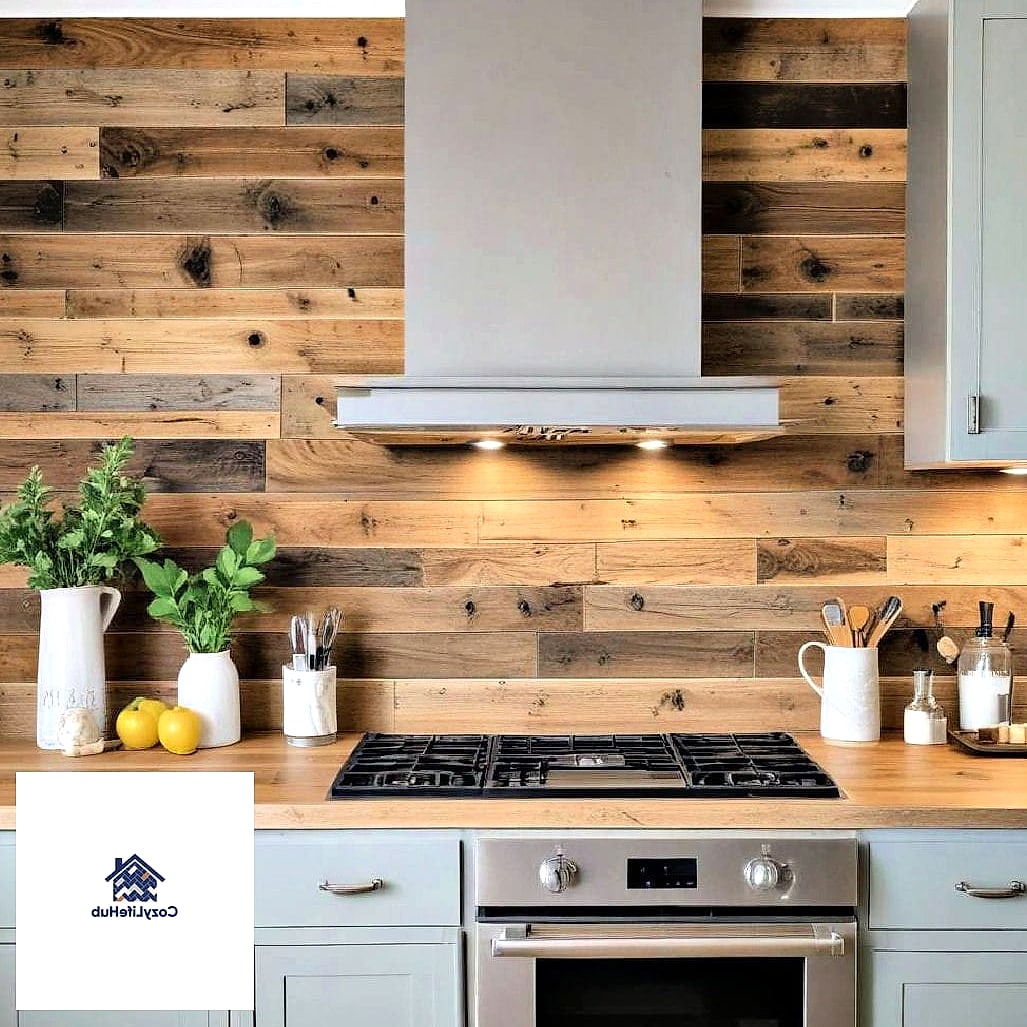
For homeowners who want serious character, reclaimed wood shiplap brings real history into the kitchen, complete with knots, nail holes, and color variation. No two boards look alike, which is either exactly what you want or a little too chaotic depending on your taste. It pairs beautifully with industrial elements like exposed pipe shelving.
Shiplap Accent Behind a Kitchen Island
If a full backsplash feels like too much commitment, try shiplap on just the end panel of your island instead. It’s a smaller, more budget-friendly way to test the look before deciding whether to extend it elsewhere. This also works well as a weekend DIY project since the surface area is manageable and mistakes are easy to fix.
Shiplap backsplashes offer something tile can’t always deliver: warmth, texture, and a handmade feel that works across farmhouse, coastal, modern, and even industrial kitchens. Whether you go full wall or just a small accent, there’s a version of this trend that fits almost any renovation budget and style. Pick the one that matches how you actually use your kitchen, seal it properly, and it should hold up beautifully for years.