13 White Marble Backsplash Ideas That Designers Keep Coming Back To
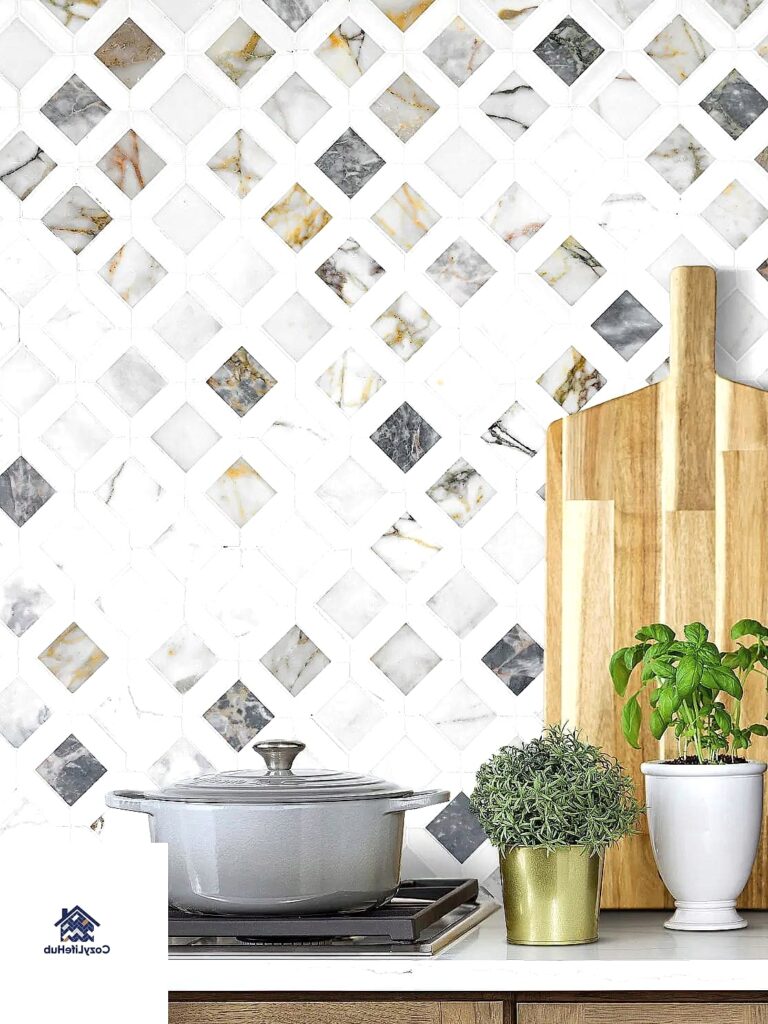
- Classic Carrara Slab Backsplash
- Herringbone Marble Tile
- Marble Subway Tile with Beveled Edges
- Full-Height Marble Slab to the Ceiling
- Marble Mosaic Tile in a Basketweave Pattern
- Marble Slab with a Waterfall Edge Connection
- Marble Tile in a Vertical Stack Layout
- Marble Hexagon Tile Backsplash
- Marble Slab Behind Floating Shelves
- Bookmatched Marble Slab Panels
- Marble Picket Tile Backsplash
- Marble Slab with a Contrasting Grout-Free Seam
- Marble Tile with Metallic Accent Strips
13 White Marble Backsplash Ideas That Designers Keep Coming Back To
White marble backsplashes never really go out of style, and there’s a reason designers keep circling back to them project after project. That soft veining and cool, luminous surface just does something a plain tile wall can’t. It’s the kind of detail that makes a kitchen feel considered, even if everything else in the room is simple.
If you’ve been scrolling through kitchen inspiration and keep stopping on marble, you’re not imagining the appeal. It photographs beautifully, it pairs with almost any cabinet color, and it ages in a way that feels intentional rather than dated. Below are 13 white marble backsplash ideas that show just how much range this material actually has.
Classic Carrara Slab Backsplash
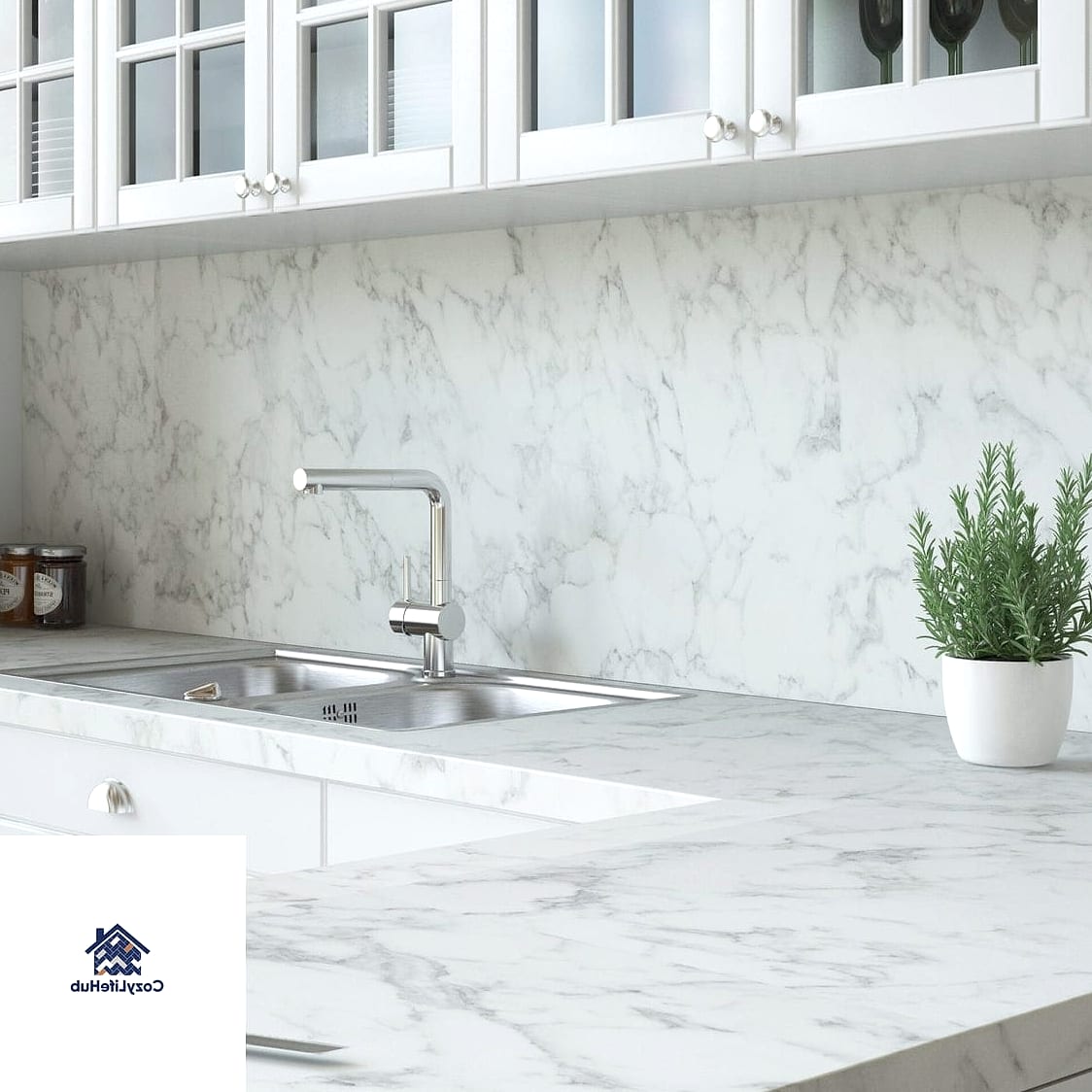
This is the look most people picture when they think “marble kitchen.” A single large slab of Carrara marble runs from countertop to upper cabinets, with soft gray veining moving across it like a painting.
Because there’s no grout lines breaking things up, the whole wall reads as one continuous, elegant surface. It works especially well behind a range where you want a dramatic focal point without any pattern competing for attention.
Slab installations cost more upfront than tile, but many homeowners find the seamless look worth the splurge, particularly in kitchens with white or navy cabinetry.
Herringbone Marble Tile
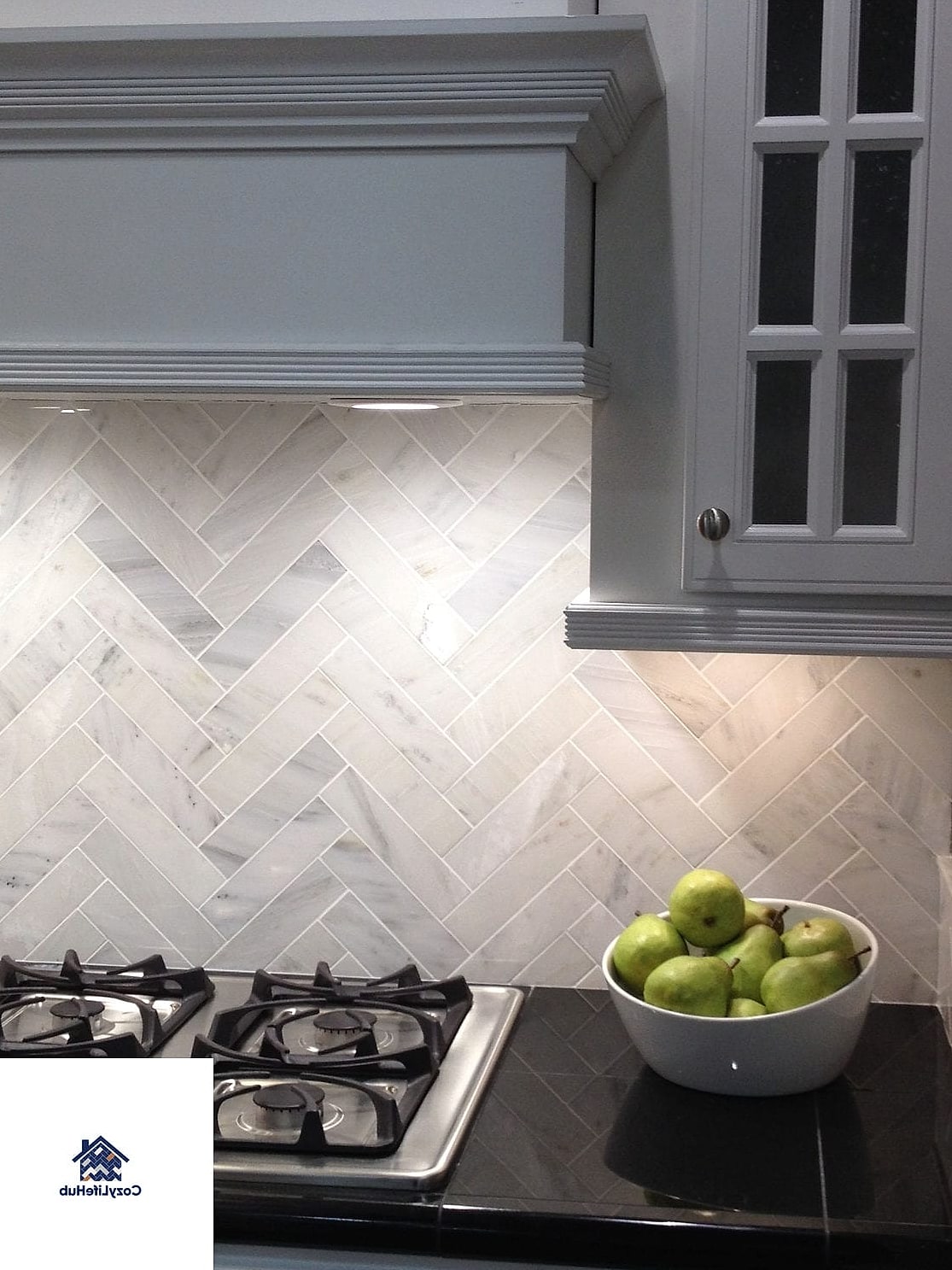
Herringbone patterns bring movement into a kitchen without adding a single extra color. Small rectangular marble tiles are laid at 45 or 90 degree angles, creating a zigzag effect that catches the light differently depending on where you’re standing.
This layout works beautifully behind a stove or sink, and it’s a favorite for kitchens that already have simple shaker cabinets and need a little visual energy. It’s more labor-intensive to install than straight-set tile, so budget for a bit more in installation costs.
Marble Subway Tile with Beveled Edges
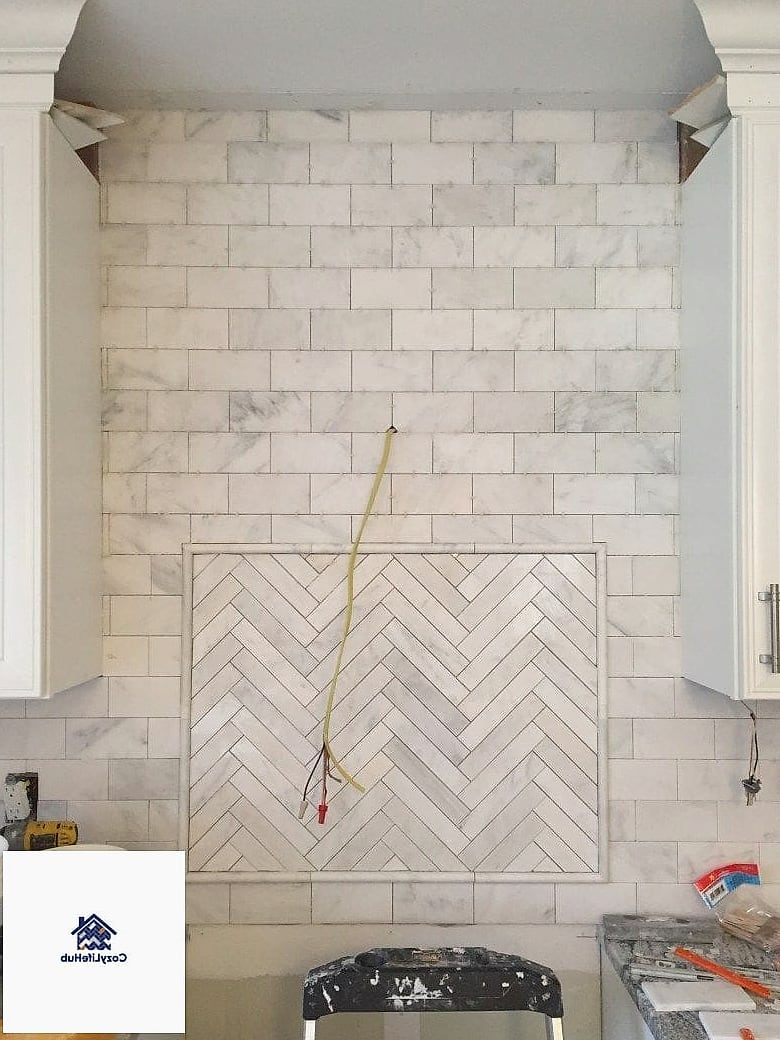
Subway tile isn’t just for ceramic anymore. Swapping standard subway tile for beveled marble versions gives you that classic rectangular shape with a shadow line around each piece, which adds subtle dimension to the wall.
It’s a great middle-ground option for people who love marble but aren’t ready for a full slab commitment. Pair it with dark grout for a more graphic look, or matching white grout for something closer to seamless.
Full-Height Marble Slab to the Ceiling
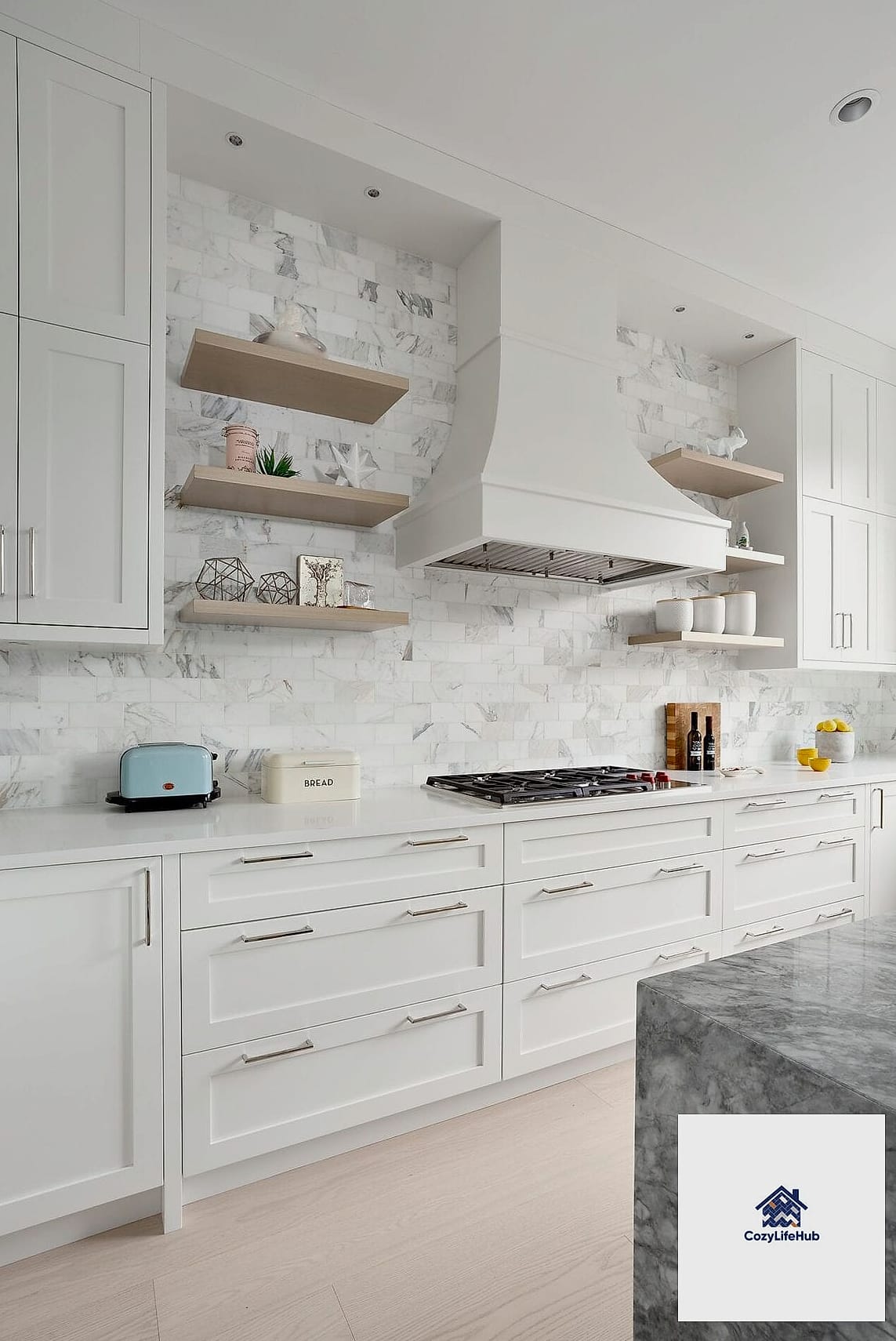
Instead of stopping the backsplash at the upper cabinets, some designers are running the marble slab all the way up to the ceiling. It’s a statement move, especially in kitchens with open shelving instead of upper cabinets.
This approach makes a kitchen feel taller and more architectural. It’s not a small investment, but in open-concept homes where the kitchen is constantly on display, it tends to be one of those upgrades people notice immediately.
Marble Mosaic Tile in a Basketweave Pattern
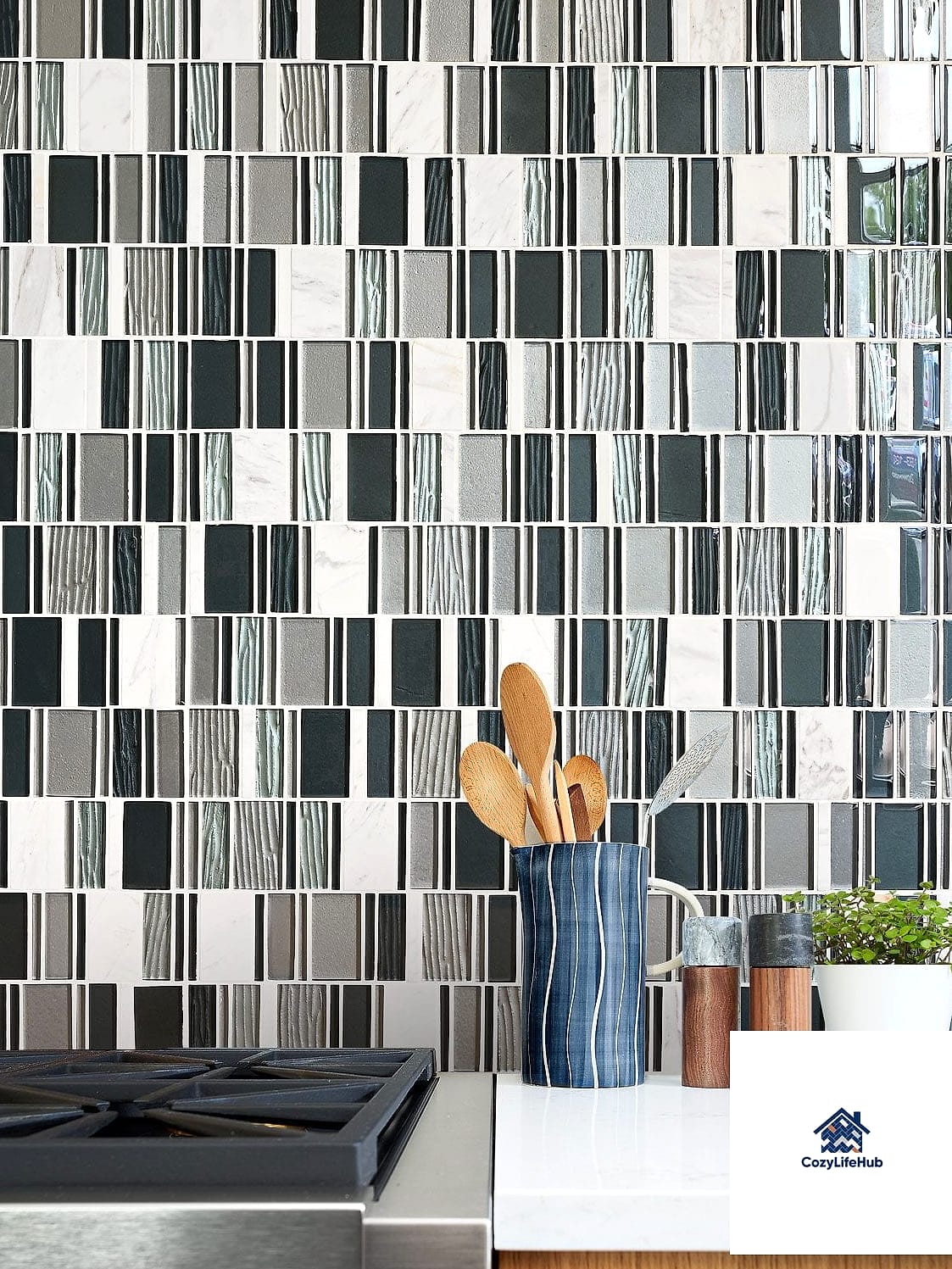
Basketweave mosaic tile has a woven, textured look that feels a little more traditional and detailed than a plain slab. Small marble pieces interlock in a pattern that mimics actual basket weaving.
This style tends to show up in more classic or transitional kitchens, often paired with furniture-style cabinetry and brushed brass hardware. It’s busier than other options on this list, so it works best as the main design statement rather than one of several patterned elements in the room.
Marble Slab with a Waterfall Edge Connection
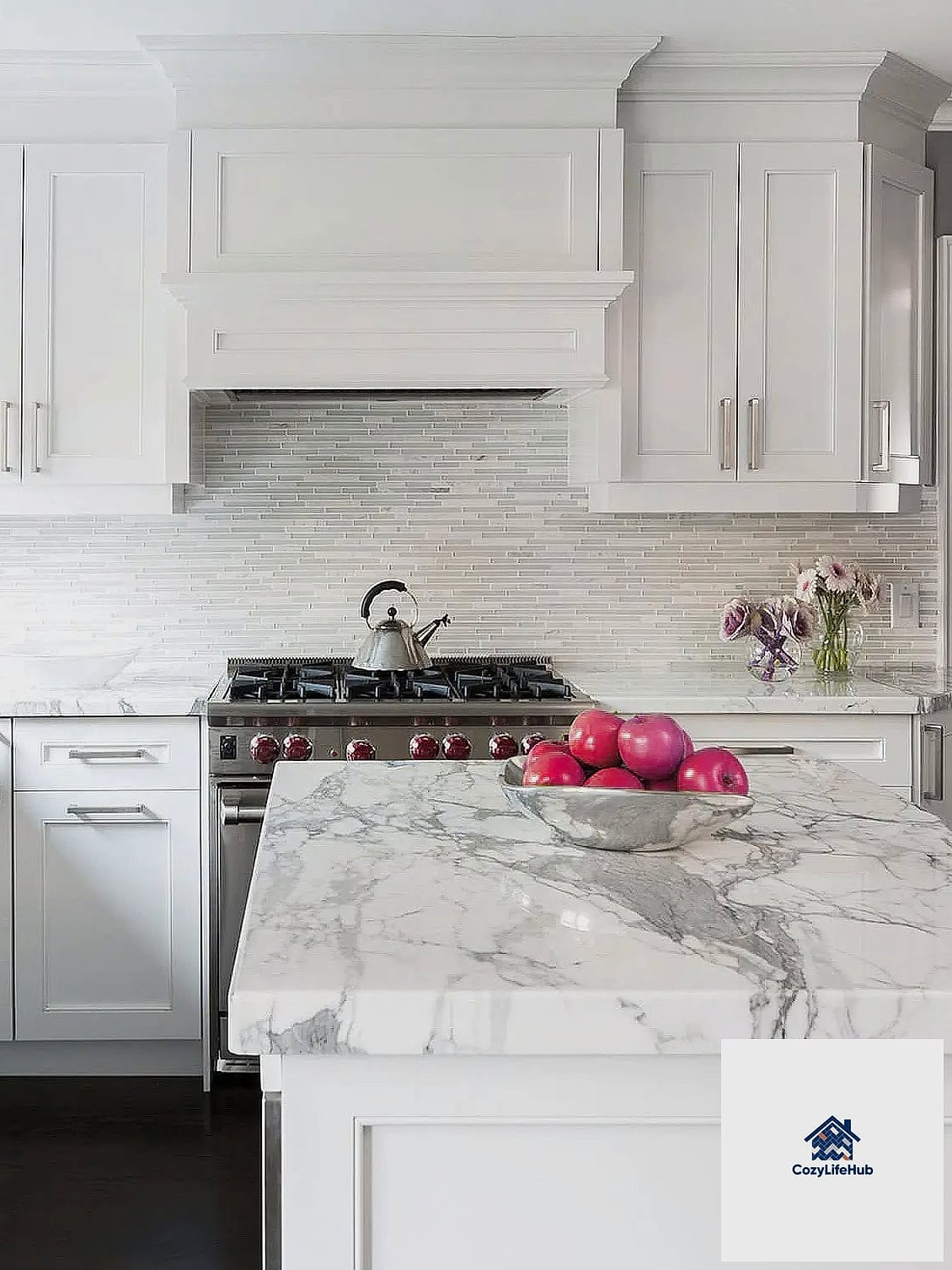
This idea ties the backsplash directly into a waterfall-edge countertop, where the marble wraps down the side of an island or peninsula in one continuous piece. When the backsplash matches, it creates a wraparound effect that feels custom and cohesive.
It’s a favorite among designers doing full kitchen remodels because it eliminates the visual break between counter and wall. Just know that matching veining across multiple slabs takes careful planning with your fabricator, so this isn’t really a DIY-friendly project.
Marble Tile in a Vertical Stack Layout
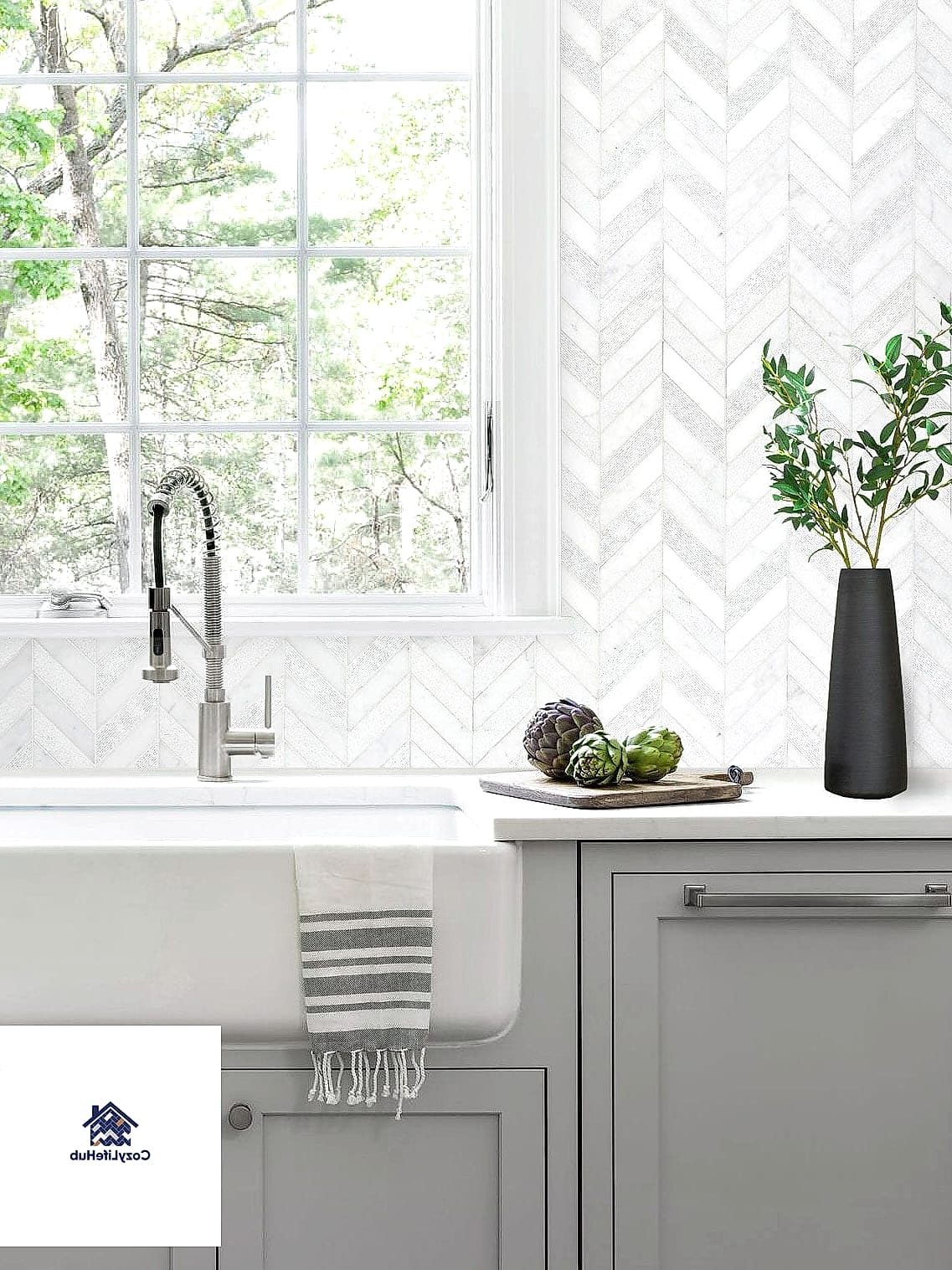
Instead of the traditional horizontal offset pattern, vertical stacking lines marble tiles up in straight columns. It’s a clean, modern take that draws the eye upward and can make low ceilings feel a little taller.
This layout pairs particularly well with slab countertops and minimalist hardware. It’s a quieter choice than herringbone or basketweave, which makes it a solid pick if you want marble’s texture without too much visual complexity.
Marble Hexagon Tile Backsplash
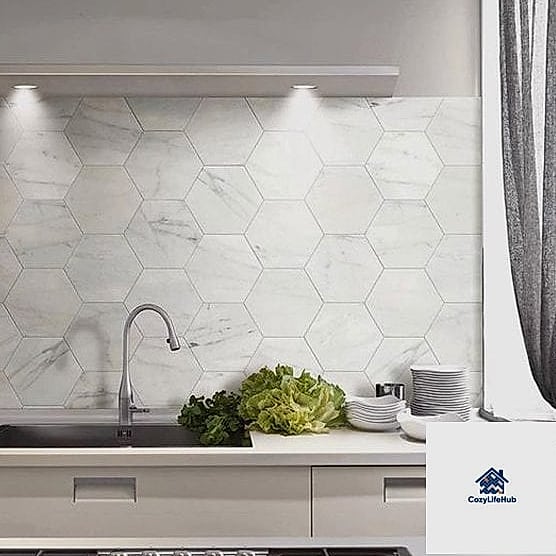
Hexagon tile brings a playful geometric shape into an otherwise neutral material. Small white marble hexagons create a honeycomb pattern that feels fresh without leaning too trendy.
This works nicely in kitchens that want a bit of personality but still need to stay neutral for resale value. It’s also a popular choice for a small accent area, like behind open shelving, rather than a full wall treatment.
Marble Slab Behind Floating Shelves
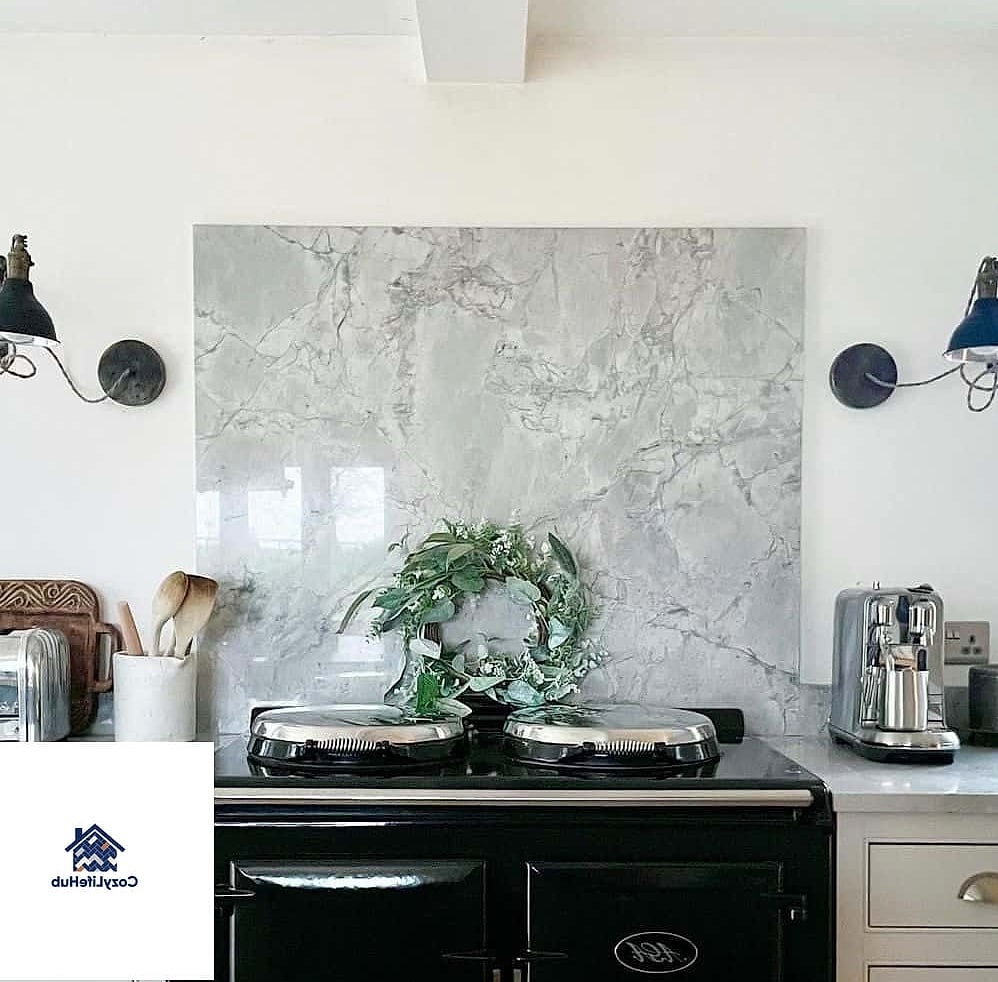
Pairing a marble slab backsplash with open floating shelves instead of upper cabinets creates a lighter, more curated feel. The marble becomes the backdrop for displayed dishware, cutting boards, and a bit of greenery.
Because there’s less concealed storage, this setup works best in kitchens where you’re willing to keep things tidy and styled. It’s a look that shows up a lot in smaller kitchens where removing upper cabinets helps the room feel more open.
Bookmatched Marble Slab Panels
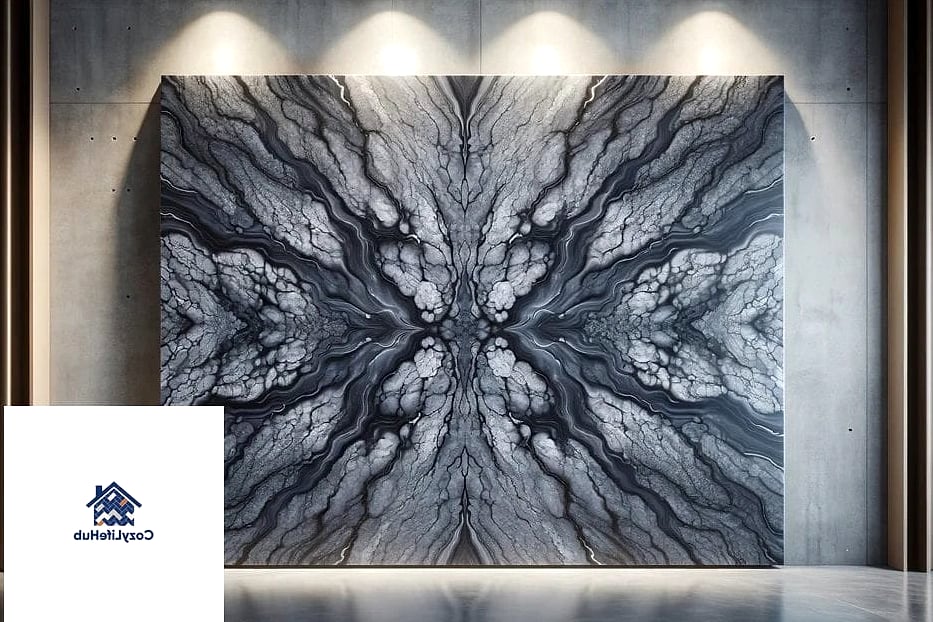
Bookmatching involves cutting a slab in half and installing the two pieces side by side so the veining mirrors itself, like an open book. The result is a symmetrical, almost artistic pattern that becomes the centerpiece of the kitchen.
This is a higher-budget option since it requires specific slab selection and precise fabrication, but it’s one designers request again and again for kitchens meant to feel like a real design statement. It tends to work best on a single focal wall rather than wrapping an entire kitchen.
Marble Picket Tile Backsplash
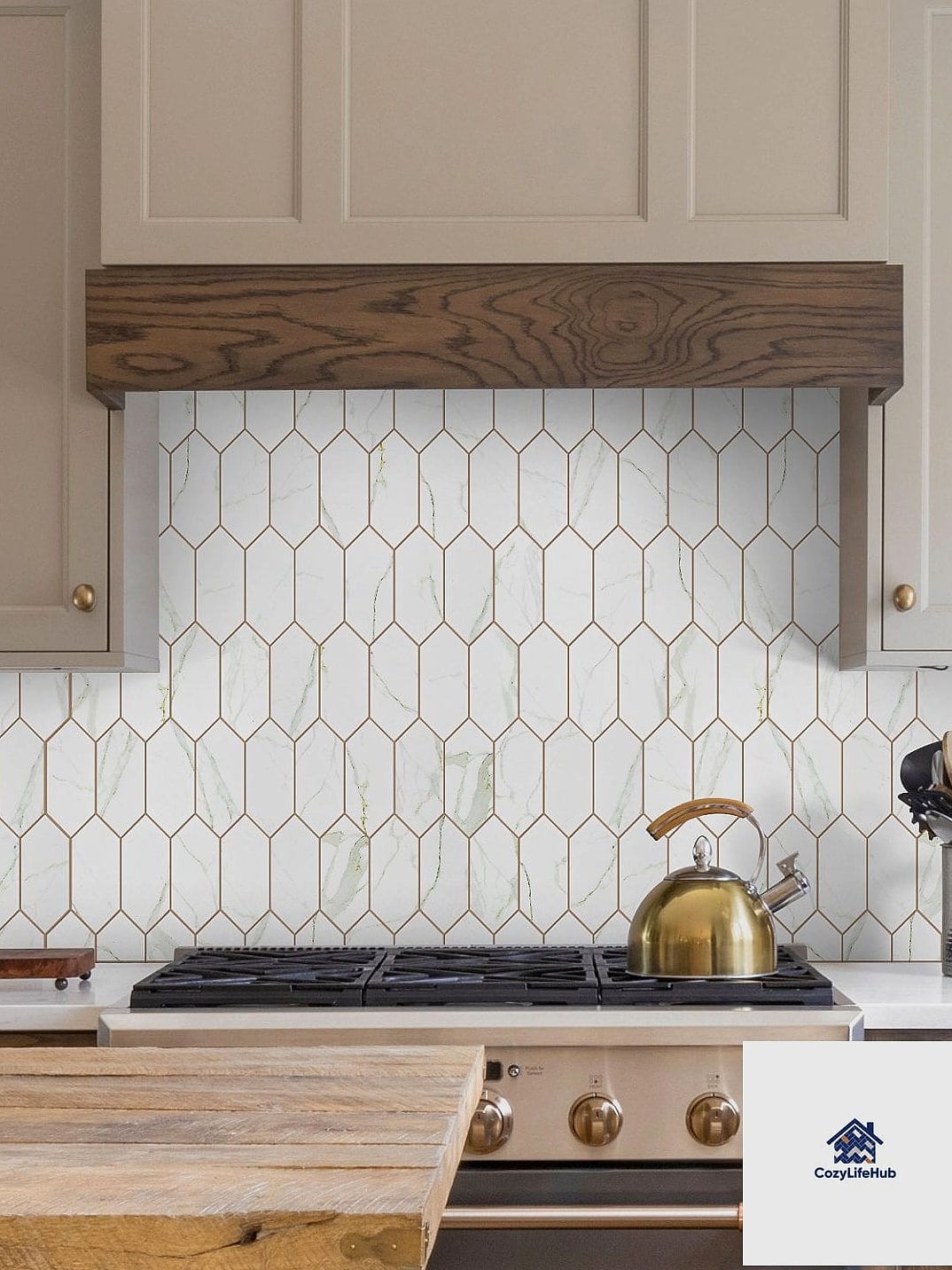
Picket tile has a pointed, arrow-like shape that adds texture without introducing any new colors. When laid in white marble, it gives a wall subtle movement while still keeping the overall palette calm and neutral.
This style tends to appear in kitchens going for a slightly more transitional or eclectic feel, especially when paired with warm wood open shelving or matte black fixtures. It’s a nice option if you want something more distinctive than subway tile but less bold than mosaic patterns.
Marble Slab with a Contrasting Grout-Free Seam
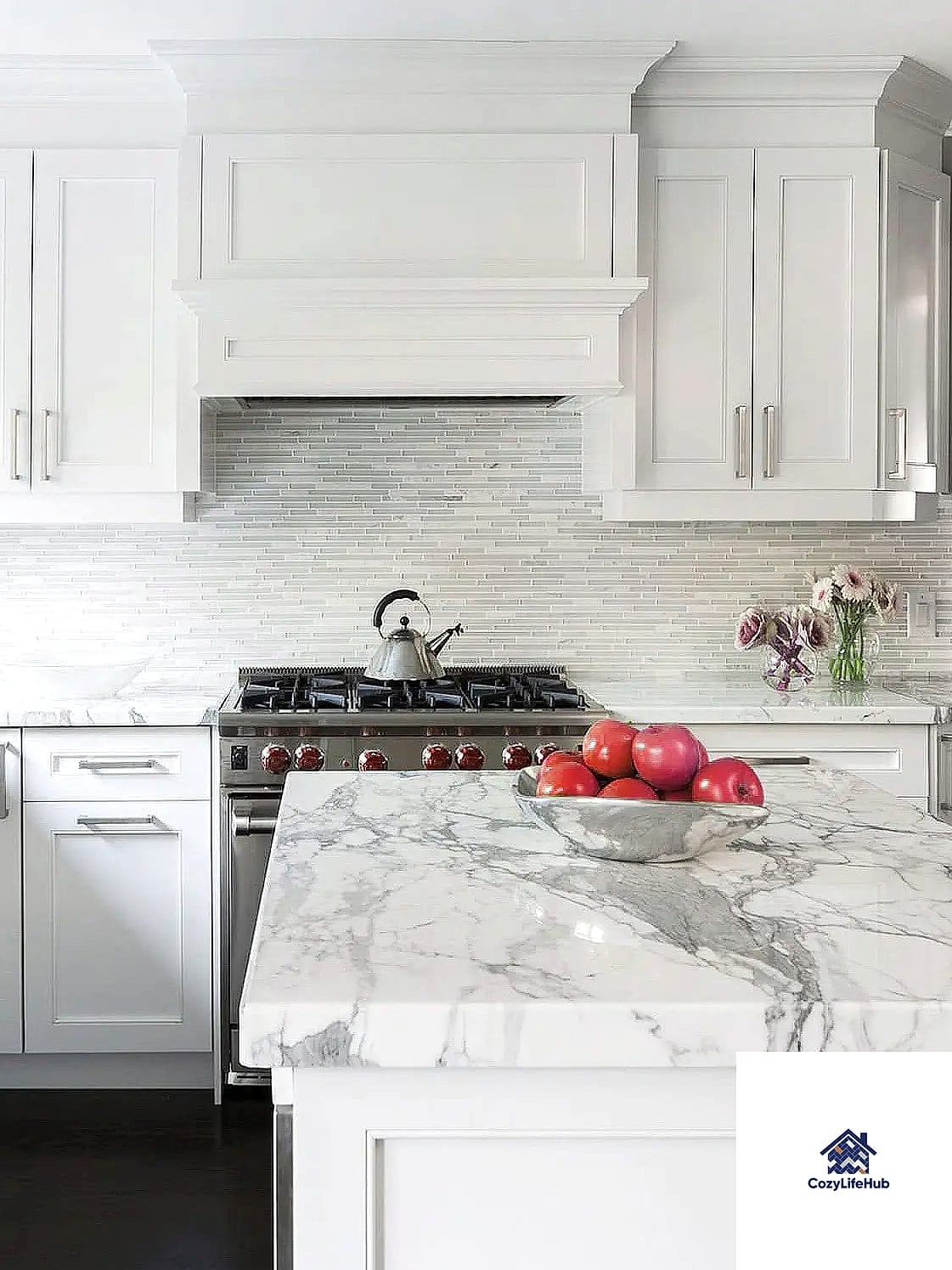
Some kitchens use two marble slabs joined with a nearly invisible seam instead of grid-patterned tile. The result looks similar to a single continuous slab but is more budget-friendly and easier to source, since you’re not searching for one giant piece of stone.
A skilled installer can align the veining so the seam is barely noticeable. This is a smart middle option for people who want the slab look without the cost of an oversized custom-cut piece.
Marble Tile with Metallic Accent Strips
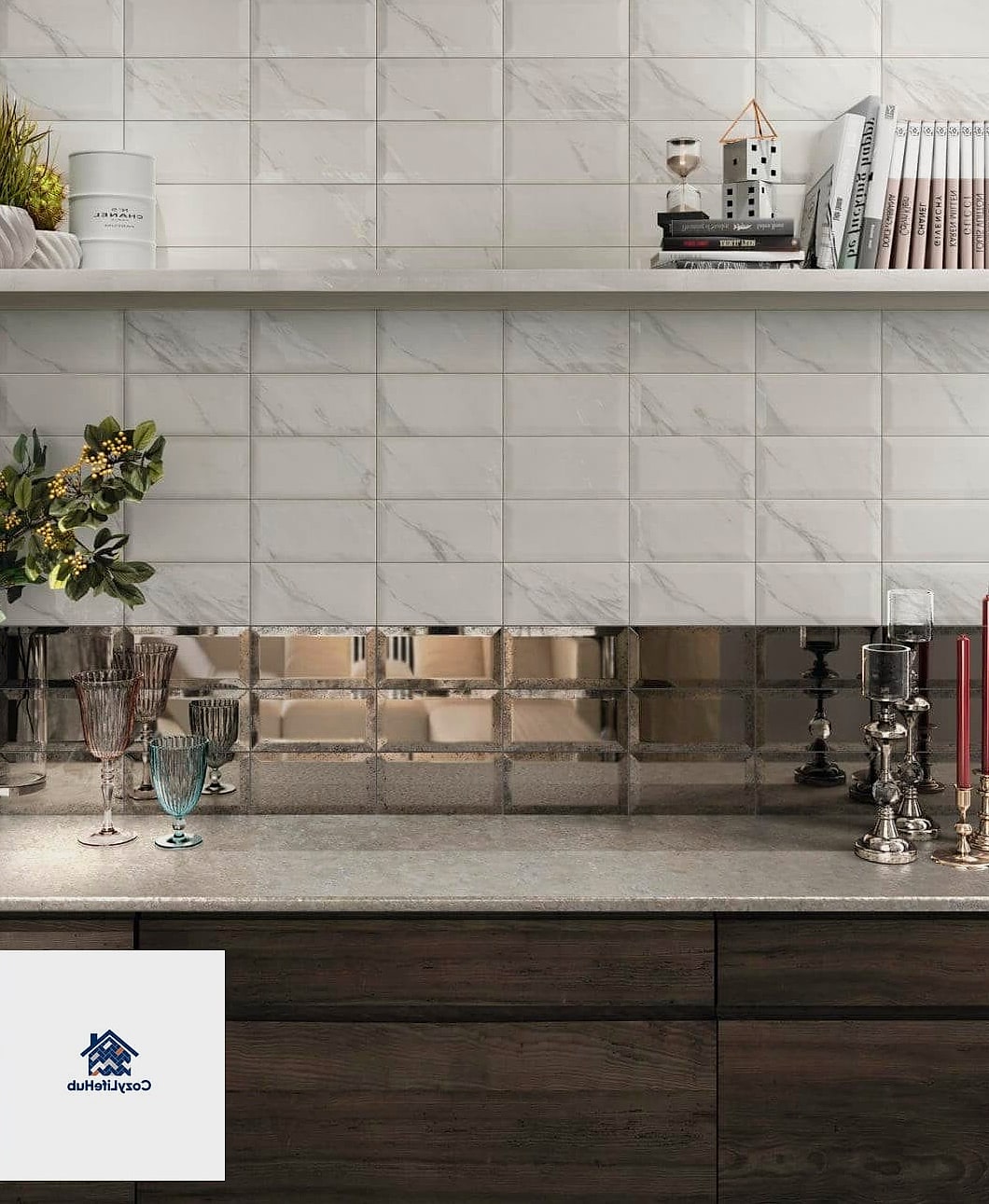
Adding a thin brass or matte black metal strip between rows of marble tile brings in a little contrast and structure. It’s a subtle way to introduce another material without overwhelming the marble itself.
This idea works particularly well in kitchens that already have mixed metal fixtures, since the backsplash can echo those tones. It also gives installers a helpful guideline for keeping tile rows level and evenly spaced, which is a nice practical bonus alongside the style factor.
Marble backsplashes take a bit more care than porcelain or ceramic. Since natural stone is porous, it’s worth sealing it periodically and wiping up acidic spills like lemon juice or wine fairly quickly to avoid etching. A soft cloth and pH-neutral cleaner will keep it looking good without dulling the finish.
None of that maintenance seems to slow down its popularity, though. Whatever layout or pattern catches your eye, white marble has a way of making a kitchen feel finished in a way few other materials can match.