30 Marble Backsplash Ideas You Haven’t Seen Before
- Herringbone Marble Mosaic
- Bookmatched Marble Slabs
- Green Marble for a Moody Kitchen
- Pink Marble Accents
- Marble Slab Extending to the Ceiling
- Fluted Marble Panels
- Marble Arabesque Tile
- Black Marble for Drama
- Marble Chevron Pattern
- Marble Slab with a Waterfall Edge Match
- Marble Picket Tile
- Marble Basketweave Tile
- Warm Travertine-Look Marble
- Marble Slab Behind Open Shelving Only
- Marble with Contrasting Dark Grout
- Marble Hexagon Tile
- Floating Shelf Integration with Marble
- Marble Slab with a Hidden Seam
- Blue-Gray Marble Tones
- Marble Tile with a Scalloped Edge Border
- Marble Around a Range Hood Only
- Marble Slab with Integrated Ledge
- Marble Peel-and-Stick for Renters
- Marble Tile with Metallic Inlay
- Marble Slab in a Coffee or Wet Bar Nook
- Marble with a Leathered Finish
- Marble Slab with Integrated Pot Filler Cutout
- Marble Tile in a Diagonal Layout
- Marble Slab Paired with Textured Plaster
- Marble Slab with Warm LED Underlighting
30 Marble Backsplash Ideas You Haven’t Seen Before
Marble backsplashes have a reputation for being the “safe elegant choice,” but the truth is there are so many ways to work with this stone that go way beyond a plain slab behind your stove. I’ve pulled together thirty ideas that push past the usual white-and-gray Carrara look, whether you’re drawn to bold color, unusual patterns, or clever ways to stretch a smaller budget. Let’s get into it.
Herringbone Marble Mosaic
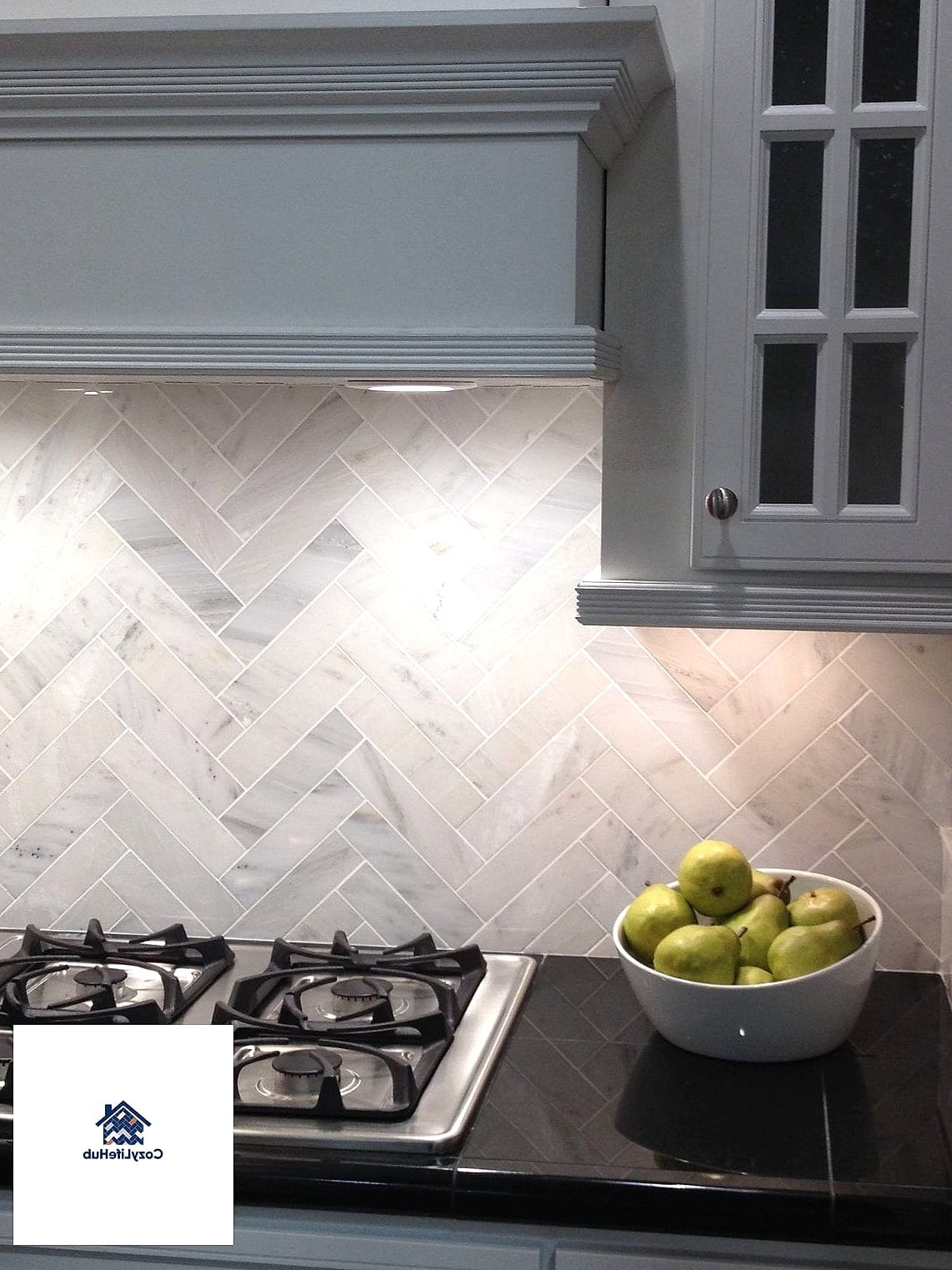
Instead of a flat slab, tiny marble tiles laid in a herringbone pattern add movement and texture to an otherwise quiet kitchen. This works especially well behind a stove where you want a focal point without adding open shelving or extra decor. The zigzag pattern catches light differently throughout the day, which makes even a small kitchen feel more dynamic. It’s pricier to install because of the labor involved, but many homeowners say it’s worth it for the custom look.
Bookmatched Marble Slabs
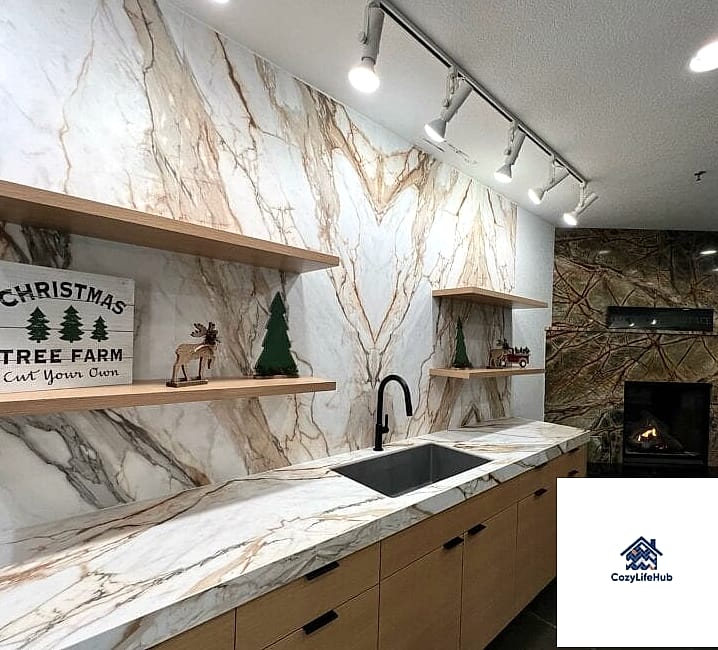
Bookmatching means cutting two slabs from the same block and mirroring them so the veining creates a symmetrical, almost inkblot pattern. It’s a favorite in luxury kitchens because it turns the backsplash into genuine wall art. This works best on a large, uninterrupted wall space like behind a range or a waterfall island. It’s a splurge, but if you only do one dramatic thing in your kitchen, this might be it.
Green Marble for a Moody Kitchen
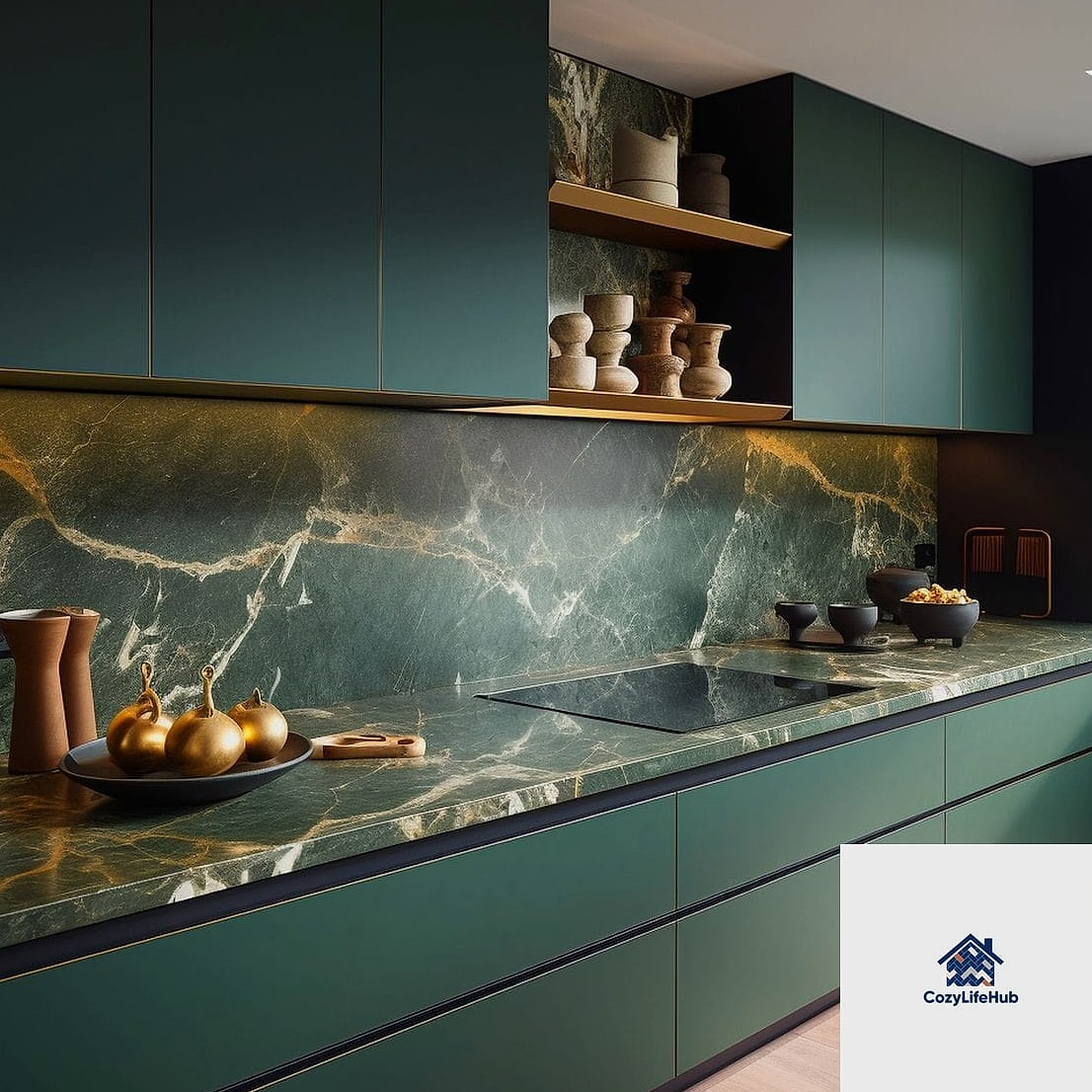
Verde marble in deep forest or sage tones brings warmth and depth that white marble just can’t. It pairs beautifully with brass hardware and warm wood cabinetry for a look that feels collected rather than showroom-perfect. Green marble also hides small water spots better than lighter stones, which is a nice bonus for busy households. Try it with matte black fixtures for extra contrast.
Pink Marble Accents
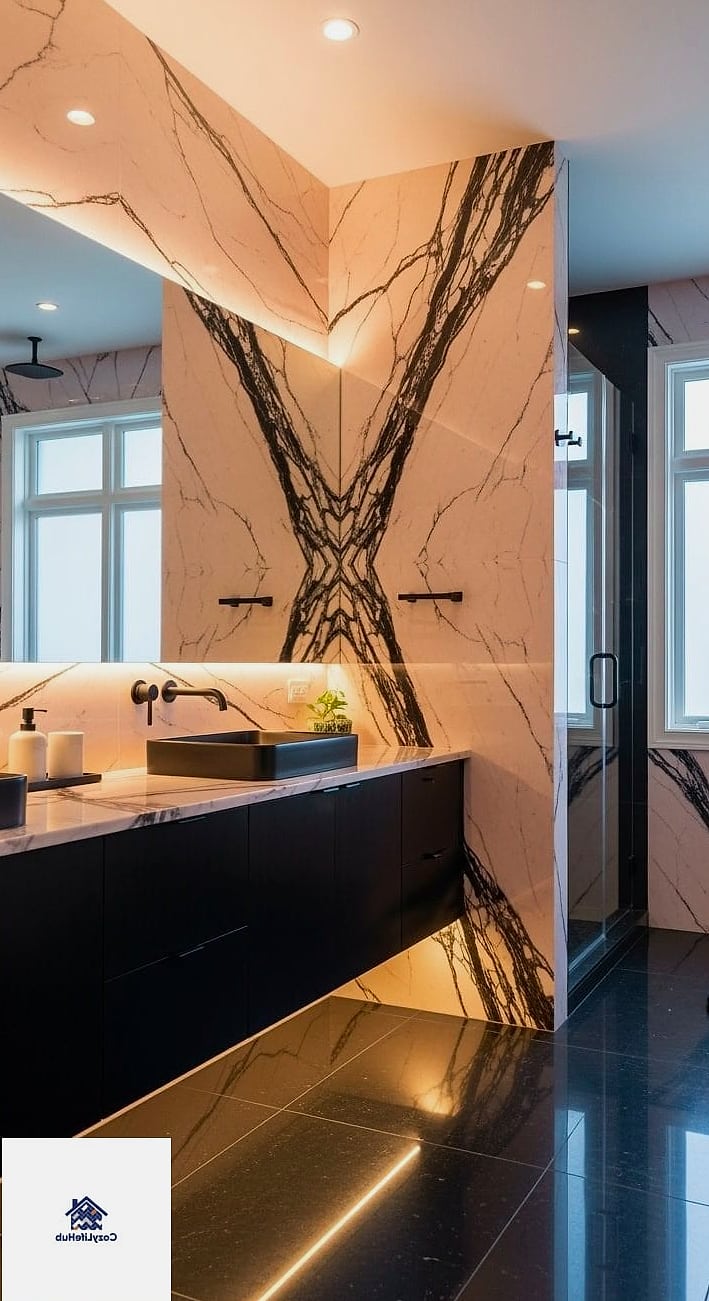
Blush and rose-toned marble has been showing up in bathrooms and kitchens alike, and it’s a lot more livable than people expect. Used as a backsplash behind open shelving, it gives a soft, almost vintage feel without going full-on pastel everywhere. Pair it with brushed brass or unlacquered brass for a warm, collected look. This is a great option if you want personality without committing to a loud color.
Marble Slab Extending to the Ceiling
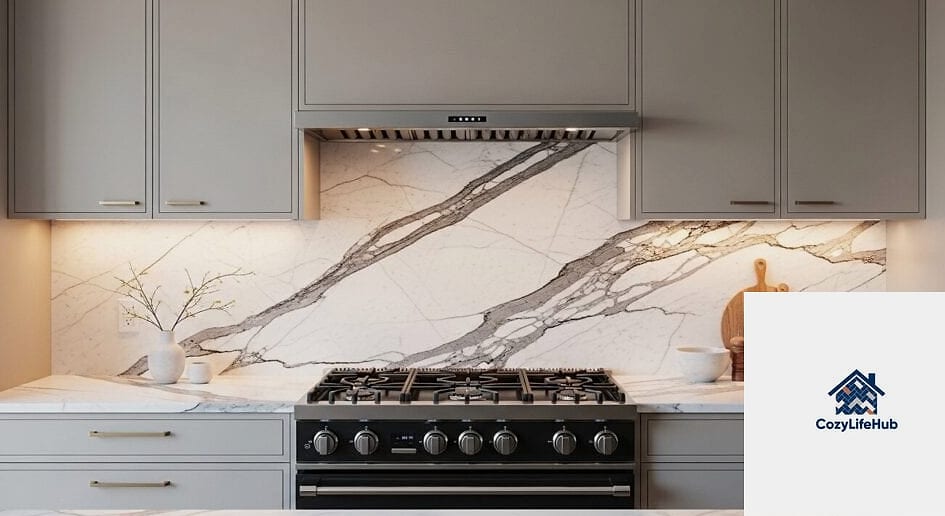
Rather than stopping the backsplash at standard cabinet height, running the marble slab all the way to the ceiling creates a dramatic, gallery-like statement. It works particularly well in kitchens with high ceilings where you want to draw the eye upward. This approach also means fewer grout lines and less to clean, since it’s often a single continuous piece. It’s an investment, but it reads as custom architecture rather than just a backsplash.
Fluted Marble Panels
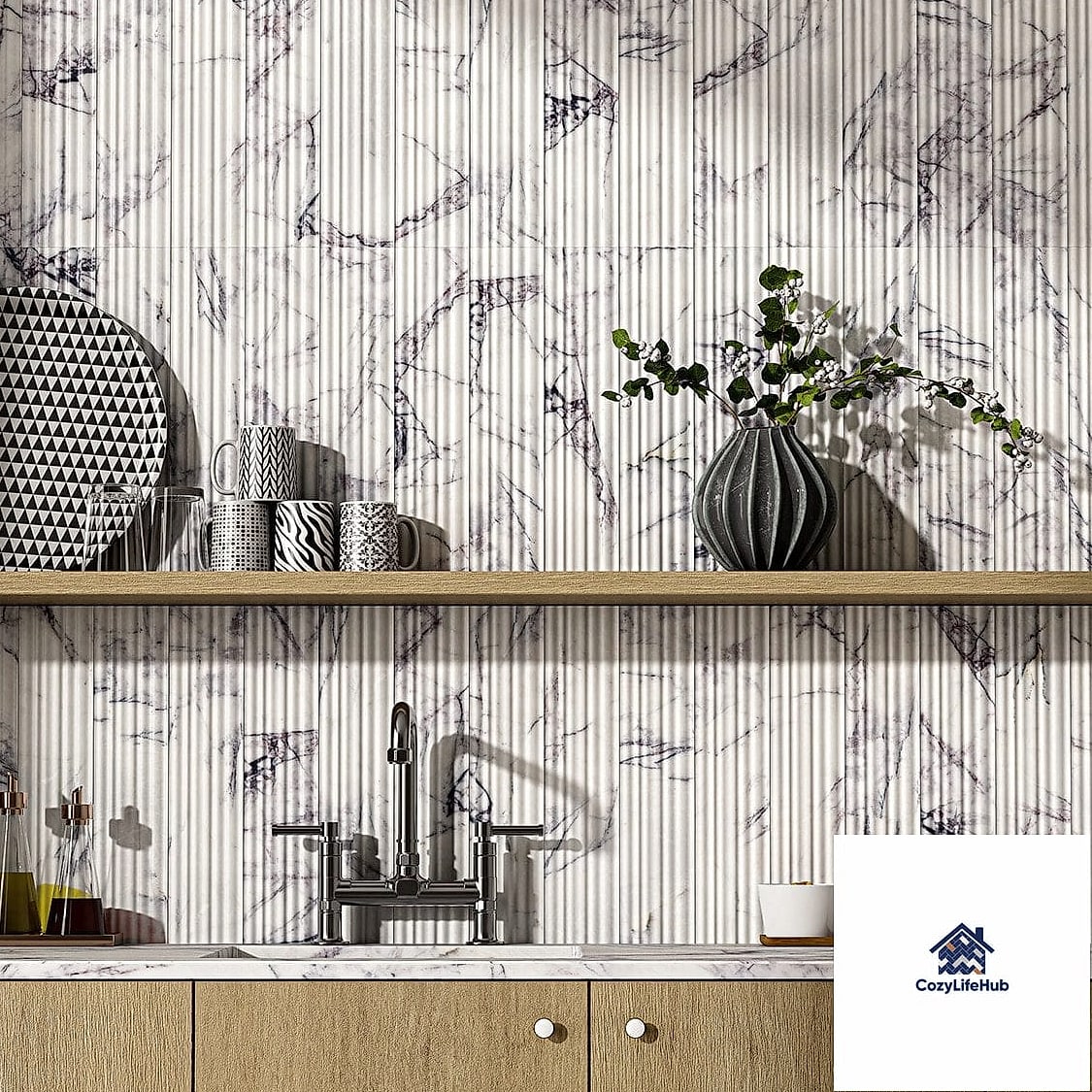
Fluting, or vertical ridged detailing, has moved from furniture into stone applications, and it’s a fresh way to add texture to a marble backsplash. The grooves catch shadow and light, giving the wall a sculptural quality even in a neutral palette. This look works well in a minimalist or Japandi-inspired kitchen. It’s a specialty install, so budget for a stone fabricator who has experience with the technique.
Marble Arabesque Tile
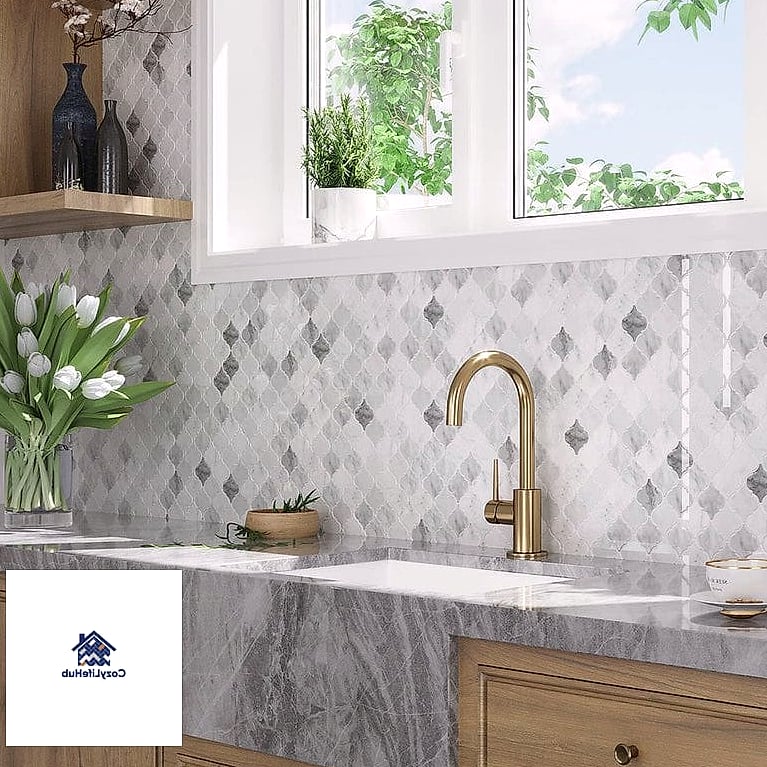
Arabesque-shaped marble tiles bring in a Moroccan-inspired silhouette without needing full patterned cement tile. The scalloped shape adds visual interest even in a simple white or cream colorway. This is a great option if you want pattern but still want the backsplash to feel timeless rather than trendy. It also plays nicely with both traditional and transitional kitchen styles.
Black Marble for Drama
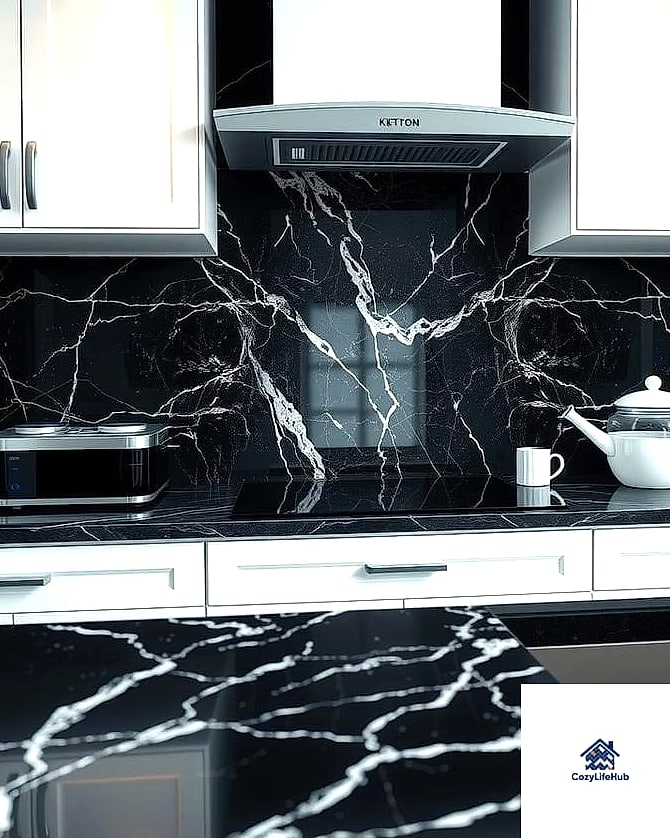
Nero Marquina, a black marble with white veining, is a striking option for anyone who wants their kitchen to feel bold and a little edgy. It pairs beautifully with brass or gold fixtures and pale wood cabinetry for contrast. Black marble can show water spots more visibly than lighter stone, so a honed finish tends to hide daily wear better than polished. This is a fantastic choice for a moody, restaurant-style kitchen.
Marble Chevron Pattern
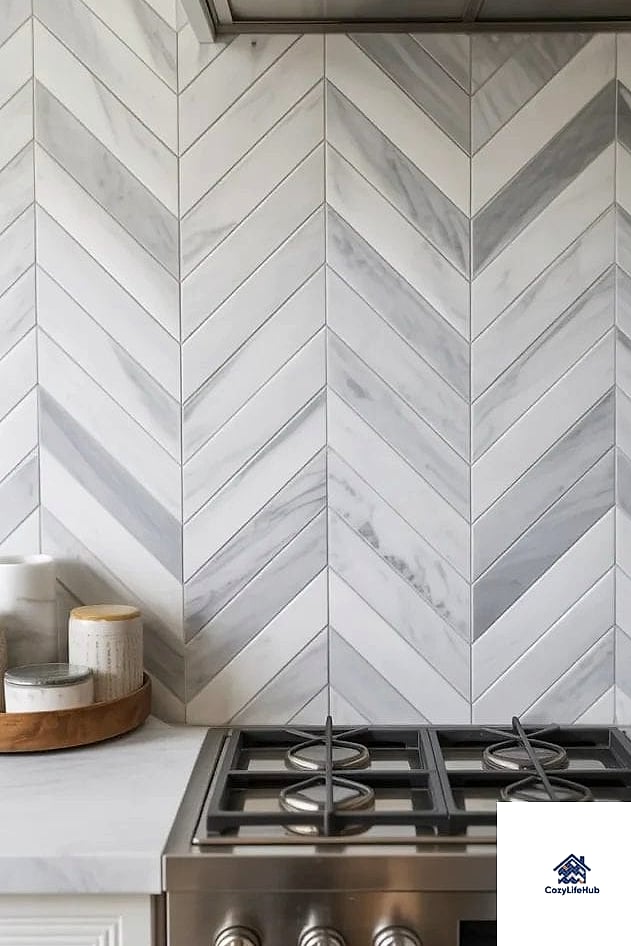
Chevron differs from herringbone because the pieces meet at a continuous point, creating clean diagonal lines rather than a woven look. It’s a striking option for a small kitchenette or coffee bar area where you want a statement without covering a huge wall. The pattern reads as more modern and graphic compared to traditional herringbone. Consider it for a bold accent wall behind open shelving.
Marble Slab with a Waterfall Edge Match
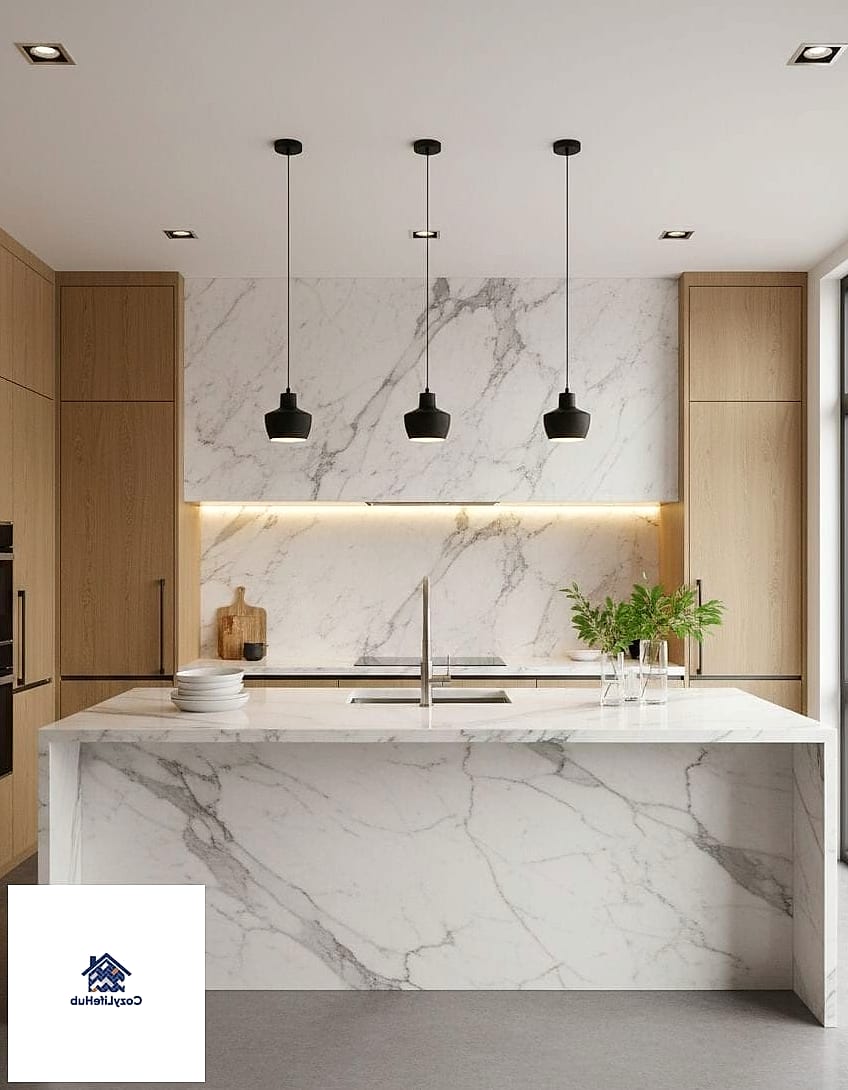
If you already have a marble waterfall island, extending that same slab up as the backsplash creates a cohesive, high-end look that feels intentional rather than mismatched. This works especially well in open-concept kitchens where the island and cooking wall are both visible at once. It’s a bigger investment since you’re essentially doubling your slab usage, but the continuity is hard to beat. Many designers consider this one of the most requested luxury upgrades right now.
Marble Picket Tile
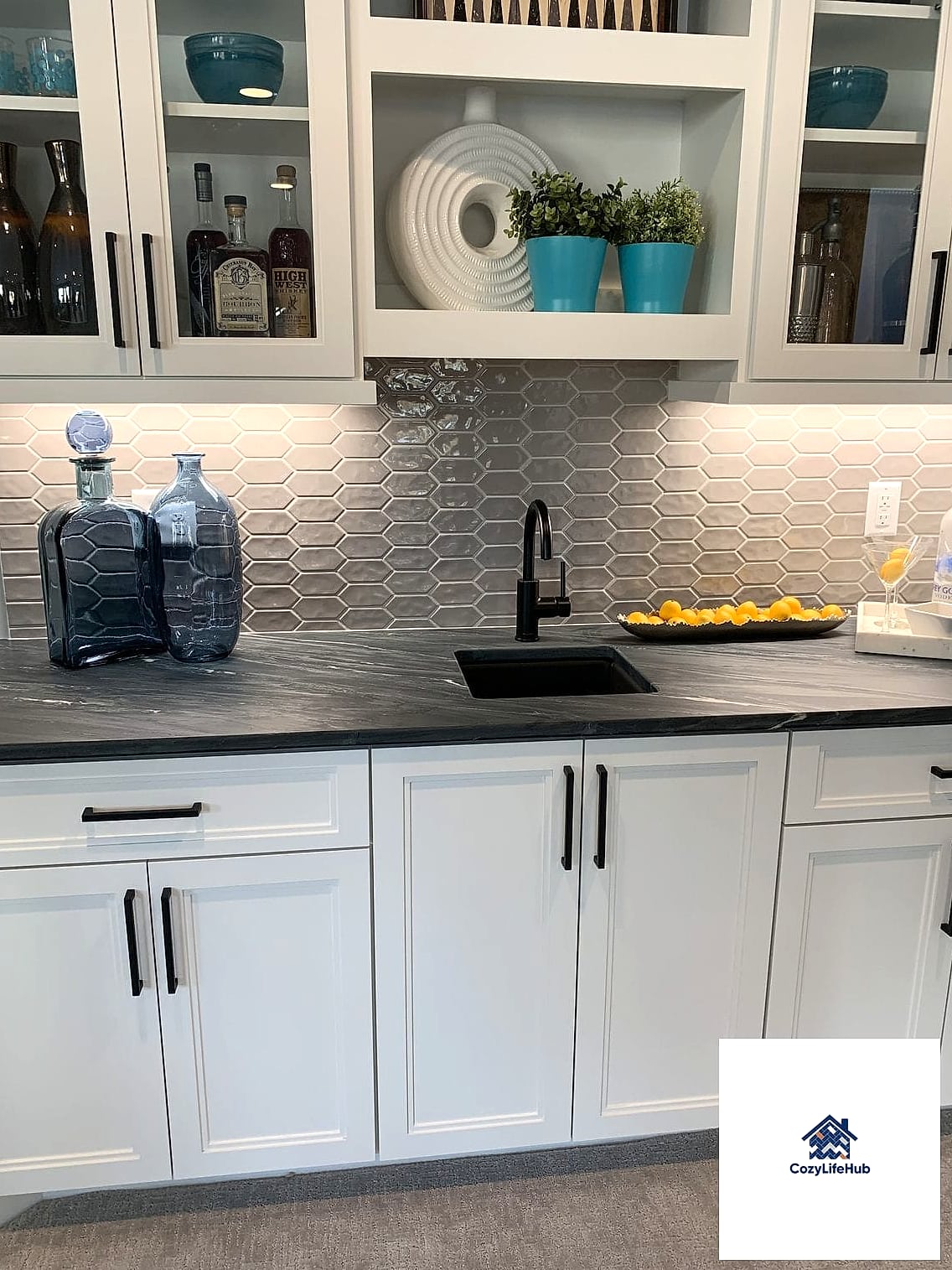
Picket-shaped marble tiles, which look like elongated hexagons or arrow points, add a subtle geometric edge to a backsplash without being loud. They work particularly well in bathrooms as well as kitchens, giving you a cohesive material across the home. The shape creates natural movement even in an all-white palette. This is a nice middle ground if you love pattern but don’t want anything too busy.
Marble Basketweave Tile
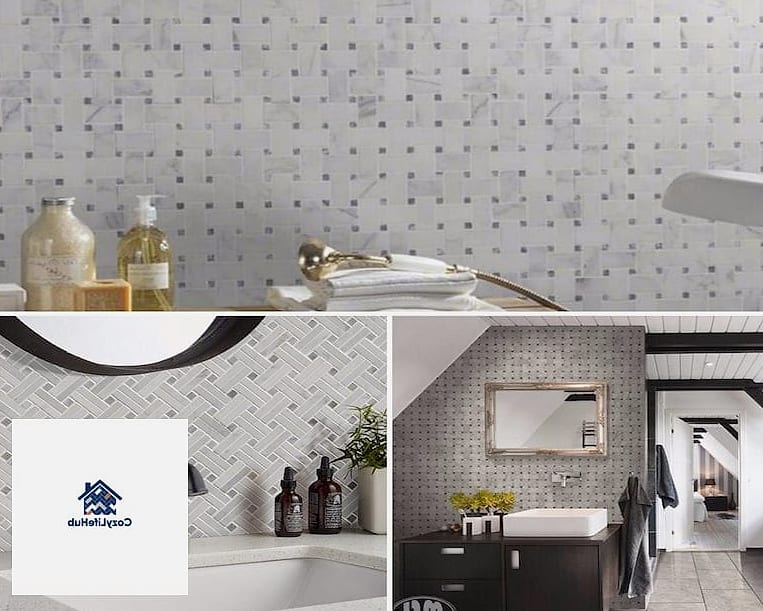
Basketweave patterns have an old-world charm that feels appropriate in both classic and modern farmhouse kitchens. The interlocking rectangular pieces create a woven visual effect that’s more textured than a straight-laid tile. This pattern tends to work best in smaller doses, like a range hood surround, rather than covering an entire wall. It’s a good way to add detail without overwhelming the space.
Warm Travertine-Look Marble
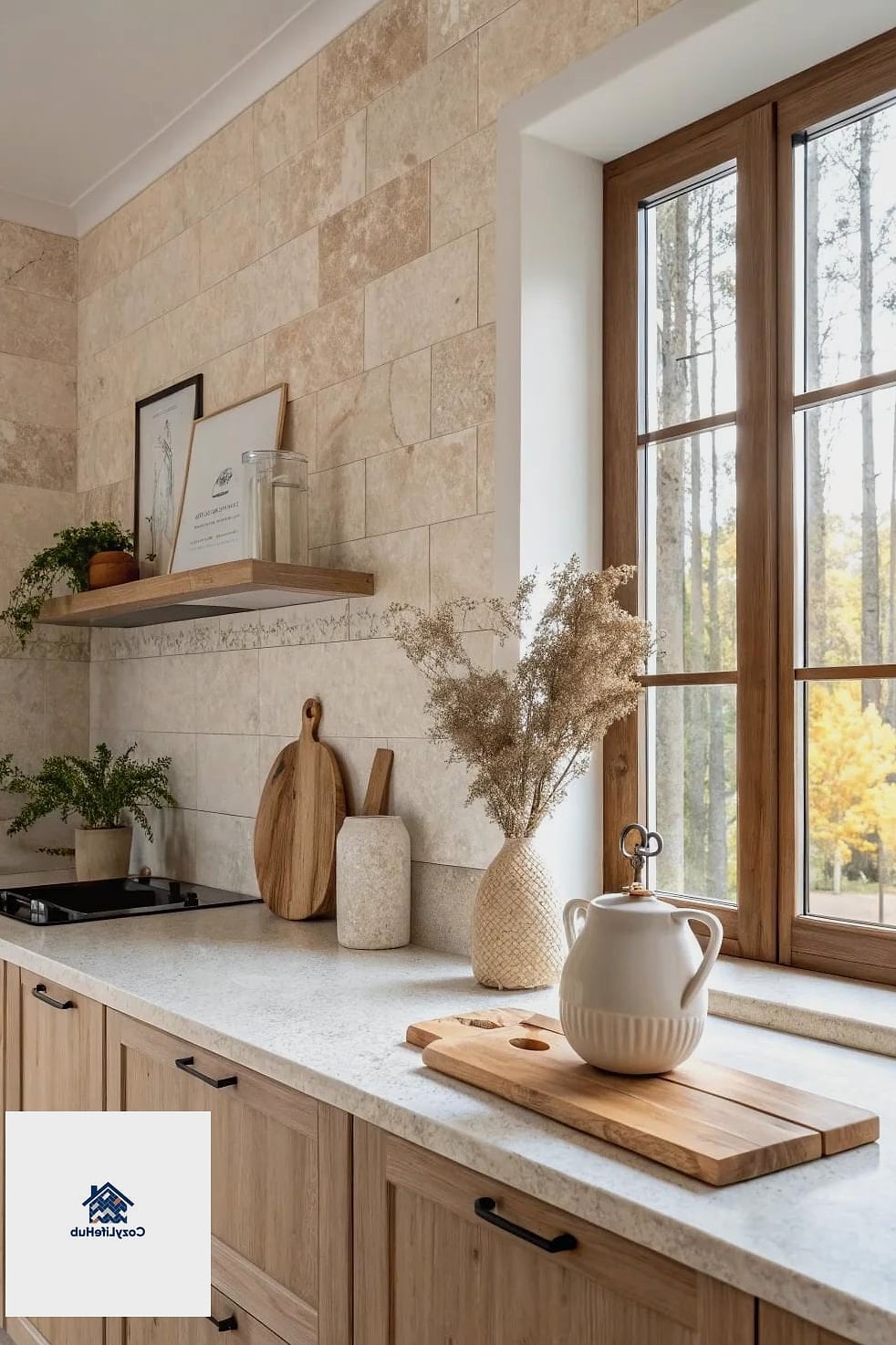
Not all marble reads cool and gray. Some varieties lean warm and beige, closer to travertine, which suits kitchens with wood tones and earthy palettes. This is worth considering if you love the marble look but find bright white stone too stark for your space. It pairs naturally with brass, rattan, and warm neutrals. Homeowners drawn to Mediterranean or organic modern style tend to gravitate here.
Marble Slab Behind Open Shelving Only
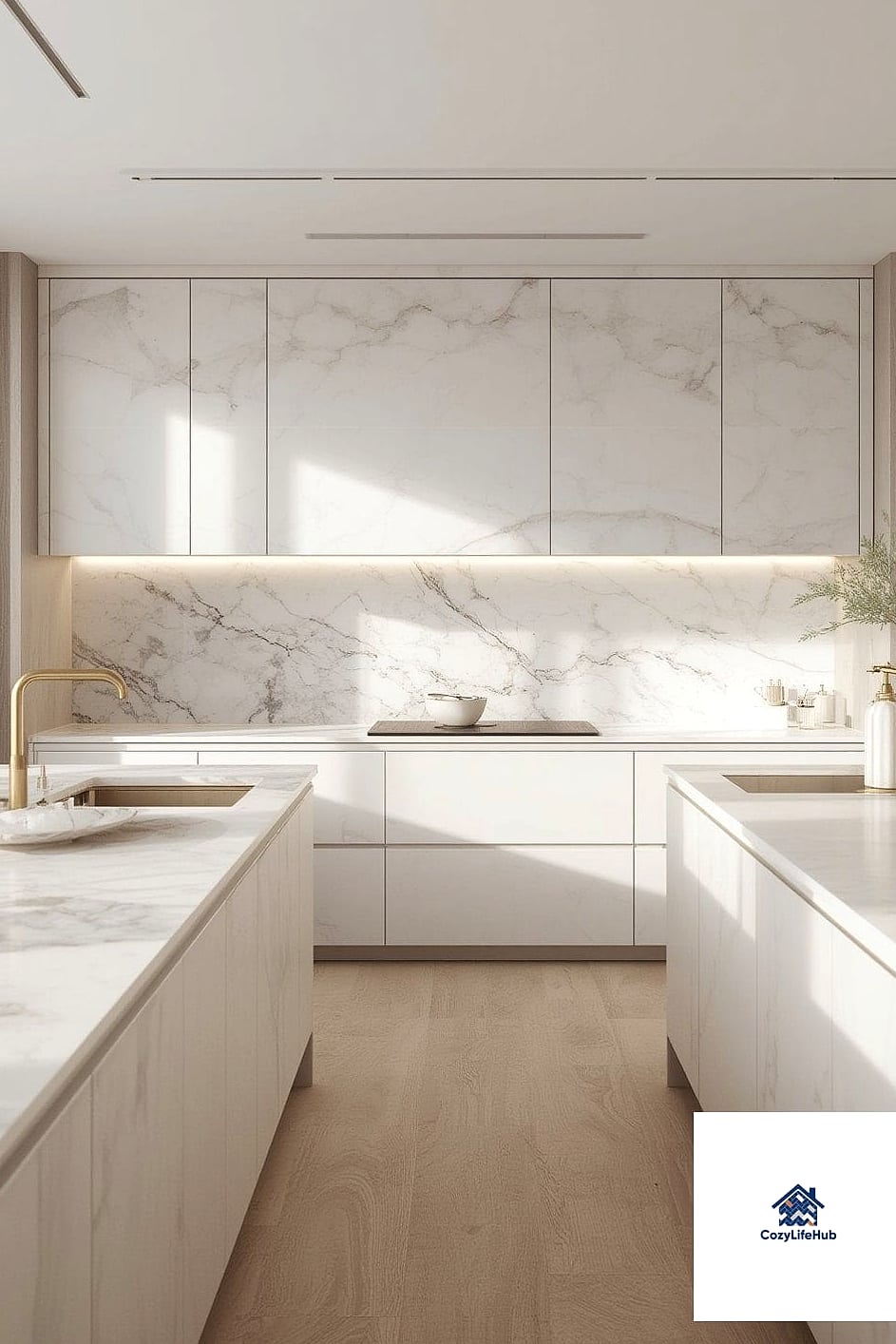
Instead of covering the whole cooking wall, some homeowners are limiting marble to just the section behind open shelves, using a simpler tile or painted wall elsewhere. This lowers material cost significantly while still giving you that marble moment where it’s most visible. It also lets the stone act as a backdrop for displayed dishware and glassware. This is a smart approach for anyone renovating on a tighter budget.
Marble with Contrasting Dark Grout
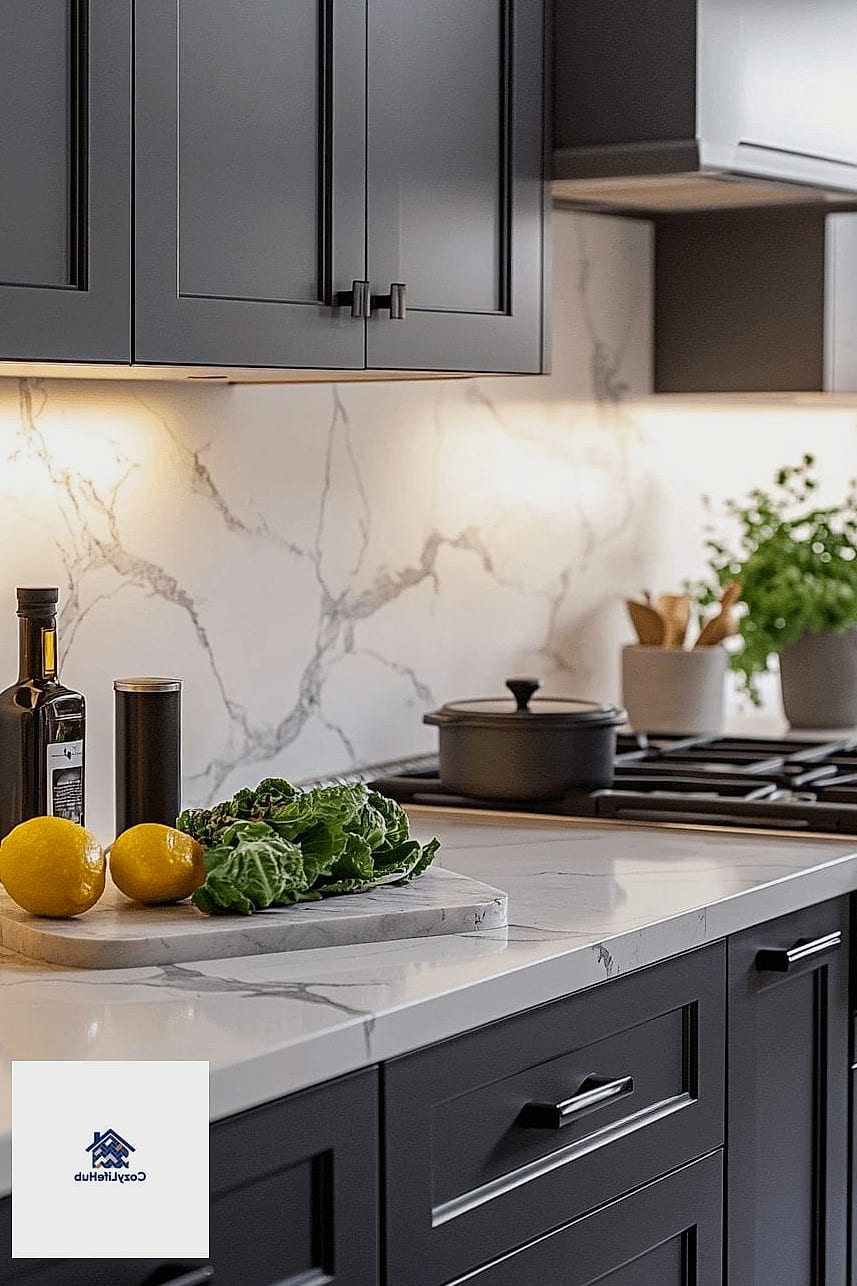
Using charcoal or black grout with white marble tile creates graphic definition between each piece, almost like a grid pattern. It’s a departure from the usual matching-grout approach and gives a more modern, architectural feel. This also tends to hide dirt and grime better than white grout, which is a practical bonus in a high-use kitchen. It works especially well with square or subway-shaped marble tiles.
Marble Hexagon Tile
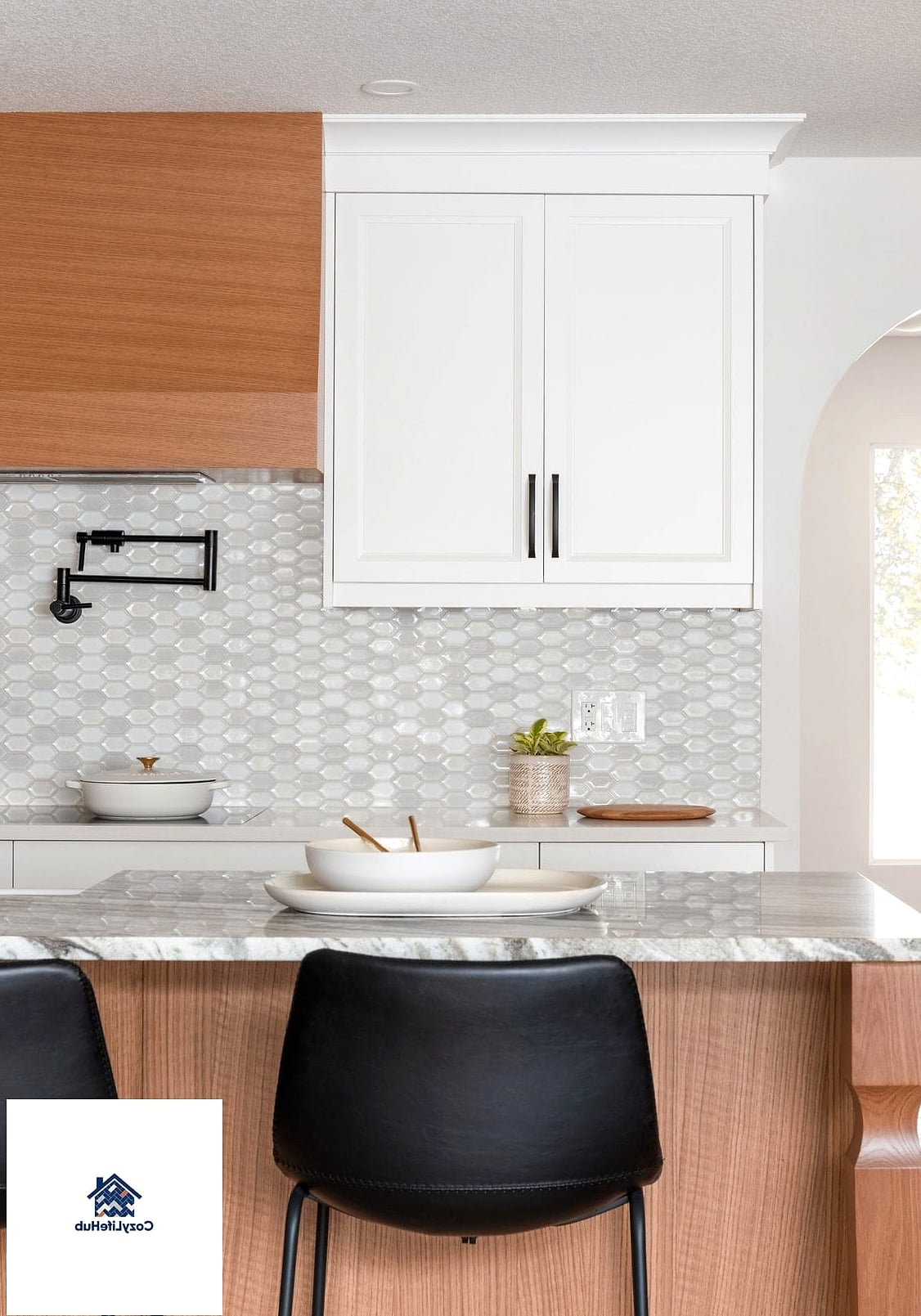
Hexagon tiles bring a honeycomb structure that feels fresh compared to standard square tile layouts. In marble, the natural veining adds even more depth to the geometric shape. This works well as a full backsplash or as an accent strip within a larger tile design. It’s a popular choice for anyone wanting pattern that still feels sophisticated rather than playful.
Floating Shelf Integration with Marble
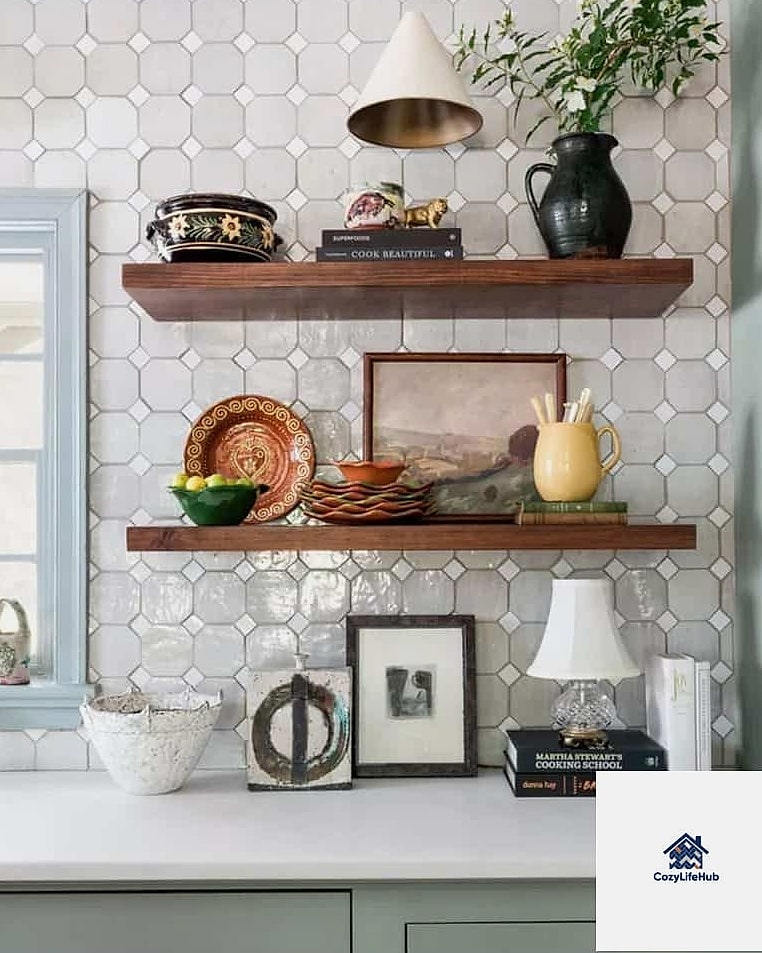
Pairing a marble backsplash with floating wood shelves creates a nice material contrast, softening the coolness of the stone with warm tones. This combination is especially popular for displaying everyday dishes, cookbooks, or small plants. It also adds functional storage without closing in the wall visually. Just keep in mind that marble can stain from oil splatters, so shelves near the stove should hold sealed or easy-to-wipe items.
Marble Slab with a Hidden Seam
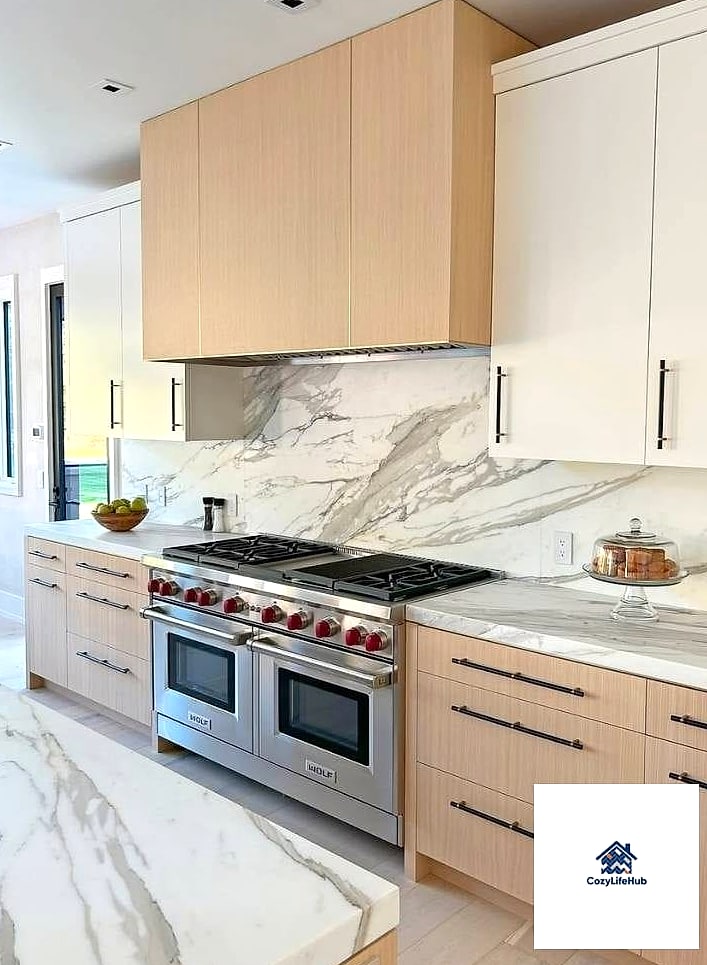
Skilled fabricators can place slab seams along cabinet lines or corners so they’re nearly invisible, giving the illusion of one continuous piece of stone. This takes careful planning during the measuring and templating stage, but the payoff is a backsplash that looks seamless from across the room. It’s worth asking your fabricator specifically about seam placement before installation begins. This detail is subtle, but it makes a real difference in how polished the final result feels.
Blue-Gray Marble Tones
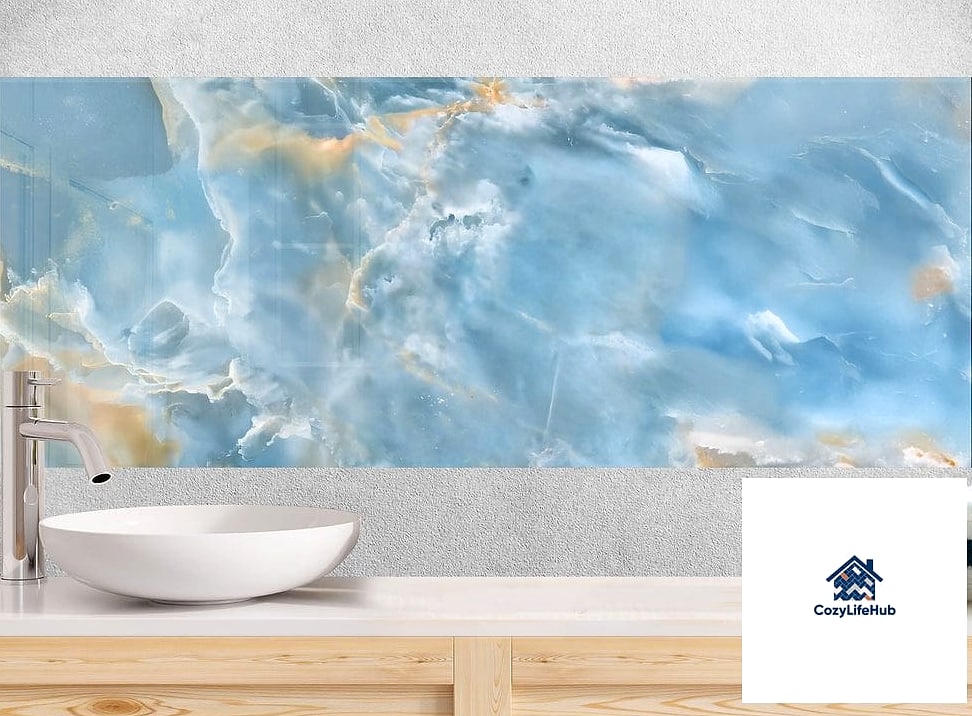
Some marble varieties carry cool blue-gray undertones rather than the classic warm gray of Carrara. This works beautifully in kitchens with navy cabinetry or cool-toned color schemes. It gives the same organic veining people love about marble but shifts the overall mood to feel calmer and more contemporary. Pair it with brushed nickel or matte black for a cohesive, cool palette.
Marble Tile with a Scalloped Edge Border
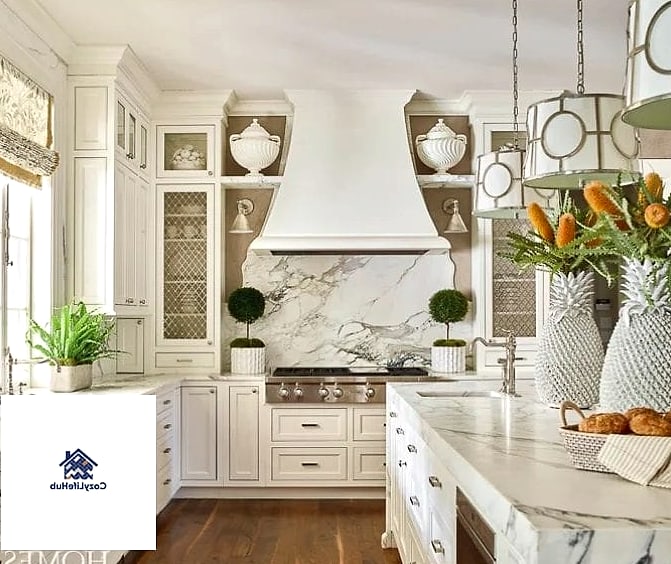
Adding a scalloped or fluted trim tile along the top edge of a marble backsplash gives it a finished, custom look, almost like a piece of furniture. This detail works well in traditional or grandmillennial-style kitchens where a little extra ornamentation feels right at home. It’s a subtle way to elevate a straightforward tile layout. Talk to your tile supplier about matching trim pieces before you commit to a layout.
Marble Around a Range Hood Only
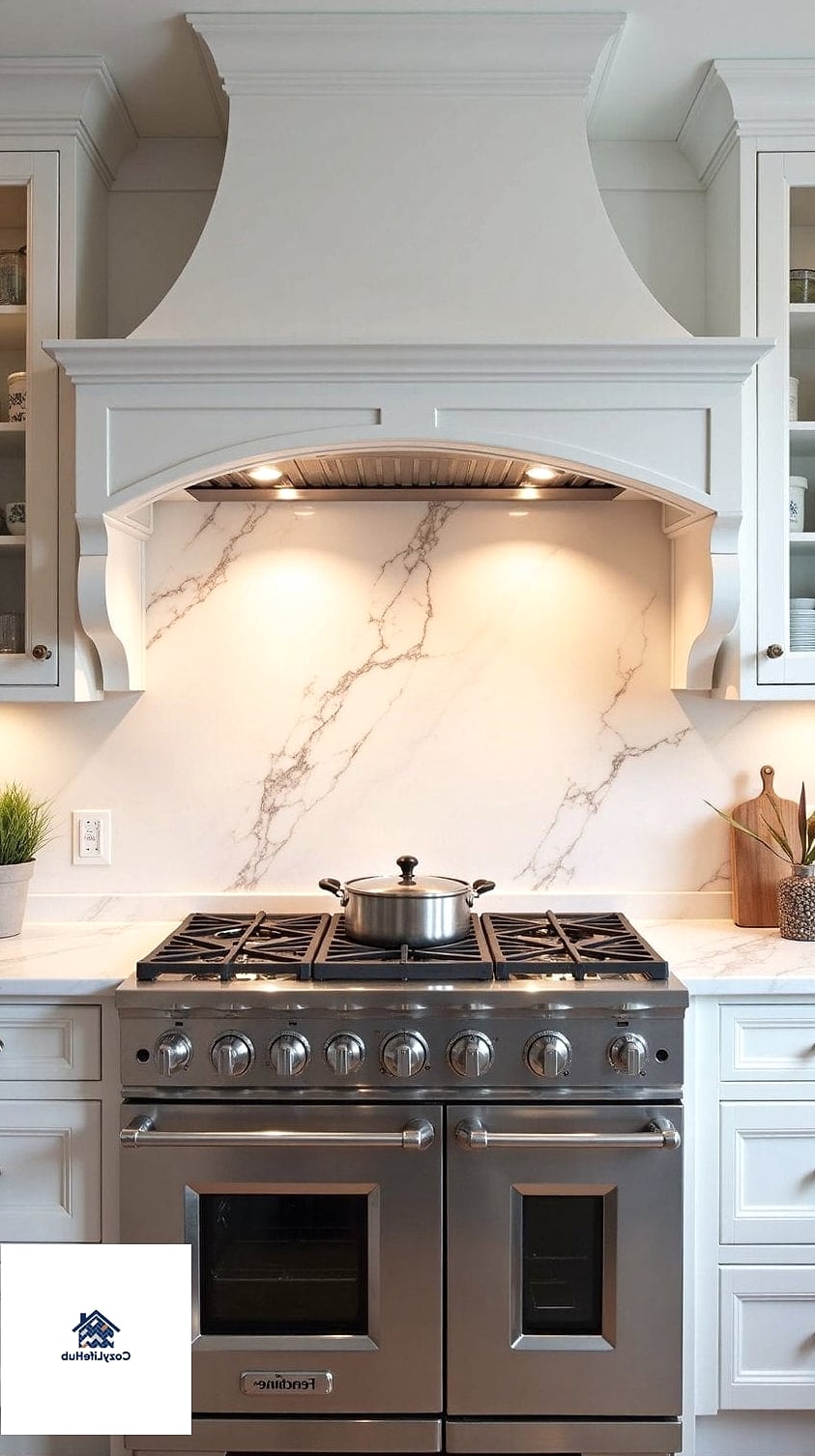
Rather than tiling an entire wall, some homeowners frame just the range hood in marble, leaving the surrounding wall painted or in simpler tile. This creates a focal point exactly where the eye naturally goes while keeping costs down elsewhere. It’s a great budget-friendly way to get a luxury marble moment without a full-wall investment. This approach also works well for renters doing a semi-permanent upgrade with removable materials nearby.
Marble Slab with Integrated Ledge
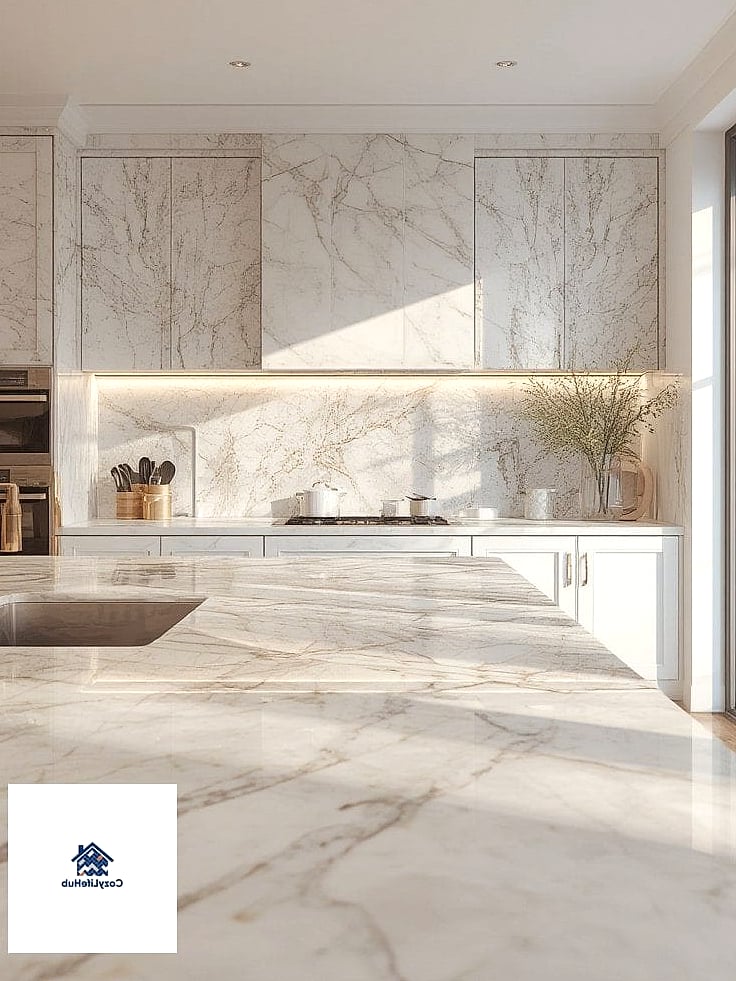
Some marble backsplash installs include a small built-in ledge, essentially a thin ridge of stone that runs along the countertop line. It’s a subtle detail that gives you a spot to rest a spoon or small bottle without needing extra hardware. This works best when planned during the initial slab fabrication rather than added later. It’s a small touch, but it adds function to what’s usually a purely decorative surface.
Marble Peel-and-Stick for Renters
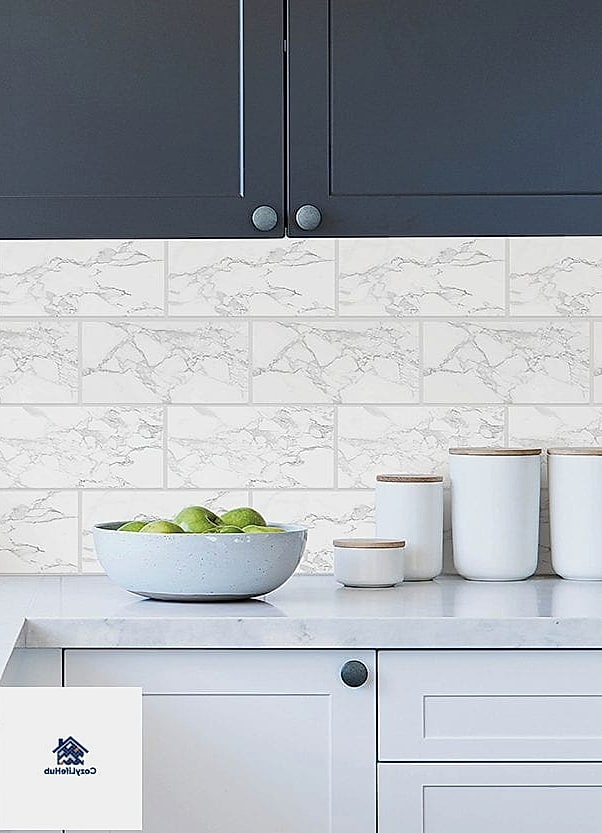
For anyone who can’t commit to permanent stone, marble-look peel-and-stick tile has come a long way in realism and texture. It’s an easy weekend project that can be removed when you move out, making it ideal for apartments or rental homes. Look for products with textured finishes rather than flat print, since that’s what sells the illusion of real stone. It won’t fool a stone expert up close, but from across the room, it holds up well.
Marble Tile with Metallic Inlay
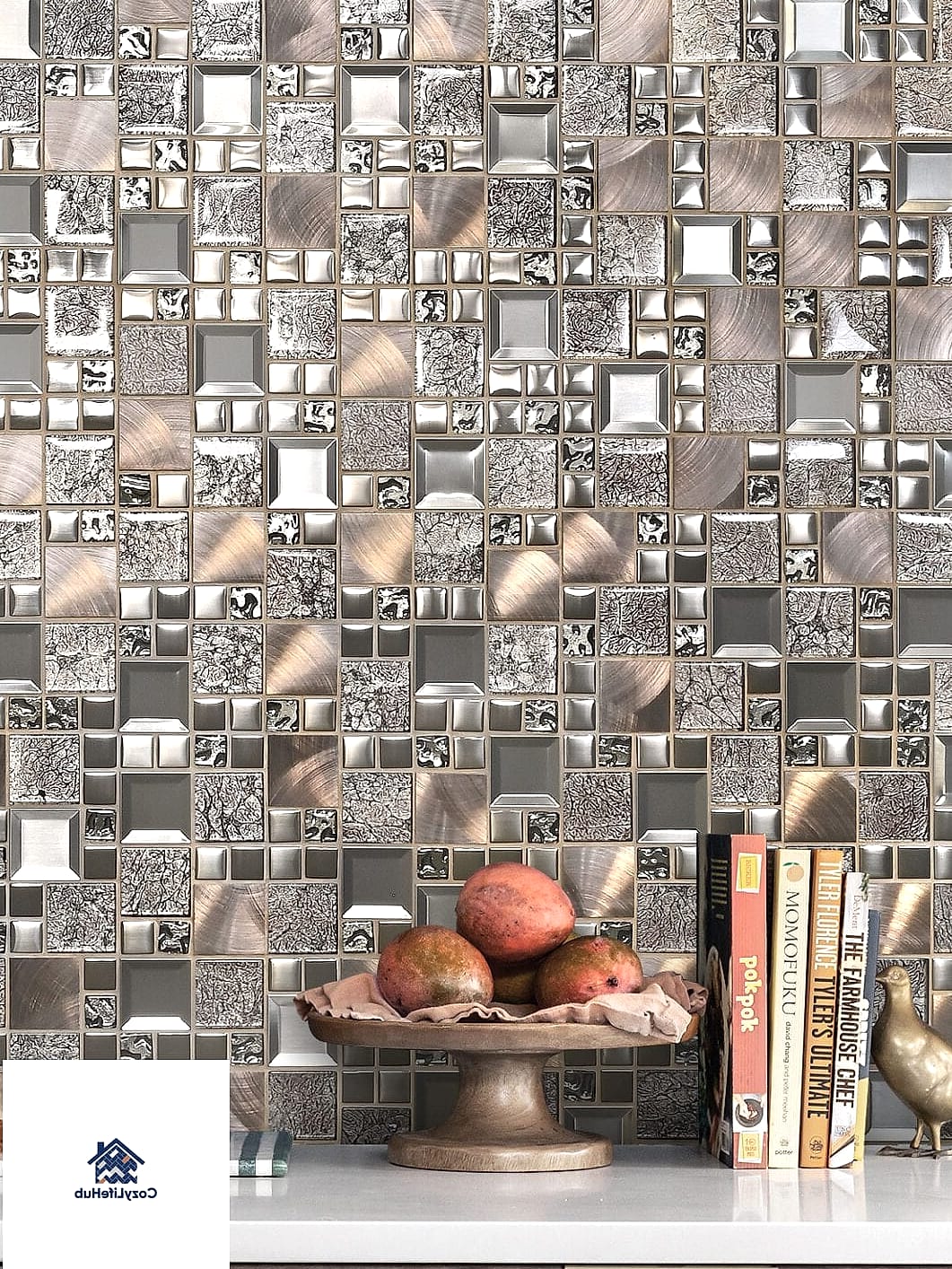
Thin brass or copper strips inlaid between marble tiles add a glint of metal that elevates a simple layout into something more custom. This detail works particularly well in art deco-inspired kitchens or bathrooms. It’s a specialty installation, so factor in extra time and a fabricator experienced with mixed materials. Even a small amount of metallic inlay can change the entire feel of the space.
Marble Slab in a Coffee or Wet Bar Nook
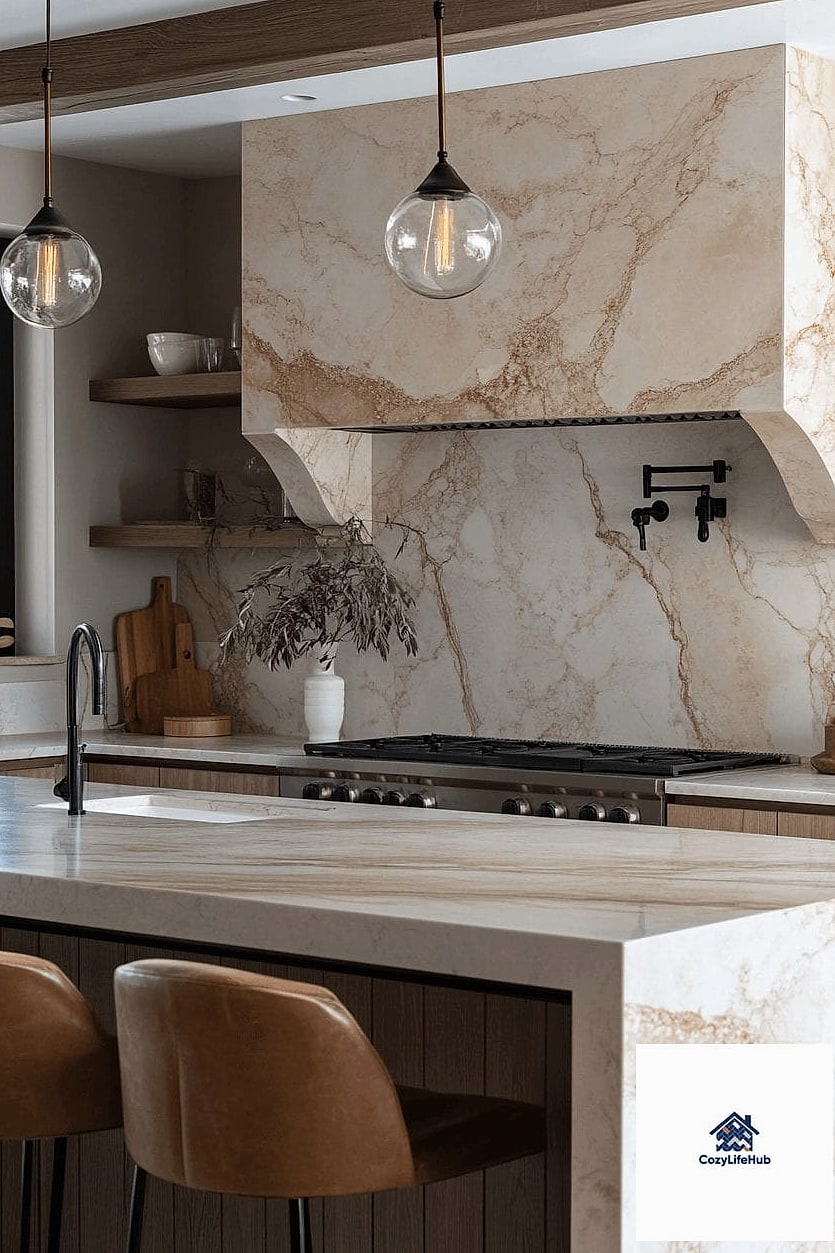
If a full kitchen marble upgrade feels like too much, consider using it just in a coffee station or wet bar area instead. This gives you a luxurious material moment in a smaller, contained space, which also keeps costs more manageable. It’s a popular choice for open shelving nooks where you want a boutique-coffee-shop feel at home. Pair it with brass fixtures and glass canisters for a cohesive look.
Marble with a Leathered Finish
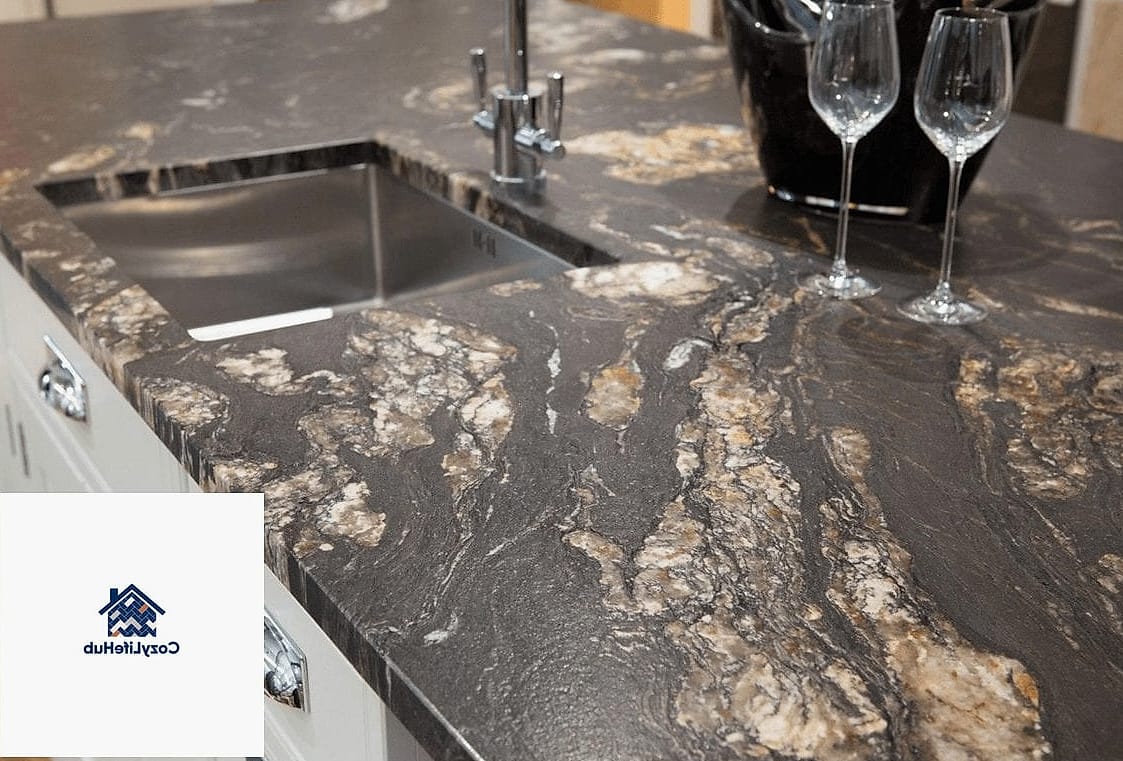
A leathered finish gives marble a soft, textured surface rather than the typical glossy polish, which also happens to hide fingerprints and water spots more effectively. This is worth considering for busy households or kitchens that see heavy daily use. The texture adds subtle depth without looking rustic or unfinished. It’s a practical option for anyone who loves the marble look but worries about maintenance.
Marble Slab with Integrated Pot Filler Cutout
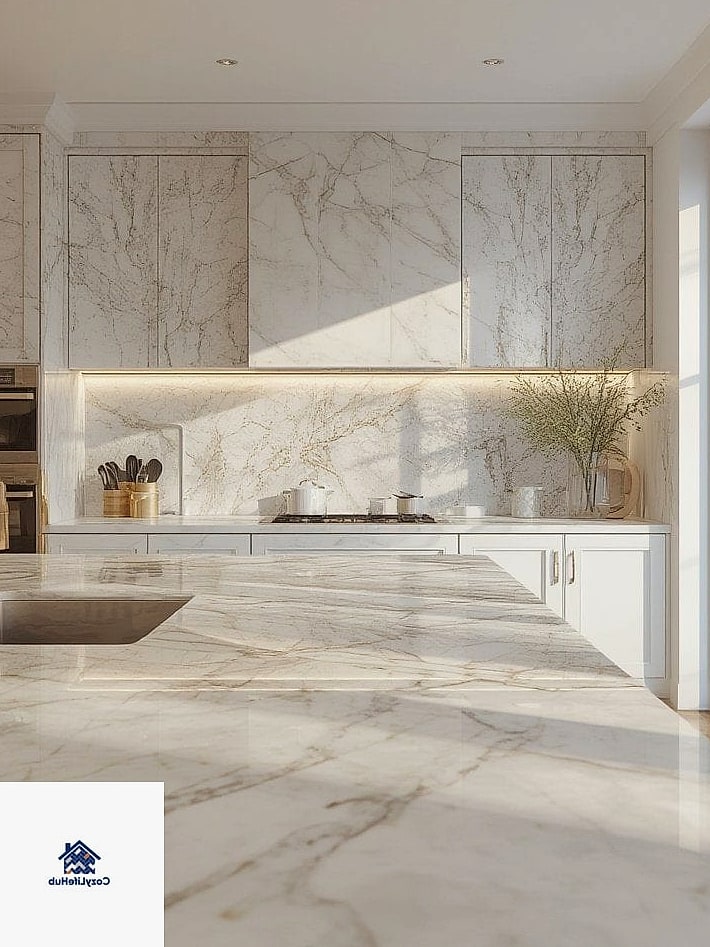
Having your fabricator cut a precise opening for a pot filler directly into the marble slab creates a clean, built-in look rather than working around visible plumbing. This detail is easy to overlook during planning but makes a noticeable difference in the finished result. It’s best coordinated early with your plumber and stone fabricator together. The result feels intentional rather than like an afterthought.
Marble Tile in a Diagonal Layout
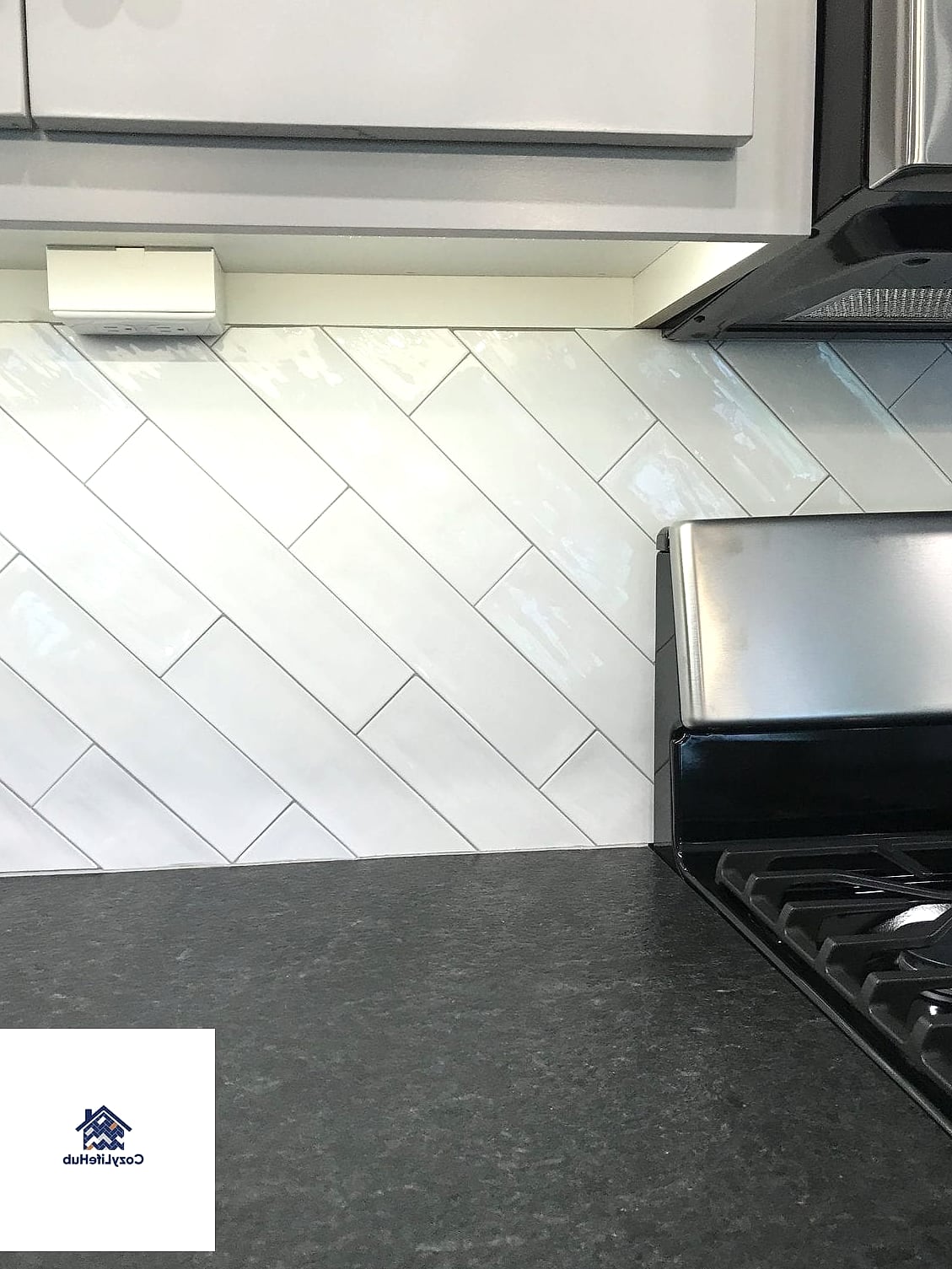
Simply turning square marble tile forty-five degrees changes the entire feel of a backsplash, creating a diamond pattern instead of a standard grid. This is a low-cost way to add visual interest without switching materials or shapes. It works especially well in smaller kitchens where you want the eye to travel and make the space feel larger. This layout does require slightly more cutting during install, so factor in a bit of extra material.
Marble Slab Paired with Textured Plaster
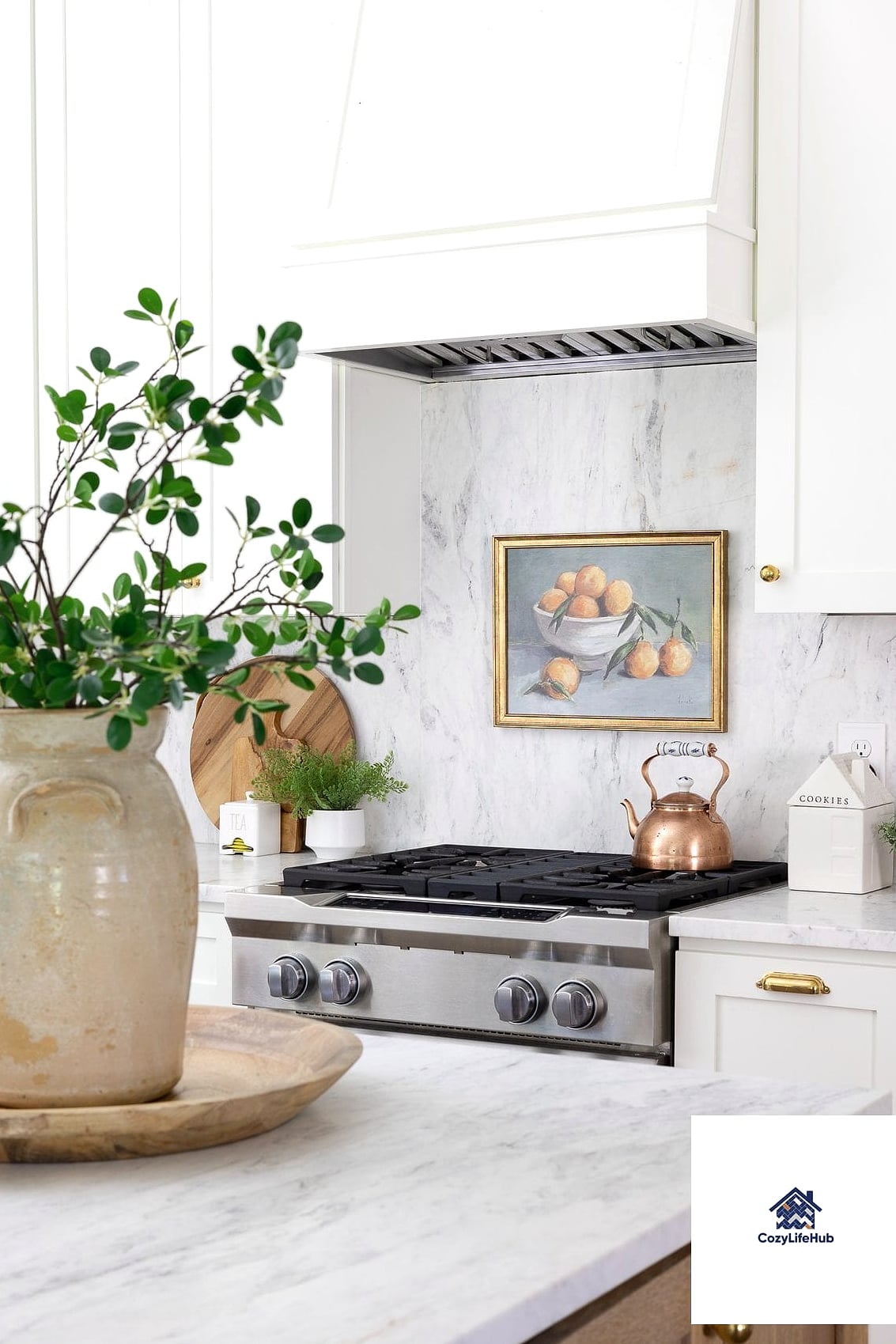
Combining a marble backsplash on one wall with lime-washed or textured plaster on an adjacent wall creates contrast between polished stone and organic texture. This works particularly well in kitchens that open into a dining or living space, giving each zone its own personality. It’s a favorite combination among designers working in organic modern or Mediterranean-inspired homes. The mix keeps the marble from feeling too cold or formal.
Marble Slab with Warm LED Underlighting
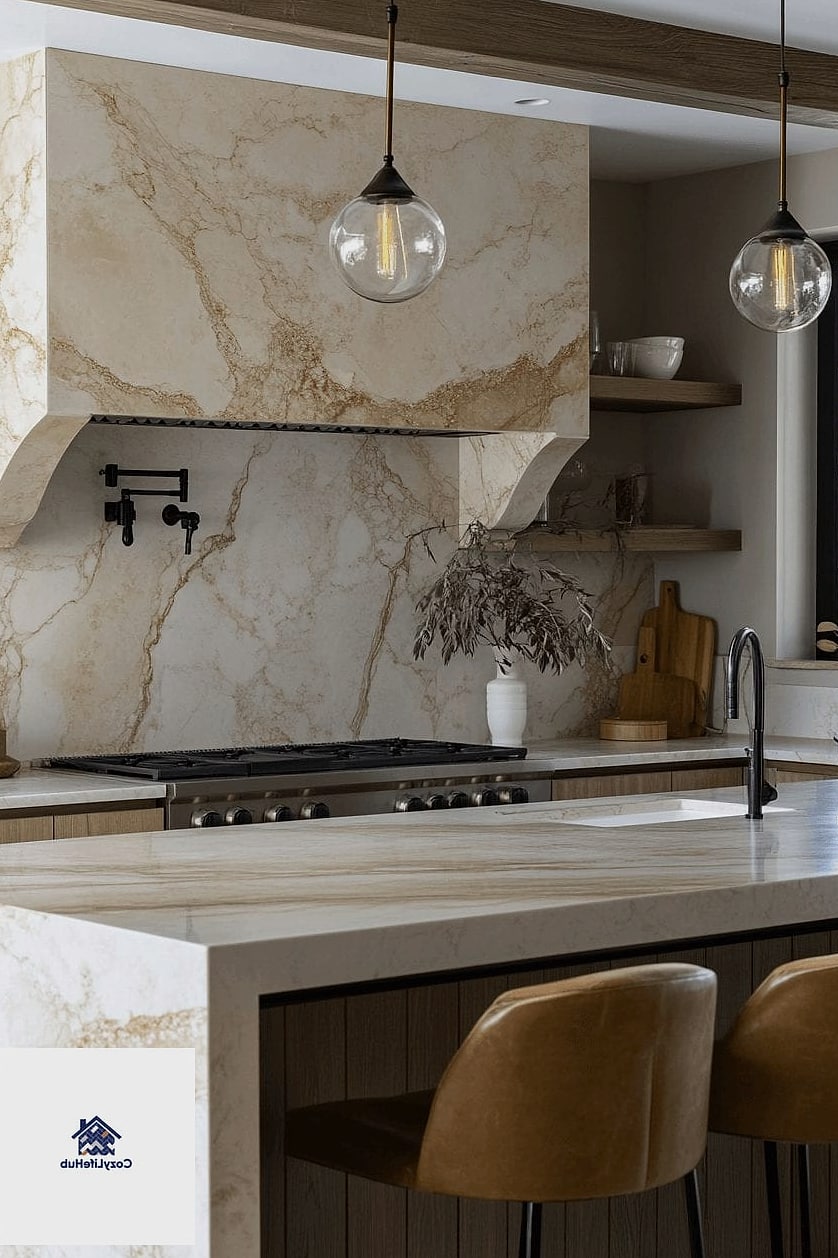
Adding a thin strip of warm LED lighting beneath open shelving in front of a marble backsplash highlights the natural veining, especially in the evening. This creates a soft glow that makes the kitchen feel more like a lounge space after dark. It’s a relatively simple electrical addition during a renovation and pays off significantly in ambiance. Just make sure to choose a warm color temperature so the marble doesn’t look overly blue or clinical under the light.
Marble backsplashes clearly aren’t a one-size-fits-all choice anymore, and honestly, that’s the fun part. Whether you go big with a bookmatched slab or ease in with a small coffee nook accent, there’s a version of this material that fits almost any budget and style. Hopefully these thirty ideas gave you a few fresh directions to consider for your own space.