21 Backsplash Behind Stove Visual Impact Ideas That Prove This Trend Is Here to Stay
- Full-Height Zellige Tile Wall
- Herringbone Marble Pattern
- Bold Colored Tile Statement
- Floor-to-Ceiling Subway Tile
- Textured Fluted Tile Panel
- Mixed Metal Accent Strip
- Handmade Ceramic Tile in Varied Tones
- Full Slab Quartz Backsplash
- Checkerboard Tile Pattern
- Natural Stone with Visible Veining
- Mosaic Tile Medallion Focal Point
- Vertical Stacked Subway Tile
- Dark Moody Tile Wall
- Scalloped or Fish Scale Tile
- Extended Backsplash Behind Open Shelving
- Warm Terracotta Tile
- Geometric Encaustic Tile
- Brick-Look Tile in a Running Bond
- Two-Tone Tile Border Design
- Glass Tile Shimmer Wall
- Plaster or Venetian Plaster Finish
21 Backsplash Behind Stove Visual Impact Ideas That Prove This Trend Is Here to Stay
The wall behind your stove works harder than almost any other spot in your kitchen. It fights grease splatters, steam, and heat every single day, which means it needs to be tough. But that doesn’t mean it can’t also be the most eye-catching part of the whole room.
More and more homeowners are treating this area like a mini art installation instead of just a practical necessity. A well-designed range backsplash can anchor your entire kitchen’s style, whether you’re going for old-world charm, modern minimalism, or something bold and unexpected. Here are 21 ideas that show why this trend isn’t going anywhere.
Full-Height Zellige Tile Wall
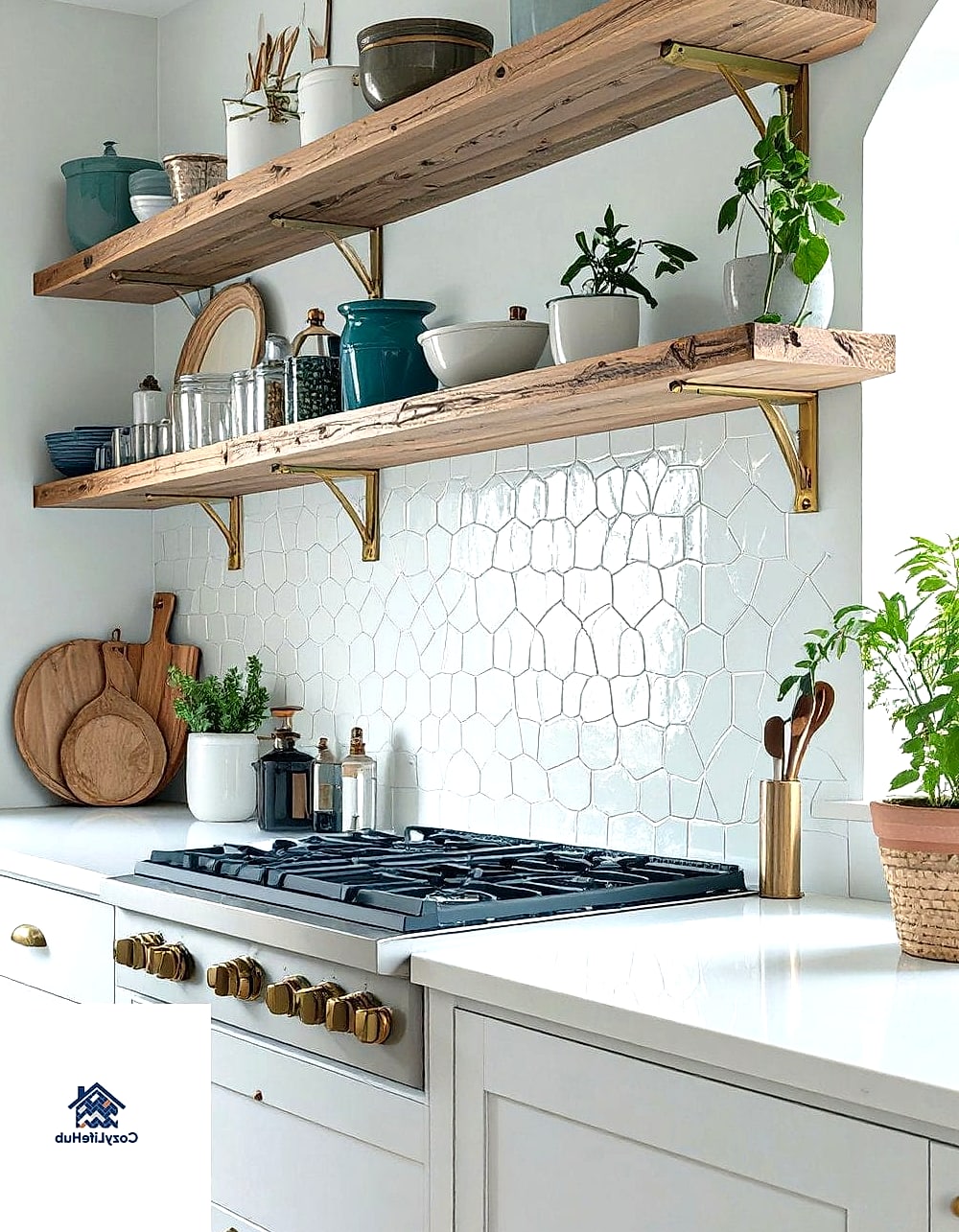
Zellige tile brings an old-world, handcrafted look thanks to its slightly irregular shape and glossy, uneven surface that catches light differently across every single piece. Running it floor to ceiling behind the stove creates a dramatic focal wall that feels almost sculptural.
This works especially well in kitchens with warm color palettes since zellige comes in earthy tones like terracotta, sage, and ochre. It’s pricier than standard ceramic tile and installation takes a skilled hand, but the payoff is a backsplash that looks nothing like anyone else’s.
Herringbone Marble Pattern
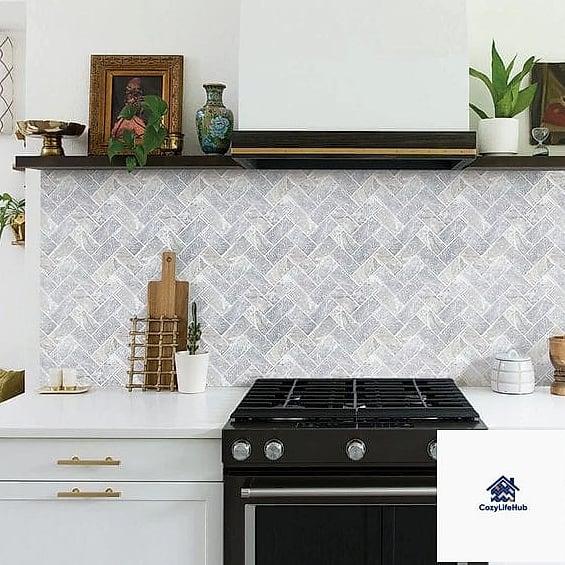
Herringbone patterns add movement and visual interest that a straight-laid tile just can’t match. When you use marble in this layout, you get the best of both worlds: classic elegance plus a dynamic, textured look.
This is a great choice for traditional or transitional kitchens where you want a touch of luxury without going overboard. Marble does need sealing to resist staining from oil splatters, so keep a sealant on hand and wipe up cooking messes fairly quickly.
Bold Colored Tile Statement
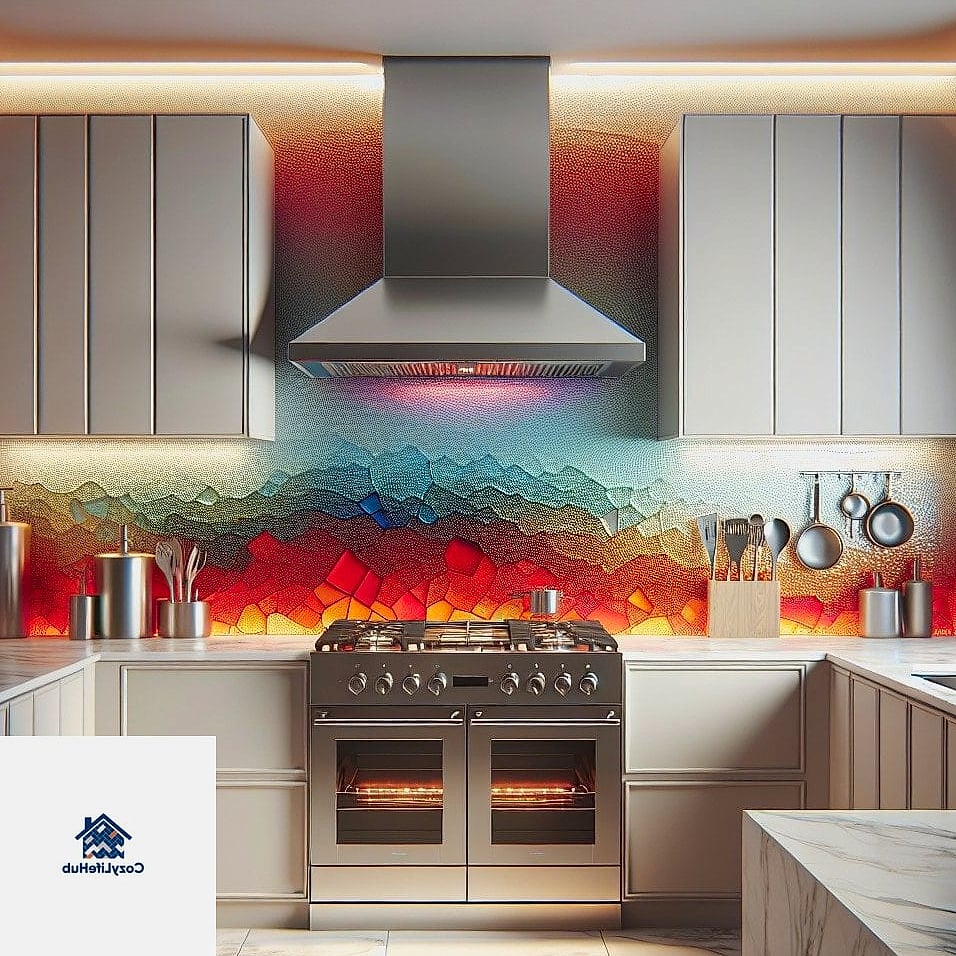
Sometimes the simplest move is just picking a color that pops. A deep emerald, cobalt blue, or even a punchy terracotta tile instantly makes the stove area the star of the kitchen.
This idea works particularly well when the rest of your kitchen leans neutral, letting the color do all the talking. Glossy finishes reflect more light and feel more playful, while matte finishes lean moodier and more sophisticated.
Floor-to-Ceiling Subway Tile
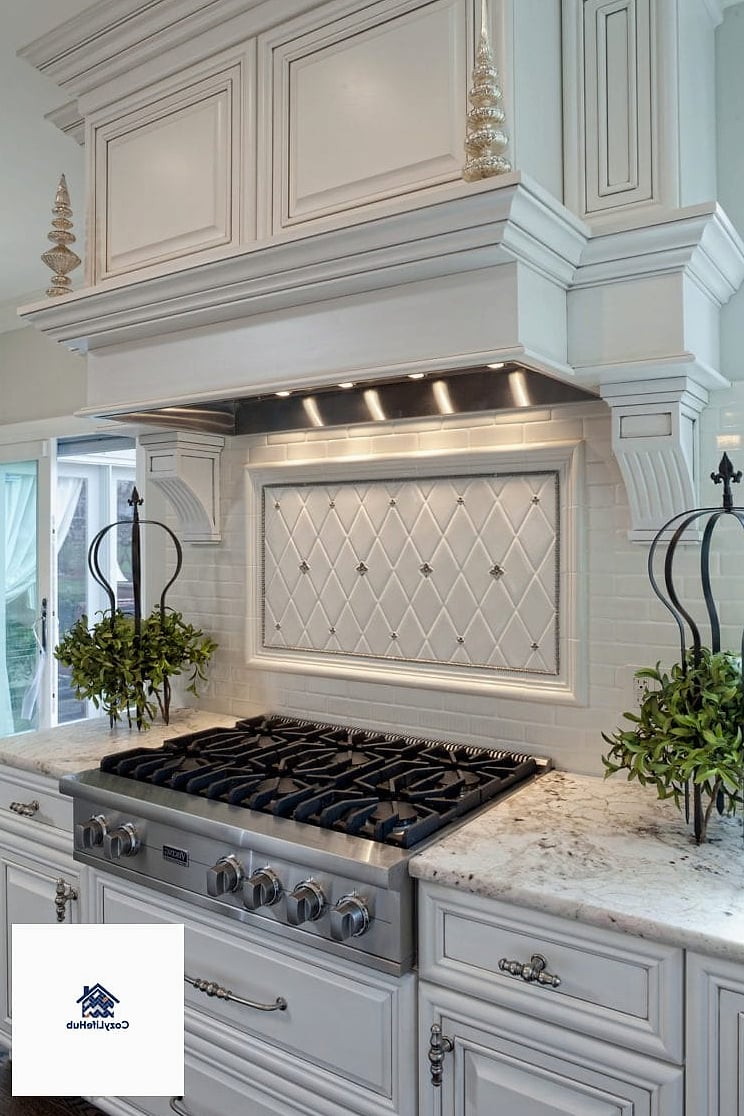
Subway tile is a classic for a reason, but taking it all the way up to the ceiling instead of stopping at the upper cabinets changes the whole feel. It reads as more intentional and gives the kitchen a taller, more expansive look.
Stick with white or off-white for a timeless base, or try a soft gray or blue-gray for something slightly more current. Dark grout adds definition and hides grease better than white grout does, which matters a lot in a high-splatter zone.
Textured Fluted Tile Panel
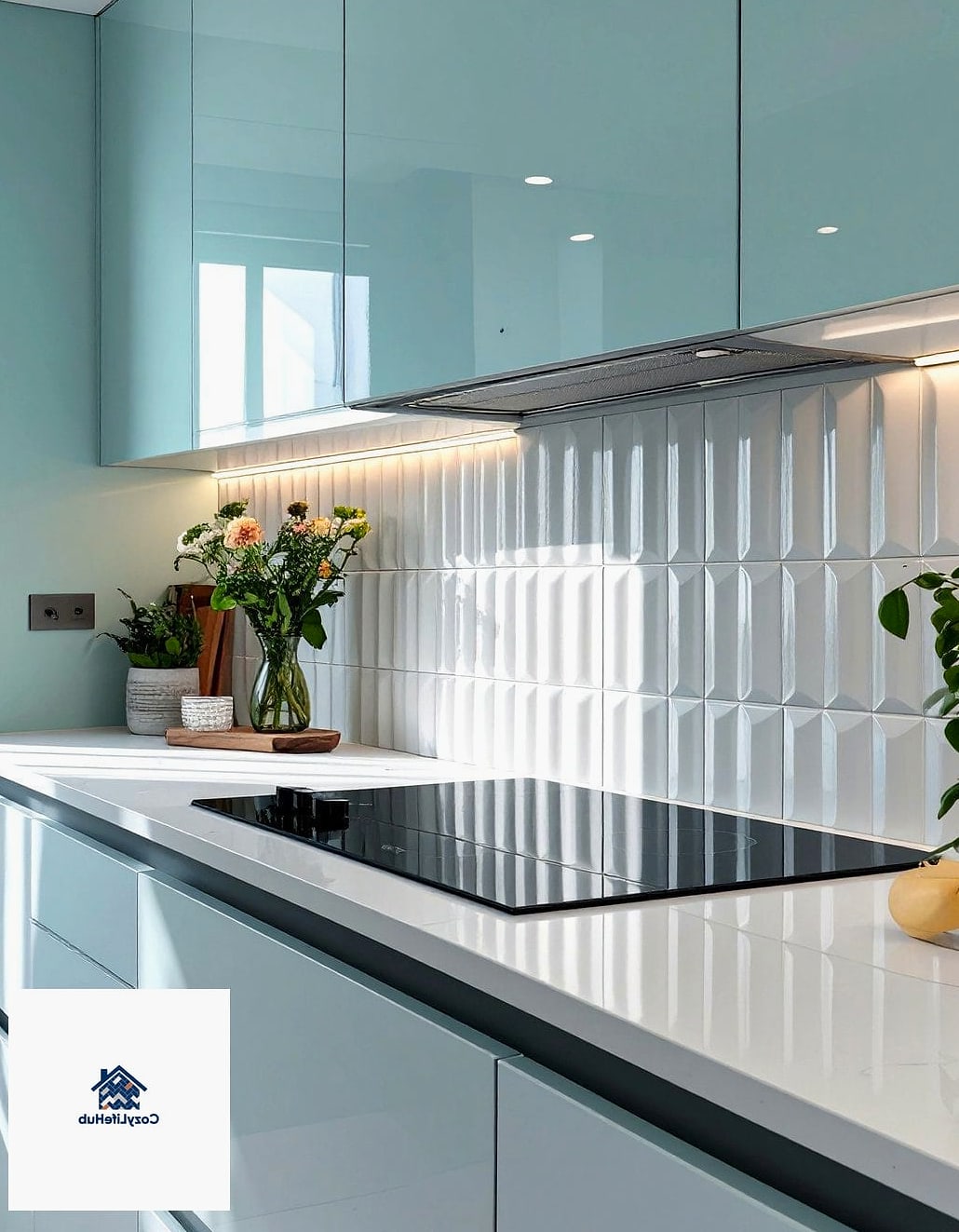
Fluted or ribbed tile has been showing up everywhere lately, and it brings a subtle three-dimensional quality that flat tile simply doesn’t offer. Behind the stove, the vertical grooves create shadow lines that shift depending on your lighting.
This look pairs beautifully with warm wood tones and brushed brass hardware for a soft, organic feel. It’s a slightly higher-maintenance option since grease can settle into the grooves, so plan on more frequent wiping.
Mixed Metal Accent Strip
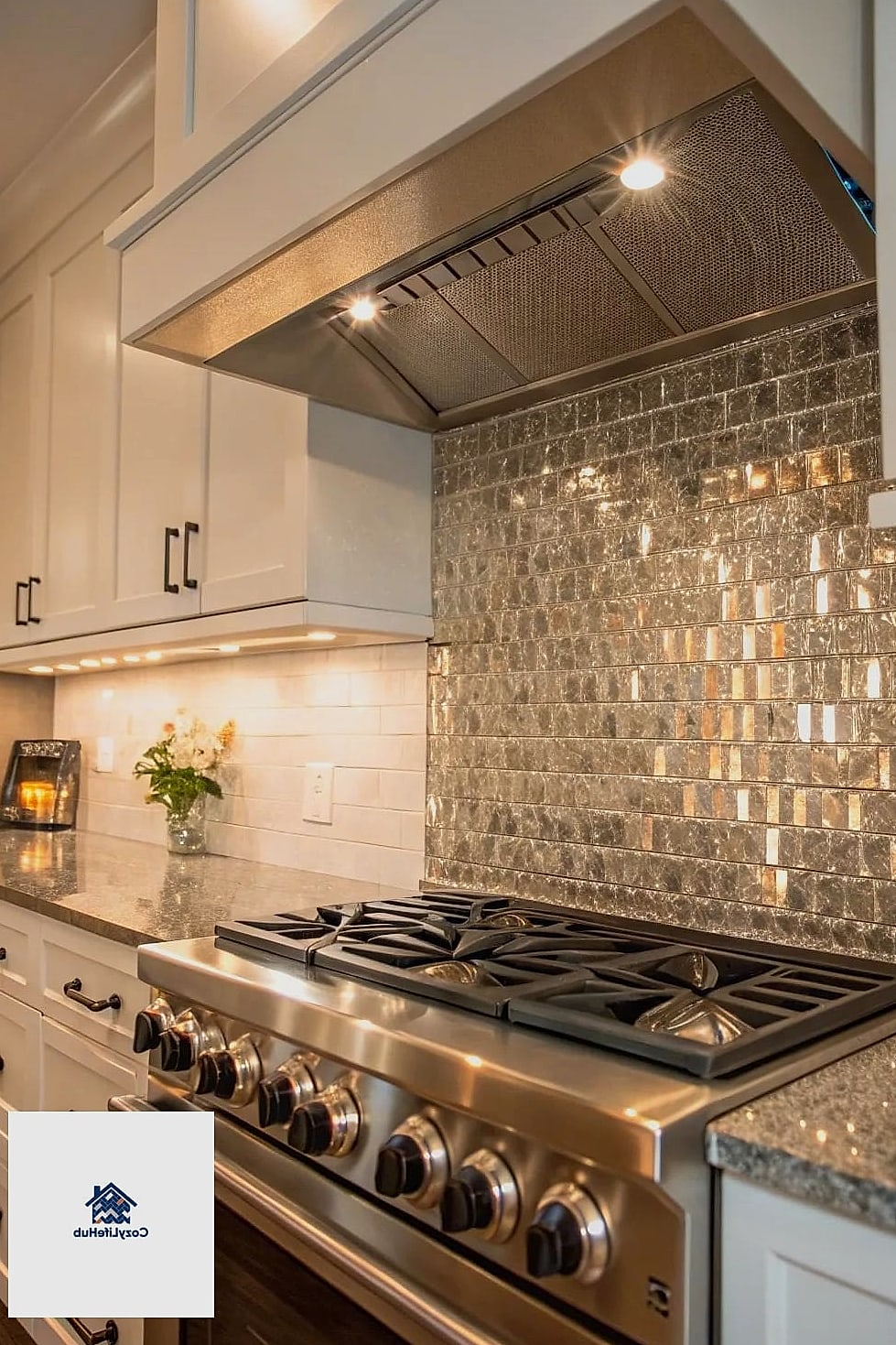
Instead of tile from top to bottom, some homeowners are adding a slim metal strip, often in brushed brass or blackened steel, as an accent within the tile layout. It might frame the range hood or create a border around the main backsplash area.
This detail adds a jewelry-like touch without overwhelming the space. It’s a nice option if you love the look of metal but don’t want to commit to an entire metal backsplash panel.
Handmade Ceramic Tile in Varied Tones
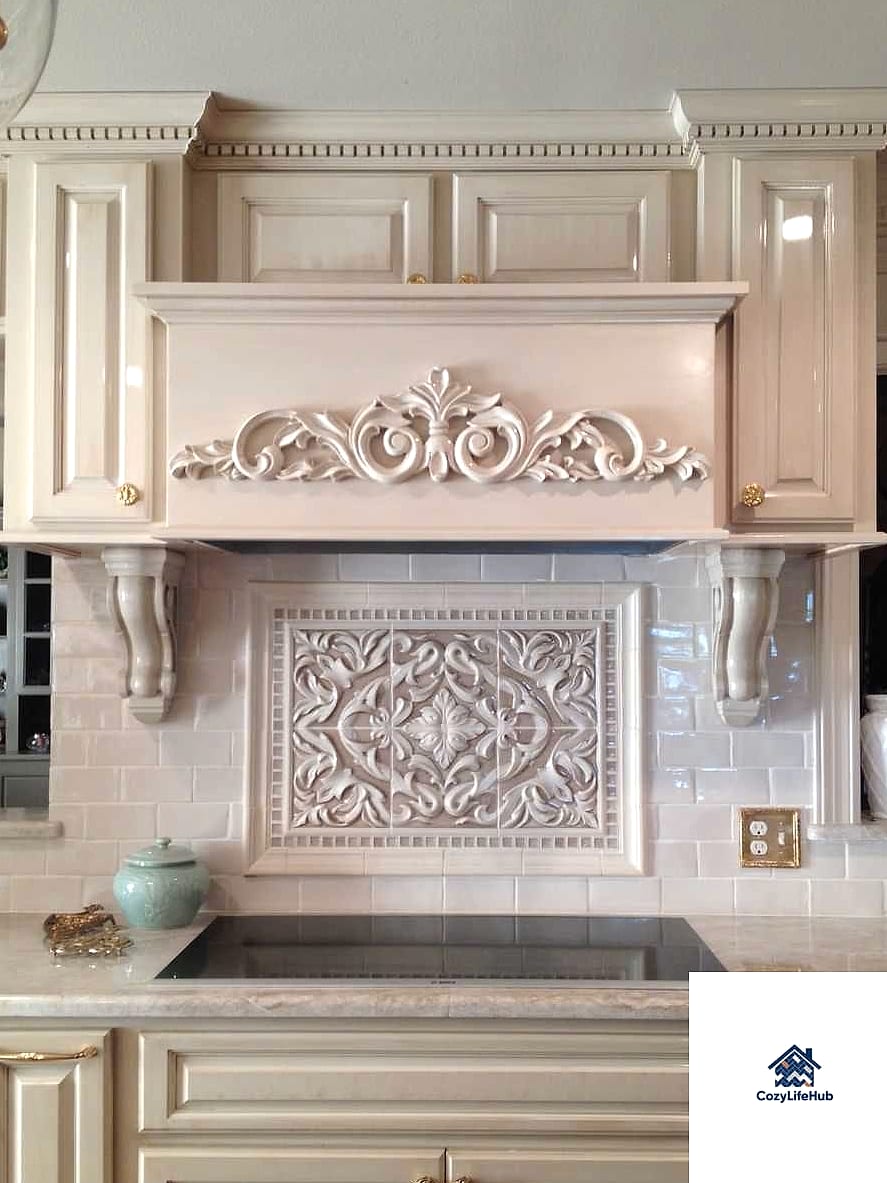
Handmade ceramic tiles rarely match perfectly, and that’s exactly the point. Each tile has slight color variation, giving the wall a lived-in, artisanal quality that mass-produced tile can’t replicate.
This is a favorite among people drawn to cottagecore or European farmhouse aesthetics. Because these tiles are often more porous, sealing is worth considering, especially in the direct splash zone right behind the burners.
Full Slab Quartz Backsplash
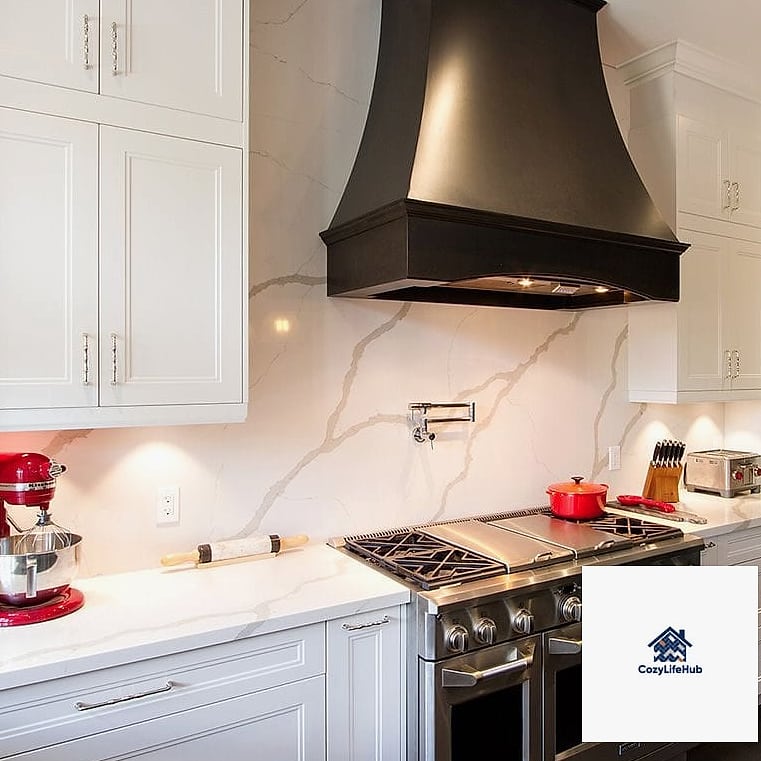
For a sleek, ultra-modern statement, a single slab of quartz behind the stove eliminates grout lines entirely. The result is a smooth, almost seamless surface that’s incredibly easy to wipe down after cooking.
Matching it to your quartz countertops creates a cohesive, monochromatic look that feels custom-built. It’s a bigger investment upfront, but the low maintenance and durability make it appealing for busy households that cook often.
Checkerboard Tile Pattern
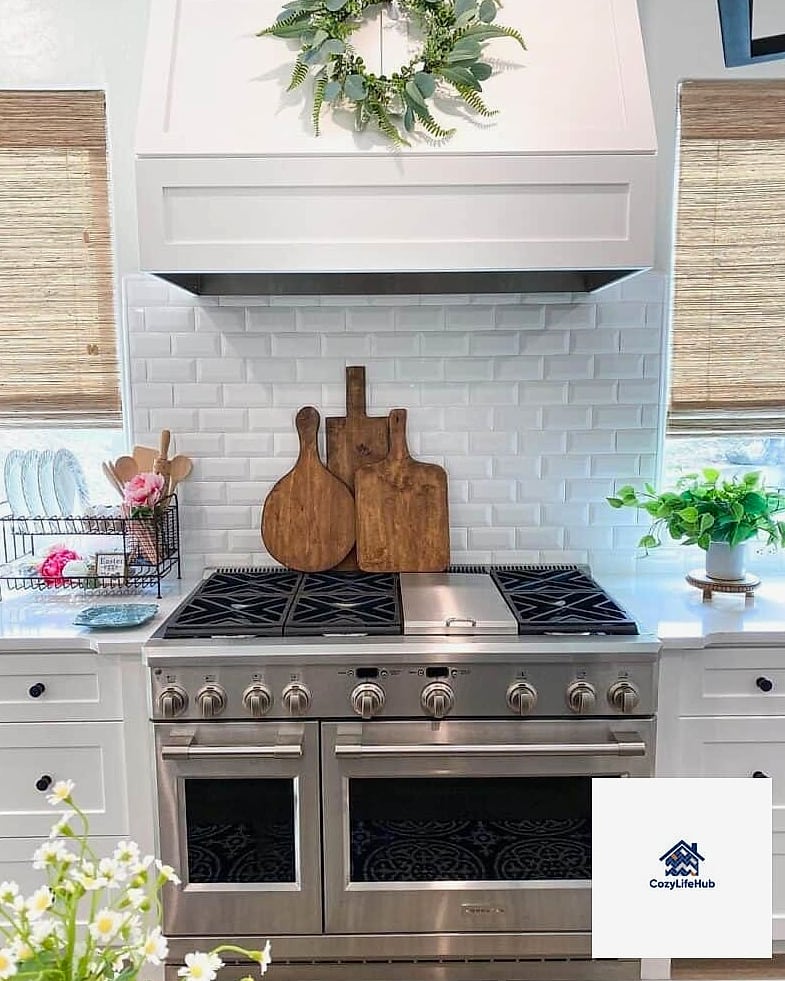
Checkerboard patterns have made a real comeback, and behind the stove is a fun place to try it since it’s a contained area rather than an entire kitchen floor. Black and white is the classic combo, but people are also playing with cream and terracotta or sage and white.
This works great in kitchens that already have some personality, like exposed brick or vintage-style appliances. It’s a playful choice that still feels grounded rather than gimmicky.
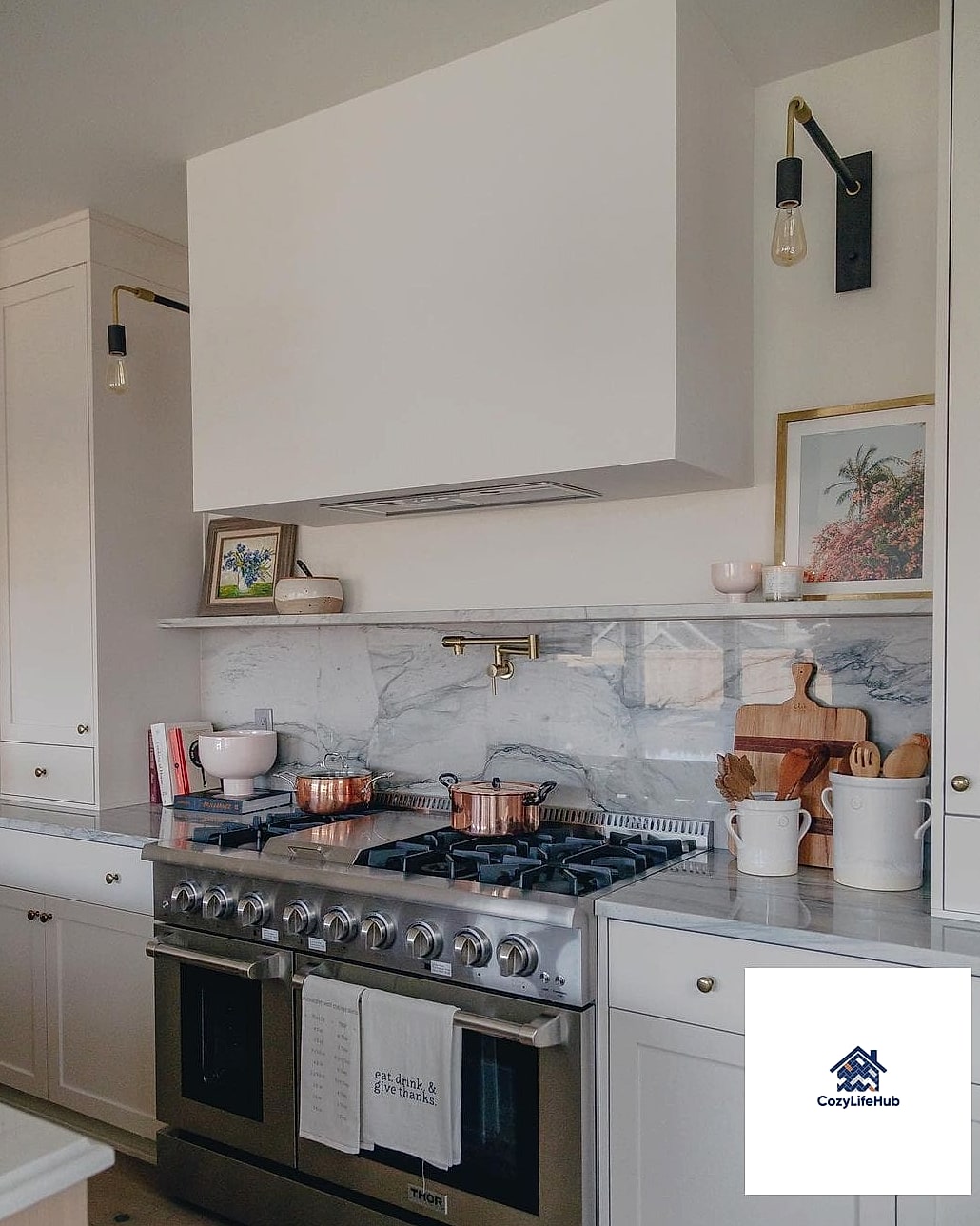
Natural Stone with Visible Veining
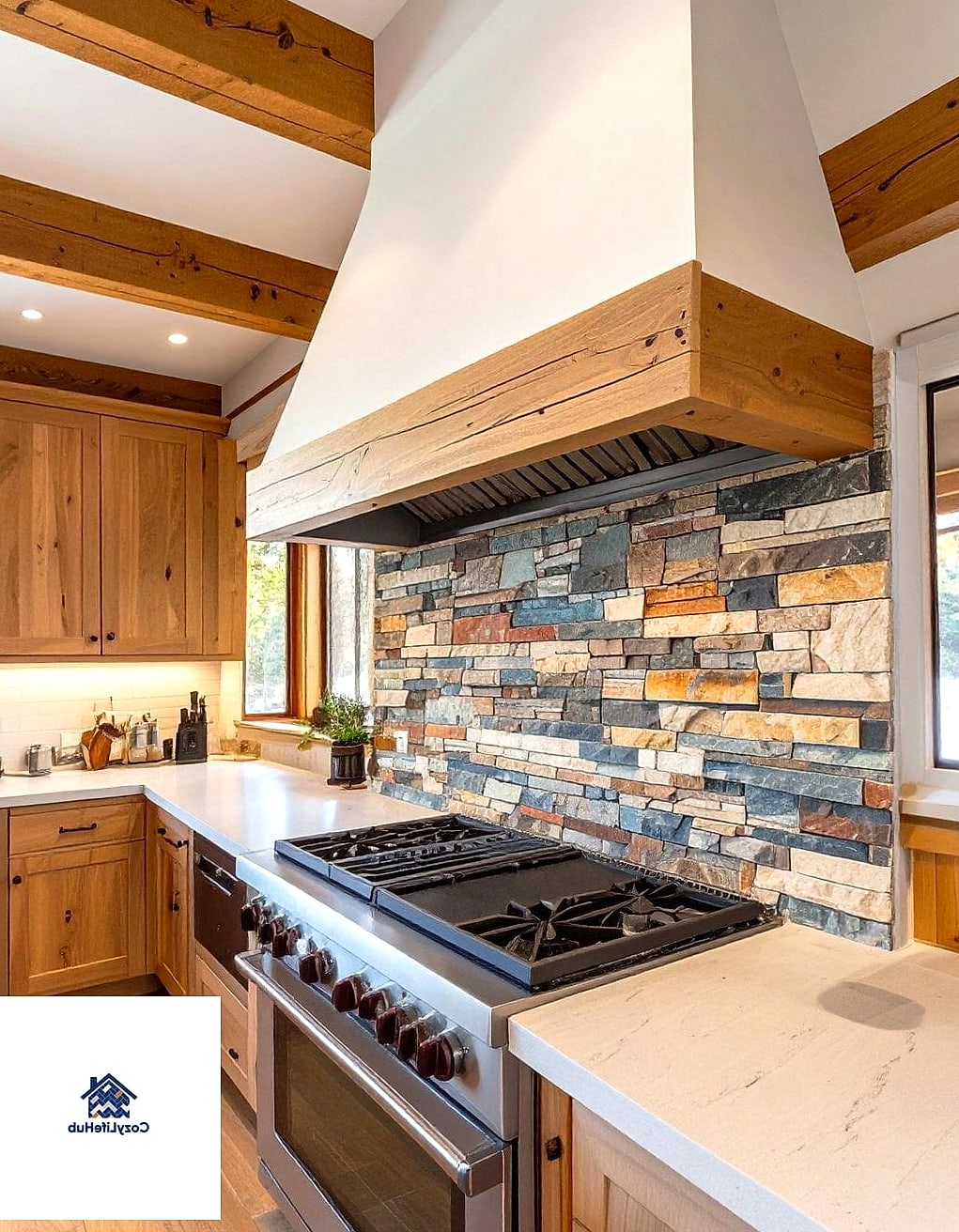
Materials like marble, quartzite, or travertine with dramatic veining turn the stove wall into a natural art piece. No two slabs look exactly alike, so you end up with something genuinely one of a kind.
This suits kitchens aiming for quiet luxury, where the beauty comes from the material itself rather than a busy pattern. Natural stone does require sealing and a bit more care, but many homeowners feel the visual payoff is worth the extra step.
Mosaic Tile Medallion Focal Point
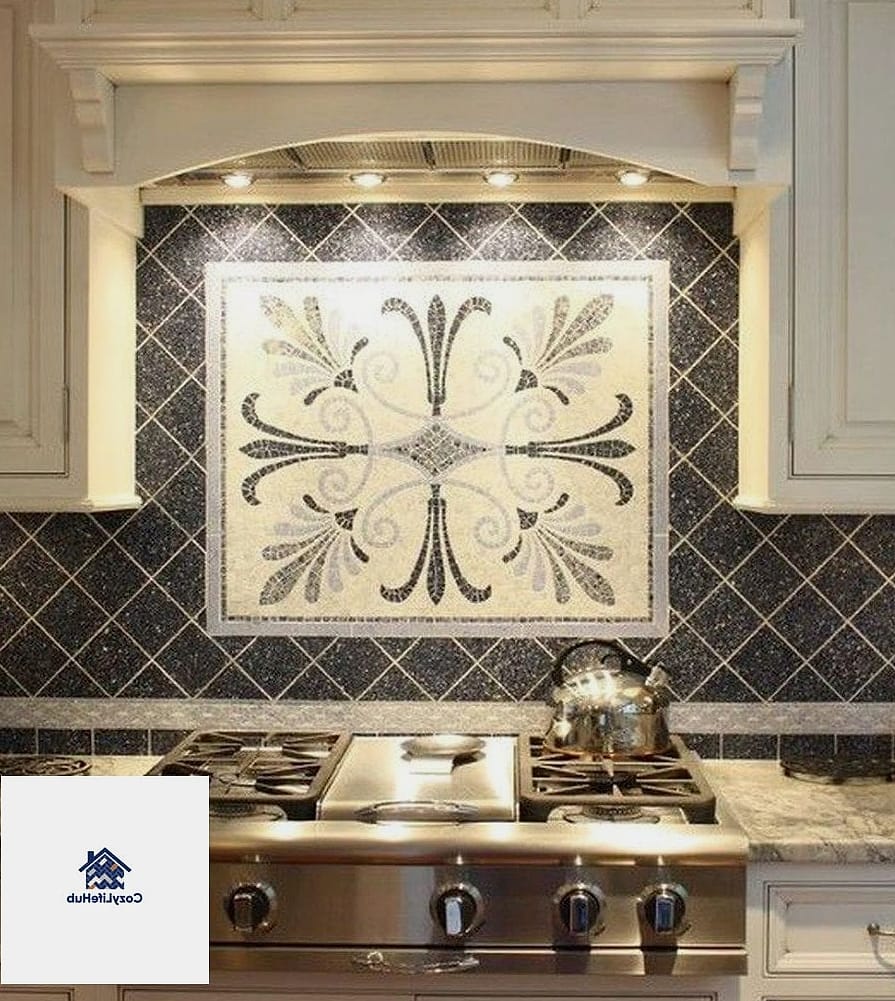
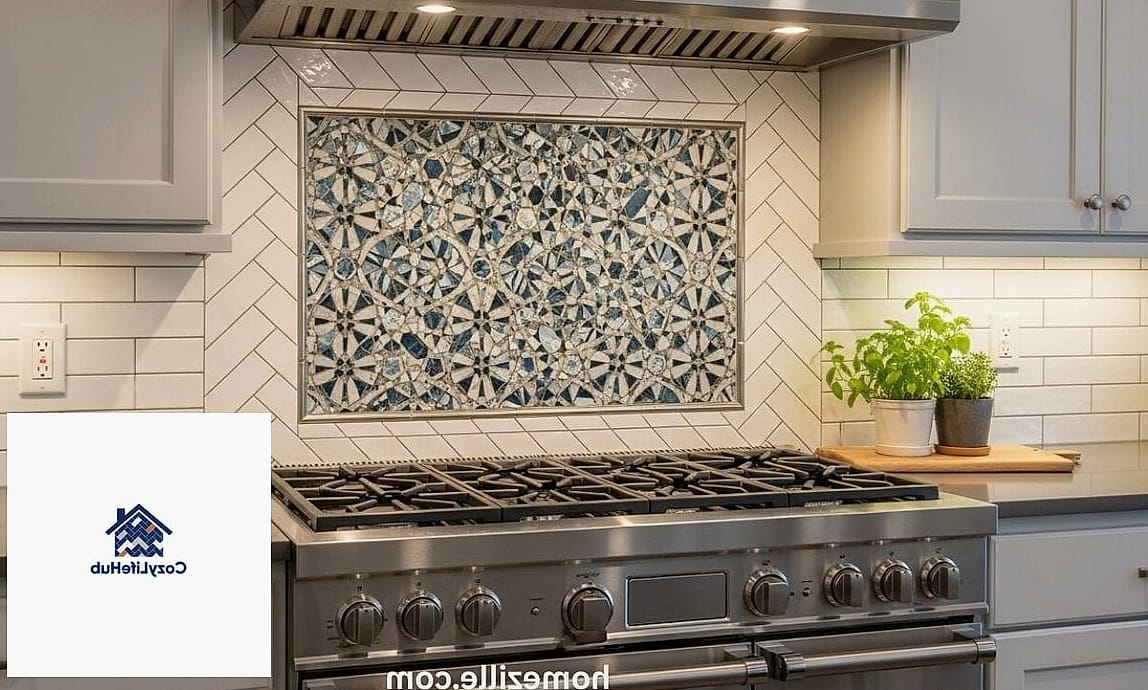
Rather than covering the whole wall in one pattern, some designers are placing a mosaic medallion or decorative tile insert directly above the range as a centerpiece, surrounded by simpler tile. It’s a nod to old European kitchens where this detail was common above hearths and stoves.
This idea adds a lot of character without requiring a full wall of intricate tile. It’s also a nice way to incorporate a splurge-worthy tile in a smaller, budget-friendly quantity.
Vertical Stacked Subway Tile
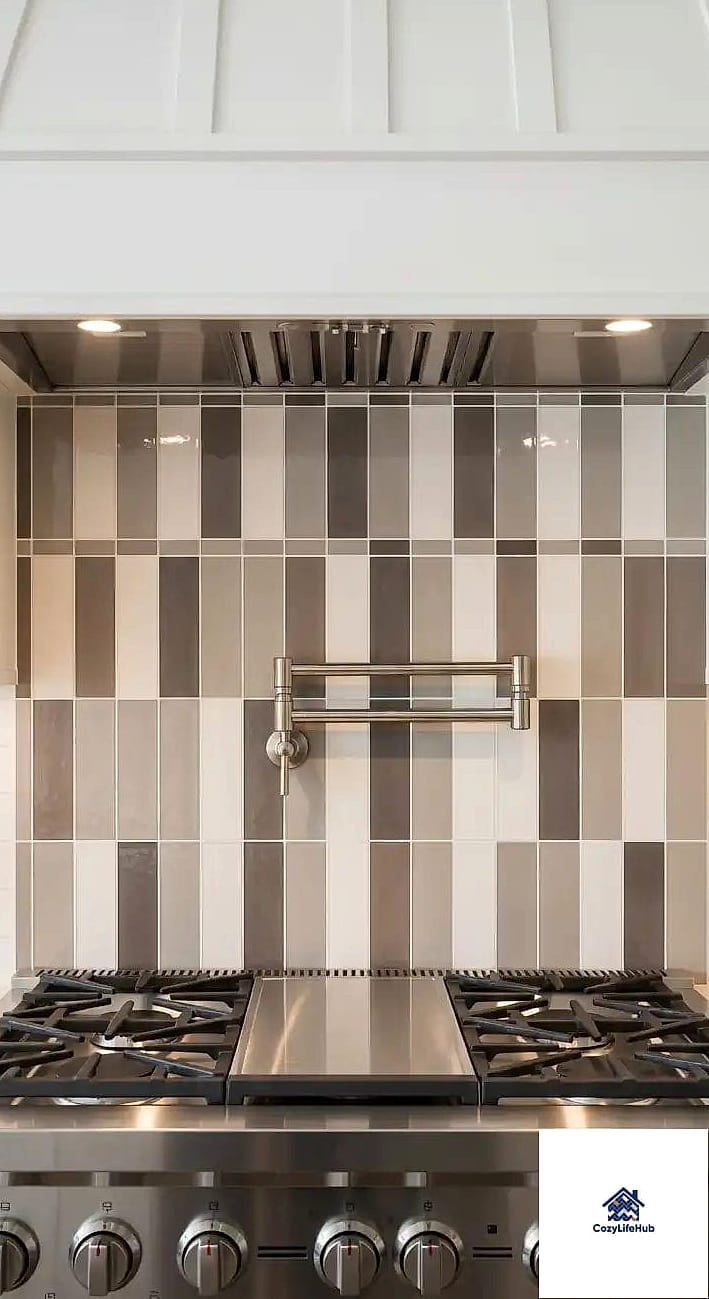
Turning standard subway tile on its side and stacking it vertically instead of using the traditional running bond pattern gives a fresh, modern spin on a familiar material. The vertical lines draw the eye upward, making ceilings feel taller.
This is an easy way to make a classic tile choice feel more current without spending more money. It works in nearly any kitchen style, from modern farmhouse to contemporary.
Dark Moody Tile Wall
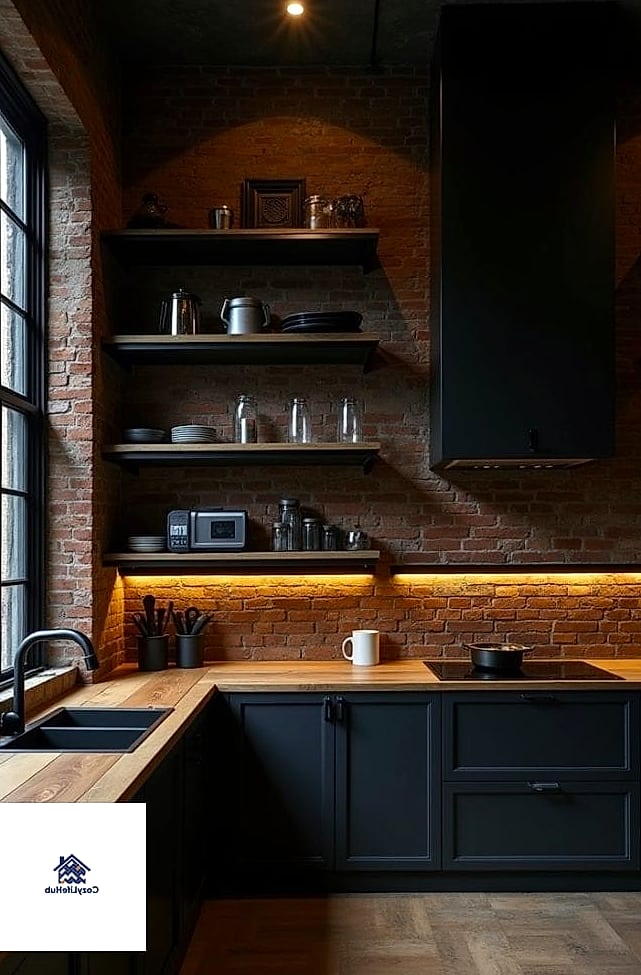
Charcoal, black, or deep espresso-toned tile behind the stove creates serious drama, especially when paired with brass or gold hardware. It’s a striking contrast against white cabinetry or light countertops.
This look tends to hide grease and splatters better than lighter tile, which is a practical bonus. It’s a bolder choice, so it works best when you’re genuinely drawn to a moody, dramatic kitchen aesthetic rather than following trends for trends’ sake.
Scalloped or Fish Scale Tile
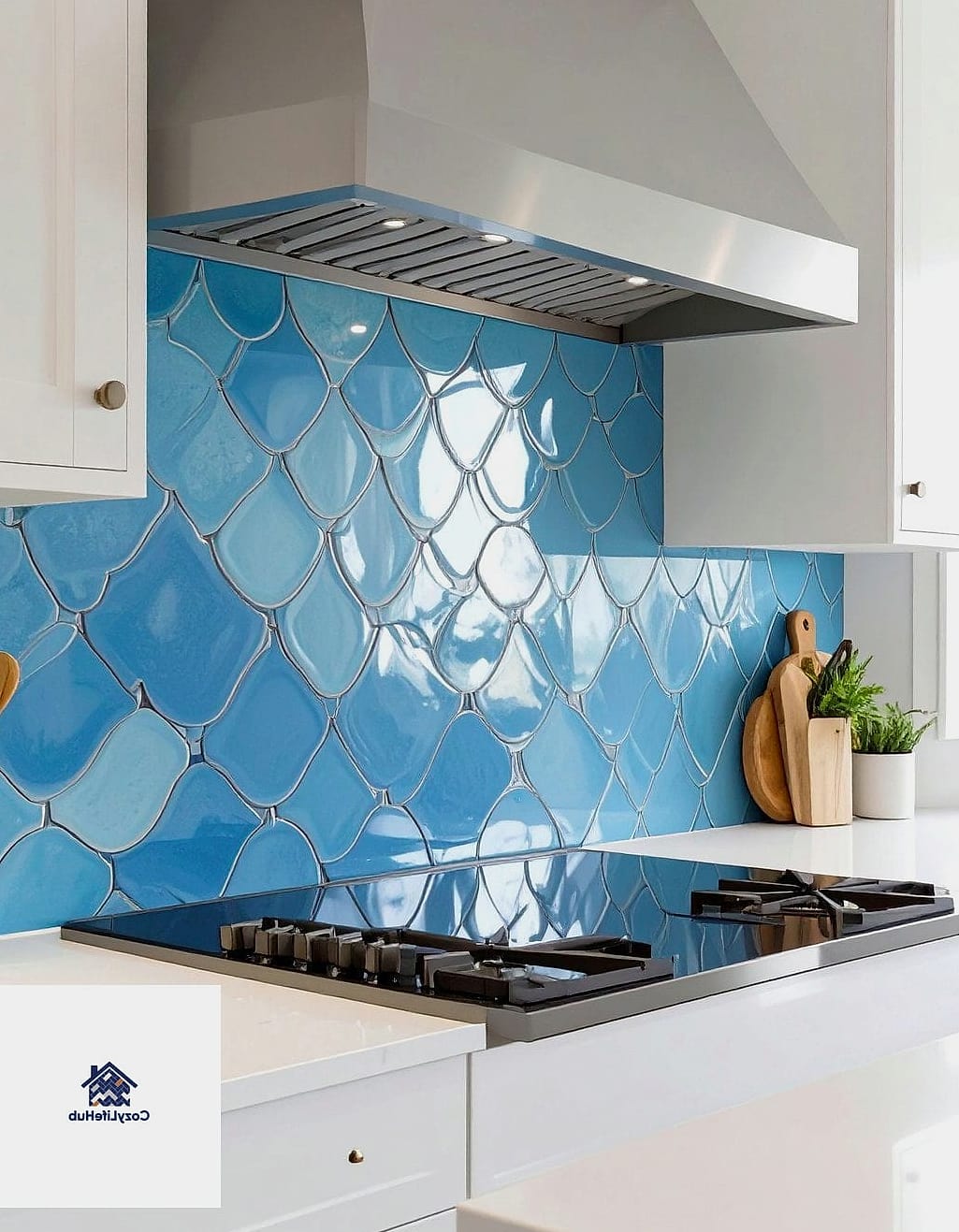
Scalloped tile, sometimes called fish scale or mermaid tile, has a soft, rounded shape that feels distinctly different from anything rectangular or square. Behind the stove, it adds a whimsical, almost storybook quality.
This pattern pairs nicely with pastel colors or soft neutrals for a gentle, romantic feel. It’s a bit more labor-intensive to install because of the curved edges, so factor that into your budget if you’re hiring a professional.
Extended Backsplash Behind Open Shelving
If you have open shelving flanking your range, extending the tile behind those shelves as well as behind the stove ties the whole wall together visually. It prevents the stove area from feeling like an isolated tile patch in the middle of painted drywall.
This approach also protects more of your wall from cooking grease and steam, which is a practical win. Styling the shelves with a few plates, jars, or a small plant adds warmth without cluttering the look.
Warm Terracotta Tile
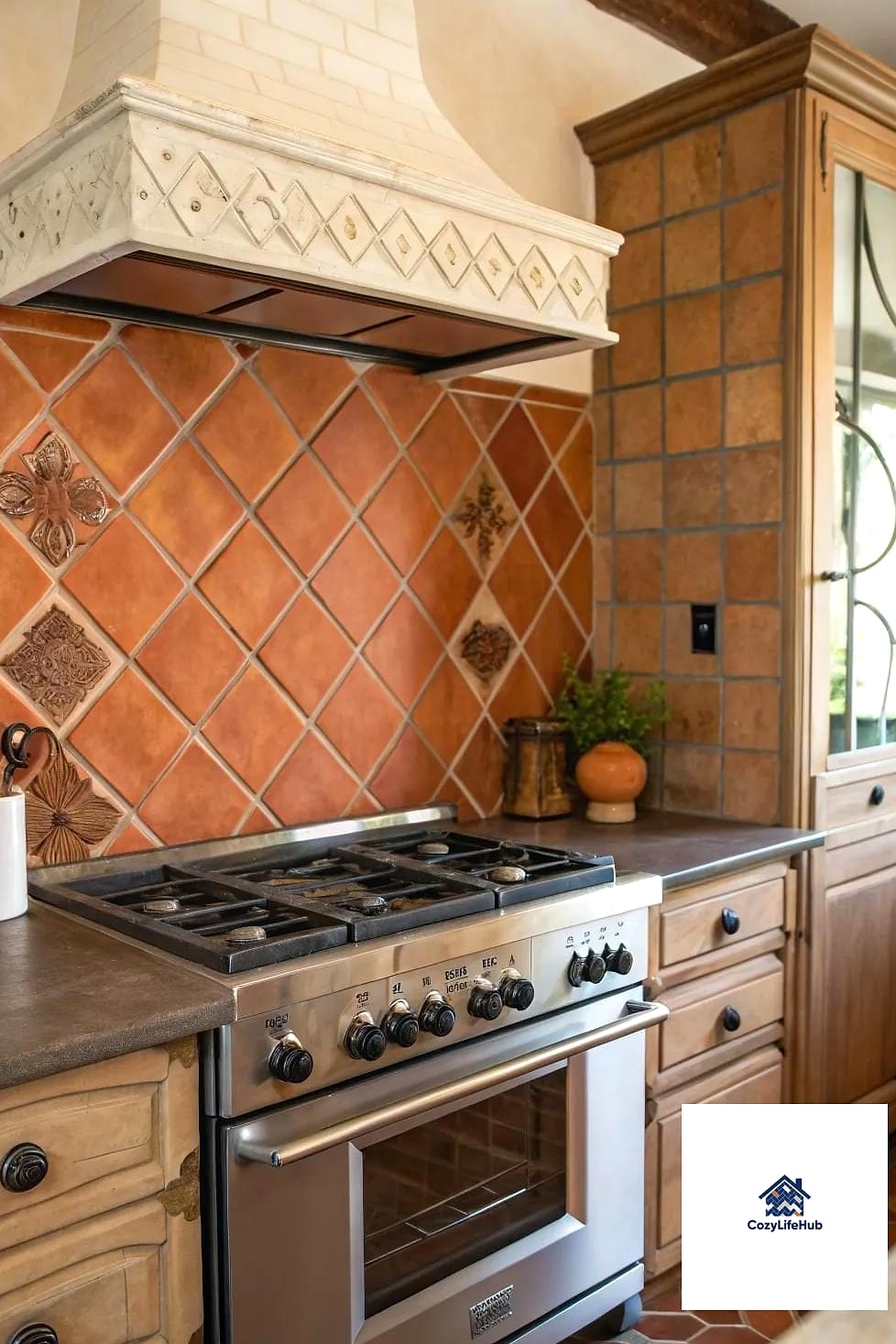
Terracotta tile brings an earthy, sun-baked warmth that instantly makes a kitchen feel more grounded and inviting. Behind the stove, it pairs beautifully with wood cabinetry, black fixtures, and greenery.
This color has been trending away from stark white and gray kitchens toward warmer, more textured palettes. Unglazed terracotta needs sealing to resist staining, so glazed versions are often the more practical pick for this splash-prone zone.
Geometric Encaustic Tile
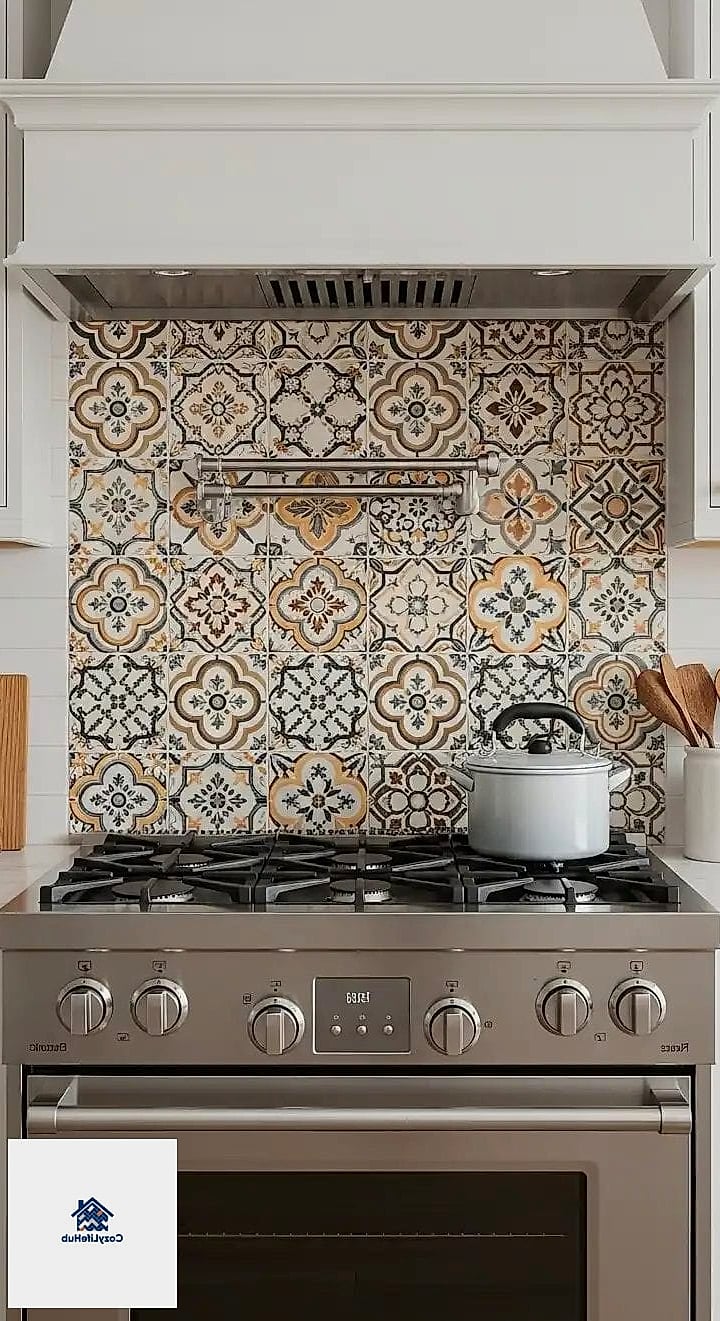
Encaustic cement tile brings intricate, colorful patterns that feel handcrafted and artistic. Placed behind the stove, it becomes a genuine conversation piece rather than just a functional surface.
This works well in kitchens with a global or bohemian influence, especially when paired with simpler cabinetry elsewhere so the pattern doesn’t compete with too many other busy elements. Cement tile is porous and benefits from sealing to handle grease and moisture better.
Brick-Look Tile in a Running Bond
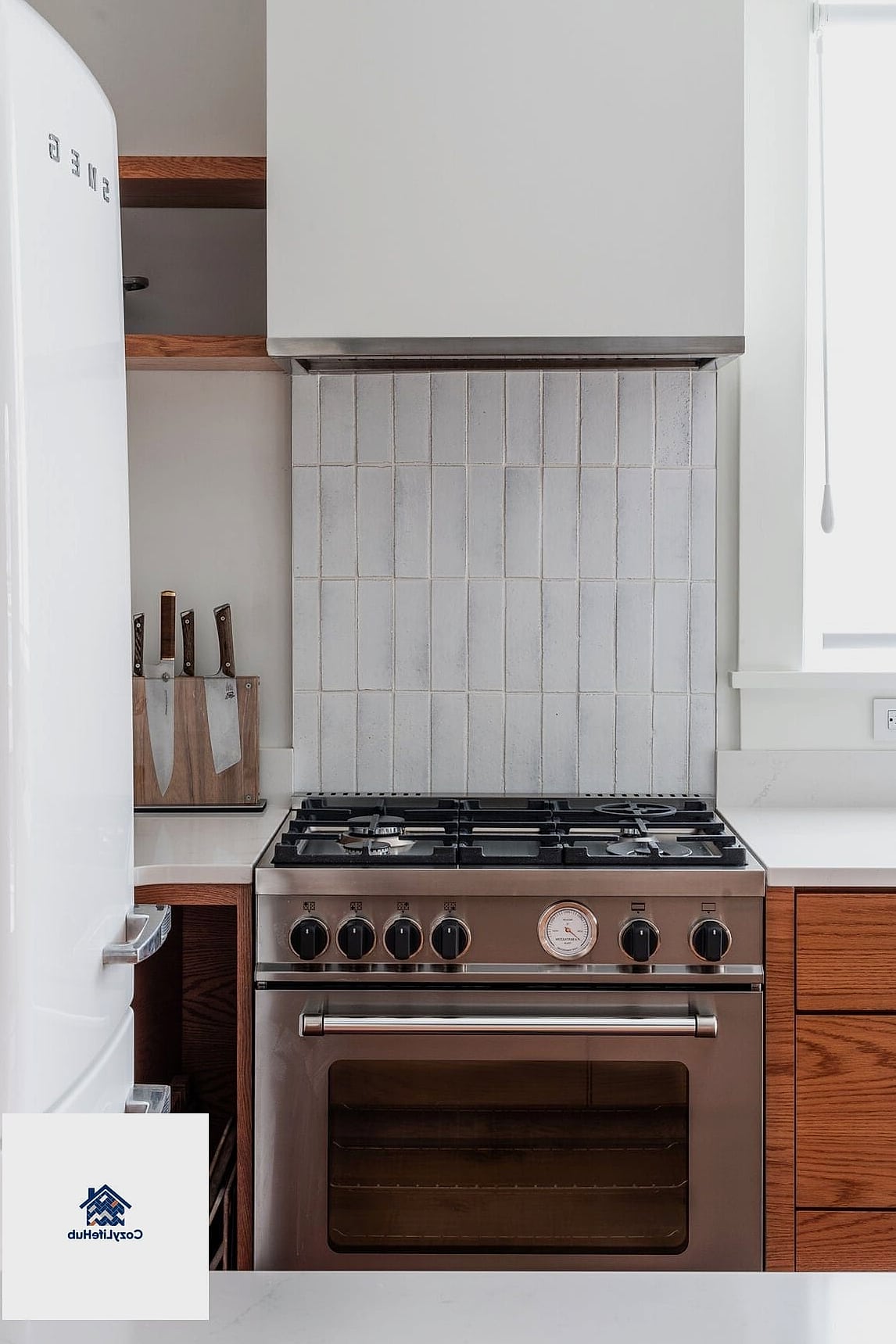
Thin brick tile or brick-look ceramic gives an industrial, rustic edge that pairs surprisingly well with modern appliances. Installed in a classic running bond pattern, it has a timeless, slightly weathered quality.
This is a popular choice for kitchens going for a loft-style or urban farmhouse feel. It’s also fairly forgiving when it comes to hiding minor grease marks, thanks to the textured, matte surface most brick-look tiles have.
Two-Tone Tile Border Design
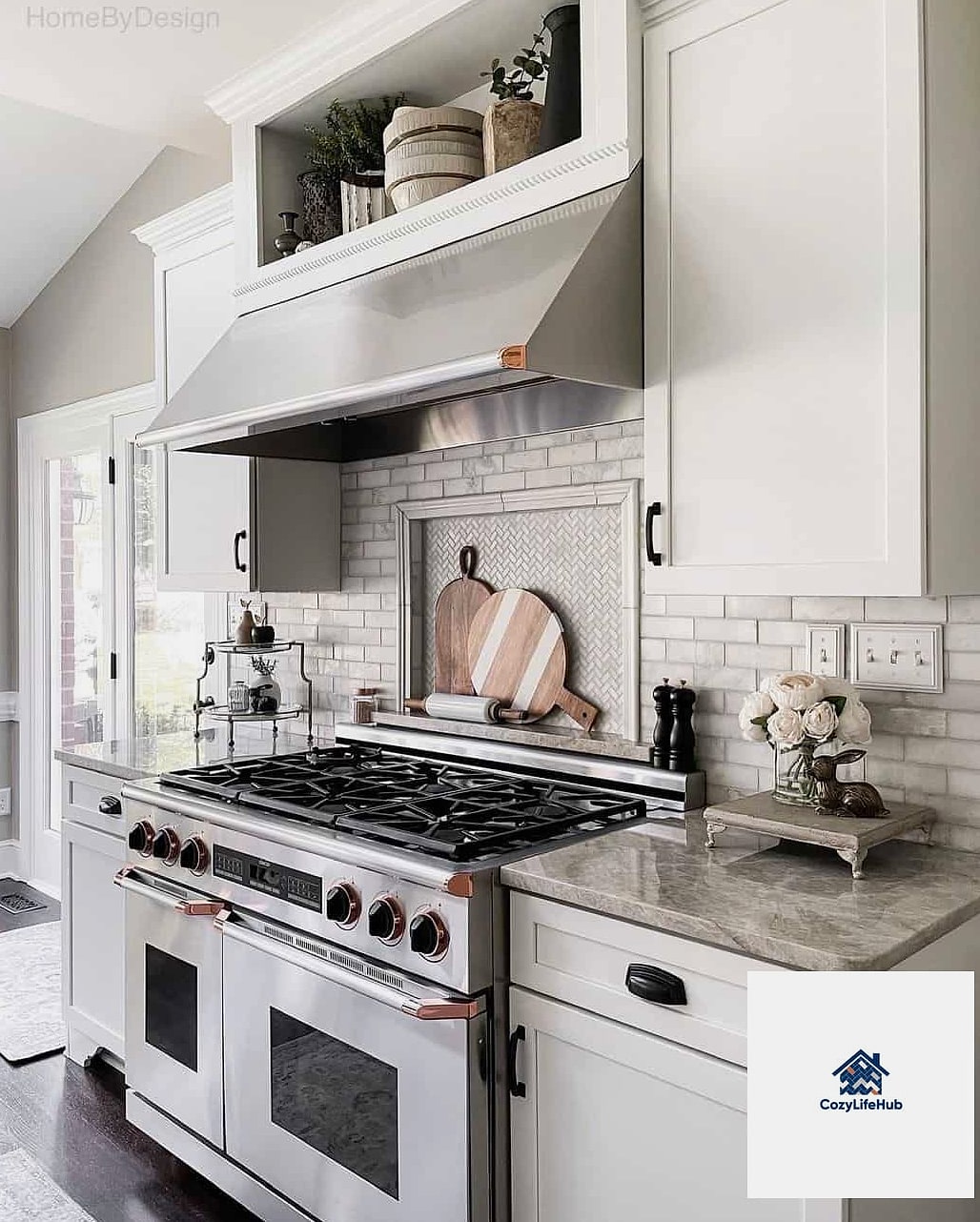
Instead of one uniform tile, some kitchens use a main field tile paired with a contrasting border tile that frames the stove area like a picture frame. This adds structure and a custom, tailored look.
A simple example is a white subway field tile with a thin black or navy border strip running along the edges. It’s a detail-oriented choice that photographs beautifully and gives the space a finished, designer feel.
Glass Tile Shimmer Wall
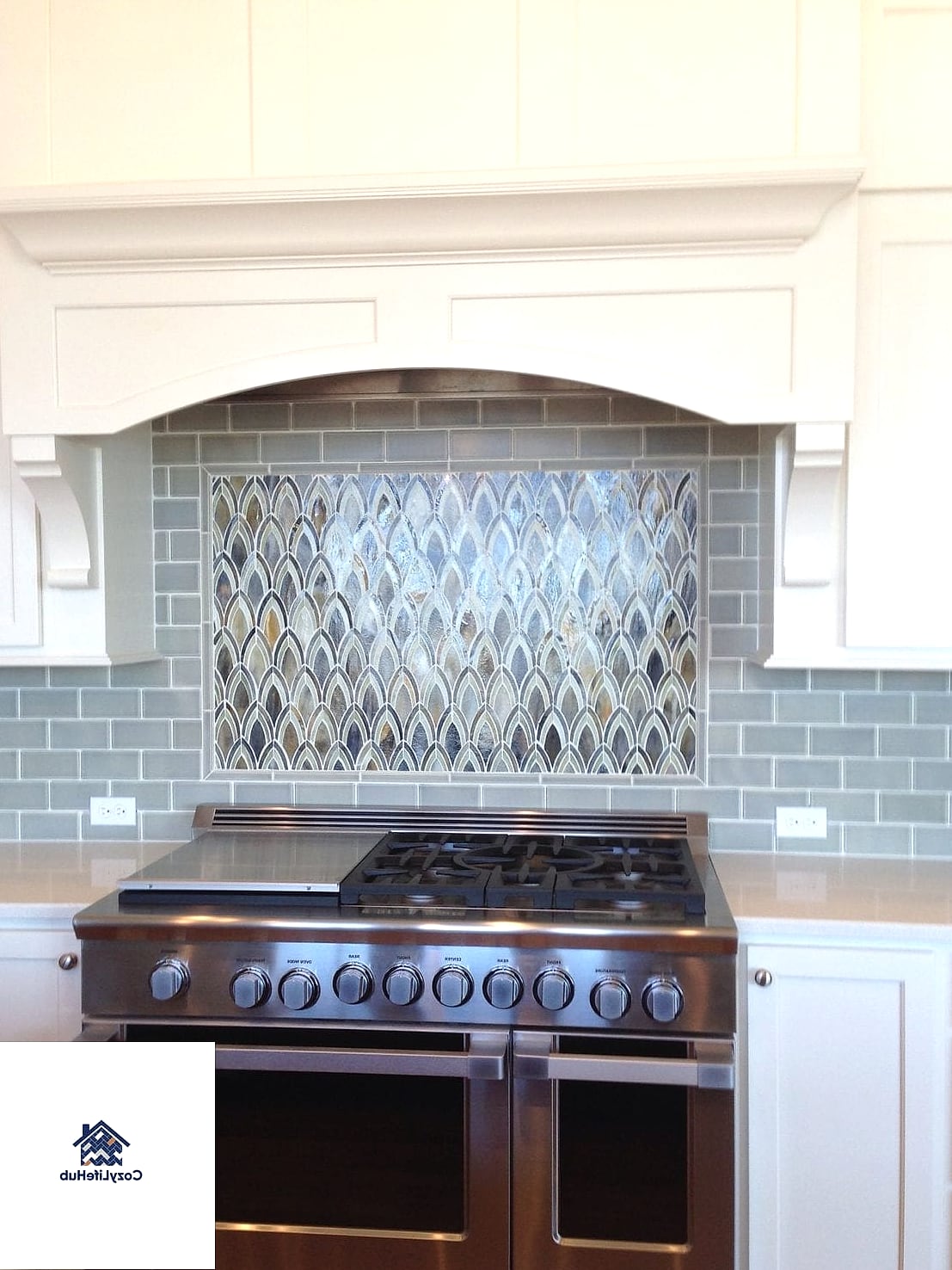
Glass tile reflects light in a way that ceramic and stone simply can’t, giving the stove wall a subtle shimmer throughout the day. It works particularly well in kitchens that don’t get a ton of natural light, since it helps bounce around what light there is.
Cool tones like soft blue or seafoam green feel fresh and coastal, while amber or bronze glass tile leans warmer and more glam. Glass is nonporous, so it’s genuinely one of the easier materials to keep clean behind a stove.
Plaster or Venetian Plaster Finish
For something completely different from tile, textured plaster behind the stove is gaining traction, especially in kitchens leaning into an Old World Italian or Mediterranean feel. It has a soft, hand-troweled look with subtle variation in tone and texture.
This isn’t the most heat- or grease-resistant option on its own, so it typically needs a protective sealant or is paired with a small stainless steel or tile panel directly behind the burners. For homeowners wanting something artisanal and unlike anything tile can offer, it’s worth exploring with a contractor experienced in the technique.
Whatever direction you land on, the range wall doesn’t have to be an afterthought. These 21 backsplash behind stove visual impact ideas prove that this small but mighty section of your kitchen can carry serious design weight, and it’s a trend worth taking seriously the next time you’re planning a kitchen refresh or full remodel.