11 White Glass Mosaic Tile Ideas Worth Bookmarking Before You Renovate
- Classic Subway-Style Glass Mosaic
- Iridescent Glass Mosaic Backsplash
- Small Square Glass Mosaic Sheets
- White Glass Mosaic with Marble Veining
- Herringbone Glass Mosaic Pattern
- Glass Mosaic Accent Strip
- Vertical Stacked Glass Mosaic
- Frosted White Glass Mosaic
- Glass Mosaic Niche or Shower Shelf
- Mixed-Finish White Glass Mosaic
- Glass Mosaic Kitchen Island Waterfall Edge
11 White Glass Mosaic Tile Ideas Worth Bookmarking Before You Renovate
White glass mosaic tile has this quiet magic to it. It catches light in a way that ceramic and porcelain just can’t compete with, and it instantly makes a space feel cleaner and brighter without you having to do much else.
If you’re planning a kitchen or bathroom refresh, this is one of those materials worth pinning to your inspiration board early. Here are eleven ways to use it that actually make sense for real homes, not just showroom displays.
Classic Subway-Style Glass Mosaic
This is the safest starting point if you’re nervous about committing to something too trendy. Glass subway tiles keep the familiar brick shape everyone loves but swap out the matte ceramic finish for something with a little shimmer.
It works beautifully behind a stove or sink where you want brightness without a busy pattern. The reflective surface bounces light around small kitchens, which makes it a smart pick if your space doesn’t get much natural sun. Grout color matters here more than people expect, so go with a soft gray if you want to hide daily splatters.
Iridescent Glass Mosaic Backsplash
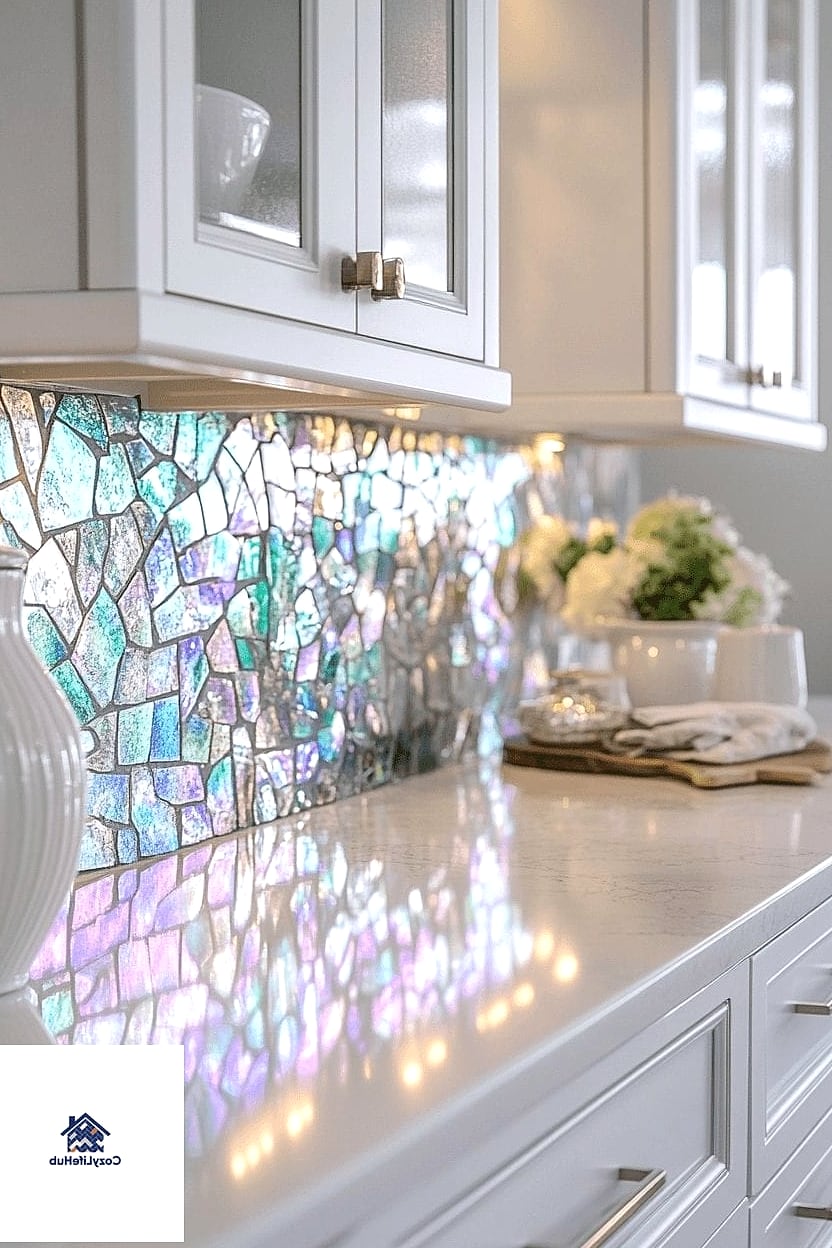
If you want a backsplash that shifts and shimmers depending on where you’re standing, iridescent glass mosaic is worth a look. The tiles have a subtle rainbow sheen built into the glass itself, so you’re not relying on paint or coating that can wear down over time.
This style shines in kitchens with pendant lighting or under-cabinet lights, since the glow really activates the iridescence. It’s a bit more of a statement than plain white glass, so it pairs well with simple white cabinets and quartz countertops so the backsplash stays the star.
Small Square Glass Mosaic Sheets
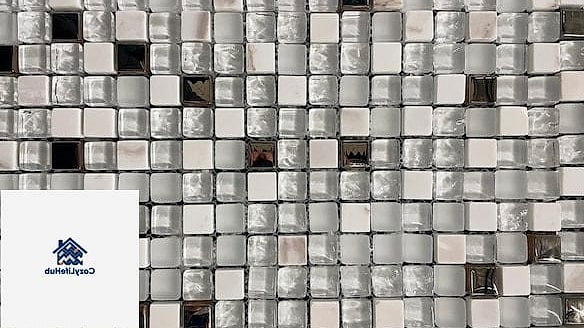
There’s something satisfying about tiny square mosaics arranged in neat sheets. This layout gives you more grout lines than larger tile, which actually helps with slip resistance if you’re using it on a shower floor.
Small squares are also forgiving for uneven surfaces, since the little tiles can flex slightly around curves and corners that larger format tile can’t handle. It’s a favorite among tile installers for niches, accent strips, and curbless shower entries where precision cutting gets tricky.
White Glass Mosaic with Marble Veining
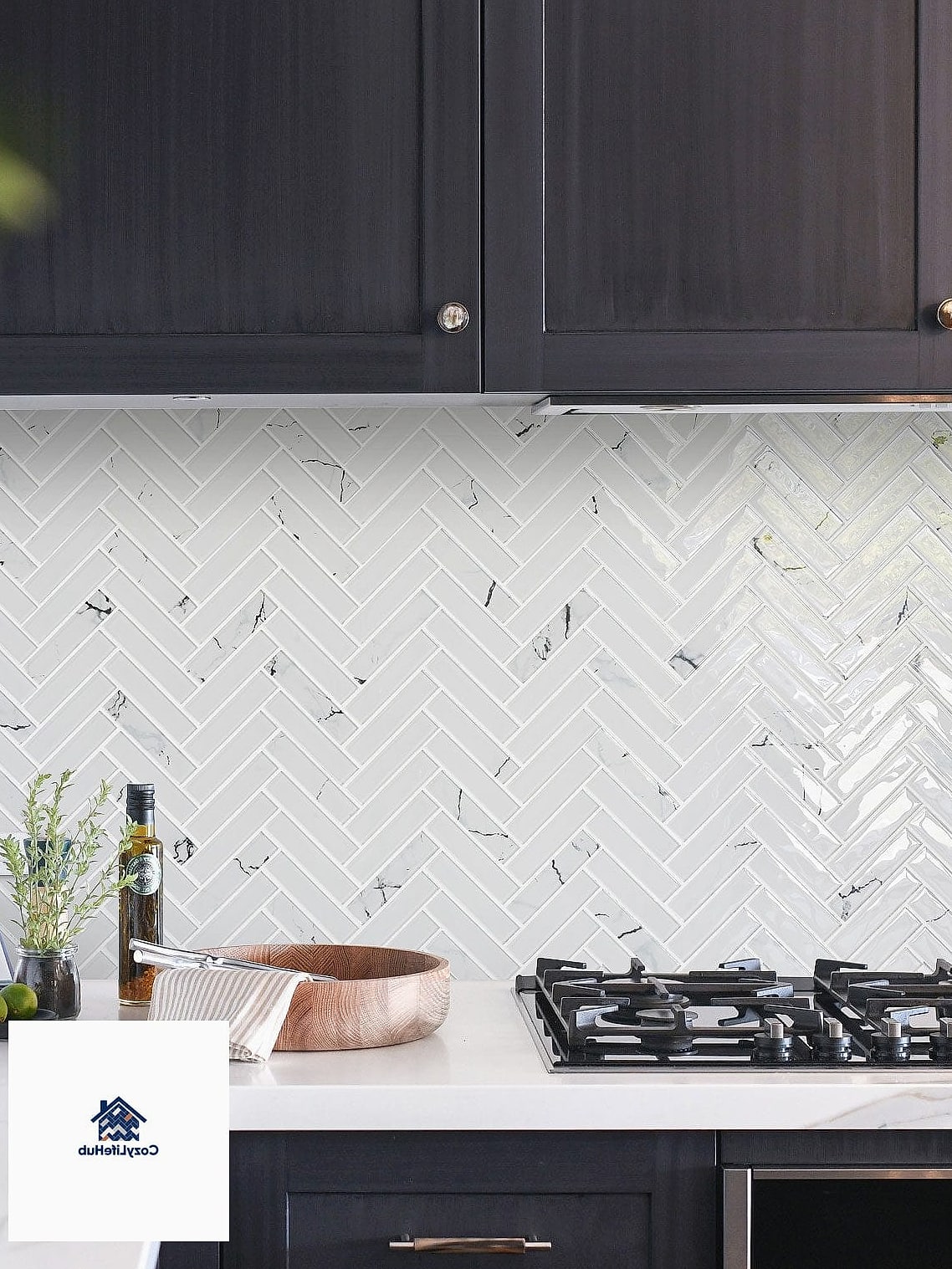
Blending glass with real or faux marble chips creates a look that feels more expensive than it usually costs. The cool gray veining running through the white glass gives it visual interest without turning into a bold pattern you’ll tire of in five years.
This combination works especially well in bathrooms going for a spa-like feel. Pair it with brushed brass hardware and a floating vanity, and the whole room reads high-end even on a moderate budget. It’s also a smart pick if you’re matching an existing marble countertop but don’t want to pay full marble prices on the walls.
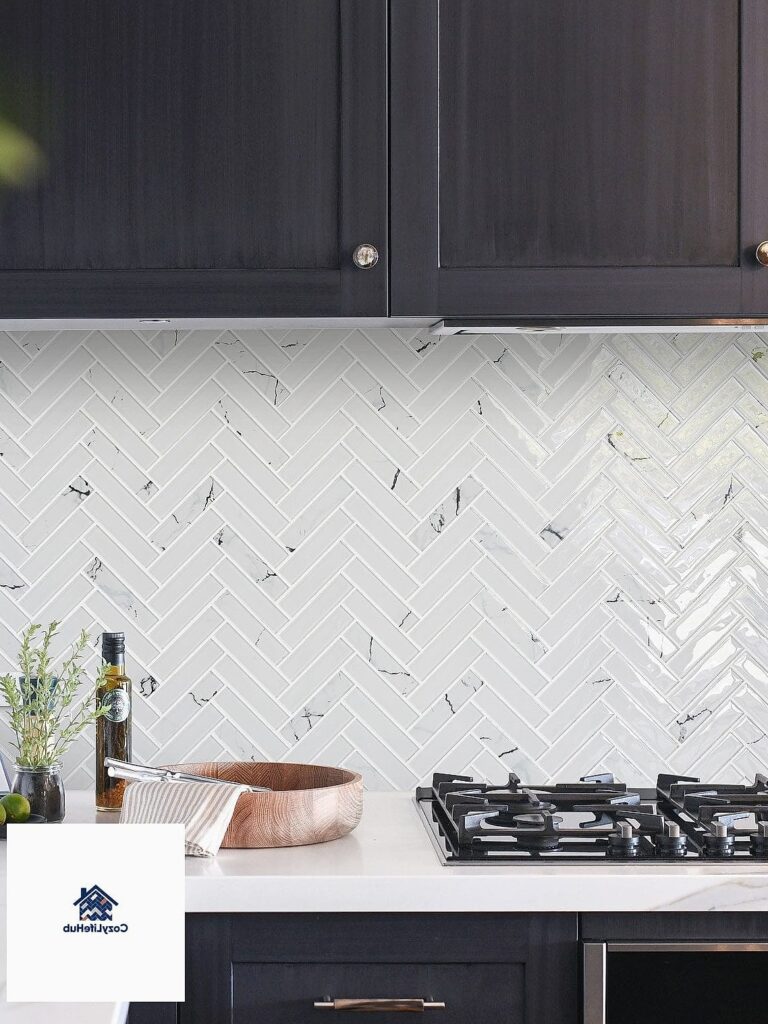
Herringbone Glass Mosaic Pattern
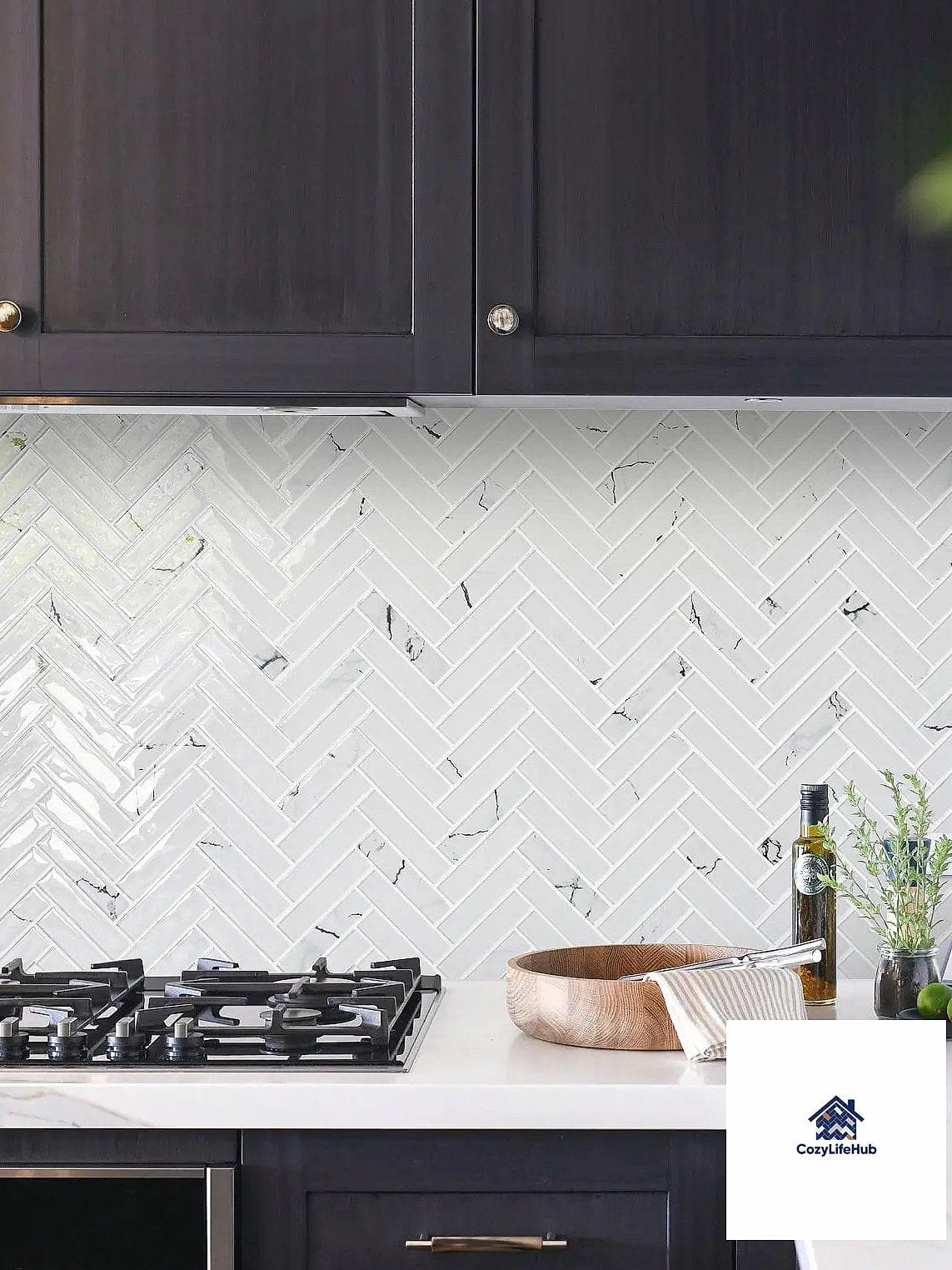
Herringbone never really goes out of style, and doing it in glass mosaic gives the classic zigzag a fresh, glossy update. The angled layout adds movement to a wall that would otherwise feel flat, which makes it a great choice for a shower accent wall or a fireplace surround.
Because the pattern itself does the visual work, keep everything else in the room simple. White walls, natural wood accents, and matte black fixtures let the herringbone take center stage without the space feeling overdesigned.
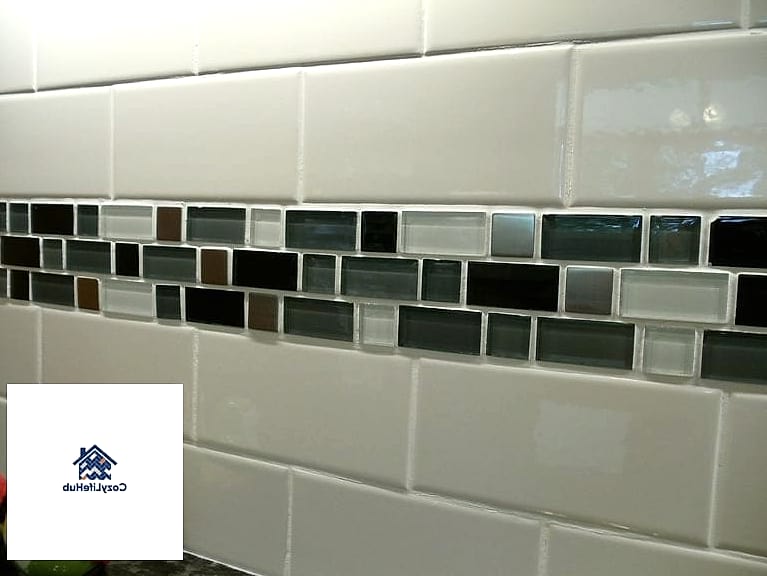
Glass Mosaic Accent Strip
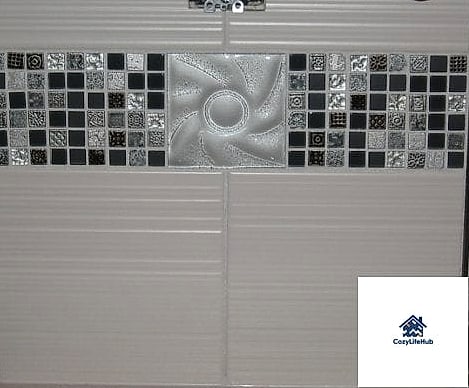
Not ready to tile an entire wall? A single accent strip of white glass mosaic can do a lot of heavy lifting. Think of it as a border running along the top of a ceramic tile backsplash or wrapping around a bathtub surround.
This is a budget-friendly way to get the glass mosaic look without covering a huge square footage. It’s also an easier weekend DIY project than a full wall, since you’re working with a smaller, more manageable area.
Vertical Stacked Glass Mosaic
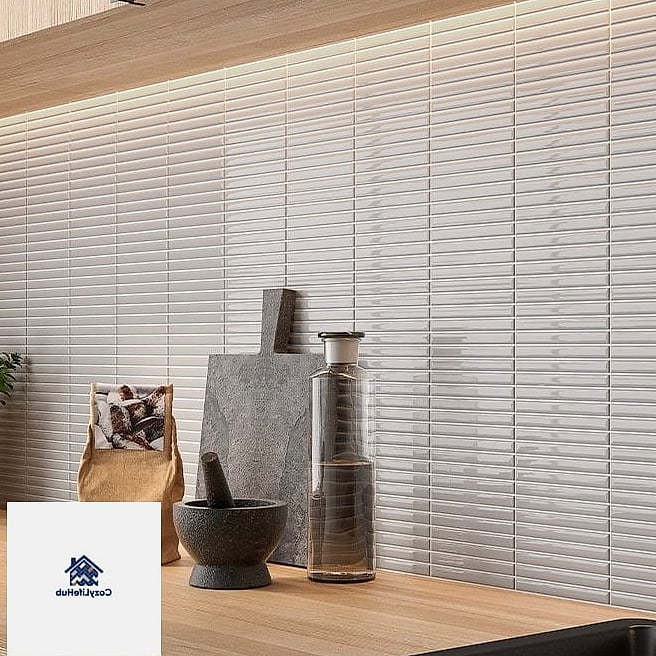
Running mosaic tile in a vertical stack rather than the typical horizontal offset draws the eye upward, which is a neat trick in rooms with lower ceilings. It creates an illusion of extra height that horizontal layouts just don’t offer.
This installation style works particularly well behind a range hood, where the vertical lines lead your eye straight up to the ceiling. It reads as more modern and architectural than a traditional running bond pattern, so it suits contemporary kitchens with sleek, handle-less cabinetry.
Frosted White Glass Mosaic
Frosted glass tile has a soft, matte-ish quality even though it’s technically still glass. It diffuses light rather than reflecting it sharply, which gives a gentler, more understated glow compared to glossy glass options.
This is a good middle ground if you love the idea of glass tile but worry glossy finishes will show every water spot and fingerprint. Frosted surfaces tend to hide smudges a bit better, making them more practical for busy family kitchens or bathrooms shared by kids.
Glass Mosaic Niche or Shower Shelf
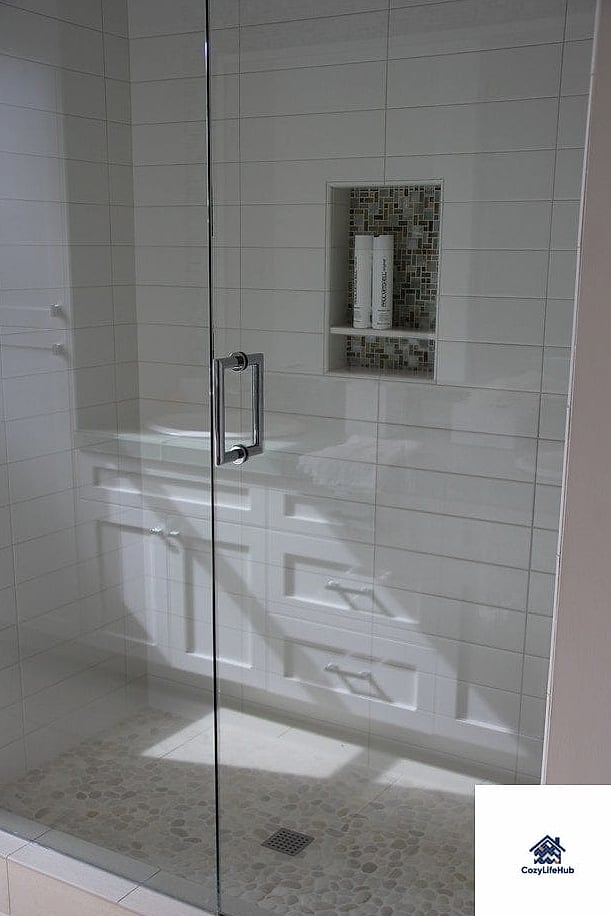
Even if you’re not tiling the whole shower, a recessed niche done in white glass mosaic adds a pretty detail that feels intentional. It’s the kind of small design choice that makes a bathroom feel considered rather than builder-basic.
Small mosaic tiles fit into these tight, awkward spaces far more easily than large format tile, which usually needs heavy cutting to fit corners and shelves. Pairing the niche tile with your main shower tile in a contrasting texture, even if the color stays white, adds subtle depth.
Mixed-Finish White Glass Mosaic
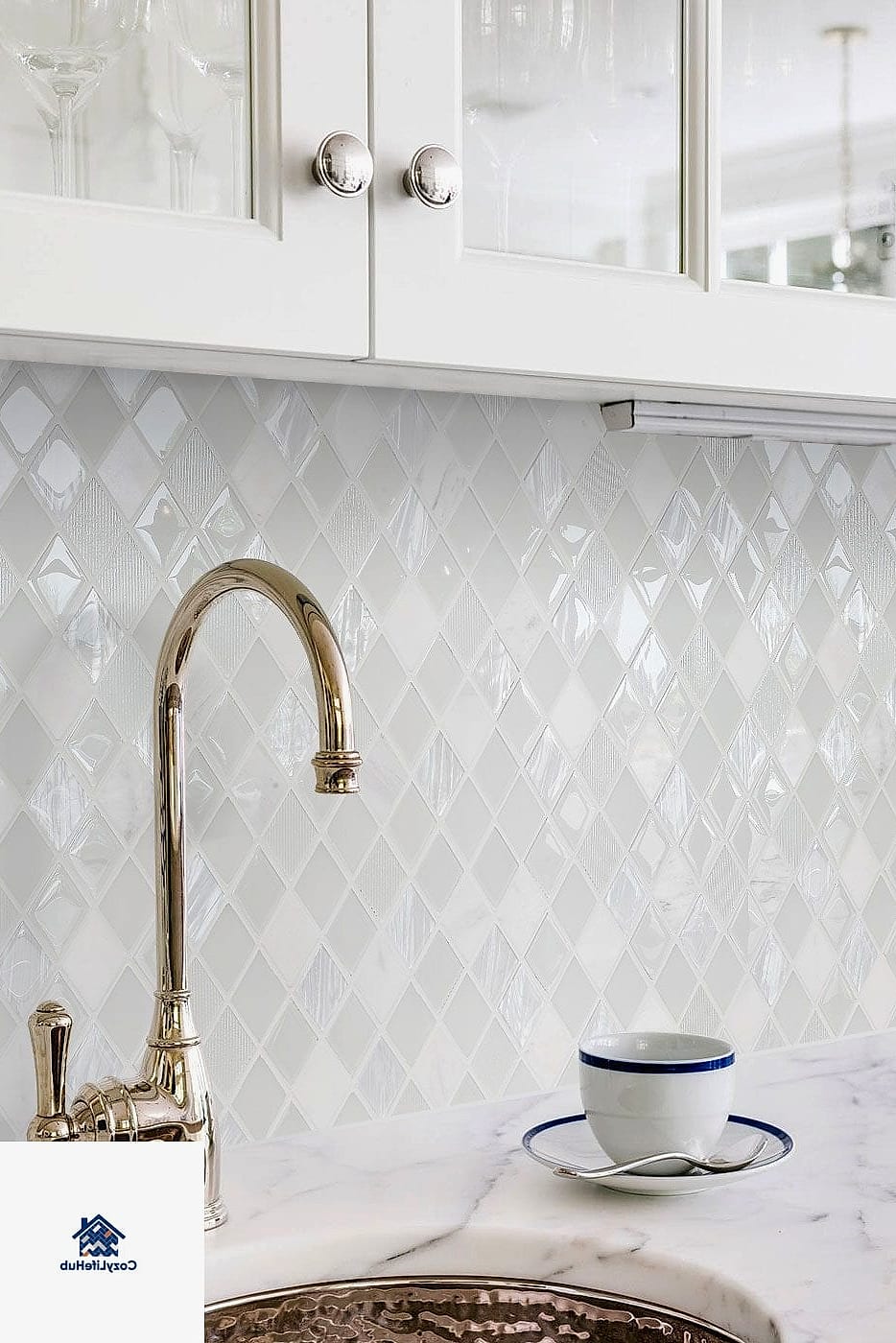
Some mosaic sheets combine matte and glossy white glass pieces in the same pattern, giving you texture and dimension without introducing another color. It’s a quieter way to add visual interest if you want something more than a flat, uniform tile but aren’t ready for bold patterns or contrasting grout.
This style works well in powder rooms and laundry rooms, spaces where you want a little personality but don’t need the tile to compete with a lot of other design elements happening in the room.
Glass Mosaic Kitchen Island Waterfall Edge
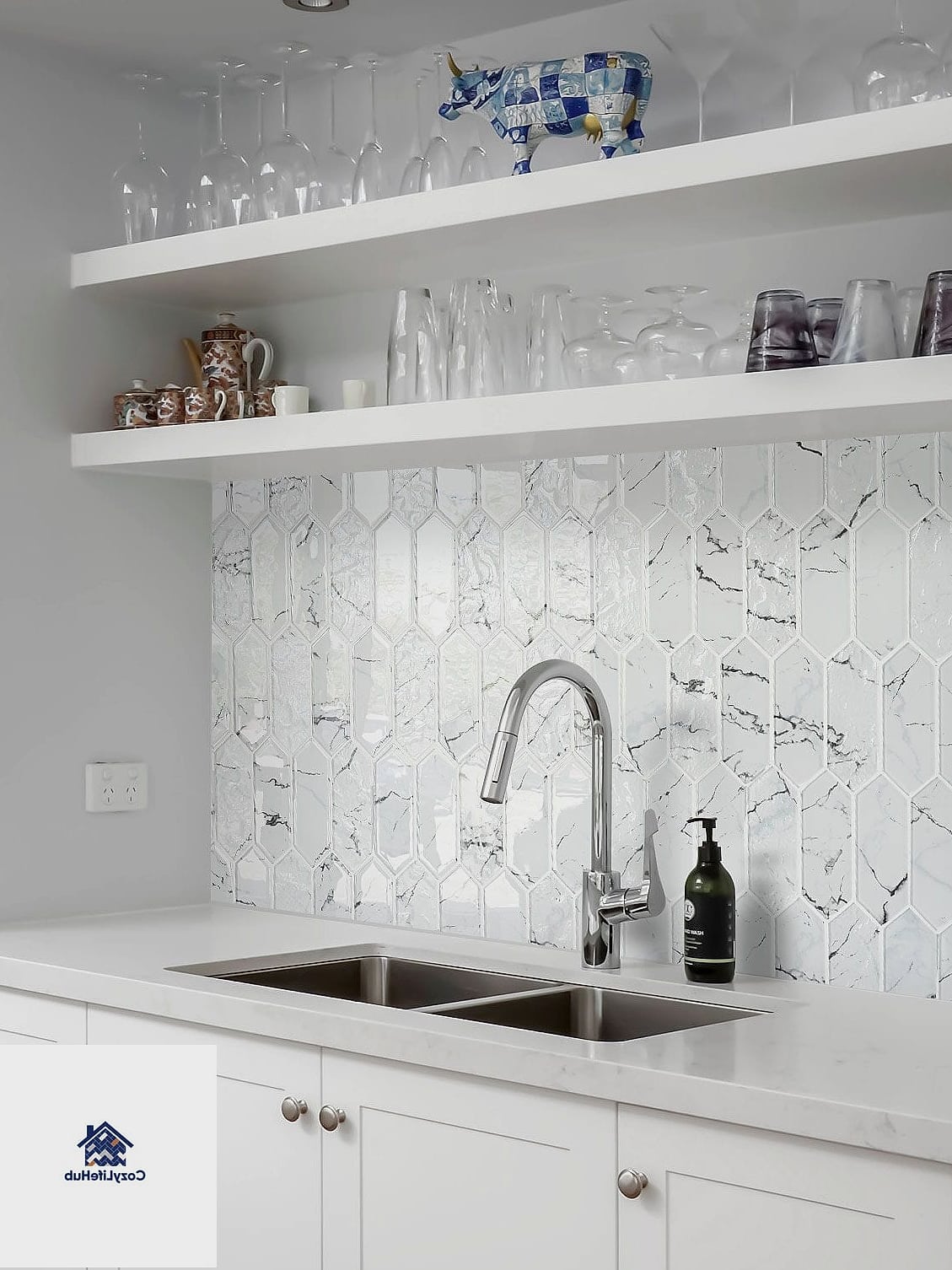
Extending a white glass mosaic pattern down the side of a kitchen island in a waterfall style is a less common choice, but it makes a serious visual impact. Instead of the usual quartz or butcher block waterfall edge, the tile adds texture and light play that solid surfaces can’t replicate.
This idea works best in larger kitchens where the island has room to breathe as a focal point. It’s also a fun way to repeat your backsplash tile elsewhere in the room, tying the whole space together without feeling matchy in an obvious way.
Final Thoughts
White glass mosaic tile is one of those materials that photographs beautifully but also holds up in daily life, as long as you keep grout sealed and wipe down glossy surfaces regularly to avoid water spotting. Whether you go bold with a waterfall island edge or keep it simple with a subway-style backsplash, there’s a version of this trend that fits almost any budget and any room.
Bookmark a few of these ideas, pull some material samples, and see which one actually feels right in your space before you commit. The best renovations usually come from combining a couple of these looks rather than picking just one straight off a mood board.