17 White Herringbone Backsplash Ideas to Inspire Your Next Renovation
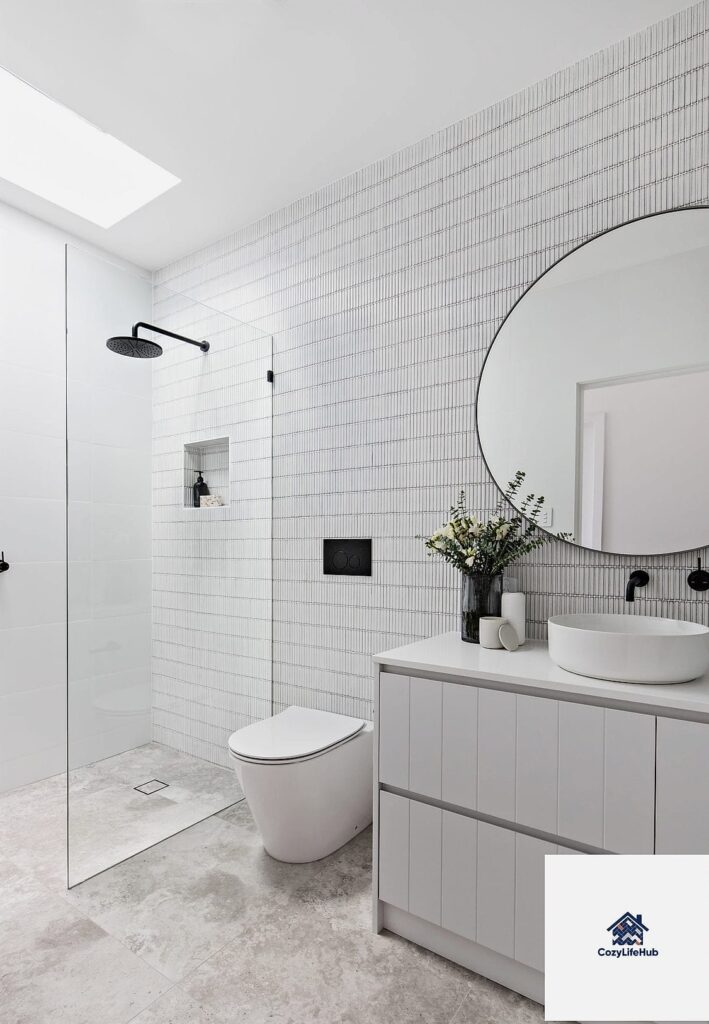
- Classic Subway Tile Herringbone
- Marble Herringbone for a Luxe Look
- Mini Herringbone Mosaic Sheets
- Herringbone with Contrasting Grout
- Vertical Herringbone Installation
- Herringbone Behind the Range Only
- Extra-Large Format Herringbone Tile
- Glossy Ceramic Herringbone
- Matte Finish Herringbone
- Herringbone with Warm Wood Open Shelving
- Full-Wall Herringbone Statement
- Herringbone Paired with Quartz Countertops
- Peel-and-Stick Herringbone for Renters
- Herringbone with a Decorative Border
- Herringbone with Black Cabinetry
- Textured Handmade-Look Herringbone
- Herringbone Accent Nook
17 White Herringbone Backsplash Ideas to Inspire Your Next Renovation
There’s something about a herringbone pattern that instantly makes a kitchen look pulled together. Maybe it’s the movement, or the way the zigzag catches light differently than a straight-laid tile ever could. Whatever the reason, white herringbone backsplashes have become one of those go-to upgrades for homeowners who want a classic look with a little extra personality.
If you’re planning a renovation or just daydreaming about one, here are 17 white herringbone backsplash ideas worth considering, from budget-friendly peel-and-stick options to full-on marble installations.
Classic Subway Tile Herringbone
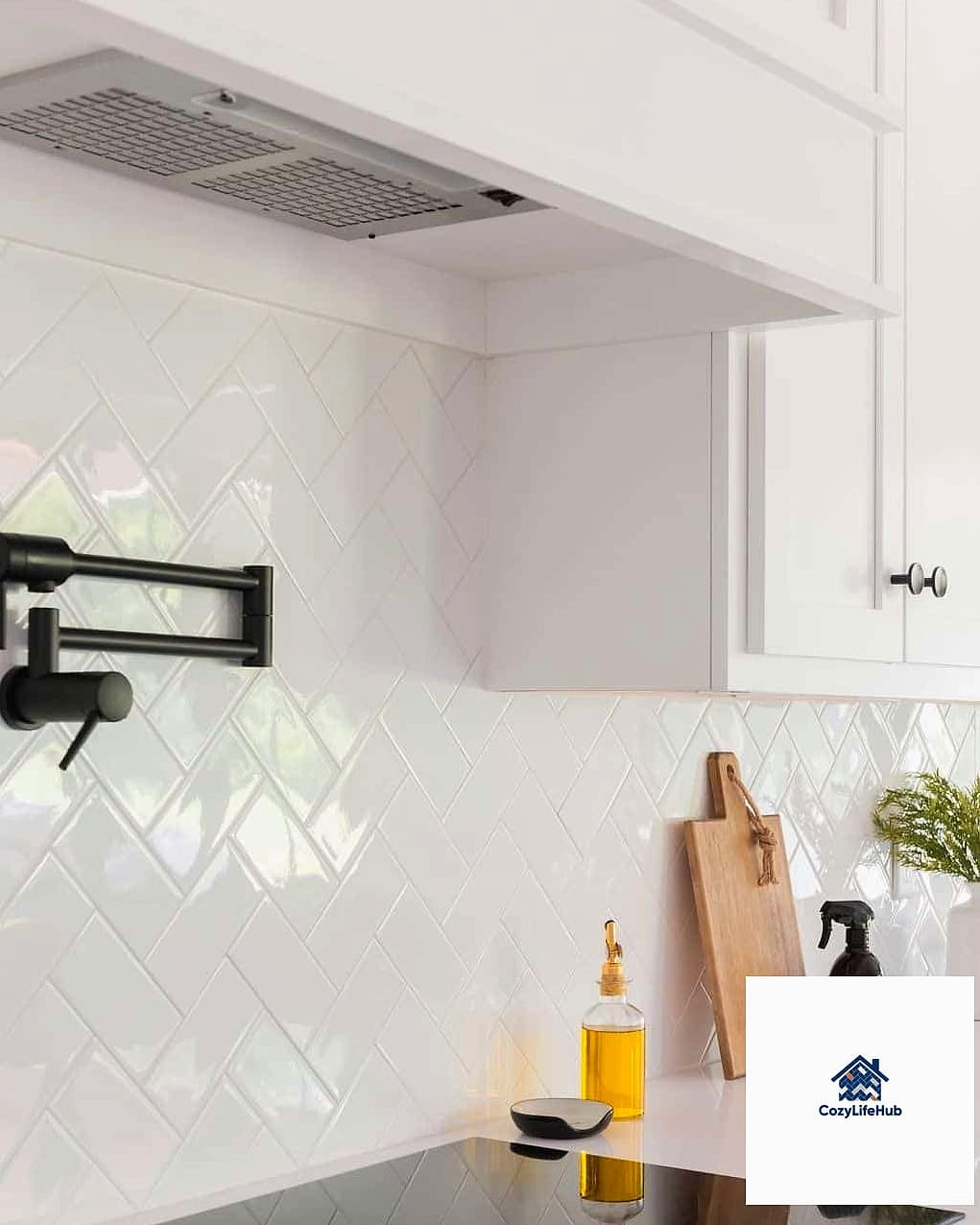
This is the one most people picture first, and for good reason. Standard white subway tiles laid in a herringbone pattern give you that familiar clean look with a lot more visual interest than a straight grid. It works in nearly any kitchen style, from farmhouse to transitional. Grout lines add texture without overwhelming the space, and the tile itself is easy to find at most home improvement stores, which keeps costs reasonable.
Marble Herringbone for a Luxe Look
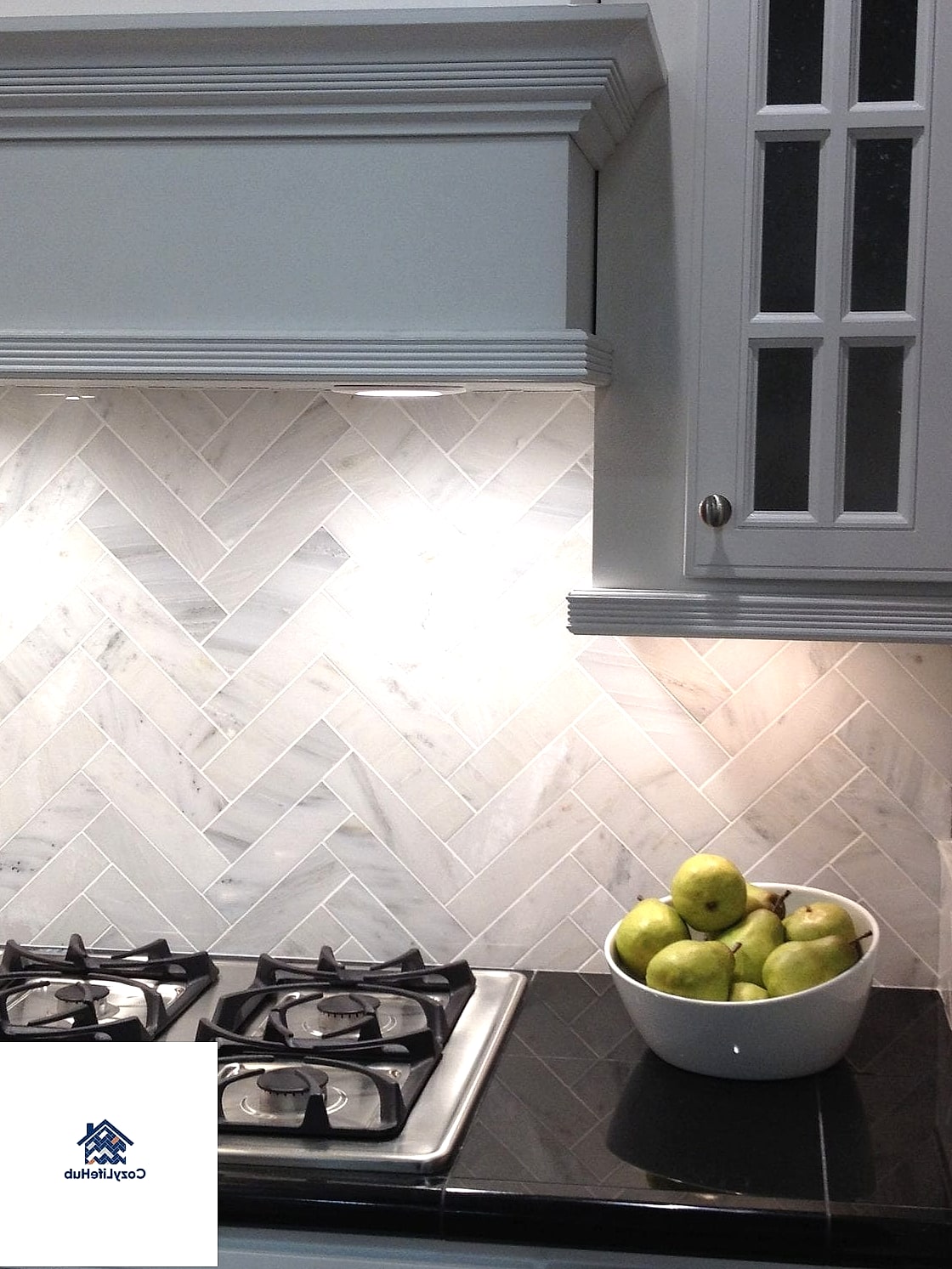
If budget allows, white marble tiles in a herringbone layout bring a level of polish that’s hard to match. The natural veining plays beautifully against the angled pattern, so no two installations ever look quite the same. This is a favorite for kitchens that lean more upscale, especially when paired with brushed brass hardware or matte black fixtures. Marble does need sealing and a bit more care around acidic spills, so keep that in mind if you’re someone who cooks with a lot of citrus or wine.
Mini Herringbone Mosaic Sheets
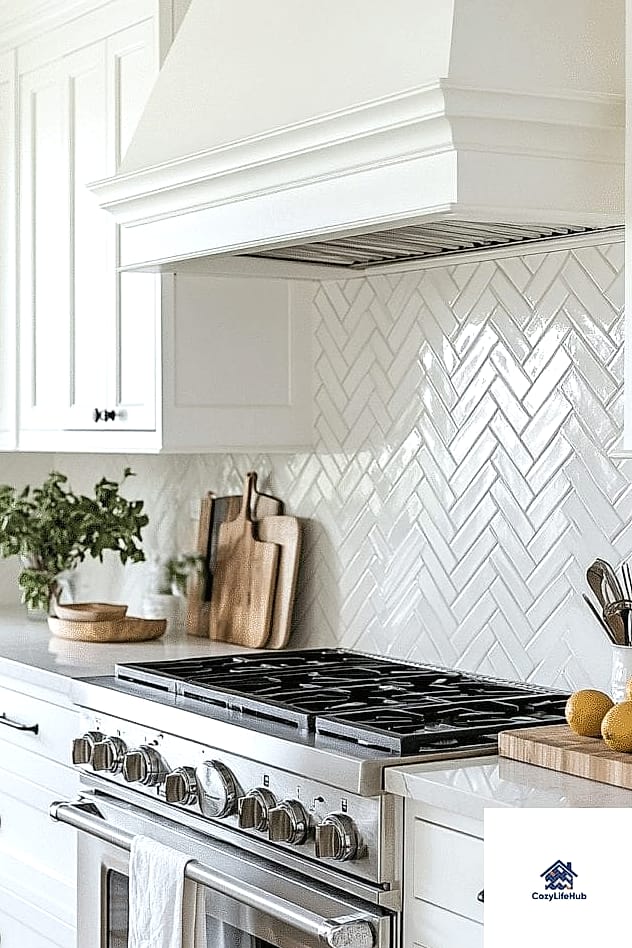
For a more delicate, refined feel, mini herringbone mosaic tiles (usually pre-mounted on mesh sheets) are worth a look. The smaller scale creates a tighter, almost woven texture that reads a little more contemporary than the classic subway size. These sheets also tend to install faster since you’re not placing individual pieces, which can be a nice perk if you’re tackling this as a weekend DIY project.
Herringbone with Contrasting Grout
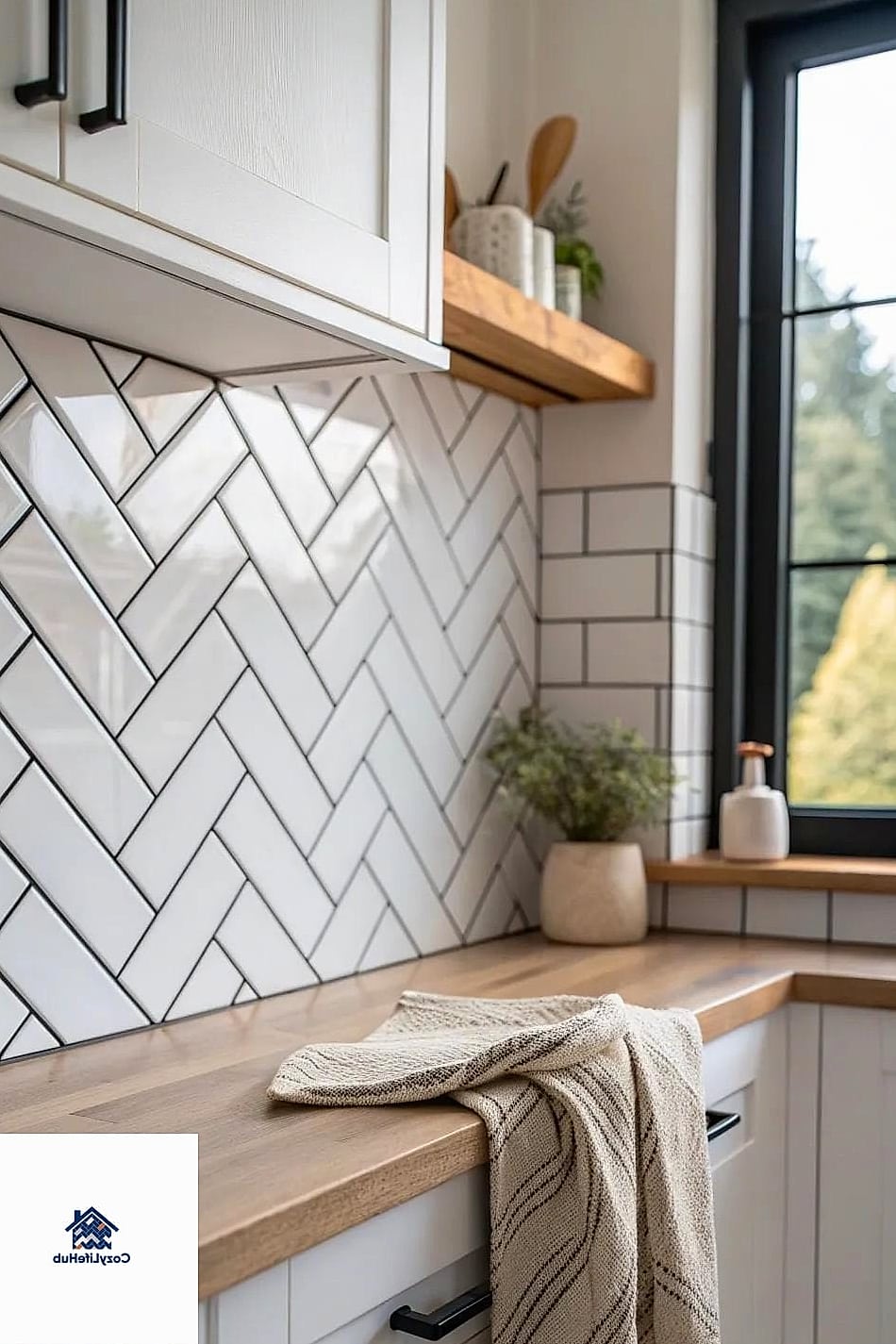
White tile doesn’t have to mean an all-white look. Swapping in charcoal, black, or deep gray grout makes the herringbone pattern pop in a completely different way, almost like it’s outlined. This is a great option if your kitchen has darker cabinetry or black fixtures you want to tie together. It’s also more forgiving when it comes to hiding grease splatters near the stove.
Vertical Herringbone Installation
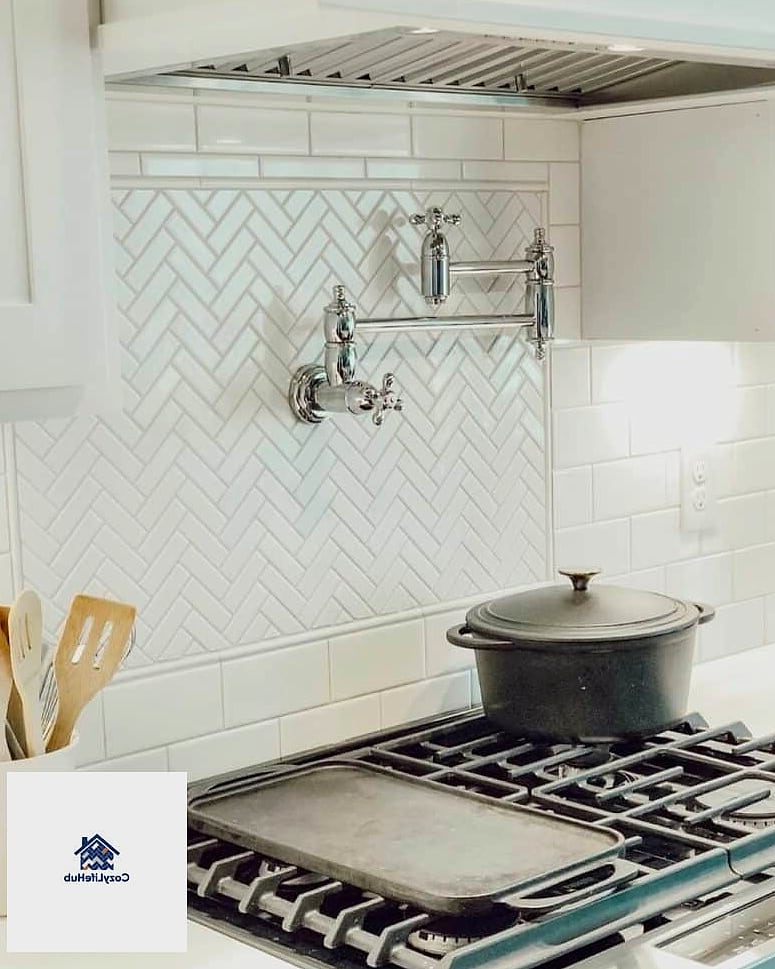
Most herringbone backsplashes run horizontally, but turning the pattern vertically changes the whole feel of a space. It draws the eye upward, which can make a kitchen with lower ceilings feel a bit taller. This layout tends to look especially good behind a stove as a statement zone, rather than covering the entire wall.
Herringbone Behind the Range Only
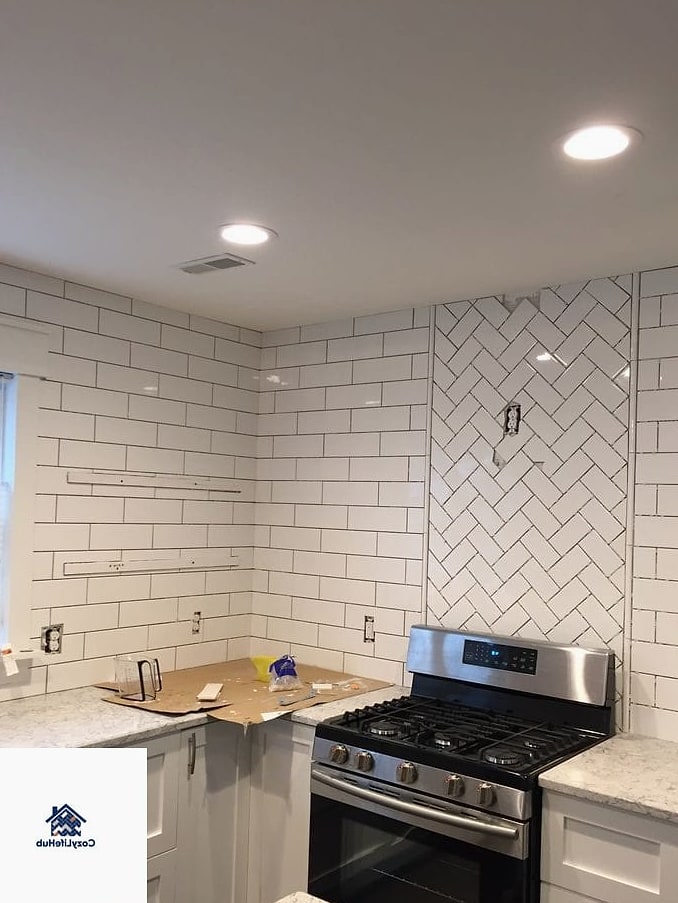
Speaking of statement zones, you don’t need to tile your whole backsplash to get the herringbone effect. A lot of homeowners are choosing to install it just behind the range or cooktop, then keeping the rest of the wall painted or in a simpler tile. It’s a budget-conscious way to get the look without the full material and labor cost, and it creates a natural focal point in the kitchen.
Extra-Large Format Herringbone Tile
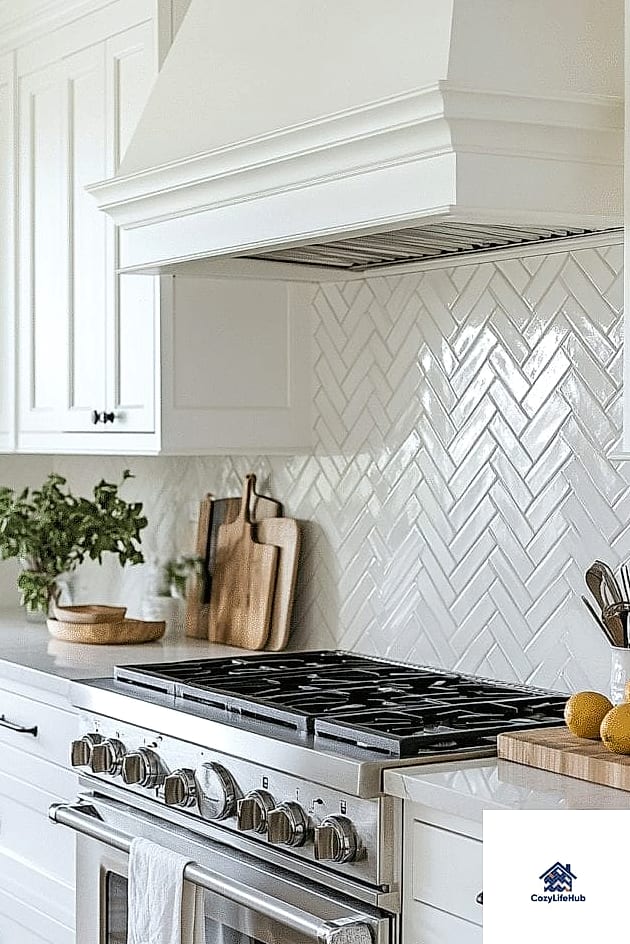
Bigger tiles mean fewer grout lines, which gives the herringbone pattern a cleaner, more modern look. This works well in minimalist or contemporary kitchens where you want the shape of the pattern to read clearly without a ton of busy detail. Fewer grout lines also mean less scrubbing down the road, which is always a nice bonus.
Glossy Ceramic Herringbone
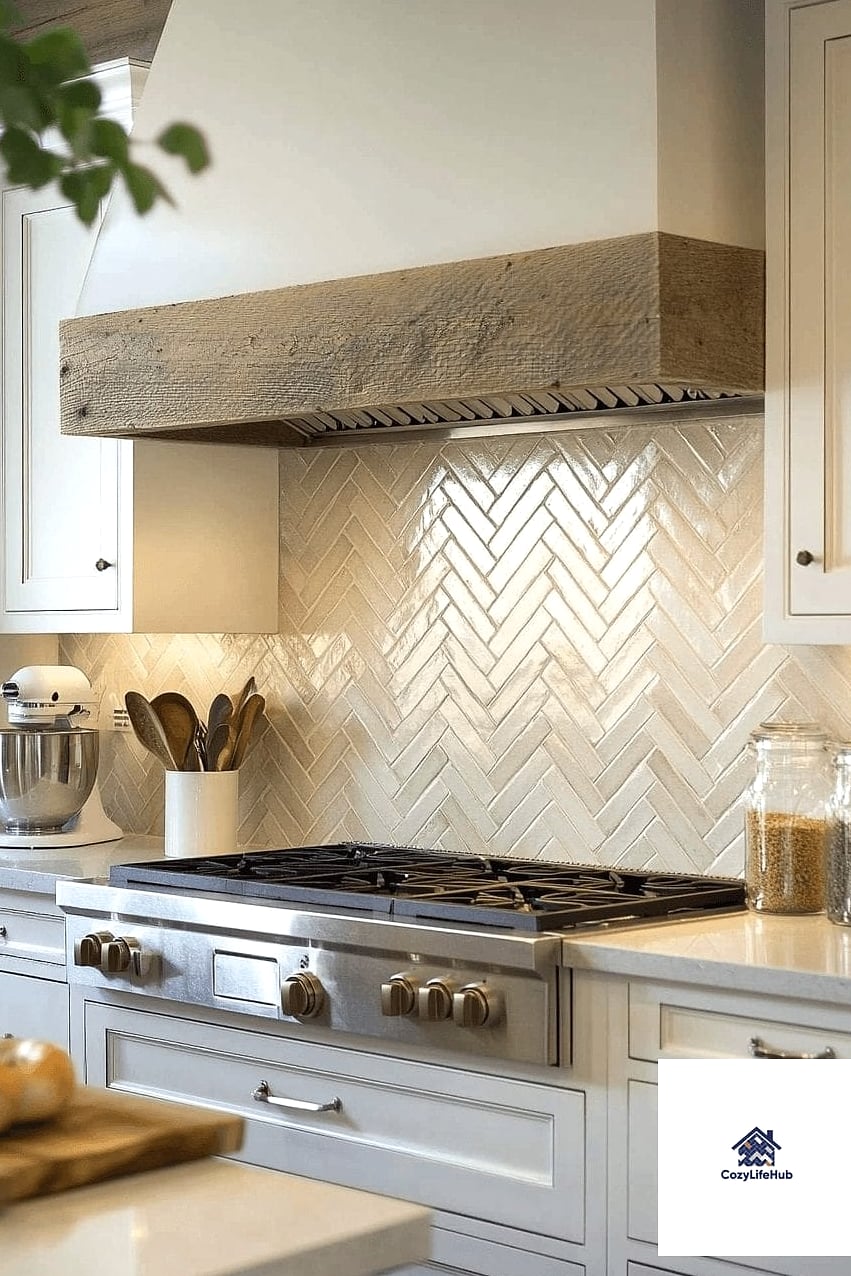
A high-gloss finish on white ceramic tile bounces light around the room, which makes it a smart pick for kitchens that don’t get a lot of natural sunlight. It also has a slightly more polished, almost vintage-glam feel compared to matte tile. Just know that glossy finishes can show water spots more easily, so you’ll want to wipe it down regularly if you’re near the sink.
Matte Finish Herringbone
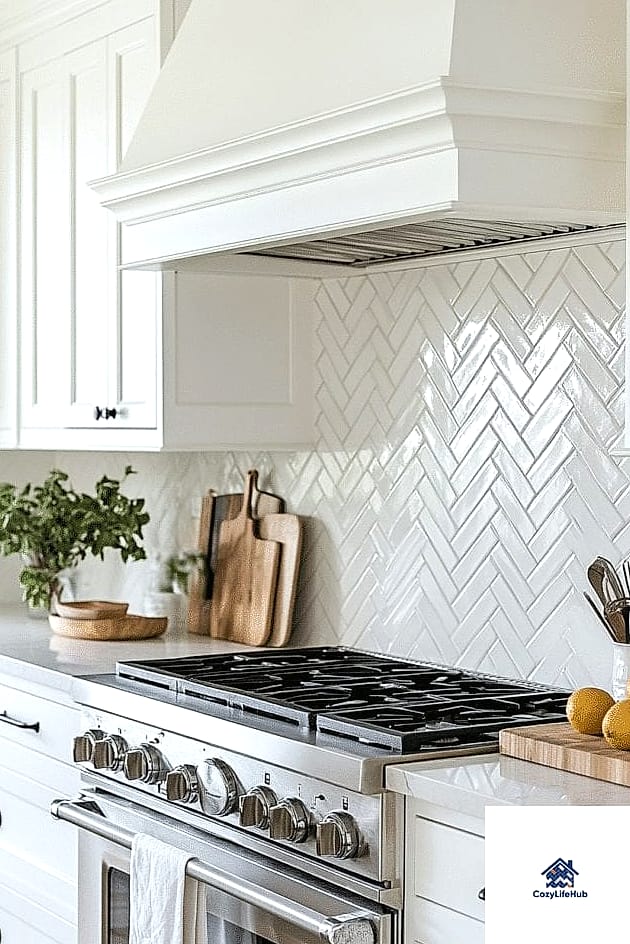
On the flip side, matte white tile gives a softer, more understated version of the herringbone look. It’s become popular in modern farmhouse and Scandinavian-inspired kitchens where the goal is texture without shine. Matte tile also tends to hide water spots and fingerprints better than glossy options, which is worth considering if you have kids or pets running through the kitchen.
Herringbone with Warm Wood Open Shelving
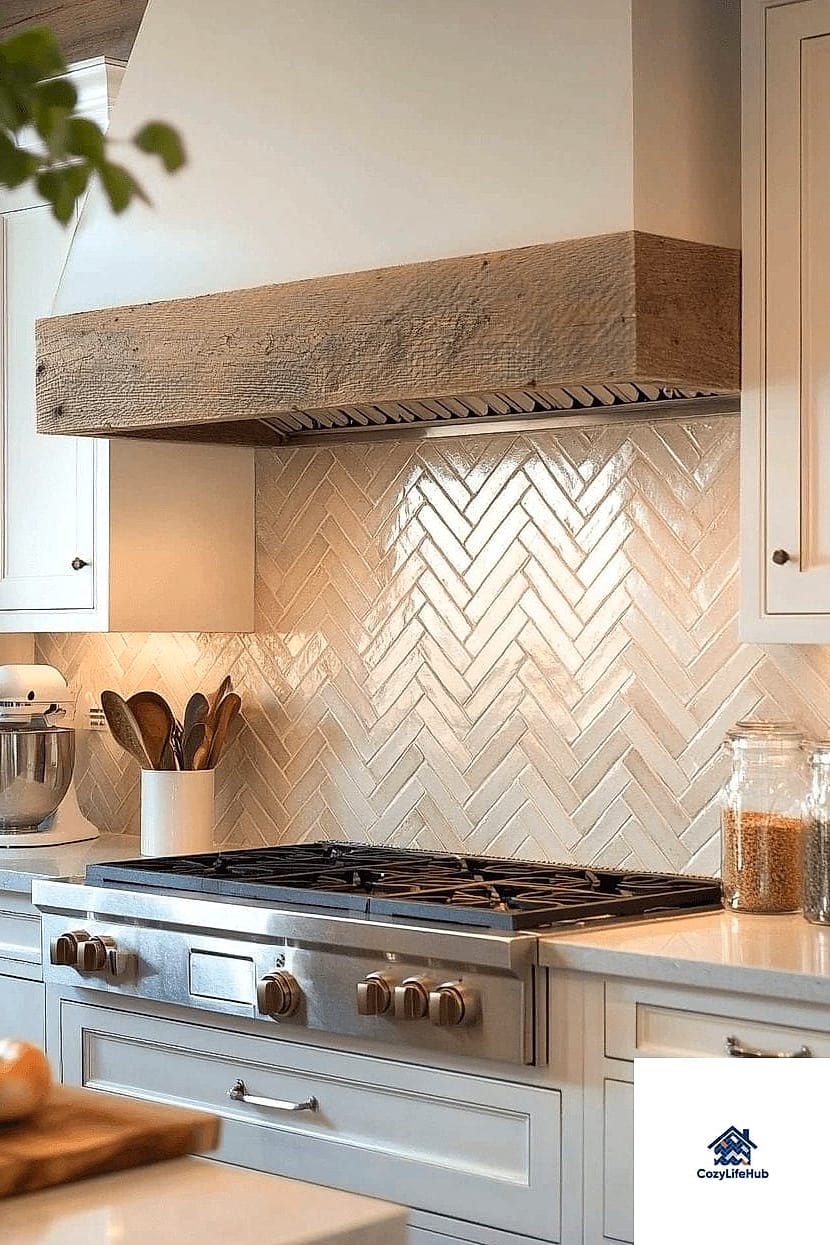
Pairing a white herringbone backsplash with open wood shelving creates a warm, collected look that photographs beautifully. The pattern gives the wall enough texture that it doesn’t feel bare even without upper cabinets. This combo works especially well in kitchens going for a European farmhouse vibe, and it’s a great way to display everyday dishware or a few plants.
Full-Wall Herringbone Statement
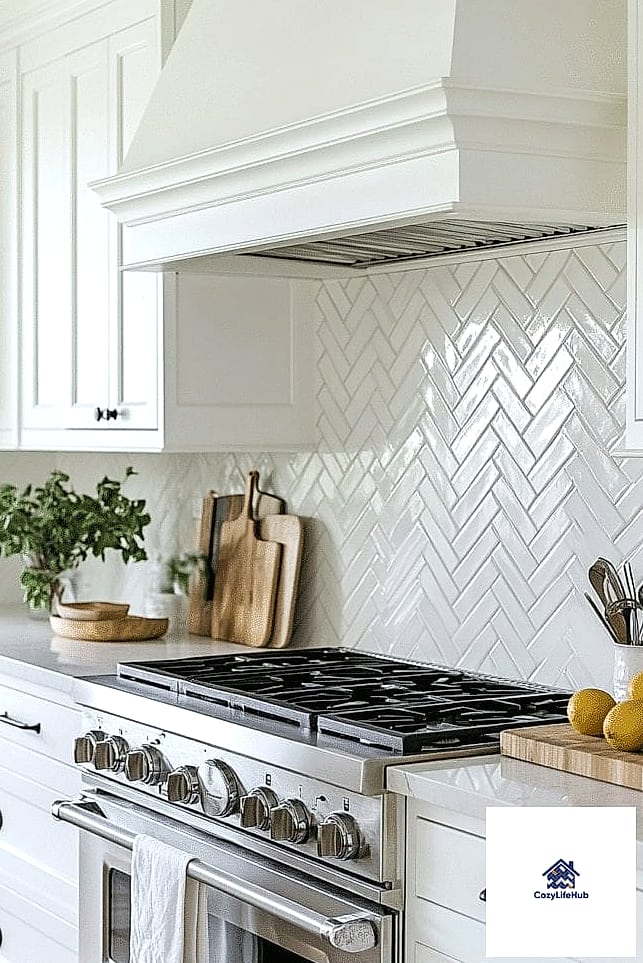
Instead of stopping at counter height, some homeowners are taking the herringbone pattern all the way up to the ceiling. It’s a bigger investment, but the payoff is a kitchen that feels custom and architecturally interesting. This works especially well in kitchens without upper cabinets on one wall, where you’ve already got the open space to work with.
Herringbone Paired with Quartz Countertops
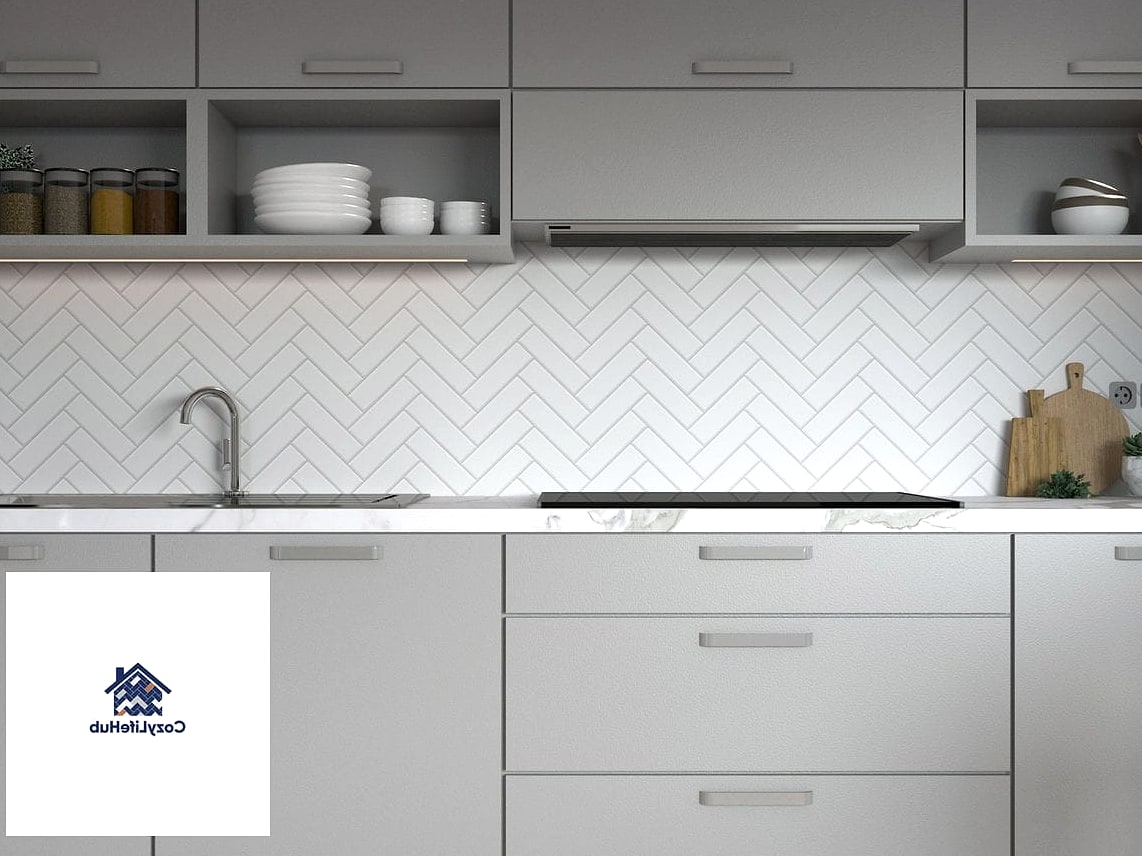
White herringbone tile against a quartz countertop with subtle veining is a pairing you’ll see a lot in newer builds and renovations. The two textures complement each other without competing, since quartz tends to be smoother and more uniform than the tile pattern. It’s also a practical combo, since quartz is low-maintenance and doesn’t need sealing the way natural stone does.
Peel-and-Stick Herringbone for Renters
If you’re renting or just not ready to commit to a full tile installation, peel-and-stick herringbone backsplash panels have come a long way. Modern versions look surprisingly convincing from a few feet away and can be removed without damaging the wall underneath. It’s a solid renter-friendly option if you want the look without the demo work, though it’s worth checking your lease first.
Herringbone with a Decorative Border
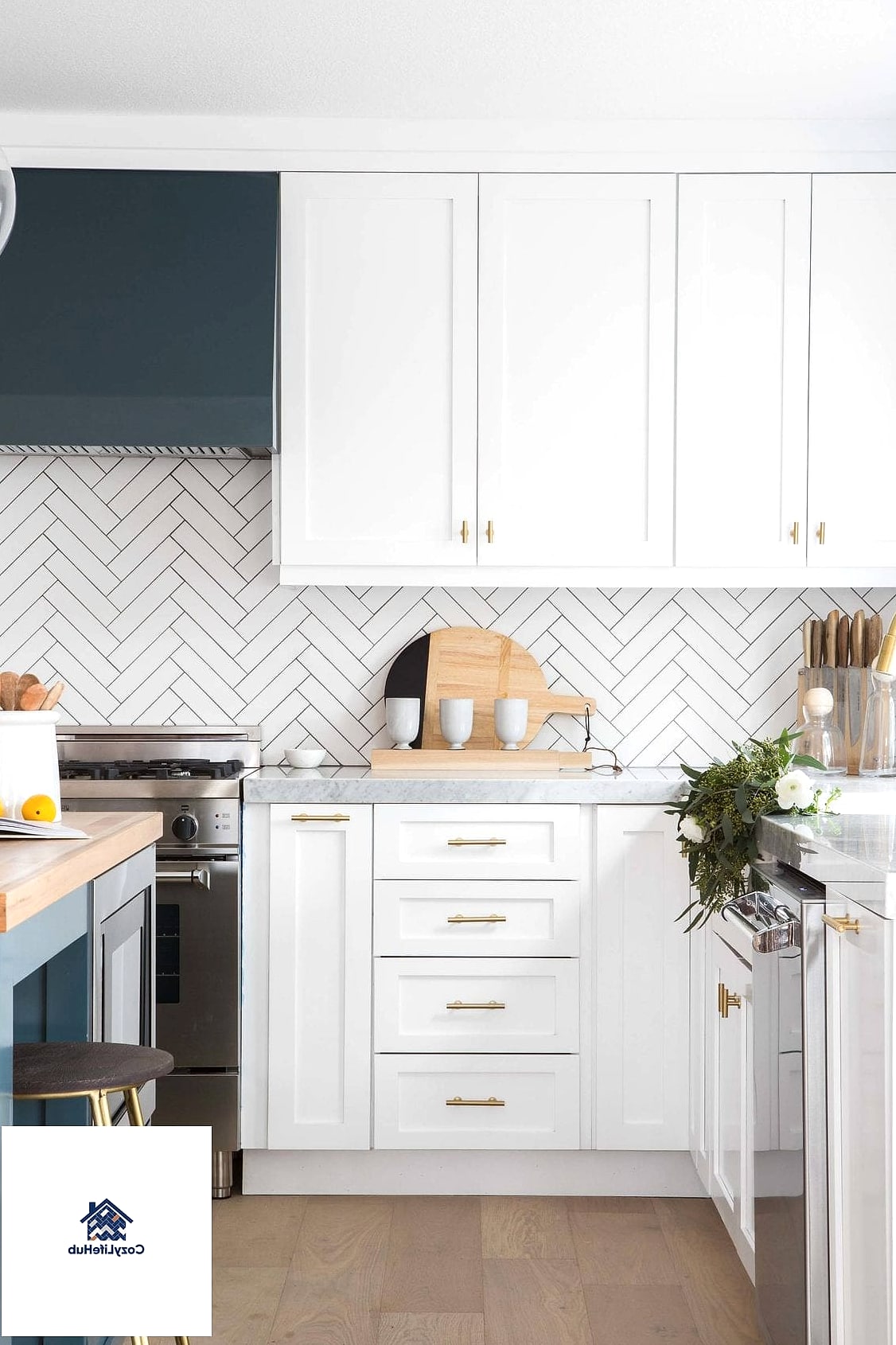
Framing your herringbone pattern with a straight-laid tile border or a thin metal trim piece gives the whole installation a more finished, intentional look. It’s a small detail, but it keeps the eye from getting lost in the pattern and adds a nice transition point where the tile meets cabinetry or countertop. This is a favorite among tile installers who want that extra custom touch.
Herringbone with Black Cabinetry
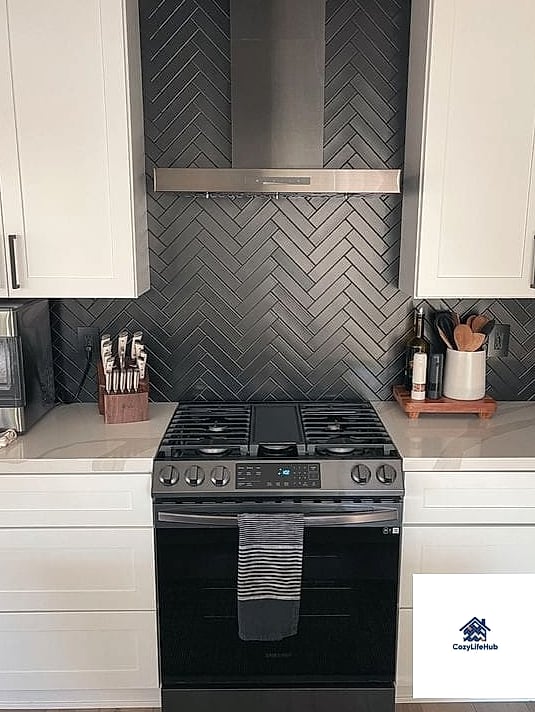
White herringbone tile against black or navy cabinets creates serious contrast, and it’s one of the more dramatic combinations on this list. The busy texture of the tile softens what could otherwise feel like a very stark color pairing. If you’re drawn to moody kitchens but worried about it feeling too dark, this combo strikes a nice balance.
Textured Handmade-Look Herringbone
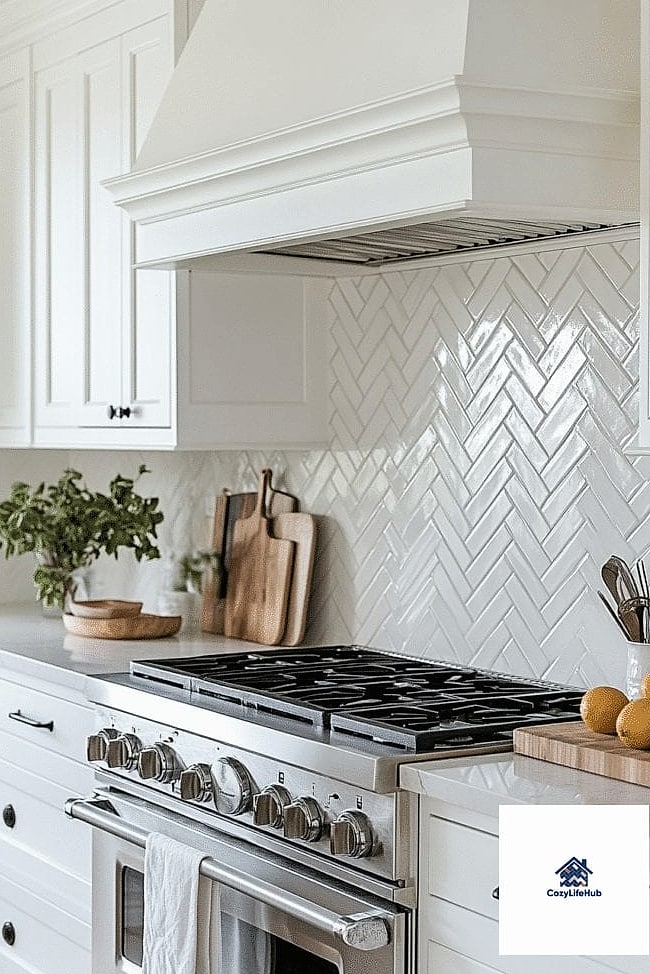
Tiles designed to mimic handmade or artisan tile (think slightly irregular edges and subtle color variation within the white) add warmth and character to the herringbone pattern. It’s a popular choice for kitchens going for that lived-in, European farmhouse feel rather than something that looks factory-perfect. The slight imperfections actually help hide minor grout inconsistencies too.
Herringbone Accent Nook
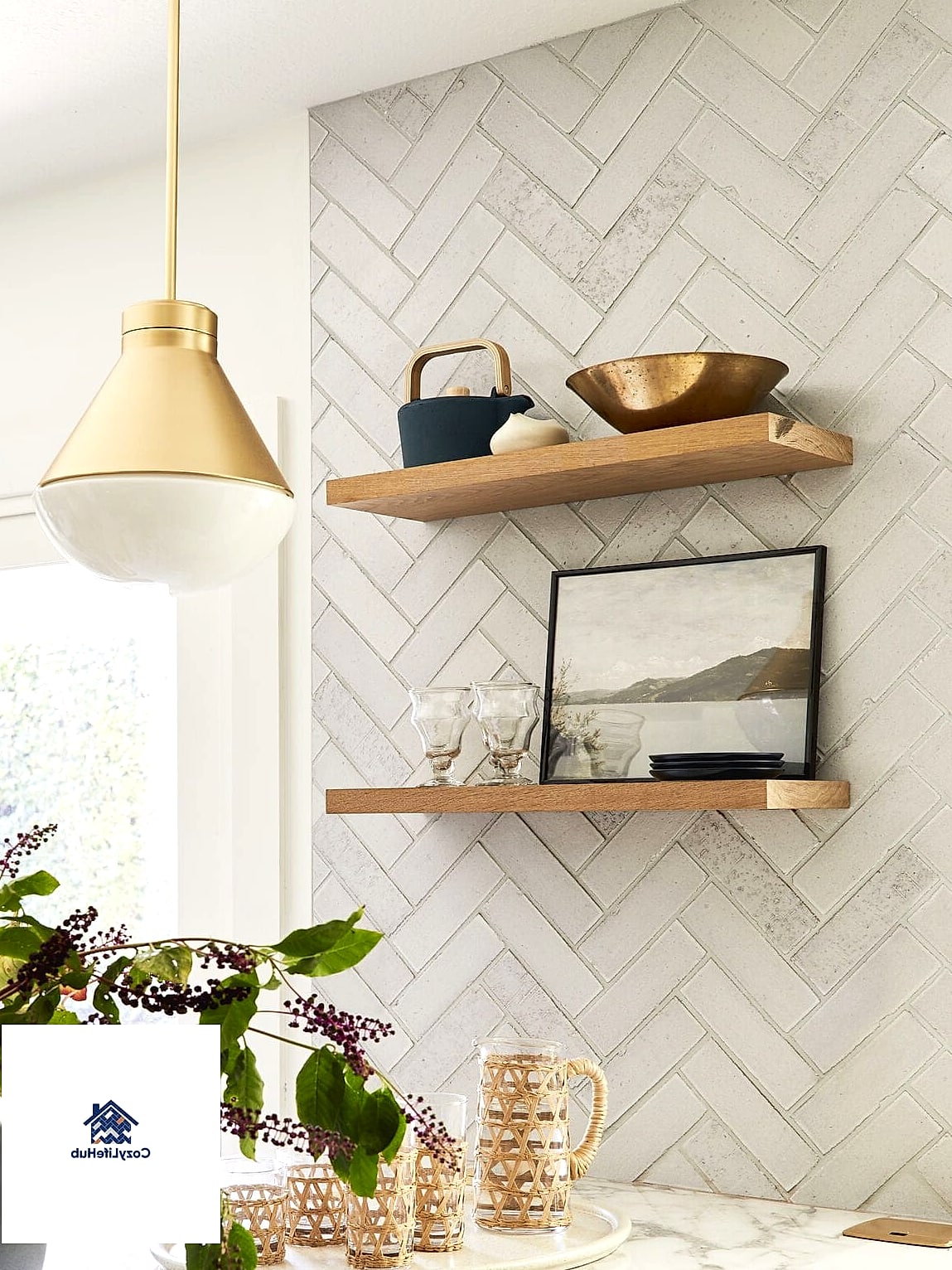
Not every kitchen has room for a full backsplash overhaul, and that’s okay. A small herringbone accent, like inside a baking nook, around a window, or behind open shelving, can deliver the same visual punch on a much smaller budget. It’s a great way to test out the pattern before committing to a bigger installation, or just to add detail to an otherwise plain corner of the kitchen.
Whichever direction you go, a white herringbone backsplash is one of those upgrades that tends to age well and suit a lot of different styles down the road. Whether you’re doing a full renovation or a smaller accent project, there’s a version of this pattern that can fit your space, your budget, and how much maintenance you’re actually willing to keep up with.